

Mustard greens, frozen, cooked, fat added
Common food

Photo: Wikipedia
Frozen mustard greens, once cooked with a touch of fat, offer a tender, slightly chewy texture with a robust, peppery bite that mellows into a savory, earthy depth. Nutritionally, they are a low-calorie powerhouse, delivering a solid dose of fiber and plant-based protein for minimal energy cost.
Calorie split: 19% protein · 26% carbs · 55% fat
↓ Full nutrition💚 Why it's loved
People love it for its assertive, spicy flavor that cuts through rich dishes and adds a deep, satisfying savoriness. It's a versatile green that holds up well to long cooking, braising, and pairing with strong ingredients like garlic, ginger, and smoked meats.
⚠️ Watch-outs & how to enjoy it better
The natural bitterness and strong peppery notes can be overwhelming for some palates. Those with a sensitivity to oxalates or following a low-oxalate diet should be mindful of portion size; pairing with calcium-rich foods can help mitigate oxalate absorption.
Key benefits
- Excellent source of dietary fiber for digestive health.
- Provides a good amount of plant-based protein per calorie.
- Rich in vitamins K, A, and C, supporting immune and bone health.
- Contains glucosinolates, compounds studied for their potential health benefits.
- Low in natural sugars, making it a stable carbohydrate choice.
🍽️ Popular dishes
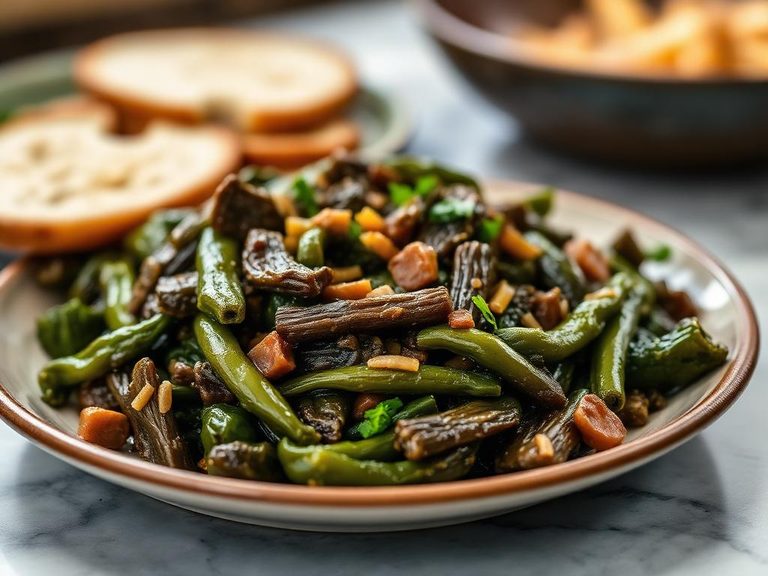
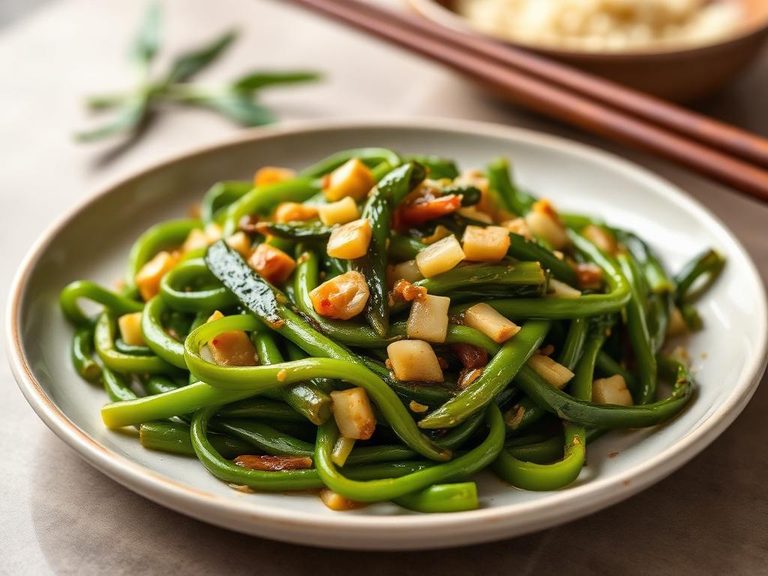
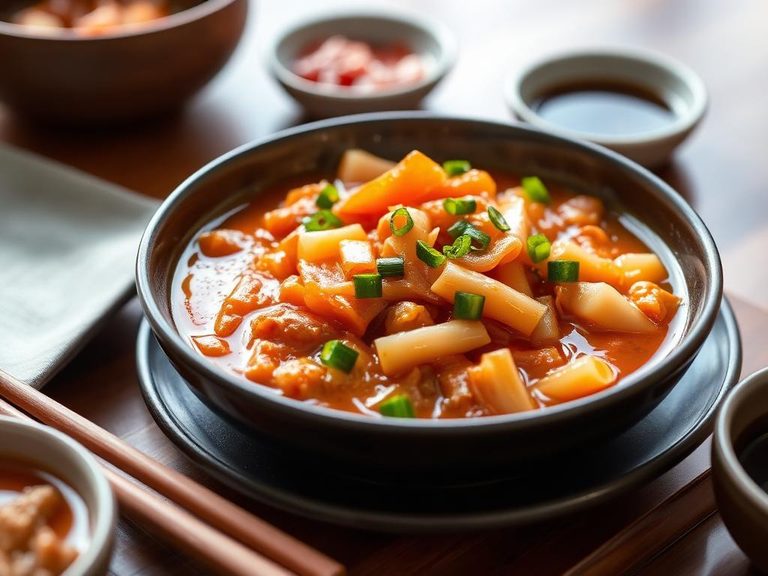
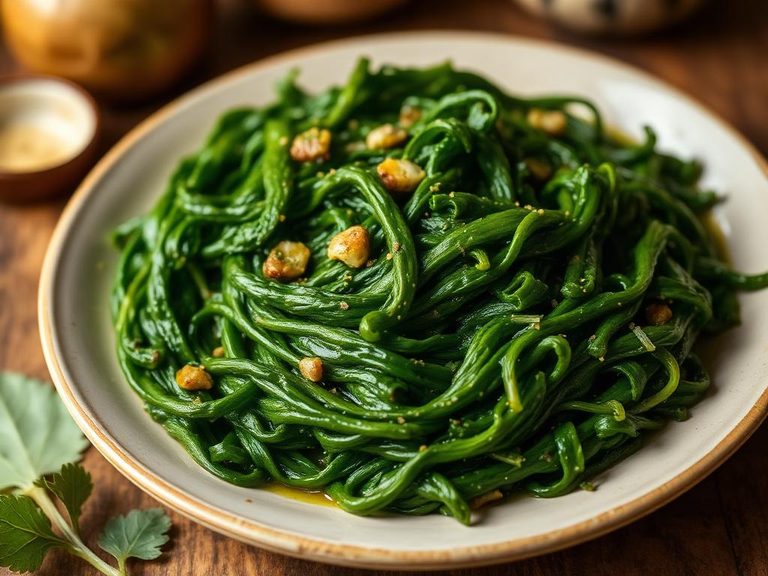
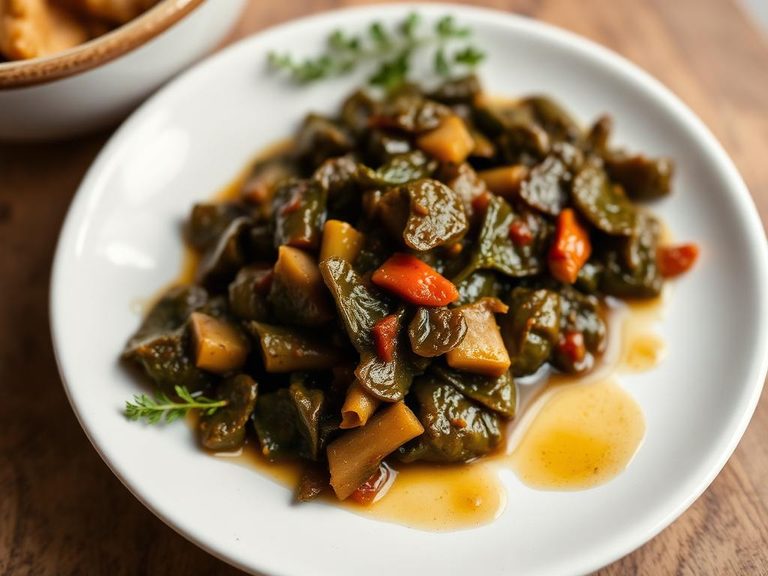
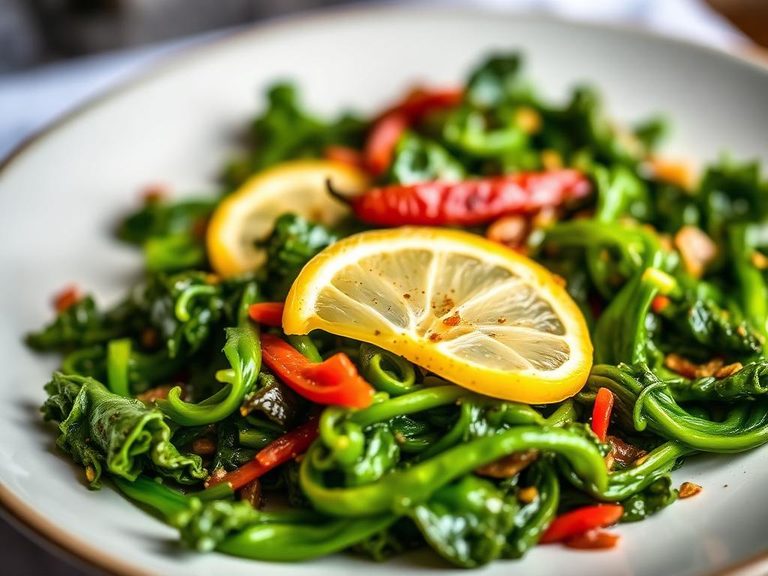
🌍 Where it's eaten
💡 Did you know?
Mustard greens are the leaves of the same plant that produces mustard seeds, meaning the fiery condiment and the leafy vegetable share the same botanical origin and peppery chemical compounds.
Full nutrition (USDA data · scales with serving)
| Water | 91.1 g |
| Energy | 41.0 kcal |
| Protein | 2.2 g |
| Total lipid (fat) | 2.8 g |
| Carbohydrate, by difference | 3.0 g |
| Fiber, total dietary | 2.7 g |
| Total Sugars | 0.32 g |
| Calcium, Ca | 98.0 mg |
| Iron, Fe | 1.1 mg |
| Magnesium, Mg | 13.0 mg |
| Phosphorus, P | 24.0 mg |
| Potassium, K | 135 mg |
| Sodium, Na | 145 mg |
| Zinc, Zn | 0.19 mg |
| Copper, Cu | 0.06 mg |
| Selenium, Se | 0.60 ug |
| Vitamin C, total ascorbic acid | 13.4 mg |
| Thiamin | 0.04 mg |
| Riboflavin | 0.05 mg |
| Niacin | 0.25 mg |
| Vitamin B-6 | 0.12 mg |
| Folate, total | 68.0 ug |
| Folic acid | 0.00 ug |
| Folate, food | 68.0 ug |
| Folate, DFE | 68.0 ug |
| Choline, total | 0.50 mg |
| Vitamin B-12 | 0.00 ug |
| Vitamin B-12, added | 0.00 ug |
| Vitamin A, RAE | 354 ug |
| Retinol | 11.0 ug |
| Carotene, beta | 4115 ug |
| Carotene, alpha | 0.00 ug |
| Cryptoxanthin, beta | 0.00 ug |
| Lycopene | 0.00 ug |
| Lutein + zeaxanthin | 6459 ug |
| Vitamin E (alpha-tocopherol) | 1.7 mg |
| Vitamin E, added | 0.00 mg |
| Vitamin D (D2 + D3) | 0.00 ug |
| Vitamin K (phylloquinone) | 327 ug |
| Alcohol, ethyl | 0.00 g |
| Caffeine | 0.00 mg |
| Theobromine | 0.00 mg |
Fat & fatty acid profile (per 100g)
| Fatty acids, total saturated | 0.68 g |
| SFA 4:0 | 0.02 g |
| SFA 6:0 | 0.01 g |
| SFA 8:0 | 0.01 g |
| SFA 10:0 | 0.02 g |
| SFA 12:0 | 0.02 g |
| SFA 14:0 | 0.06 g |
| SFA 16:0 | 0.37 g |
| SFA 18:0 | 0.14 g |
| Fatty acids, total monounsaturated | 1.0 g |
| MUFA 16:1 | 0.01 g |
| MUFA 18:1 | 0.89 g |
| MUFA 20:1 | 0.03 g |
| MUFA 22:1 | 0.07 g |
| Fatty acids, total polyunsaturated | 0.78 g |
| PUFA 18:2 | 0.67 g |
| PUFA 18:3 | 0.10 g |
| PUFA 18:4 | 0.00 g |
| PUFA 20:4 | 0.00 g |
| PUFA 20:5 n-3 (EPA) | 0.00 g |
| PUFA 22:5 n-3 (DPA) | 0.00 g |
| PUFA 22:6 n-3 (DHA) | 0.00 g |
| Cholesterol | 2.0 mg |
Amino acid profile (per 100g)
Estimated from Mustard greens, frozen, unprepared — USDA does not publish this profile for Mustard greens.
| Tryptophan | 0.03 g |
| Threonine | 0.07 g |
| Isoleucine | 0.09 g |
| Leucine | 0.08 g |
| Lysine | 0.11 g |
| Methionine | 0.02 g |
| Cystine | 0.04 g |
| Phenylalanine | 0.07 g |
| Tyrosine | 0.13 g |
| Valine | 0.10 g |
| Arginine | 0.18 g |
| Histidine | 0.04 g |
FAQ
Why are my frozen mustard greens mushy?
Overcooking is the common culprit. Since they are pre-blanched, add them later in the cooking process and heat just until tender-crisp to preserve texture.
How do I reduce the bitterness?
A pinch of sugar, a splash of vinegar or lemon juice, or pairing with sweet ingredients like caramelized onions can balance the natural bitterness.
Is the added fat necessary?
Fat is not strictly necessary but helps in absorbing fat-soluble vitamins (A and K) and mellows the greens' sharp flavor. Use a small amount of a flavorful oil or animal fat.
Nutrient density (calculated · NRF9.3)
Nutrient Rich Foods index: beneficial nutrients (protein, fiber, vitamins, minerals) minus saturated fat, added sugar & sodium, per 100 kcal.
NRF9.3 index — Fulgoni, Keast & Drewnowski, 2009. Computed from USDA nutrients.
Weight-loss friendliness (composite index)
Energy density 0.41 kcal/g · 22% calories from protein · 2.7 g fiber · 0.3 g sugar per 100 g.
Composite of energy density (Rolls et al., 1999), protein & fiber satiety, minus sugar. A calculated heuristic — ranks satiety-per-calorie, not a clinical measure.
Dietary load (calculated from USDA values)
Potential renal acid load. Positive = acid-forming, negative = alkaline-forming.
Sodium-to-potassium ratio: 1.07 (lower is better — aim for ≤ 1)
Sodium:potassium per WHO potassium guidance. Computed from USDA nutrients.