

Mustard greens, fresh, cooked, no added fat
Common food

Photo: Wikipedia
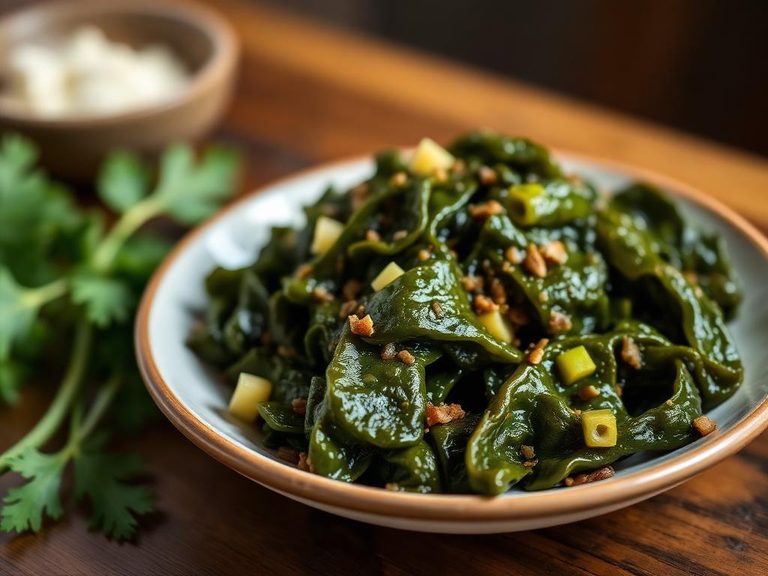
Mustard greens are the peppery, dark leafy greens from the mustard plant, offering a bold, slightly bitter flavor and a tender-crisp texture when cooked. They are a nutritional powerhouse, exceptionally low in calories while being a standout source of vitamins K, A, and C, and dietary fiber.
Calorie split: 34% protein · 55% carbs · 11% fat
↓ Full nutrition💚 Why it's loved
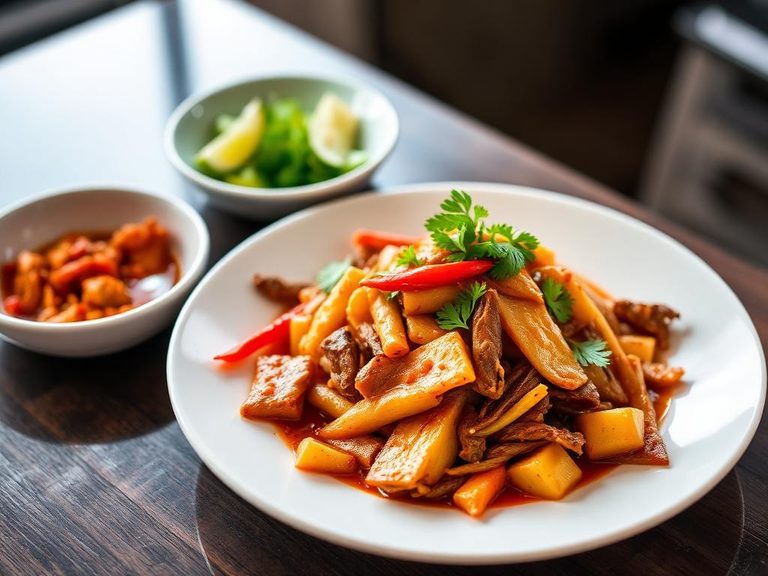
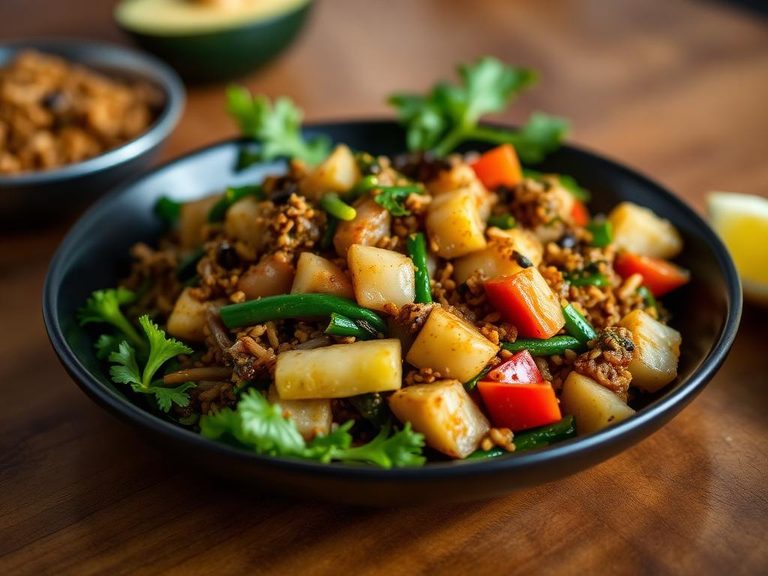
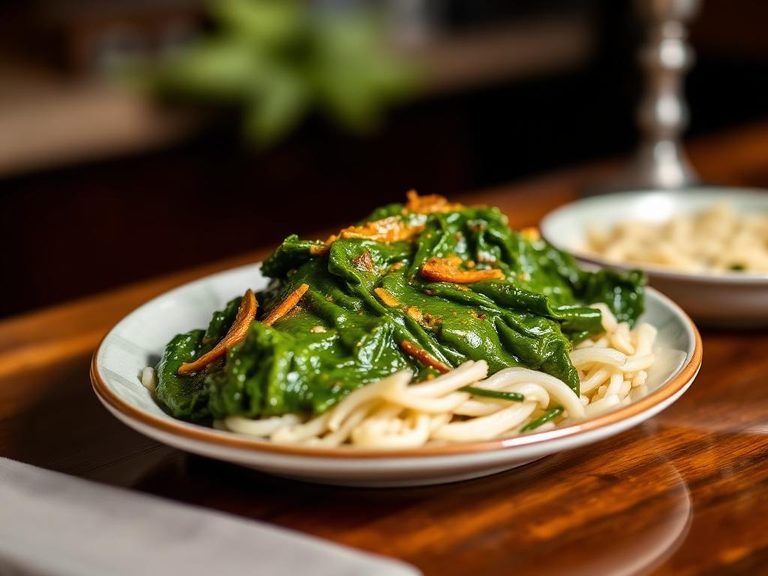
People love mustard greens for their vibrant, zesty flavor that adds a lively kick to dishes without heaviness. Their ability to absorb seasonings and pair with everything from smoked meats to garlic makes them incredibly versatile in stir-fries, braises, and soups.
⚠️ Watch-outs & how to enjoy it better
Their natural bitterness can be off-putting to some palates, and they contain oxalates, which can inhibit mineral absorption and may be a concern for those prone to kidney stones. To counteract bitterness, a quick blanch in salted water before final cooking can mellow it. To reduce oxalates, boil them in plenty of water and discard the cooking liquid before adding to your dish.
Key benefits
- Rich in vitamin K, crucial for bone health and blood clotting.
- High in antioxidants like beta-carotene and flavonoids.
- Excellent source of dietary fiber for digestive health.
- Very low in calories and fat, supporting weight management.
- Provides a good amount of vitamin C and folate.
🍽️ Popular dishes
🌍 Where it's eaten
💡 Did you know?
The seeds of the same plant are ground to make the common yellow mustard condiment, so the greens and your hot dog topping are botanical siblings.
Full nutrition (USDA data · scales with serving)
| Water | 89.7 g |
| Energy | 29.0 kcal |
| Protein | 3.1 g |
| Total lipid (fat) | 0.45 g |
| Carbohydrate, by difference | 5.0 g |
| Fiber, total dietary | 3.4 g |
| Total Sugars | 1.4 g |
| Calcium, Ca | 123 mg |
| Iron, Fe | 1.8 mg |
| Magnesium, Mg | 34.0 mg |
| Phosphorus, P | 62.0 mg |
| Potassium, K | 412 mg |
| Sodium, Na | 146 mg |
| Zinc, Zn | 0.27 mg |
| Copper, Cu | 0.18 mg |
| Selenium, Se | 1.0 ug |
| Vitamin C, total ascorbic acid | 52.5 mg |
| Thiamin | 0.08 mg |
| Riboflavin | 0.11 mg |
| Niacin | 0.81 mg |
| Vitamin B-6 | 0.18 mg |
| Folate, total | 10.0 ug |
| Folic acid | 0.00 ug |
| Folate, food | 10.0 ug |
| Folate, DFE | 10.0 ug |
| Choline, total | 0.50 mg |
| Vitamin B-12 | 0.00 ug |
| Vitamin B-12, added | 0.00 ug |
| Vitamin A, RAE | 154 ug |
| Retinol | 0.00 ug |
| Carotene, beta | 1823 ug |
| Carotene, alpha | 10.0 ug |
| Cryptoxanthin, beta | 41.0 ug |
| Lycopene | 0.00 ug |
| Lutein + zeaxanthin | 3799 ug |
| Vitamin E (alpha-tocopherol) | 2.1 mg |
| Vitamin E, added | 0.00 mg |
| Vitamin D (D2 + D3) | 0.00 ug |
| Vitamin K (phylloquinone) | 276 ug |
| Alcohol, ethyl | 0.00 g |
| Caffeine | 0.00 mg |
| Theobromine | 0.00 mg |
Fat & fatty acid profile (per 100g)
| Fatty acids, total saturated | 0.01 g |
| SFA 4:0 | 0.00 g |
| SFA 6:0 | 0.00 g |
| SFA 8:0 | 0.00 g |
| SFA 10:0 | 0.00 g |
| SFA 12:0 | 0.00 g |
| SFA 14:0 | 0.00 g |
| SFA 16:0 | 0.01 g |
| SFA 18:0 | 0.00 g |
| Fatty acids, total monounsaturated | 0.10 g |
| MUFA 16:1 | 0.00 g |
| MUFA 18:1 | 0.02 g |
| MUFA 20:1 | 0.02 g |
| MUFA 22:1 | 0.06 g |
| Fatty acids, total polyunsaturated | 0.04 g |
| PUFA 18:2 | 0.02 g |
| PUFA 18:3 | 0.02 g |
| PUFA 18:4 | 0.00 g |
| PUFA 20:4 | 0.00 g |
| PUFA 20:5 n-3 (EPA) | 0.00 g |
| PUFA 22:5 n-3 (DPA) | 0.00 g |
| PUFA 22:6 n-3 (DHA) | 0.00 g |
| Cholesterol | 0.00 mg |
Amino acid profile (per 100g)
Estimated from Mustard greens, frozen, unprepared — USDA does not publish this profile for Mustard greens.
| Tryptophan | 0.03 g |
| Threonine | 0.07 g |
| Isoleucine | 0.09 g |
| Leucine | 0.08 g |
| Lysine | 0.11 g |
| Methionine | 0.02 g |
| Cystine | 0.04 g |
| Phenylalanine | 0.07 g |
| Tyrosine | 0.13 g |
| Valine | 0.10 g |
| Arginine | 0.18 g |
| Histidine | 0.04 g |
FAQ
How do I reduce the bitterness of mustard greens?
Blanch the greens in a large pot of boiling salted water for 1-2 minutes, then shock them in ice water. This tempers the sharp bite before you proceed with stir-frying, braising, or adding them to soups.
Are mustard greens and collard greens the same?
No, they are different plants, though they are often used interchangeably in recipes. Mustard greens have a more pronounced peppery flavor, while collards are milder and have a thicker, more cabbage-like texture.
What's the best way to store fresh mustard greens?
Wrap the unwashed greens loosely in a paper towel, place them in a plastic bag, and store in the crisper drawer of your refrigerator. They should be used within 3-5 days for best freshness.
Nutrient density (calculated · NRF9.3)
Nutrient Rich Foods index: beneficial nutrients (protein, fiber, vitamins, minerals) minus saturated fat, added sugar & sodium, per 100 kcal.
NRF9.3 index — Fulgoni, Keast & Drewnowski, 2009. Computed from USDA nutrients.
Weight-loss friendliness (composite index)
Energy density 0.29 kcal/g · 42% calories from protein · 3.4 g fiber · 1.4 g sugar per 100 g.
Composite of energy density (Rolls et al., 1999), protein & fiber satiety, minus sugar. A calculated heuristic — ranks satiety-per-calorie, not a clinical measure.
Dietary load (calculated from USDA values)
Potential renal acid load. Positive = acid-forming, negative = alkaline-forming.
Sodium-to-potassium ratio: 0.35 (lower is better — aim for ≤ 1)
Sodium:potassium per WHO potassium guidance. Computed from USDA nutrients.