Indian saag or palak
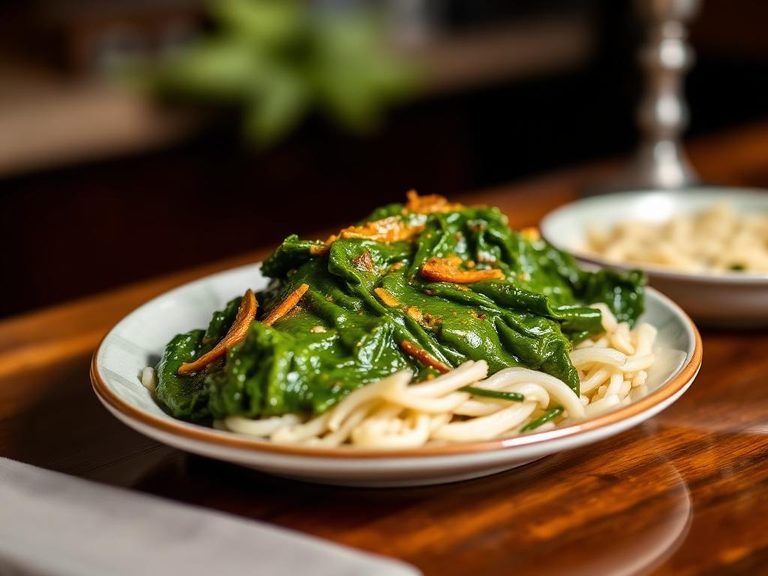
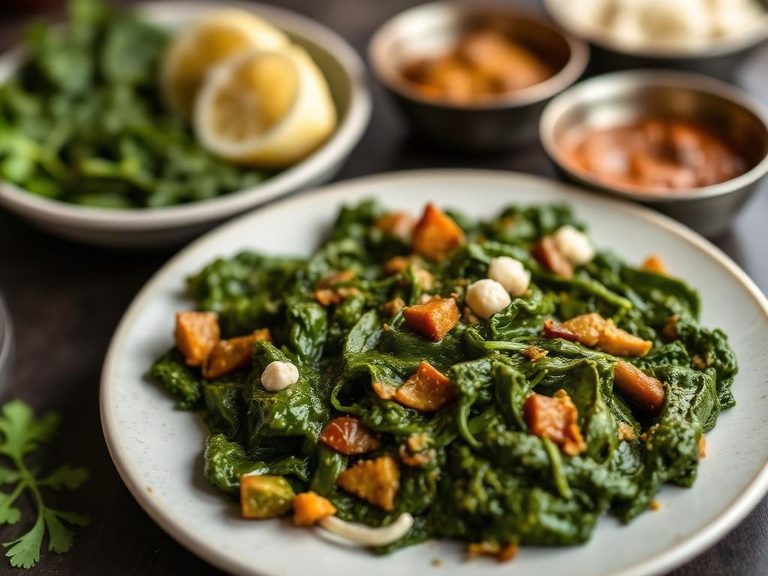
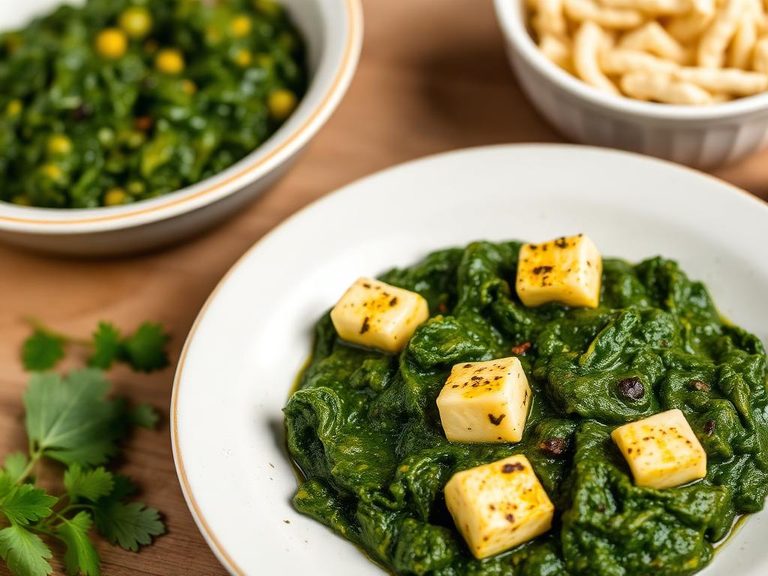
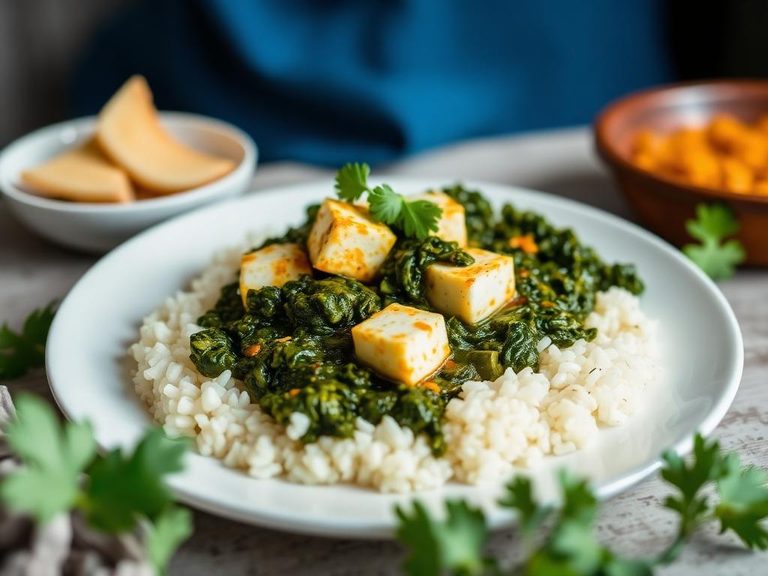
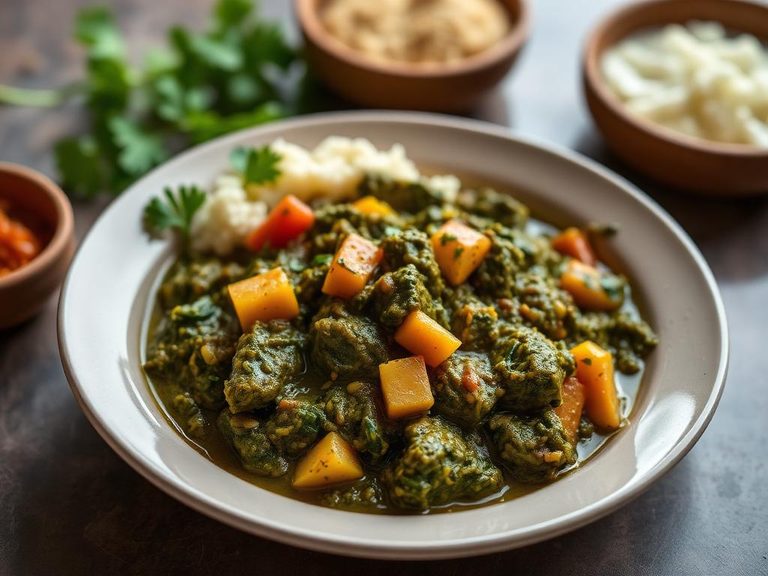
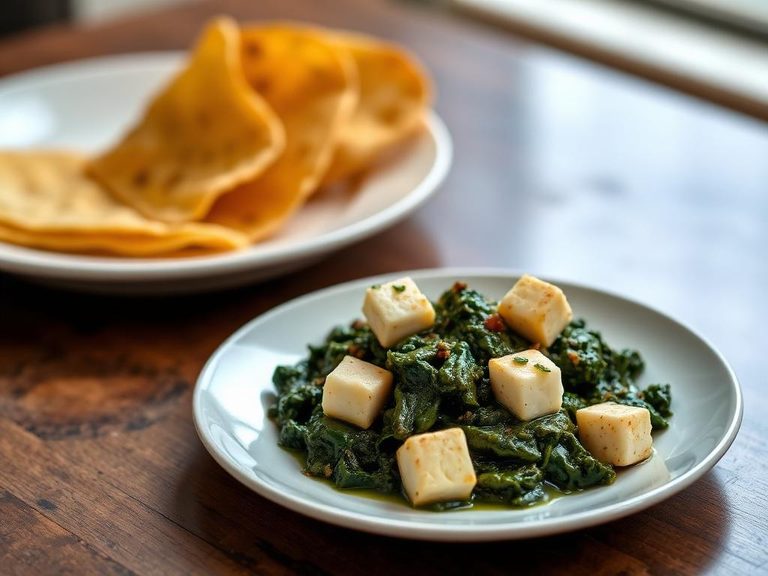
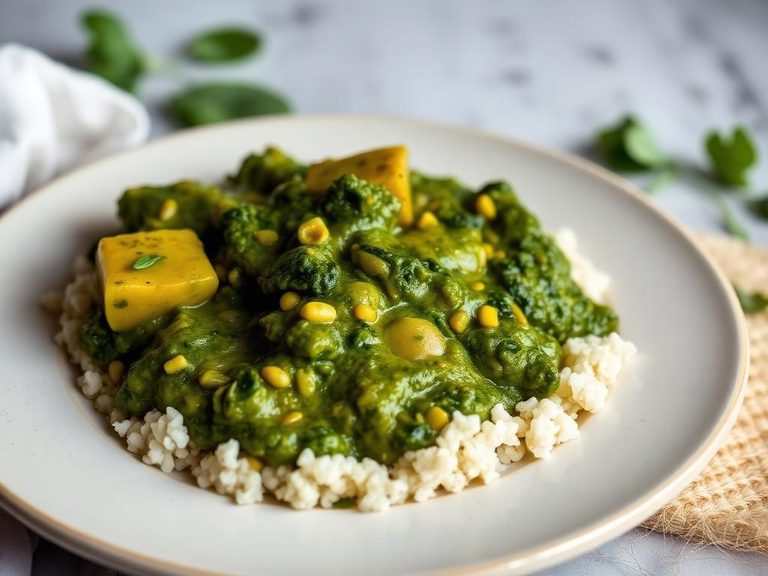
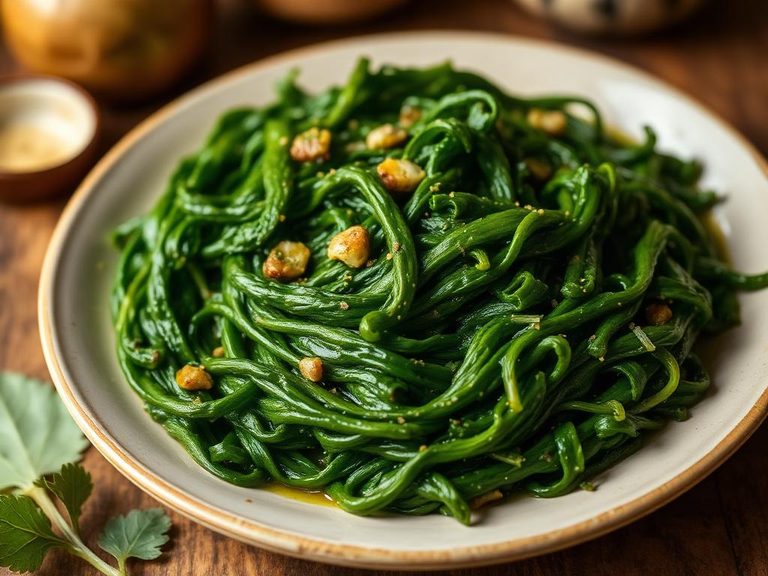
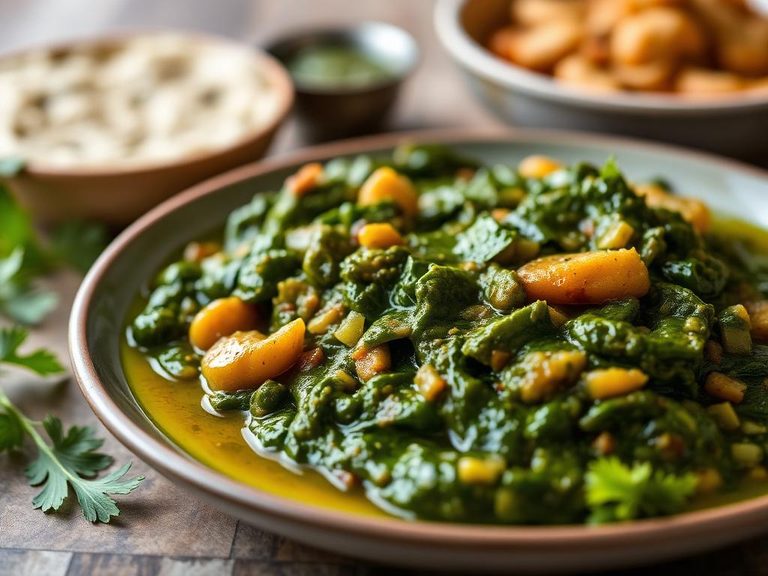
Indian saag or palak is a vibrant, creamy dish made from puréed leafy greens, most commonly spinach (palak), cooked with a blend of aromatic spices like ginger, garlic, cumin, and garam masala. It often includes onions, tomatoes, and a base of cream or yogurt for richness, and is a staple in North Indian cuisine, particularly in Punjab. The dish is typically served with flatbreads like naan or roti, or with rice.
🍽️ Nutrition at a glance
Saag is relatively low in carbohydrates and high in protein, especially when prepared with paneer (Indian cottage cheese) or lentils. It is an excellent source of vitamins A, C, and K, iron, calcium, and dietary fiber, with a rough calorie range of 150-250 per serving, depending on the addition of fats like ghee or cream.
Nutrition breakdown
| Calories | 180 kcal |
| Protein | 9 g |
| Carbs | 12 g |
| Fat | 11 g |
| Fiber | 5 g |
| Sugar | 3 g |
| Sodium | 480 mg |
| Vitamin A | 600 mcg RAE |
| Vitamin C | 35 mg |
| Vitamin K | 450 mcg |
| Folate | 150 mcg DFE |
| Iron | 4 mg |
| Calcium | 150 mg |
| Potassium | 550 mg |
| Magnesium | 70 mg |
Per 1 cup (240 g) · estimated, varies by recipe
💡 What's interesting
Culturally, saag is deeply rooted in Punjabi winter traditions, often made with mustard greens (sarson ka saag) during the harvest season. Nutritionally, its high iron and vitamin content makes it a powerhouse for boosting immunity and energy, while the spices like turmeric and cumin offer anti-inflammatory benefits.