Indian sarson ka saag
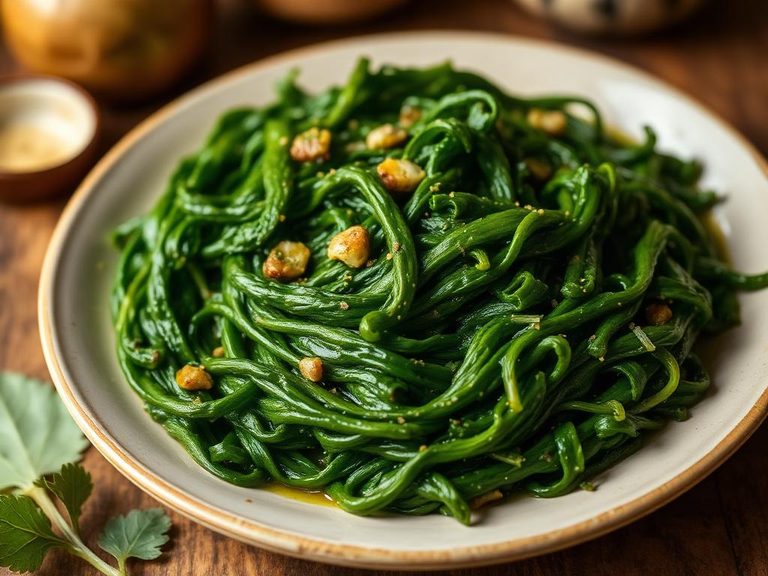
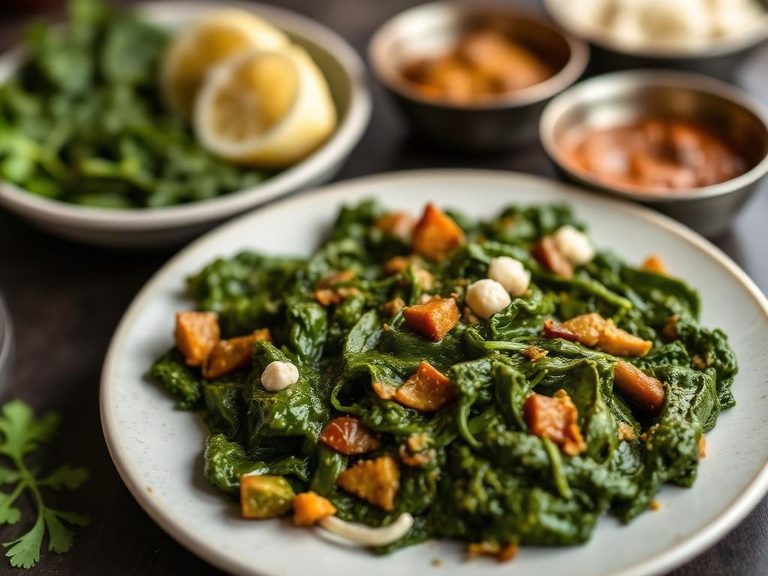
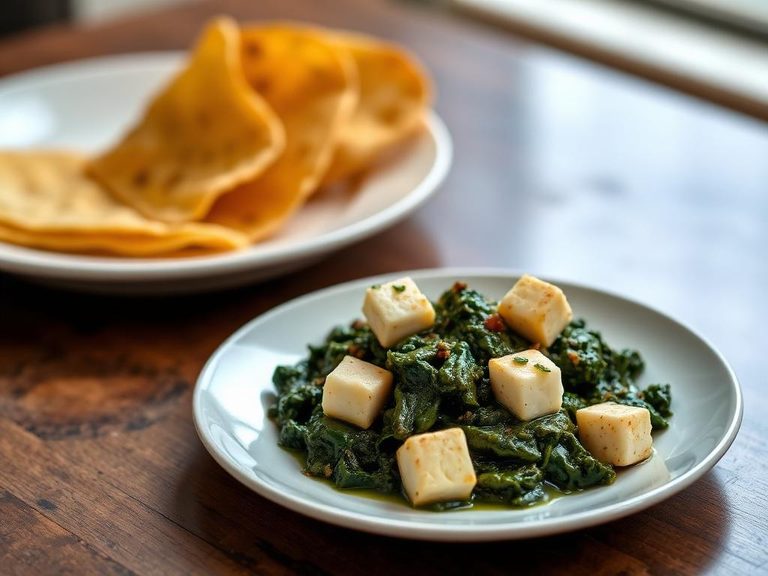
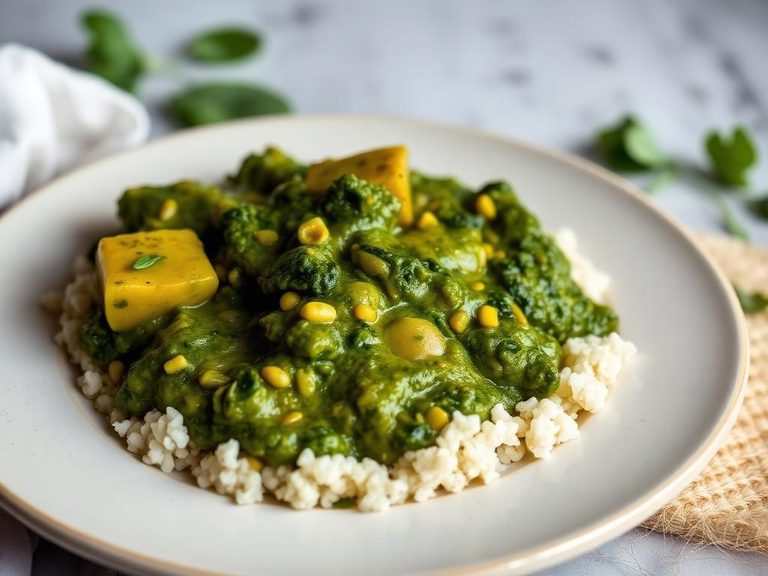
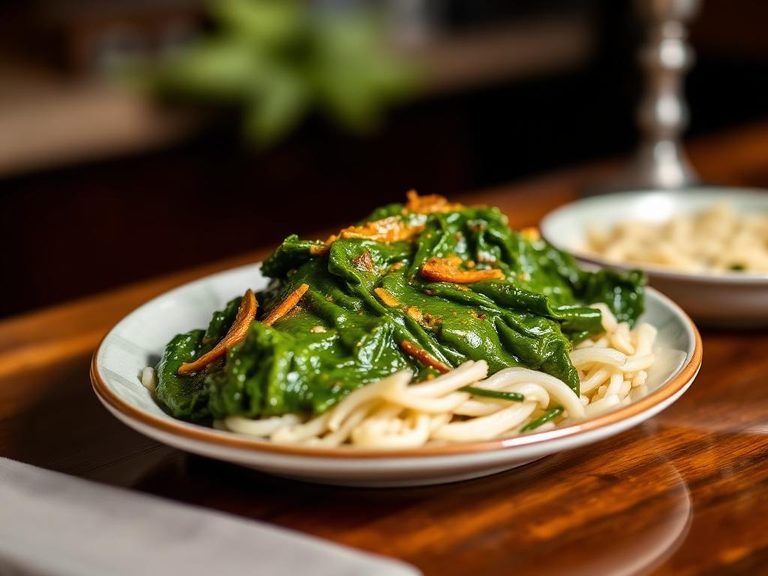
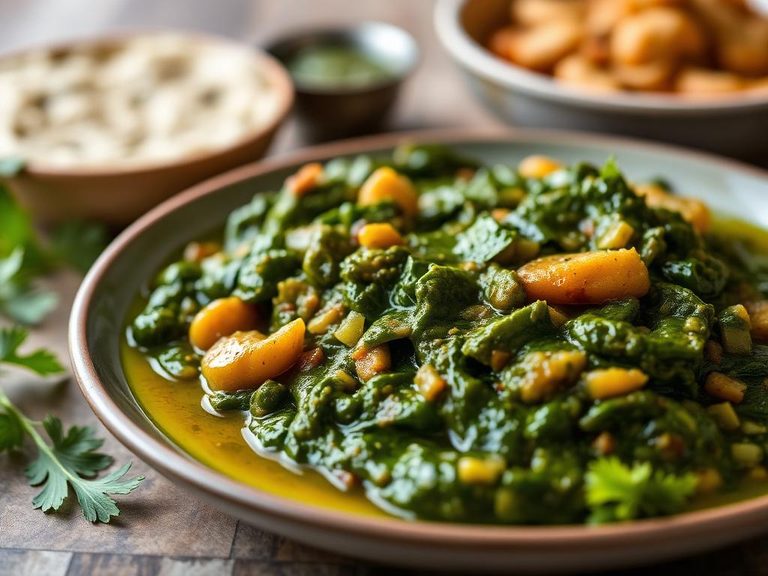
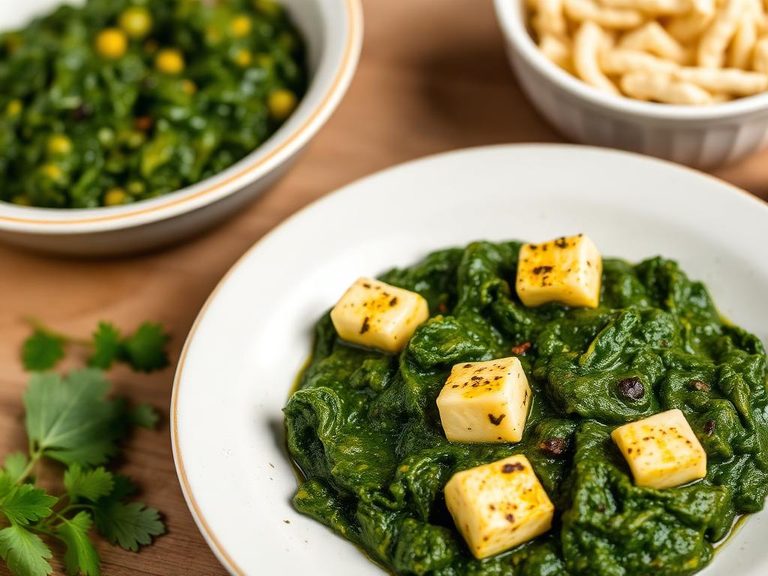
Sarson ka saag is a traditional winter dish from the Punjab region of India and Pakistan, made from puréed mustard greens (sarson) and other leafy greens like spinach or bathua. It is slow-cooked with aromatics like garlic, ginger, and green chilies, and is typically finished with a generous dollop of butter or ghee.
🍽️ Nutrition at a glance
This dish is relatively low in carbohydrates and protein but can be higher in fat due to the traditional use of butter or ghee. It is a rich source of vitamins A, C, and K, as well as minerals like iron and calcium.
Nutrition breakdown
| Calories | 180 kcal |
| Protein | 8 g |
| Carbs | 12 g |
| Fat | 12 g |
| Fiber | 5 g |
| Sugar | 3 g |
| Sodium | 450 mg |
| Vitamin A | 450 mcg RAE |
| Vitamin C | 30 mg |
| Vitamin K | 120 mcg |
| Folate | 100 mcg DFE |
| Calcium | 180 mg |
| Iron | 3 mg |
| Magnesium | 40 mg |
| Potassium | 350 mg |
Per 1 cup (240 g) · estimated, varies by recipe
💡 What's interesting
Culturally, it is a quintessential winter comfort food in Punjab, often enjoyed with makki ki roti (cornmeal flatbread), and its preparation is a seasonal ritual. Nutritionally, the mustard greens are a powerhouse of antioxidants and compounds that may support detoxification.