

Saag
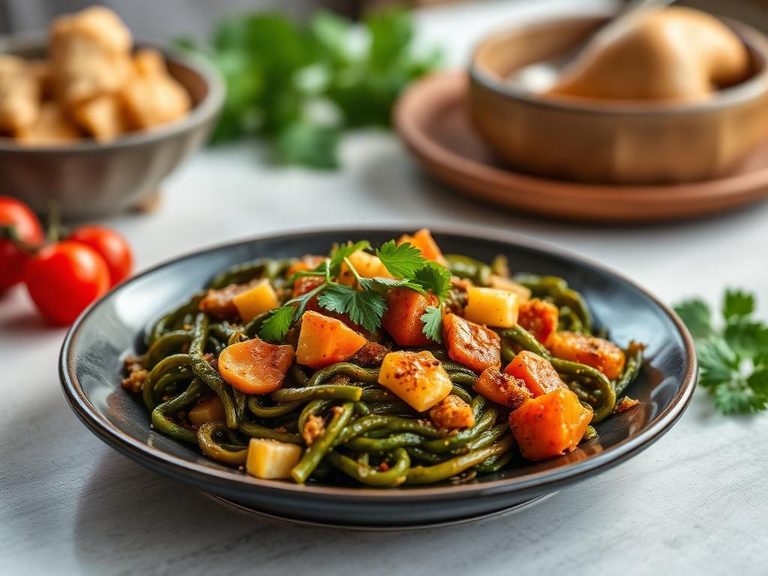
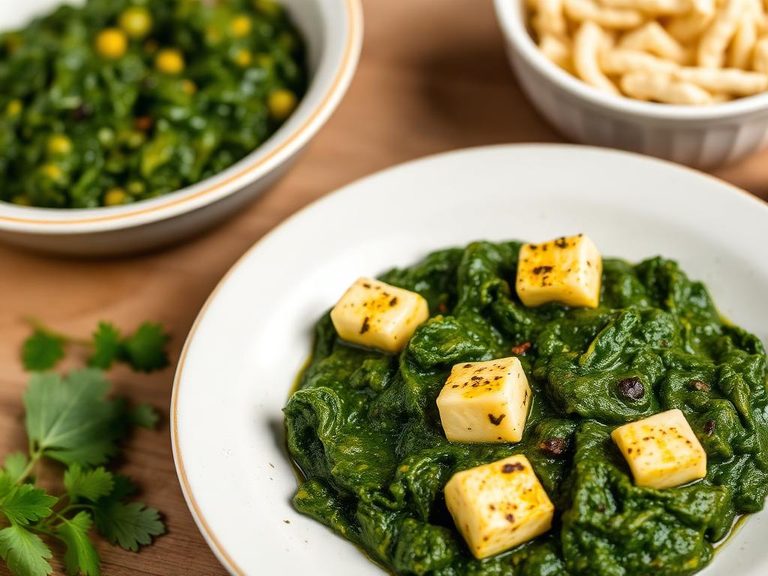
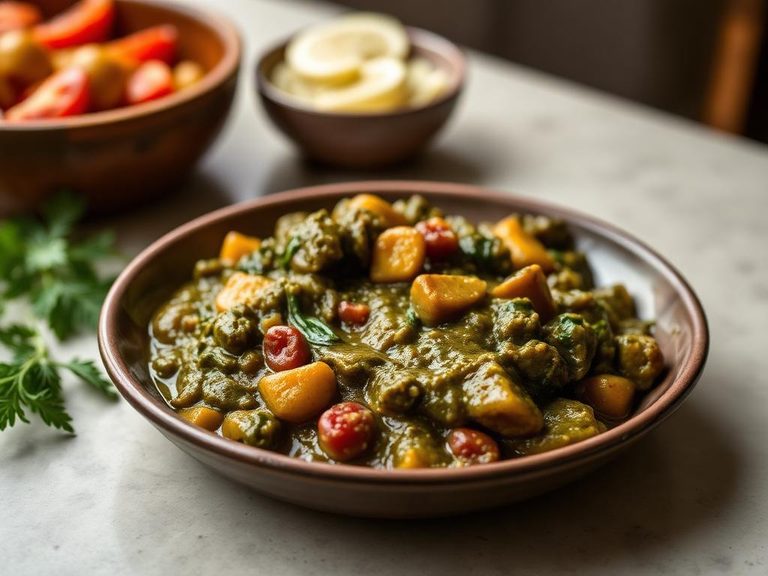
Saag is a traditional South Asian dish featuring leafy greens cooked down into a thick, savory curry, commonly made with spinach, mustard greens, or a mix of greens, often seasoned with spices like ginger, garlic, and cumin. It originates from the Indian subcontinent, particularly popular in North India and Pakistan, and is frequently paired with bread like roti or naan.
🍽️ Nutrition at a glance
Saag is generally low in carbohydrates and high in protein when prepared with paneer or legumes, while being rich in fiber, vitamins A, C, and K, and minerals like iron and calcium. A typical serving ranges from 150 to 250 calories, depending on the amount of oil or ghee used.
Nutrition breakdown
| Calories | 180 kcal |
| Protein | 8 g |
| Carbs | 12 g |
| Fat | 12 g |
| Fiber | 5 g |
| Sugar | 3 g |
| Sodium | 450 mg |
| Vitamin A | 450 mcg |
| Vitamin C | 18 mg |
| Vitamin K | 320 mcg |
| Folate | 120 mcg |
| Calcium | 180 mg |
| Iron | 3.5 mg |
| Magnesium | 65 mg |
| Potassium | 420 mg |
Per 1 cup (240 g) · estimated, varies by recipe
💡 What's interesting
Culturally, saag is celebrated for its versatility and role in winter cuisine, as greens like mustard are harvested in cooler months, making it a seasonal staple. Nutritionally, it stands out as a nutrient-dense, plant-forward dish that supports bone health and immunity through its high vitamin and mineral content.
🍽️ Related dishes
AI estimate may be inaccurate · Terms