

Beef, rib eye roast, bone-in, lip-on, separable lean and fat, trimmed to 1/8" fat, choice, cooked, roasted
Whole food · Beef Products

Photo: Wikipedia
A premium, bone-in cut from the rib section, this roasted rib eye offers a rich, buttery flavor with a tender, juicy texture thanks to its generous marbling. With 23.53g of high-quality protein and 23.61g of fat per 100g, it's a calorie-dense (307 kcal) choice that delivers a satisfying, savory experience. The 'choice' grade ensures a reliable balance of tenderness and flavor without the extreme marbling of prime.
Calorie split: 31% protein · 0% carbs · 69% fat
↓ Full nutrition💚 Why it's loved
People adore it for its robust, beefy flavor and melt-in-your-mouth tenderness, which comes from the intramuscular fat. It's a celebratory centerpiece, often the star of holiday roasts and special occasions, symbolizing indulgence and culinary craftsmanship.
⚠️ Watch-outs & how to enjoy it better
The high saturated fat content (about 9.5g per 100g) means it should be enjoyed in moderation, especially by those managing cholesterol or heart health. To counteract, pair it with fiber-rich vegetables like roasted Brussels sprouts or a large green salad, and practice portion control by serving a 118g (4 oz) slice as part of a balanced plate.
Key benefits
- Excellent source of complete, high-quality protein
- Rich in iron, zinc, and B vitamins (especially B12)
- Provides conjugated linoleic acid (CLA) from marbled fat
- Contains creatine, which supports muscle energy
- Bone-in cooking can enhance flavor and moisture retention
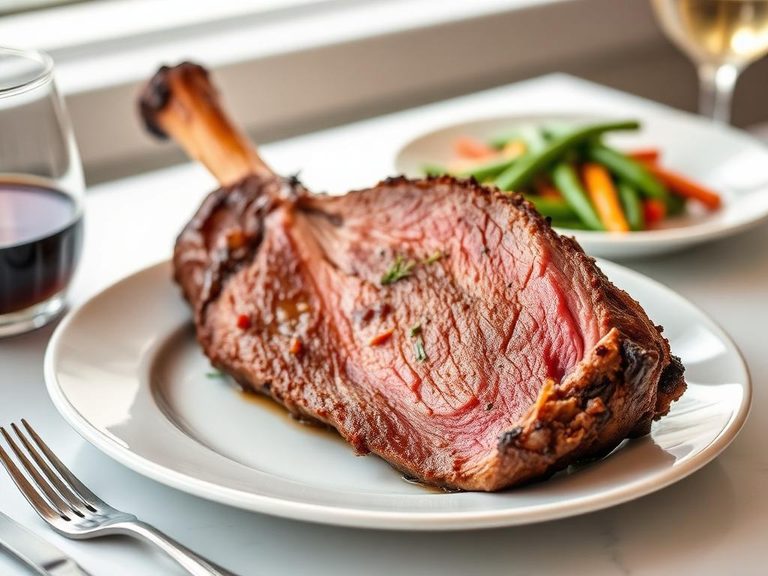
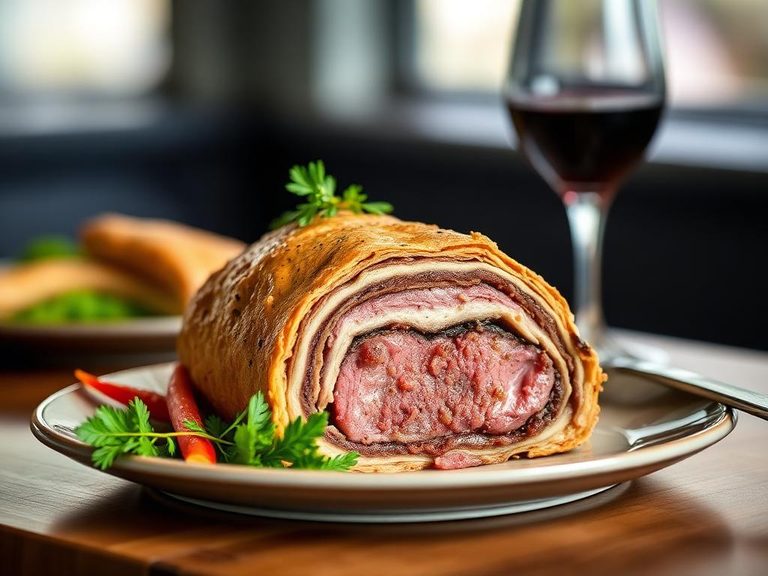
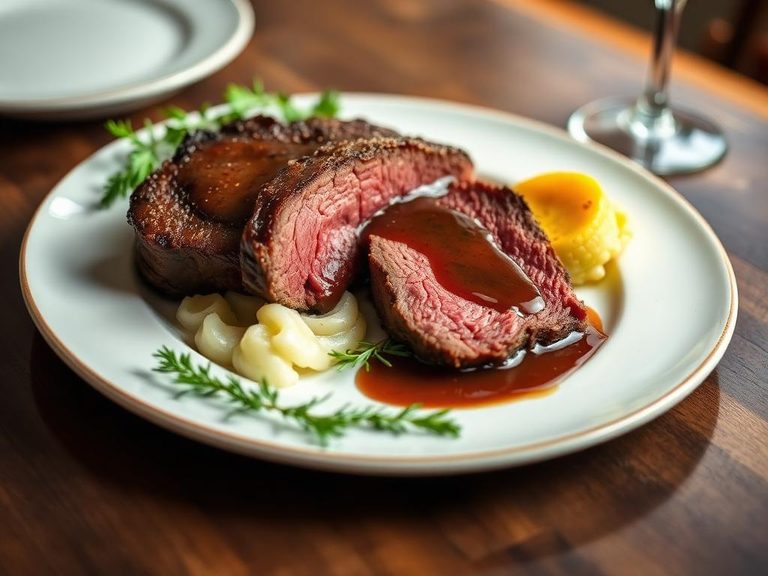
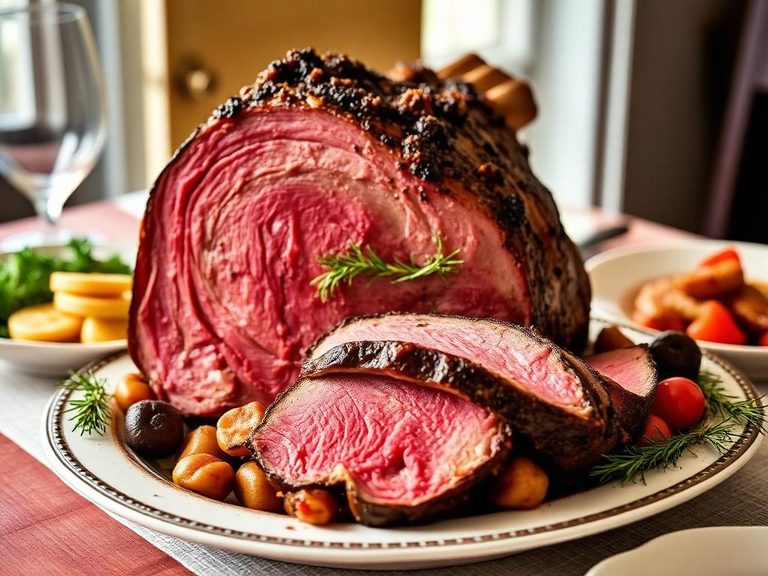
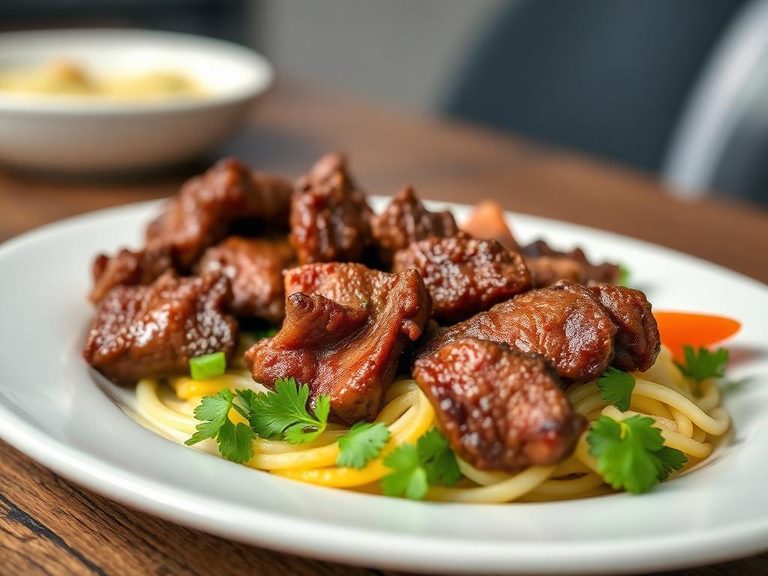
🍽️ Popular dishes
🌍 Where it's eaten
💡 Did you know?
The 'lip-on' designation means the external fat cap is left intact during roasting, which bastes the meat as it cooks, creating a flavorful, crispy crust while keeping the interior exceptionally moist.
Full nutrition (USDA data · scales with serving)
| Water | 52.4 g |
| Energy | 307 kcal |
| Energy | 1283 kj |
| Protein | 23.5 g |
| Total lipid (fat) | 23.6 g |
| Ash | 0.91 g |
| Carbohydrate, by difference | 0.00 g |
| Fiber, total dietary | 0.00 g |
| Total Sugars | 0.00 g |
| Calcium, Ca | 13.0 mg |
| Iron, Fe | 2.1 mg |
| Magnesium, Mg | 21.0 mg |
| Phosphorus, P | 153 mg |
| Potassium, K | 264 mg |
| Sodium, Na | 62.0 mg |
| Zinc, Zn | 5.3 mg |
| Copper, Cu | 0.08 mg |
| Manganese, Mn | 0.08 mg |
| Selenium, Se | 24.6 ug |
| Vitamin C, total ascorbic acid | 0.00 mg |
| Thiamin | 0.10 mg |
| Riboflavin | 0.30 mg |
| Niacin | 4.7 mg |
| Pantothenic acid | 0.61 mg |
| Vitamin B-6 | 0.45 mg |
| Folate, total | 6.0 ug |
| Folic acid | 0.00 ug |
| Folate, food | 6.0 ug |
| Folate, DFE | 6.0 ug |
| Choline, total | 48.7 mg |
| Betaine | 14.2 mg |
| Vitamin B-12 | 2.0 ug |
| Vitamin B-12, added | 0.00 ug |
| Vitamin A, RAE | 8.0 ug |
| Retinol | 8.0 ug |
| Carotene, beta | 0.00 ug |
| Carotene, alpha | 0.00 ug |
| Cryptoxanthin, beta | 0.00 ug |
| Vitamin A, IU | 25.0 iu |
| Lycopene | 0.00 ug |
| Lutein + zeaxanthin | 0.00 ug |
| Vitamin E (alpha-tocopherol) | 0.12 mg |
| Vitamin E, added | 0.00 mg |
| Vitamin D (D2 + D3), International Units | 7.0 iu |
| Vitamin D (D2 + D3) | 0.20 ug |
| Vitamin D3 (cholecalciferol) | 0.20 ug |
| Vitamin K (phylloquinone) | 1.6 ug |
| Alcohol, ethyl | 0.00 g |
| Caffeine | 0.00 mg |
| Theobromine | 0.00 mg |
Fat & fatty acid profile (per 100g)
| Fatty acids, total saturated | 10.1 g |
| SFA 4:0 | 0.00 g |
| SFA 6:0 | 0.00 g |
| SFA 8:0 | 0.00 g |
| SFA 10:0 | 0.02 g |
| SFA 12:0 | 0.02 g |
| SFA 14:0 | 0.67 g |
| SFA 15:0 | 0.14 g |
| SFA 16:0 | 5.4 g |
| SFA 17:0 | 0.32 g |
| SFA 18:0 | 3.5 g |
| SFA 20:0 | 0.02 g |
| SFA 24:0 | 0.01 g |
| Fatty acids, total monounsaturated | 11.2 g |
| MUFA 14:1 | 0.14 g |
| MUFA 15:1 | 0.04 g |
| MUFA 16:1 | 0.75 g |
| MUFA 16:1 c | 0.70 g |
| MUFA 17:1 | 0.20 g |
| MUFA 18:1 | 10.0 g |
| MUFA 18:1 c | 8.7 g |
| MUFA 20:1 | 0.05 g |
| MUFA 22:1 | 0.00 g |
| Fatty acids, total polyunsaturated | 1.1 g |
| PUFA 18:2 | 0.92 g |
| PUFA 18:2 n-6 c,c | 0.72 g |
| PUFA 18:2 CLAs | 0.10 g |
| PUFA 18:3 | 0.04 g |
| PUFA 18:3 n-3 c,c,c (ALA) | 0.04 g |
| PUFA 18:4 | 0.00 g |
| PUFA 20:2 n-6 c,c | 0.00 g |
| PUFA 20:3 | 0.03 g |
| PUFA 20:3 n-6 | 0.03 g |
| PUFA 20:4 | 0.06 g |
| PUFA 20:5 n-3 (EPA) | 0.00 g |
| PUFA 22:5 n-3 (DPA) | 0.01 g |
| PUFA 22:6 n-3 (DHA) | 0.00 g |
| Fatty acids, total trans | 1.5 g |
| Fatty acids, total trans-monoenoic | 1.4 g |
| TFA 16:1 t | 0.05 g |
| TFA 18:1 t | 1.3 g |
| TFA 18:2 t not further defined | 0.09 g |
| Fatty acids, total trans-polyenoic | 0.09 g |
| Cholesterol | 83.0 mg |
Amino acid profile (per 100g)
| Tryptophan | 0.26 g |
| Threonine | 1.1 g |
| Isoleucine | 1.1 g |
| Leucine | 2.0 g |
| Lysine | 2.2 g |
| Methionine | 0.63 g |
| Cystine | 0.24 g |
| Phenylalanine | 0.94 g |
| Tyrosine | 0.87 g |
| Valine | 1.2 g |
| Arginine | 1.6 g |
| Histidine | 0.87 g |
| Alanine | 1.5 g |
| Aspartic acid | 2.3 g |
| Glutamic acid | 3.8 g |
| Glycine | 1.2 g |
| Proline | 1.0 g |
| Serine | 0.96 g |
| Hydroxyproline | 0.16 g |
FAQ
What does 'choice' mean in beef grading?
It's the second-highest USDA quality grade (below Prime), indicating good marbling, tenderness, and flavor, offering excellent value for a premium eating experience.
How is this different from a boneless rib eye roast?
The bone (rib bone) acts as a natural rack during roasting, adding flavor and helping the meat cook more evenly. It also makes for a more dramatic presentation when carved and served.
What's the best way to cook it for maximum tenderness?
Use a two-stage method: sear at high heat first to develop a crust, then roast at a lower temperature (around 325°F/163°C) until your desired doneness. Always let it rest for 15-20 minutes after cooking to allow juices to redistribute.
Nutrient density (calculated · NRF9.3)
Nutrient Rich Foods index: beneficial nutrients (protein, fiber, vitamins, minerals) minus saturated fat, added sugar & sodium, per 100 kcal.
NRF9.3 index — Fulgoni, Keast & Drewnowski, 2009. Computed from USDA nutrients.
Weight-loss friendliness (composite index)
Energy density 3.07 kcal/g · 31% calories from protein · 0.0 g fiber · 0.0 g sugar per 100 g.
Composite of energy density (Rolls et al., 1999), protein & fiber satiety, minus sugar. A calculated heuristic — ranks satiety-per-calorie, not a clinical measure.
Dietary load (calculated from USDA values)
Potential renal acid load. Positive = acid-forming, negative = alkaline-forming.
Sodium-to-potassium ratio: 0.23 (lower is better — aim for ≤ 1)
Sodium:potassium per WHO potassium guidance. Computed from USDA nutrients.