

Beef, plate steak, boneless, outside skirt, separable lean only, trimmed to 0" fat, choice, raw
Whole food · Beef Products

Photo: Wikipedia
The outside skirt steak is a long, thin, and intensely flavorful cut from the diaphragm muscle, prized for its deep beefy taste and distinctive, loose-grained texture. When trimmed of fat and prepared raw, it's a lean powerhouse, delivering a robust protein punch with minimal carbohydrates. Its coarse grain makes it ideal for quick, high-heat cooking methods like grilling, where it develops a fantastic char while remaining tender inside.
Calorie split: 35% protein · 0% carbs · 65% fat
↓ Full nutrition💚 Why it's loved
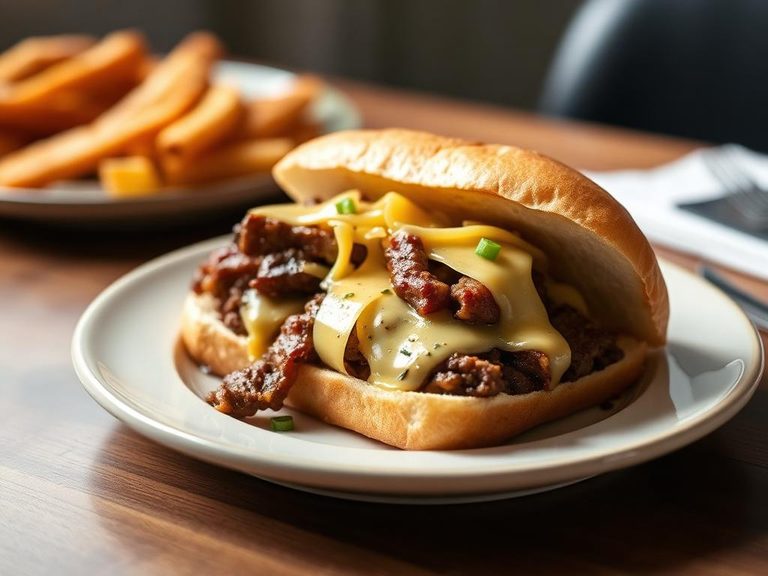
People love skirt steak for its bold, beefy flavor that stands up to strong marinades and grilling. Its unique texture and ability to cook quickly make it a favorite for dishes like fajitas and steak sandwiches, offering a satisfying, meaty bite.
⚠️ Watch-outs & how to enjoy it better
The coarse grain can be tough if overcooked or sliced incorrectly, and it's a relatively high-fat cut even when trimmed, which may concern those monitoring saturated fat intake. To counteract toughness, always slice thinly against the grain, and consider pairing it with fiber-rich vegetables like grilled peppers or a side salad to balance the meal.
Key benefits
- Excellent source of high-quality protein (18.5g per 100g)
- Very low in carbohydrates and sugars
- Rich in essential minerals like iron and zinc
- Provides B vitamins, especially B12, for energy metabolism
- A lean cut when trimmed, offering flavor without excessive fat
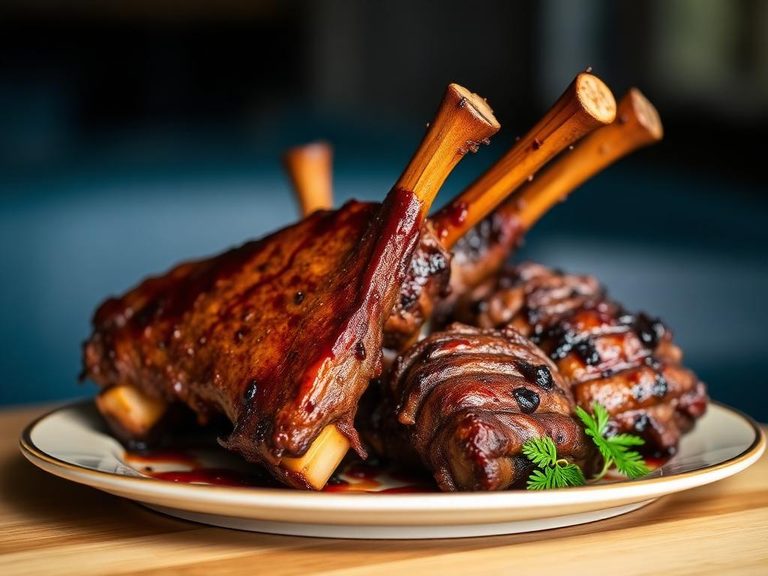
🍽️ Popular dishes
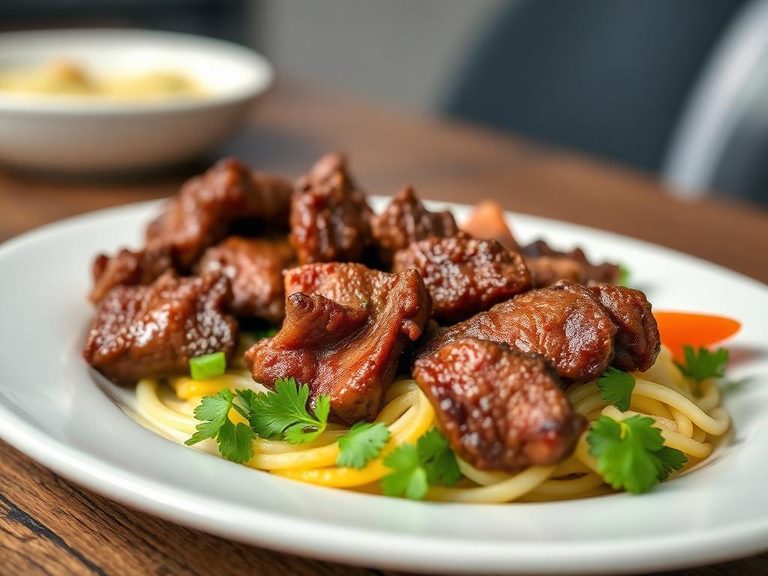
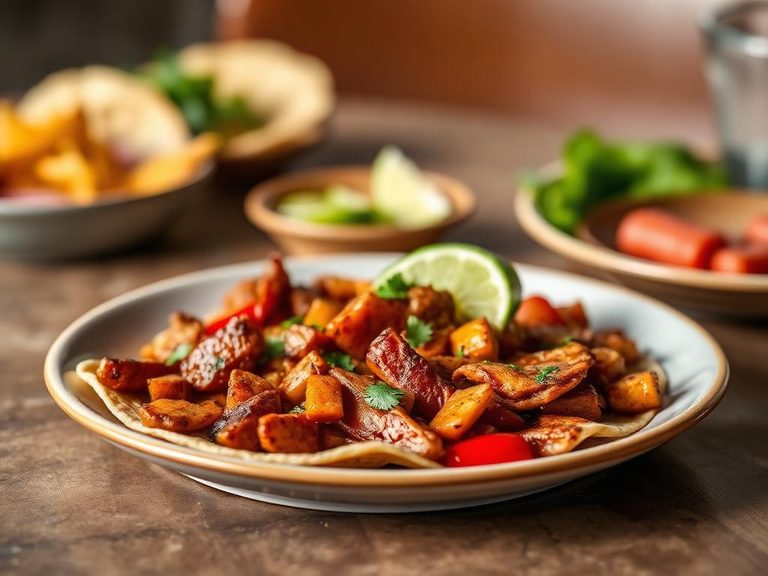
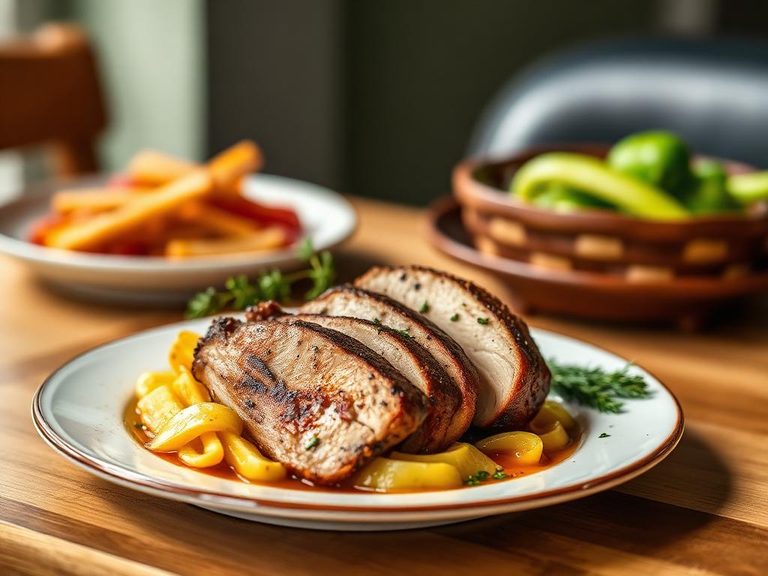
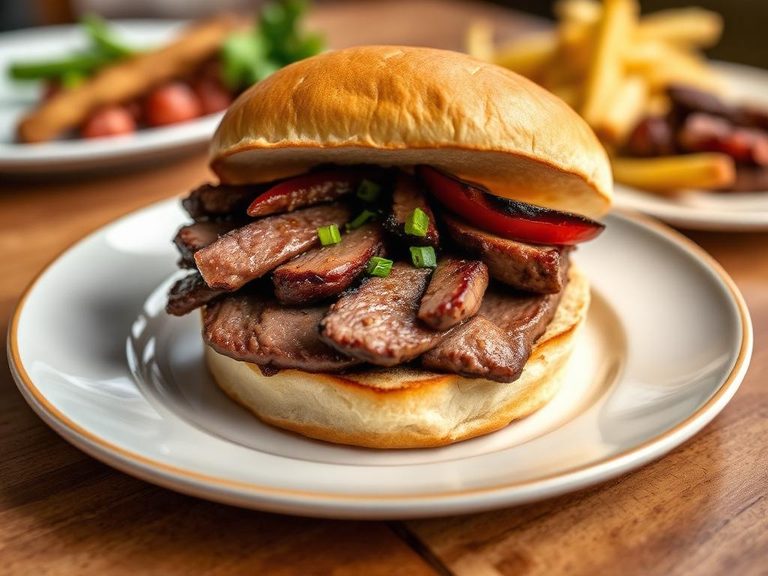
🌍 Where it's eaten
💡 Did you know?
Skirt steak was historically considered a 'butcher's cut' and was often kept by butchers for themselves due to its rich flavor, before becoming a popular menu item in the 1980s thanks to the fajita craze.
Full nutrition (USDA data · scales with serving)
| Water | 65.2 g |
| Energy | 212 kcal |
| Energy | 886 kj |
| Protein | 18.5 g |
| Total lipid (fat) | 15.3 g |
| Ash | 0.92 g |
| Carbohydrate, by difference | 0.17 g |
| Fiber, total dietary | 0.00 g |
| Total Sugars | 0.00 g |
| Calcium, Ca | 5.0 mg |
| Iron, Fe | 3.5 mg |
| Magnesium, Mg | 20.0 mg |
| Phosphorus, P | 147 mg |
| Potassium, K | 251 mg |
| Sodium, Na | 68.0 mg |
| Zinc, Zn | 4.7 mg |
| Copper, Cu | 0.18 mg |
| Manganese, Mn | 0.18 mg |
| Selenium, Se | 23.7 ug |
| Vitamin C, total ascorbic acid | 0.00 mg |
| Thiamin | 0.11 mg |
| Riboflavin | 0.60 mg |
| Niacin | 4.2 mg |
| Pantothenic acid | 1.2 mg |
| Vitamin B-6 | 0.39 mg |
| Folate, total | 3.0 ug |
| Folic acid | 0.00 ug |
| Folate, food | 3.0 ug |
| Folate, DFE | 3.0 ug |
| Choline, total | 58.0 mg |
| Betaine | 15.3 mg |
| Vitamin B-12 | 5.8 ug |
| Vitamin B-12, added | 0.00 ug |
| Vitamin A, RAE | 2.0 ug |
| Retinol | 2.0 ug |
| Carotene, beta | 0.00 ug |
| Carotene, alpha | 0.00 ug |
| Cryptoxanthin, beta | 0.00 ug |
| Vitamin A, IU | 7.0 iu |
| Lycopene | 0.00 ug |
| Lutein + zeaxanthin | 0.00 ug |
| Vitamin E (alpha-tocopherol) | 0.16 mg |
| Vitamin E, added | 0.00 mg |
| Vitamin D (D2 + D3), International Units | 6.0 iu |
| Vitamin D (D2 + D3) | 0.20 ug |
| Vitamin D3 (cholecalciferol) | 0.20 ug |
| Vitamin K (phylloquinone) | 1.5 ug |
| Alcohol, ethyl | 0.00 g |
| Caffeine | 0.00 mg |
| Theobromine | 0.00 mg |
Fat & fatty acid profile (per 100g)
| Fatty acids, total saturated | 5.8 g |
| SFA 4:0 | 0.00 g |
| SFA 6:0 | 0.00 g |
| SFA 8:0 | 0.00 g |
| SFA 10:0 | 0.01 g |
| SFA 12:0 | 0.01 g |
| SFA 14:0 | 0.34 g |
| SFA 15:0 | 0.06 g |
| SFA 16:0 | 3.0 g |
| SFA 17:0 | 0.19 g |
| SFA 18:0 | 2.2 g |
| SFA 20:0 | 0.01 g |
| SFA 24:0 | 0.01 g |
| Fatty acids, total monounsaturated | 6.4 g |
| MUFA 14:1 | 0.06 g |
| MUFA 15:1 | 0.07 g |
| MUFA 16:1 | 0.35 g |
| MUFA 16:1 c | 0.34 g |
| MUFA 17:1 | 0.12 g |
| MUFA 18:1 | 5.7 g |
| MUFA 18:1 c | 5.0 g |
| MUFA 20:1 | 0.02 g |
| MUFA 22:1 | 0.00 g |
| Fatty acids, total polyunsaturated | 0.80 g |
| PUFA 18:2 | 0.65 g |
| PUFA 18:2 n-6 c,c | 0.58 g |
| PUFA 18:2 CLAs | 0.05 g |
| PUFA 18:3 | 0.02 g |
| PUFA 18:3 n-3 c,c,c (ALA) | 0.02 g |
| PUFA 18:4 | 0.00 g |
| PUFA 20:2 n-6 c,c | 0.00 g |
| PUFA 20:3 | 0.03 g |
| PUFA 20:3 n-6 | 0.03 g |
| PUFA 20:4 | 0.08 g |
| PUFA 20:5 n-3 (EPA) | 0.01 g |
| PUFA 22:5 n-3 (DPA) | 0.01 g |
| PUFA 22:6 n-3 (DHA) | 0.00 g |
| Fatty acids, total trans | 0.77 g |
| Fatty acids, total trans-monoenoic | 0.76 g |
| TFA 16:1 t | 0.00 g |
| TFA 18:1 t | 0.75 g |
| TFA 18:2 t not further defined | 0.01 g |
| Fatty acids, total trans-polyenoic | 0.01 g |
| Cholesterol | 70.0 mg |
Amino acid profile (per 100g)
| Tryptophan | 0.22 g |
| Threonine | 0.91 g |
| Isoleucine | 0.90 g |
| Leucine | 1.7 g |
| Lysine | 1.8 g |
| Methionine | 0.51 g |
| Cystine | 0.19 g |
| Phenylalanine | 0.77 g |
| Tyrosine | 0.72 g |
| Valine | 0.95 g |
| Arginine | 1.3 g |
| Histidine | 0.71 g |
| Alanine | 1.2 g |
| Aspartic acid | 1.9 g |
| Glutamic acid | 3.1 g |
| Glycine | 0.83 g |
| Proline | 0.81 g |
| Serine | 0.78 g |
| Hydroxyproline | 0.09 g |
FAQ
What is the best way to cook skirt steak?
The best method is high-heat grilling or pan-searing for a short time (2-3 minutes per side) to get a good crust while keeping the inside tender. Always let it rest before slicing.
How should I slice skirt steak?
Always slice thinly against the grain (perpendicular to the muscle fibers) to break up the tough fibers and make it more tender and easier to chew.
Is skirt steak a healthy choice?
Yes, it's a lean, protein-rich cut with minimal carbs, making it suitable for low-carb or high-protein diets. However, it does contain some saturated fat, so moderation is key for those watching fat intake.
Nutrient density (calculated · NRF9.3)
Nutrient Rich Foods index: beneficial nutrients (protein, fiber, vitamins, minerals) minus saturated fat, added sugar & sodium, per 100 kcal.
NRF9.3 index — Fulgoni, Keast & Drewnowski, 2009. Computed from USDA nutrients.
Weight-loss friendliness (composite index)
Energy density 2.12 kcal/g · 35% calories from protein · 0.0 g fiber · 0.0 g sugar per 100 g.
Composite of energy density (Rolls et al., 1999), protein & fiber satiety, minus sugar. A calculated heuristic — ranks satiety-per-calorie, not a clinical measure.
Dietary load (calculated from USDA values)
Potential renal acid load. Positive = acid-forming, negative = alkaline-forming.
Sodium-to-potassium ratio: 0.27 (lower is better — aim for ≤ 1)
Sodium:potassium per WHO potassium guidance. Computed from USDA nutrients.