

Beef, plate steak, boneless, outside skirt, separable lean only, trimmed to 0" fat, all grades, raw
Whole food · Beef Products

Photo: Wikipedia
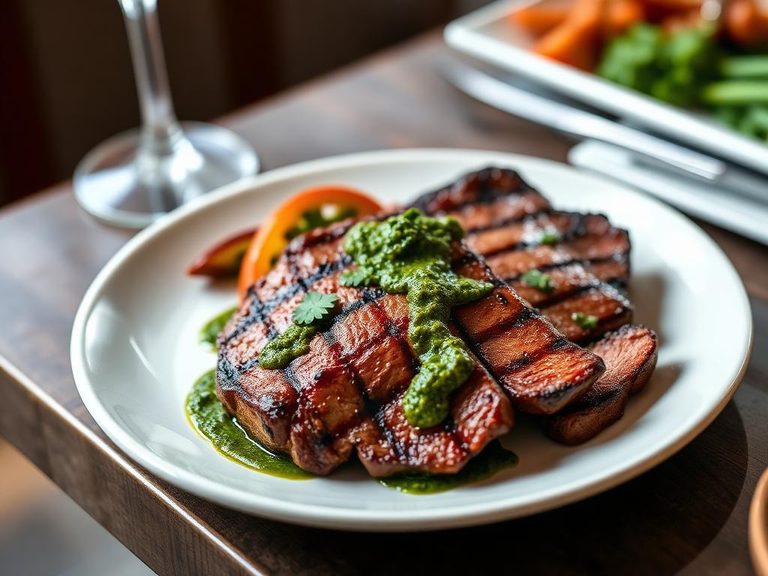
This is the lean, outer skirt muscle of the beef plate, prized for its intense, beefy flavor and distinct, coarse grain. When raw, it's a deep red, long, flat cut that transforms into a tender, juicy steak when sliced against the grain after quick, high-heat cooking. Nutritionally, it's a powerhouse of high-quality protein with minimal carbohydrates and a moderate amount of fat.
Calorie split: 36% protein · 0% carbs · 63% fat
↓ Full nutrition💚 Why it's loved
People love outside skirt steak for its robust, almost mineral-rich beef flavor that stands up boldly to marinades and chimichurri. It's the classic, essential cut for authentic Mexican carne asada and Argentinian parrilla, making it a cultural staple for grilling.
⚠️ Watch-outs & how to enjoy it better
Its coarse grain and connective tissue can make it tough if overcooked or sliced incorrectly. To counteract this, always marinate to tenderize, cook quickly over very high heat (grill or cast-iron), and slice thinly against the grain before serving. It is also a common trigger for histamine intolerance in sensitive individuals.
Key benefits
- Excellent source of complete, high-quality protein for muscle maintenance.
- Very low in carbohydrates (0.19g per 100g), making it ideal for low-carb diets.
- Rich in essential minerals like iron and zinc.
- Provides a good amount of B vitamins, particularly B12.
- The lean trim means less saturated fat compared to fattier cuts.
🍽️ Popular dishes
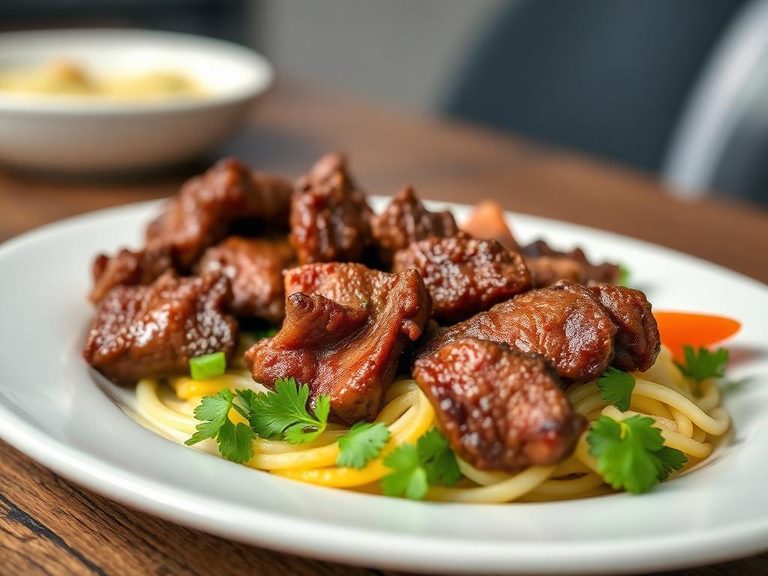
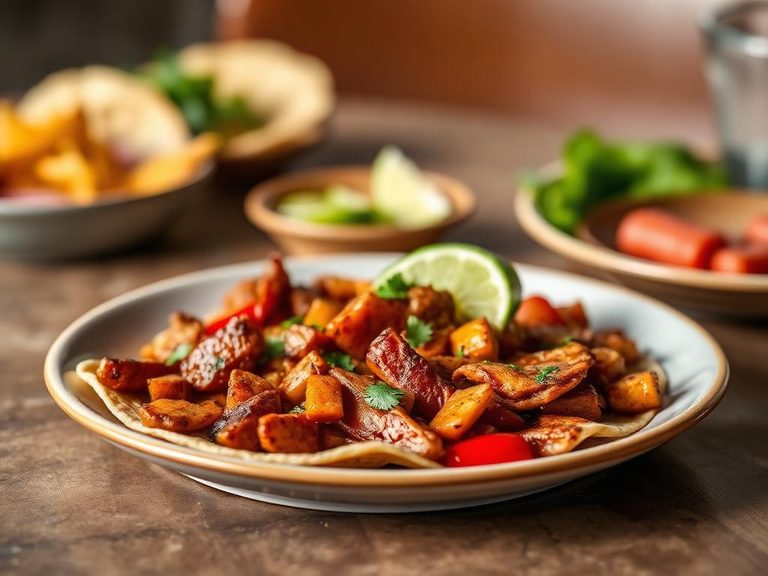
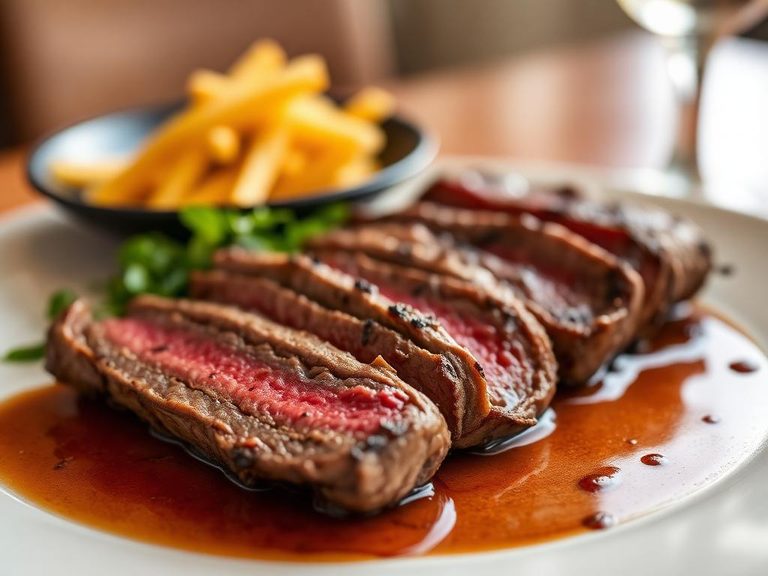
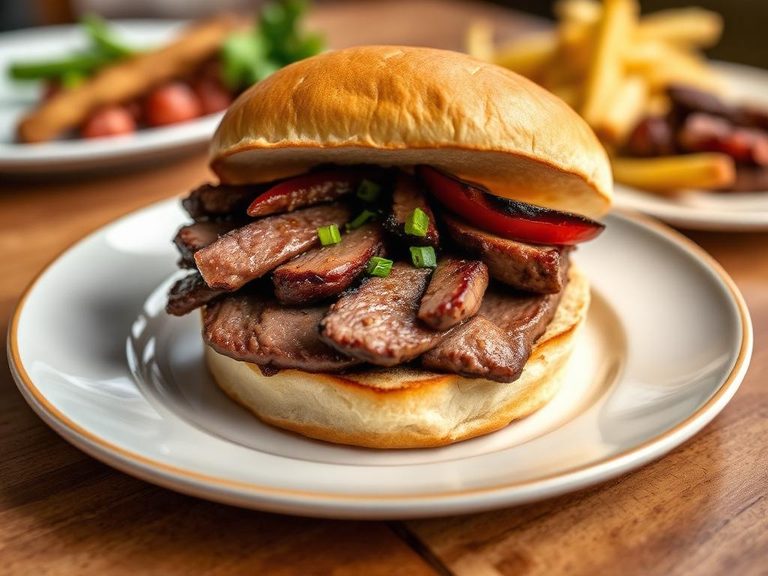
🌍 Where it's eaten
💡 Did you know?
The skirt steak is the diaphragm muscle of the cow, which is why it's a long, flat sheet of meat with a pronounced grain running its entire length.
Full nutrition (USDA data · scales with serving)
| Water | 65.6 g |
| Energy | 206 kcal |
| Energy | 864 kj |
| Protein | 18.7 g |
| Total lipid (fat) | 14.5 g |
| Ash | 0.94 g |
| Carbohydrate, by difference | 0.19 g |
| Fiber, total dietary | 0.00 g |
| Total Sugars | 0.00 g |
| Calcium, Ca | 5.0 mg |
| Iron, Fe | 3.6 mg |
| Magnesium, Mg | 20.0 mg |
| Phosphorus, P | 148 mg |
| Potassium, K | 253 mg |
| Sodium, Na | 67.0 mg |
| Zinc, Zn | 5.0 mg |
| Copper, Cu | 0.18 mg |
| Manganese, Mn | 0.18 mg |
| Selenium, Se | 23.7 ug |
| Vitamin C, total ascorbic acid | 0.00 mg |
| Thiamin | 0.11 mg |
| Riboflavin | 0.59 mg |
| Niacin | 4.3 mg |
| Pantothenic acid | 1.2 mg |
| Vitamin B-6 | 0.40 mg |
| Folate, total | 3.0 ug |
| Folic acid | 0.00 ug |
| Folate, food | 3.0 ug |
| Folate, DFE | 3.0 ug |
| Choline, total | 58.7 mg |
| Betaine | 13.9 mg |
| Vitamin B-12 | 5.5 ug |
| Vitamin B-12, added | 0.00 ug |
| Vitamin A, RAE | 2.0 ug |
| Retinol | 2.0 ug |
| Carotene, beta | 0.00 ug |
| Carotene, alpha | 0.00 ug |
| Cryptoxanthin, beta | 0.00 ug |
| Vitamin A, IU | 8.0 iu |
| Lycopene | 0.00 ug |
| Lutein + zeaxanthin | 0.00 ug |
| Vitamin E (alpha-tocopherol) | 0.14 mg |
| Vitamin E, added | 0.00 mg |
| Vitamin D (D2 + D3), International Units | 6.0 iu |
| Vitamin D (D2 + D3) | 0.20 ug |
| Vitamin D3 (cholecalciferol) | 0.20 ug |
| Vitamin K (phylloquinone) | 1.5 ug |
| Alcohol, ethyl | 0.00 g |
| Caffeine | 0.00 mg |
| Theobromine | 0.00 mg |
Fat & fatty acid profile (per 100g)
| Fatty acids, total saturated | 5.6 g |
| SFA 4:0 | 0.00 g |
| SFA 6:0 | 0.00 g |
| SFA 8:0 | 0.00 g |
| SFA 10:0 | 0.01 g |
| SFA 12:0 | 0.01 g |
| SFA 14:0 | 0.33 g |
| SFA 15:0 | 0.06 g |
| SFA 16:0 | 2.9 g |
| SFA 17:0 | 0.18 g |
| SFA 18:0 | 2.1 g |
| SFA 20:0 | 0.01 g |
| SFA 24:0 | 0.01 g |
| Fatty acids, total monounsaturated | 6.1 g |
| MUFA 14:1 | 0.06 g |
| MUFA 15:1 | 0.07 g |
| MUFA 16:1 | 0.33 g |
| MUFA 16:1 c | 0.33 g |
| MUFA 17:1 | 0.11 g |
| MUFA 18:1 | 5.5 g |
| MUFA 18:1 c | 4.8 g |
| MUFA 20:1 | 0.02 g |
| MUFA 22:1 | 0.00 g |
| Fatty acids, total polyunsaturated | 0.77 g |
| PUFA 18:2 | 0.62 g |
| PUFA 18:2 n-6 c,c | 0.56 g |
| PUFA 18:2 CLAs | 0.05 g |
| PUFA 18:3 | 0.02 g |
| PUFA 18:3 n-3 c,c,c (ALA) | 0.02 g |
| PUFA 18:4 | 0.00 g |
| PUFA 20:2 n-6 c,c | 0.00 g |
| PUFA 20:3 | 0.02 g |
| PUFA 20:3 n-6 | 0.02 g |
| PUFA 20:4 | 0.08 g |
| PUFA 20:5 n-3 (EPA) | 0.01 g |
| PUFA 22:5 n-3 (DPA) | 0.01 g |
| PUFA 22:6 n-3 (DHA) | 0.00 g |
| Fatty acids, total trans | 0.74 g |
| Fatty acids, total trans-monoenoic | 0.73 g |
| TFA 16:1 t | 0.00 g |
| TFA 18:1 t | 0.73 g |
| TFA 18:2 t not further defined | 0.01 g |
| Fatty acids, total trans-polyenoic | 0.01 g |
| Cholesterol | 69.0 mg |
Amino acid profile (per 100g)
| Tryptophan | 0.23 g |
| Threonine | 0.96 g |
| Isoleucine | 0.95 g |
| Leucine | 1.8 g |
| Lysine | 2.0 g |
| Methionine | 0.54 g |
| Cystine | 0.21 g |
| Phenylalanine | 0.82 g |
| Tyrosine | 0.77 g |
| Valine | 1.0 g |
| Arginine | 1.4 g |
| Histidine | 0.76 g |
| Alanine | 1.2 g |
| Aspartic acid | 2.0 g |
| Glutamic acid | 3.3 g |
| Glycine | 0.88 g |
| Proline | 0.86 g |
| Serine | 0.83 g |
| Hydroxyproline | 0.10 g |
FAQ
What's the difference between inside and outside skirt steak?
The outside skirt is the more prized, uniform, and tender of the two. The inside skirt is thinner, more irregularly shaped, and often has more connective tissue, making it slightly tougher.
How do I prevent skirt steak from getting chewy?
The two keys are: 1) Do not cook past medium (135°F/57°C internal temp), and 2) Always slice it thinly against the grain. The grain is very visible; cutting perpendicular to those long fibers shortens them, making each bite tender.
Is skirt steak good for stir-fries?
Yes, it's excellent. Its strong flavor holds up well to sauces. Slice it very thinly against the grain before cooking, and stir-fry it quickly over very high heat for best results.
Nutrient density (calculated · NRF9.3)
Nutrient Rich Foods index: beneficial nutrients (protein, fiber, vitamins, minerals) minus saturated fat, added sugar & sodium, per 100 kcal.
NRF9.3 index — Fulgoni, Keast & Drewnowski, 2009. Computed from USDA nutrients.
Weight-loss friendliness (composite index)
Energy density 2.06 kcal/g · 36% calories from protein · 0.0 g fiber · 0.0 g sugar per 100 g.
Composite of energy density (Rolls et al., 1999), protein & fiber satiety, minus sugar. A calculated heuristic — ranks satiety-per-calorie, not a clinical measure.
Dietary load (calculated from USDA values)
Potential renal acid load. Positive = acid-forming, negative = alkaline-forming.
Sodium-to-potassium ratio: 0.26 (lower is better — aim for ≤ 1)
Sodium:potassium per WHO potassium guidance. Computed from USDA nutrients.