

Beef, chuck, shoulder clod, shoulder tender, medallion, separable lean and fat, trimmed to 0" fat, select, cooked, grilled
Whole food · Beef Products

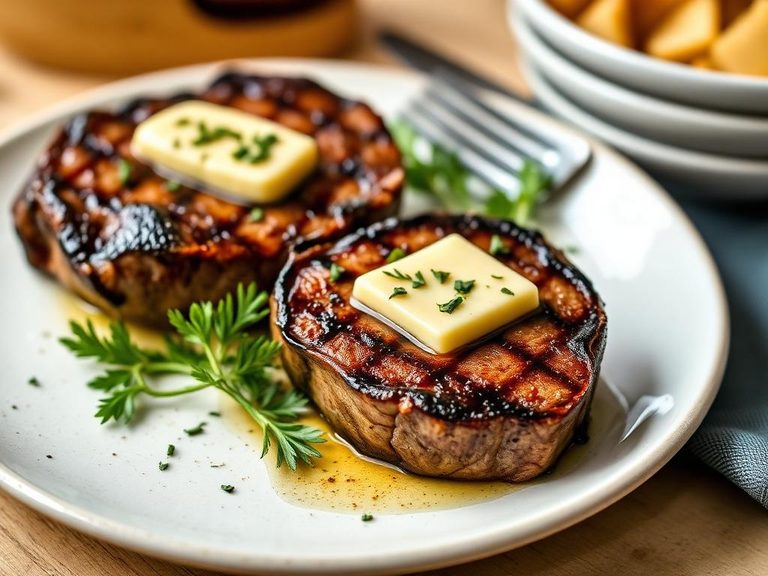
Photo: Wikipedia
This is a lean, premium cut from the beef shoulder, specifically the shoulder tender medallion, trimmed to near-zero fat. When grilled, it develops a rich, beefy flavor with a firm yet tender texture that's less marbled than ribeye but deeply satisfying. Its standout nutritional feature is its exceptional protein-to-calorie ratio, making it a powerhouse for muscle maintenance.
Calorie split: 64% protein · 1% carbs · 35% fat
↓ Full nutrition💚 Why it's loved
People love it for its robust, clean beef flavor that shines with simple seasoning and high-heat cooking. It's prized by athletes and health-conscious cooks for being a lean yet flavorful protein source that doesn't sacrifice taste for nutrition.
⚠️ Watch-outs & how to enjoy it better
Because it's so lean, it can become tough or dry if overcooked, which is a common pitfall. To counteract this, use a meat thermometer, cook to medium-rare or medium, and let it rest after grilling to redistribute juices. Pairing it with a flavorful sauce or compound butter can also add moisture.
Key benefits
- Excellent source of high-quality protein (26g per 100g)
- Very low in carbohydrates and sugars
- Provides essential minerals like zinc and iron
- Low in fat, especially saturated fat, due to trimming
- Supports muscle growth and repair
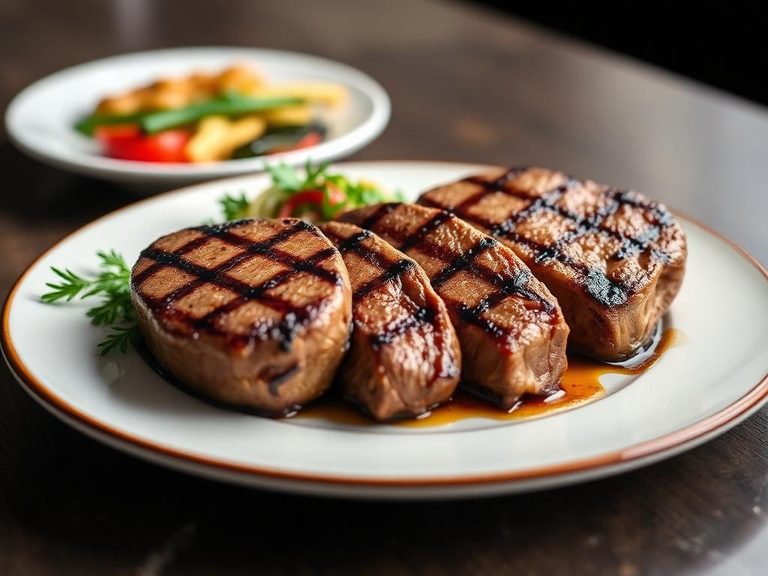
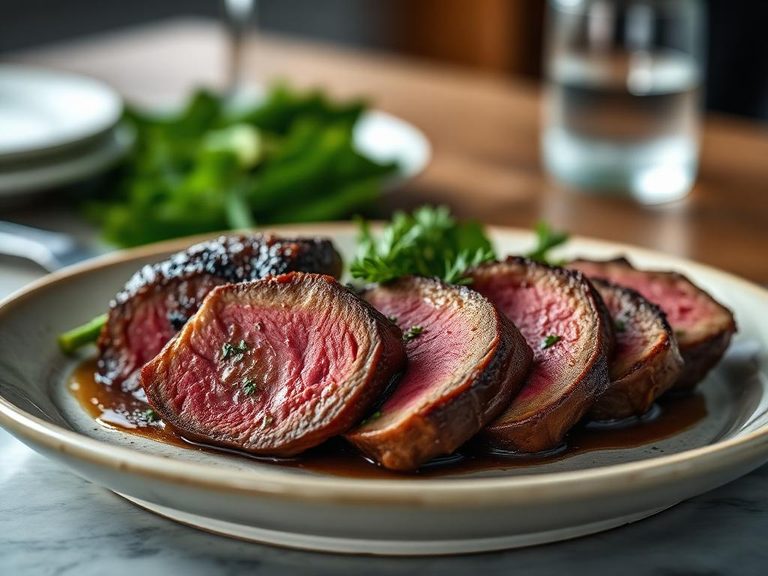
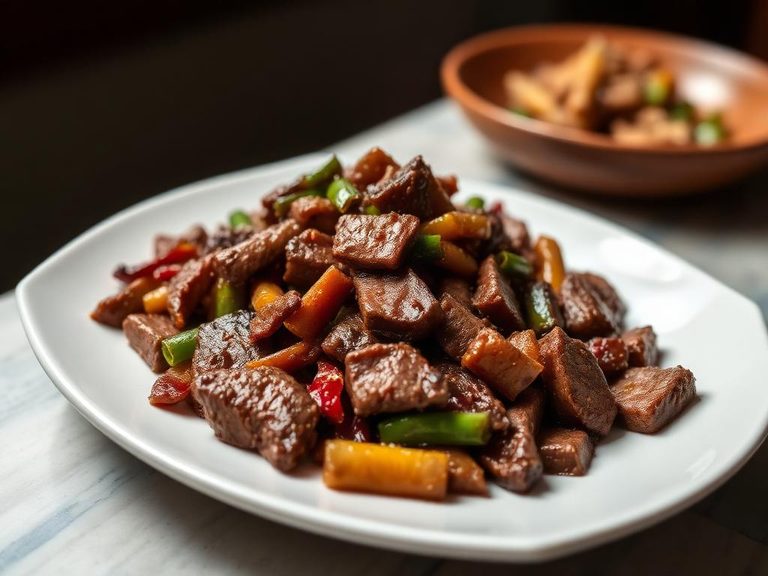
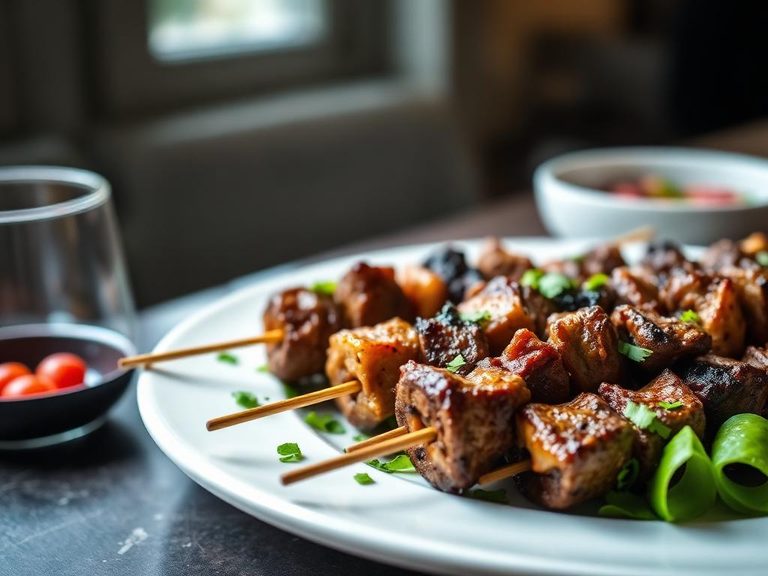
🍽️ Popular dishes
🌍 Where it's eaten
💡 Did you know?
The 'shoulder tender' is sometimes called the 'mock tender' or 'scotch tender' because it mimics the tenderness of a true tenderloin at a lower cost, but it requires precise cooking to avoid toughness.
Full nutrition (USDA data · scales with serving)
| Water | 65.8 g |
| Energy | 172 kcal |
| Energy | 721 kj |
| Protein | 26.4 g |
| Total lipid (fat) | 6.4 g |
| Ash | 1.0 g |
| Carbohydrate, by difference | 0.33 g |
| Fiber, total dietary | 0.00 g |
| Total Sugars | 0.00 g |
| Calcium, Ca | 5.0 mg |
| Iron, Fe | 2.6 mg |
| Magnesium, Mg | 24.0 mg |
| Phosphorus, P | 223 mg |
| Potassium, K | 348 mg |
| Sodium, Na | 58.0 mg |
| Zinc, Zn | 5.2 mg |
| Copper, Cu | 0.25 mg |
| Manganese, Mn | 0.02 mg |
| Selenium, Se | 38.3 ug |
| Vitamin C, total ascorbic acid | 0.00 mg |
| Thiamin | 0.07 mg |
| Riboflavin | 0.35 mg |
| Niacin | 5.5 mg |
| Pantothenic acid | 0.85 mg |
| Vitamin B-6 | 0.61 mg |
| Folate, total | 8.0 ug |
| Folic acid | 0.00 ug |
| Folate, food | 8.0 ug |
| Folate, DFE | 8.0 ug |
| Choline, total | 113 mg |
| Betaine | 13.1 mg |
| Vitamin B-12 | 6.0 ug |
| Vitamin B-12, added | 0.00 ug |
| Vitamin A, RAE | 0.00 ug |
| Retinol | 0.00 ug |
| Carotene, beta | 0.00 ug |
| Carotene, alpha | 0.00 ug |
| Cryptoxanthin, beta | 0.00 ug |
| Vitamin A, IU | 0.00 iu |
| Lycopene | 0.00 ug |
| Lutein + zeaxanthin | 0.00 ug |
| Vitamin E (alpha-tocopherol) | 0.17 mg |
| Vitamin E, added | 0.00 mg |
| Tocopherol, beta | 0.00 mg |
| Tocopherol, gamma | 0.03 mg |
| Tocopherol, delta | 0.00 mg |
| Tocotrienol, alpha | 0.01 mg |
| Tocotrienol, beta | 0.00 mg |
| Tocotrienol, gamma | 0.00 mg |
| Tocotrienol, delta | 0.00 mg |
| Vitamin K (phylloquinone) | 0.20 ug |
| Vitamin K (Dihydrophylloquinone) | 0.00 ug |
| Vitamin K (Menaquinone-4) | 1.3 ug |
| Alcohol, ethyl | 0.00 g |
| Caffeine | 0.00 mg |
| Theobromine | 0.00 mg |
Fat & fatty acid profile (per 100g)
| Fatty acids, total saturated | 1.7 g |
| SFA 4:0 | 0.00 g |
| SFA 6:0 | 0.00 g |
| SFA 8:0 | 0.00 g |
| SFA 10:0 | 0.00 g |
| SFA 12:0 | 0.00 g |
| SFA 14:0 | 0.12 g |
| SFA 15:0 | 0.02 g |
| SFA 16:0 | 0.95 g |
| SFA 17:0 | 0.05 g |
| SFA 18:0 | 0.54 g |
| SFA 20:0 | 0.00 g |
| SFA 22:0 | 0.01 g |
| Fatty acids, total monounsaturated | 3.3 g |
| MUFA 14:1 | 0.03 g |
| MUFA 15:1 | 0.00 g |
| MUFA 16:1 | 0.12 g |
| MUFA 17:1 | 0.00 g |
| MUFA 18:1 | 1.6 g |
| MUFA 18:1 c | 1.4 g |
| MUFA 20:1 | 0.01 g |
| Fatty acids, total polyunsaturated | 0.49 g |
| PUFA 18:2 | 0.22 g |
| PUFA 18:2 n-6 c,c | 0.18 g |
| PUFA 18:3 | 0.01 g |
| PUFA 18:3 n-3 c,c,c (ALA) | 0.01 g |
| PUFA 18:3 n-6 c,c,c | 0.00 g |
| PUFA 18:4 | 0.00 g |
| PUFA 20:2 n-6 c,c | 0.00 g |
| PUFA 20:3 | 0.00 g |
| PUFA 20:4 | 0.04 g |
| Fatty acids, total trans | 0.18 g |
| Fatty acids, total trans-monoenoic | 0.14 g |
| TFA 18:1 t | 0.14 g |
| TFA 18:2 t,t | 0.03 g |
| Fatty acids, total trans-polyenoic | 0.03 g |
| Cholesterol | 80.0 mg |
Amino acid profile (per 100g)
| Tryptophan | 0.17 g |
| Threonine | 1.1 g |
| Isoleucine | 1.2 g |
| Leucine | 2.1 g |
| Lysine | 2.2 g |
| Methionine | 0.69 g |
| Cystine | 0.34 g |
| Phenylalanine | 1.0 g |
| Tyrosine | 0.84 g |
| Valine | 1.3 g |
| Arginine | 1.7 g |
| Histidine | 0.84 g |
| Alanine | 1.6 g |
| Aspartic acid | 2.4 g |
| Glutamic acid | 4.0 g |
| Glycine | 1.6 g |
| Proline | 1.3 g |
| Serine | 1.0 g |
| Hydroxyproline | 0.28 g |
FAQ
Is this the same as beef tenderloin?
No. The shoulder tender (or mock tender) comes from the shoulder clod, while true tenderloin (filet mignon) is from the loin. It's leaner and more affordable but requires careful cooking to be tender.
What's the best way to cook it to avoid it being tough?
Quick, high-heat methods like grilling or pan-searing are ideal. Cook to an internal temperature of 135°F (57°C) for medium-rare, and always let it rest for 5-10 minutes before slicing against the grain.
Can I use this cut for slow cooking or stews?
It's not the best choice. Its low fat content means it won't break down and become tender with long, moist cooking. It's best for fast, dry-heat methods.
Nutrient density (calculated · NRF9.3)
Nutrient Rich Foods index: beneficial nutrients (protein, fiber, vitamins, minerals) minus saturated fat, added sugar & sodium, per 100 kcal.
NRF9.3 index — Fulgoni, Keast & Drewnowski, 2009. Computed from USDA nutrients.
Weight-loss friendliness (composite index)
Energy density 1.72 kcal/g · 62% calories from protein · 0.0 g fiber · 0.0 g sugar per 100 g.
Composite of energy density (Rolls et al., 1999), protein & fiber satiety, minus sugar. A calculated heuristic — ranks satiety-per-calorie, not a clinical measure.
Dietary load (calculated from USDA values)
Potential renal acid load. Positive = acid-forming, negative = alkaline-forming.
Sodium-to-potassium ratio: 0.17 (lower is better — aim for ≤ 1)
Sodium:potassium per WHO potassium guidance. Computed from USDA nutrients.