

Beef, chuck, shoulder clod, shoulder tender, medallion, separable lean and fat, trimmed to 0" fat, choice, cooked, grilled
Whole food · Beef Products

Photo: Wikipedia
This is a lean, tender cut from the beef chuck shoulder, specifically the shoulder tender medallion, trimmed of all visible fat and grilled to a juicy finish. It offers a robust, beefy flavor with a fine, melt-in-your-mouth texture that's less fibrous than other chuck cuts. Nutritionally, it's a powerhouse of high-quality protein with minimal fat and zero carbohydrates.
Calorie split: 60% protein · 0% carbs · 40% fat
↓ Full nutrition💚 Why it's loved
People adore this cut for its perfect balance of deep, savory beef flavor and exceptional tenderness when grilled properly. Its uniform medallion shape makes it incredibly versatile for quick-cooking methods, delivering a steakhouse-quality experience at home.
⚠️ Watch-outs & how to enjoy it better
As a red meat, it is high in saturated fat and cholesterol, which should be consumed in moderation. Those managing heart health or following a strict low-fat diet should be cautious. To counteract, practice portion control (stick to a 3-4 oz serving), pair with fiber-rich vegetables like broccoli or asparagus, and trim any remaining fat meticulously before cooking.
Key benefits
- Excellent source of complete protein (26g per 100g)
- Very low in fat for a red meat (7.68g per 100g)
- Carb-free and sugar-free, ideal for low-carb diets
- Rich in iron, zinc, and B vitamins like B12
🍽️ Popular dishes
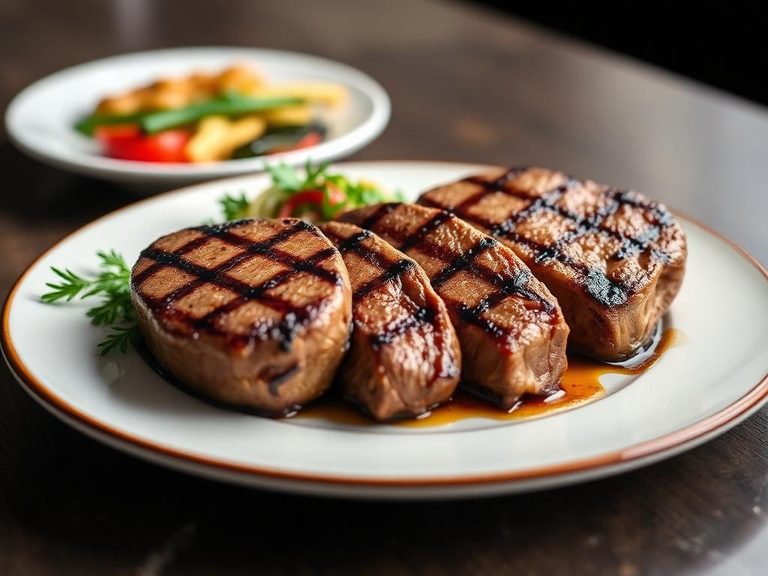
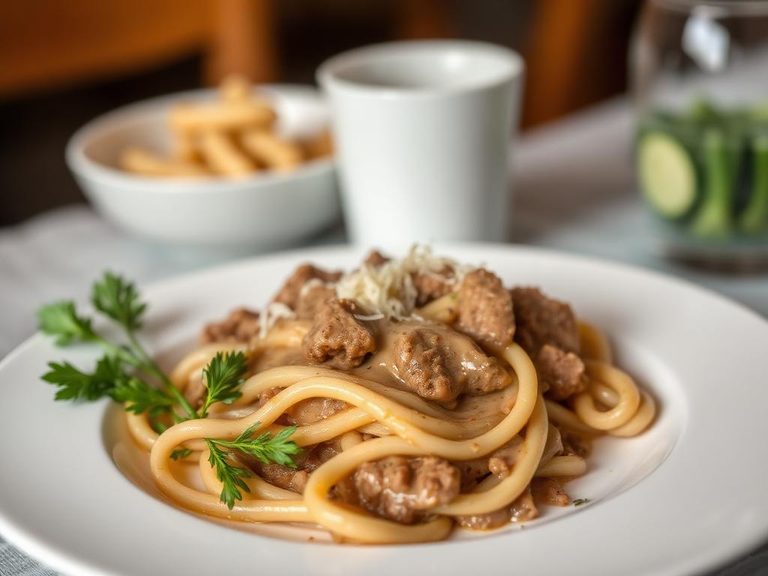
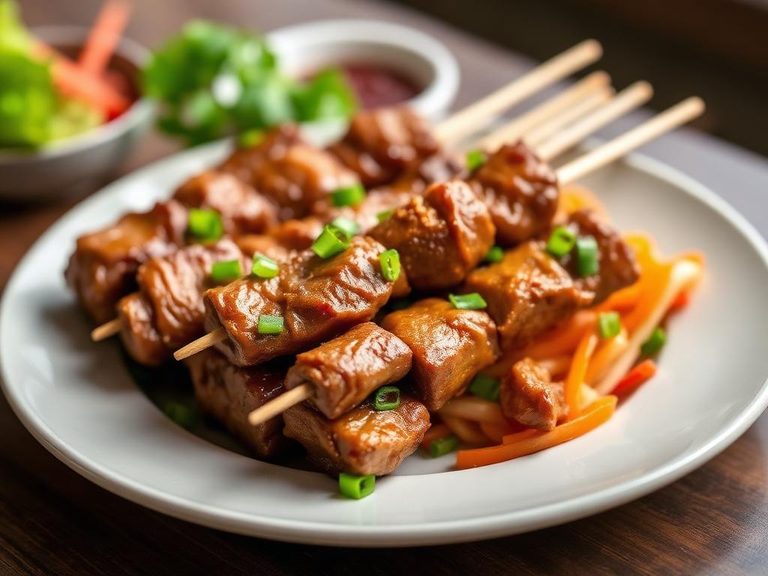
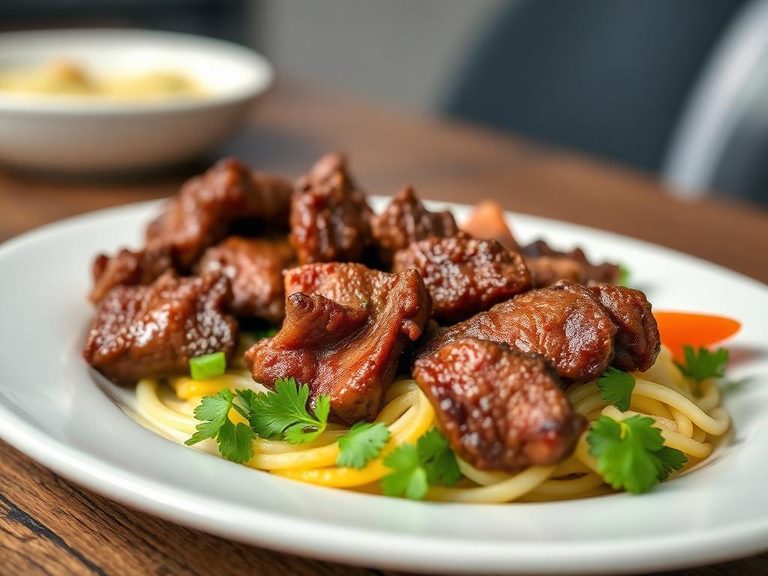
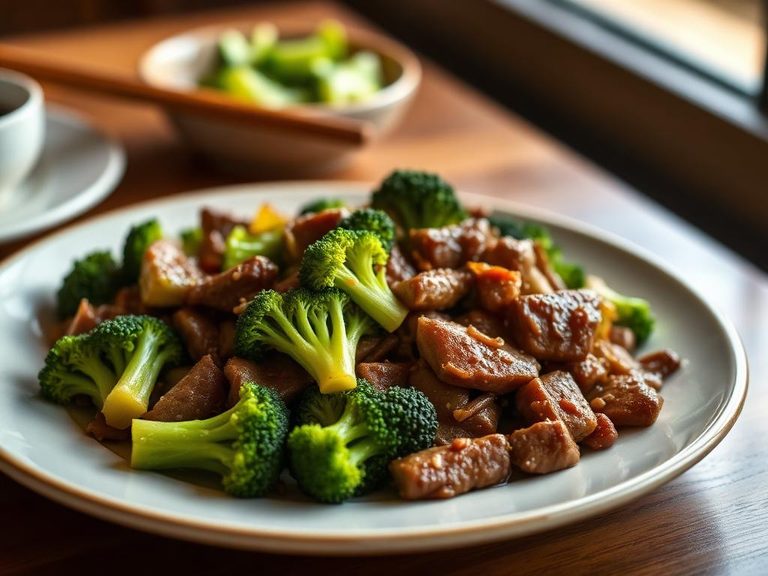
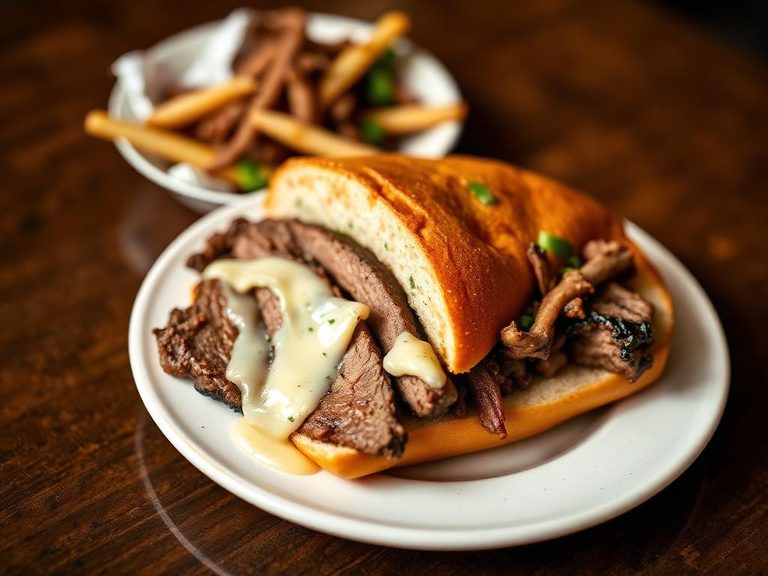
🌍 Where it's eaten
💡 Did you know?
The 'shoulder tender' is sometimes called the 'petite tender' or 'bistro filet' because it's a small, hidden muscle that butchers often set aside for premium uses, mimicking the tenderness of a filet mignon at a lower cost.
Full nutrition (USDA data · scales with serving)
| Water | 65.6 g |
| Energy | 181 kcal |
| Energy | 756 kj |
| Protein | 26.1 g |
| Total lipid (fat) | 7.7 g |
| Ash | 1.0 g |
| Carbohydrate, by difference | 0.00 g |
| Fiber, total dietary | 0.00 g |
| Total Sugars | 0.00 g |
| Calcium, Ca | 5.0 mg |
| Iron, Fe | 2.6 mg |
| Magnesium, Mg | 25.0 mg |
| Phosphorus, P | 227 mg |
| Potassium, K | 361 mg |
| Sodium, Na | 60.0 mg |
| Zinc, Zn | 5.3 mg |
| Copper, Cu | 0.09 mg |
| Manganese, Mn | 0.01 mg |
| Selenium, Se | 38.9 ug |
| Vitamin C, total ascorbic acid | 0.00 mg |
| Thiamin | 0.08 mg |
| Riboflavin | 0.22 mg |
| Niacin | 5.0 mg |
| Pantothenic acid | 0.86 mg |
| Vitamin B-6 | 0.59 mg |
| Folate, total | 8.0 ug |
| Folic acid | 0.00 ug |
| Folate, food | 8.0 ug |
| Folate, DFE | 8.0 ug |
| Choline, total | 103 mg |
| Betaine | 13.8 mg |
| Vitamin B-12 | 4.7 ug |
| Vitamin B-12, added | 0.00 ug |
| Vitamin A, RAE | 0.00 ug |
| Retinol | 0.00 ug |
| Carotene, beta | 0.00 ug |
| Carotene, alpha | 0.00 ug |
| Cryptoxanthin, beta | 0.00 ug |
| Vitamin A, IU | 0.00 iu |
| Lycopene | 0.00 ug |
| Lutein + zeaxanthin | 0.00 ug |
| Vitamin E (alpha-tocopherol) | 0.17 mg |
| Vitamin E, added | 0.00 mg |
| Tocopherol, beta | 0.00 mg |
| Tocopherol, gamma | 0.03 mg |
| Tocopherol, delta | 0.00 mg |
| Tocotrienol, alpha | 0.01 mg |
| Tocotrienol, beta | 0.00 mg |
| Tocotrienol, gamma | 0.00 mg |
| Tocotrienol, delta | 0.00 mg |
| Vitamin K (phylloquinone) | 0.20 ug |
| Vitamin K (Dihydrophylloquinone) | 0.00 ug |
| Vitamin K (Menaquinone-4) | 1.3 ug |
| Alcohol, ethyl | 0.00 g |
| Caffeine | 0.00 mg |
| Theobromine | 0.00 mg |
Fat & fatty acid profile (per 100g)
| Fatty acids, total saturated | 2.7 g |
| SFA 4:0 | 0.00 g |
| SFA 6:0 | 0.00 g |
| SFA 8:0 | 0.00 g |
| SFA 10:0 | 0.00 g |
| SFA 12:0 | 0.00 g |
| SFA 14:0 | 0.19 g |
| SFA 15:0 | 0.03 g |
| SFA 16:0 | 1.6 g |
| SFA 17:0 | 0.07 g |
| SFA 18:0 | 0.81 g |
| SFA 20:0 | 0.00 g |
| SFA 22:0 | 0.02 g |
| Fatty acids, total monounsaturated | 2.9 g |
| MUFA 14:1 | 0.04 g |
| MUFA 15:1 | 0.00 g |
| MUFA 16:1 | 0.20 g |
| MUFA 17:1 | 0.00 g |
| MUFA 18:1 | 2.6 g |
| MUFA 18:1 c | 2.4 g |
| MUFA 20:1 | 0.01 g |
| Fatty acids, total polyunsaturated | 0.38 g |
| PUFA 18:2 | 0.31 g |
| PUFA 18:2 n-6 c,c | 0.26 g |
| PUFA 18:3 | 0.01 g |
| PUFA 18:3 n-3 c,c,c (ALA) | 0.01 g |
| PUFA 18:3 n-6 c,c,c | 0.00 g |
| PUFA 18:4 | 0.00 g |
| PUFA 20:2 n-6 c,c | 0.00 g |
| PUFA 20:3 | 0.00 g |
| PUFA 20:4 | 0.06 g |
| Fatty acids, total trans | 0.25 g |
| Fatty acids, total trans-monoenoic | 0.20 g |
| TFA 18:1 t | 0.20 g |
| TFA 18:2 t,t | 0.05 g |
| Fatty acids, total trans-polyenoic | 0.05 g |
| Cholesterol | 76.0 mg |
Amino acid profile (per 100g)
| Tryptophan | 0.17 g |
| Threonine | 1.0 g |
| Isoleucine | 1.2 g |
| Leucine | 2.1 g |
| Lysine | 2.2 g |
| Methionine | 0.68 g |
| Cystine | 0.34 g |
| Phenylalanine | 1.0 g |
| Tyrosine | 0.83 g |
| Valine | 1.3 g |
| Arginine | 1.7 g |
| Histidine | 0.83 g |
| Alanine | 1.6 g |
| Aspartic acid | 2.4 g |
| Glutamic acid | 3.9 g |
| Glycine | 1.6 g |
| Proline | 1.2 g |
| Serine | 1.0 g |
| Hydroxyproline | 0.27 g |
FAQ
How is this cut different from a filet mignon?
Both are very tender, but the shoulder tender (petite tender) comes from the shoulder clod, while filet mignon is from the tenderloin. The shoulder cut has a slightly more pronounced beefy flavor and is often more affordable.
What's the best way to cook it to keep it tender?
Quick, high-heat methods are ideal: grilling, pan-searing, or broiling. Cook to medium-rare or medium (135-145°F internal temp) and let it rest for 5-10 minutes before slicing against the grain.
Is it suitable for slow cooking or stewing?
Generally, no. This cut is prized for its tenderness and is best cooked quickly. Slow cooking would cause it to dry out. For stews, a fattier chuck roast with more connective tissue is a better choice.
Nutrient density (calculated · NRF9.3)
Nutrient Rich Foods index: beneficial nutrients (protein, fiber, vitamins, minerals) minus saturated fat, added sugar & sodium, per 100 kcal.
NRF9.3 index — Fulgoni, Keast & Drewnowski, 2009. Computed from USDA nutrients.
Weight-loss friendliness (composite index)
Energy density 1.81 kcal/g · 58% calories from protein · 0.0 g fiber · 0.0 g sugar per 100 g.
Composite of energy density (Rolls et al., 1999), protein & fiber satiety, minus sugar. A calculated heuristic — ranks satiety-per-calorie, not a clinical measure.
Dietary load (calculated from USDA values)
Potential renal acid load. Positive = acid-forming, negative = alkaline-forming.
Sodium-to-potassium ratio: 0.17 (lower is better — aim for ≤ 1)
Sodium:potassium per WHO potassium guidance. Computed from USDA nutrients.