

Bagels, plain, enriched, with calcium propionate (includes onion, poppy, sesame), toasted
Whole food · Baked Products
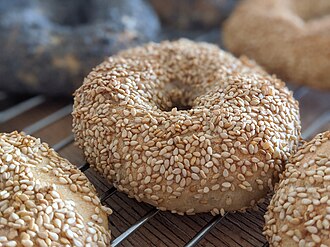
Photo: Wikipedia
A classic plain bagel, enriched with calcium propionate for freshness, offers a satisfyingly chewy crust and a dense, slightly sweet interior. Toasting it brings out a delightful nutty aroma and creates a crisp surface that contrasts perfectly with its soft crumb. It's a carbohydrate-dense staple, providing a significant energy boost with a modest 287 calories per 100g.
Calorie split: 16% protein · 80% carbs · 4% fat
↓ Full nutrition💚 Why it's loved
People adore the bagel's unique, satisfying chew and its incredible versatility—it's a blank canvas for everything from simple butter to elaborate smoked salmon creations. It's deeply embedded in North American breakfast culture, representing a comforting, substantial start to the day.
⚠️ Watch-outs & how to enjoy it better
Its high carbohydrate density can cause rapid blood-sugar spikes, especially when eaten plain and toasted. As a refined grain product, it's low in fiber, which can lead to less sustained fullness. **Tip:** Pair it with protein (like eggs or cream cheese) and healthy fats (like avocado or smoked salmon) to slow digestion and stabilize blood sugar. Opt for a whole-wheat variety for more fiber.
Key benefits
- Provides quick, sustained energy from complex carbohydrates.
- Contains calcium propionate, a preservative that helps prevent mold.
- Offers a good base for protein-rich toppings.
- Enriched with iron and B vitamins like thiamin and niacin.
- Its dense texture makes it a sturdy vehicle for spreads and fillings.
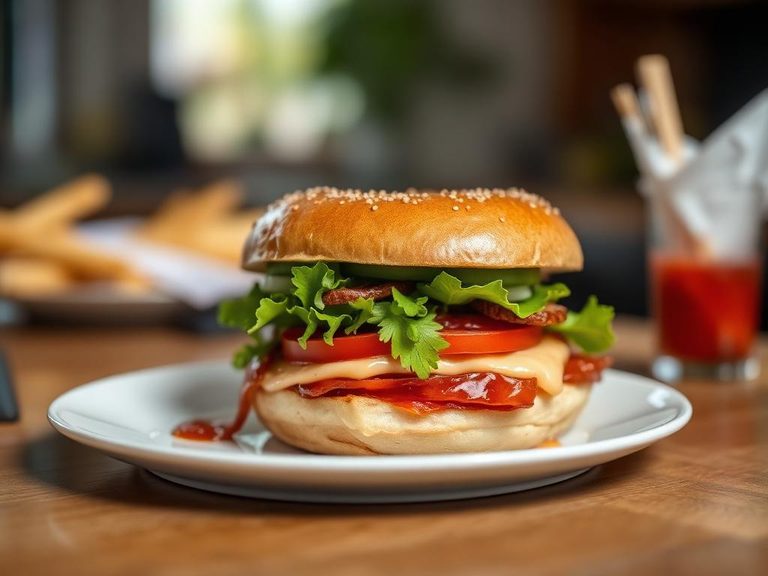
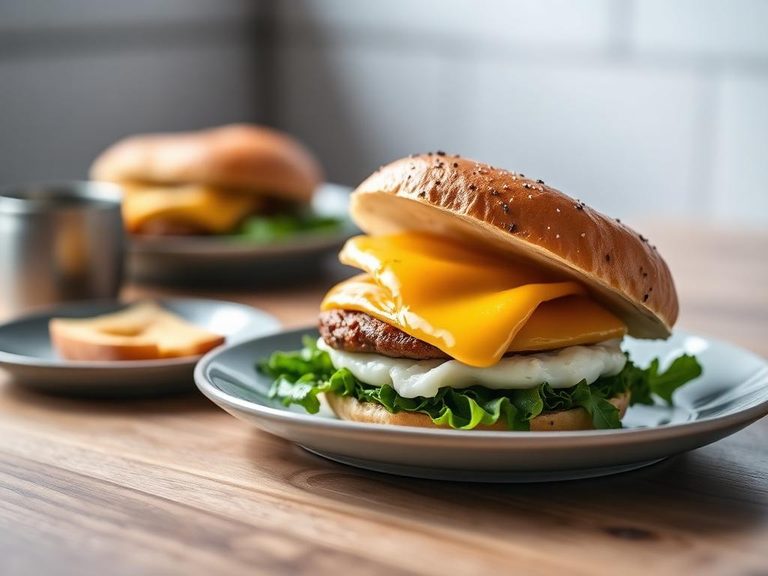
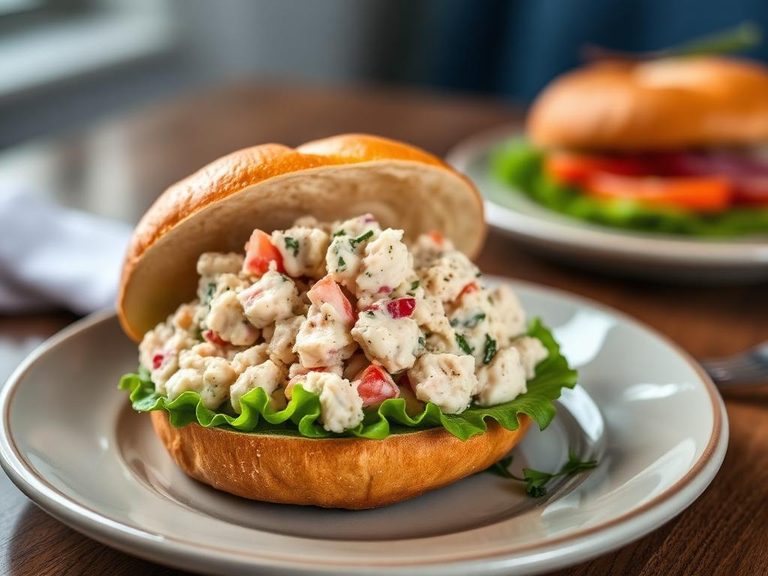
🍽️ Popular dishes



🌍 Where it's eaten
💡 Did you know?
The hole in the center of a bagel isn't just for looks; it was traditionally said to ensure the bagel cooked evenly throughout and, according to some folk tales, to allow bagel makers to string them on rods for easy transport and sale.
Full nutrition (USDA data · scales with serving)
| Water | 28.3 g |
| Energy | 287 kcal |
| Energy | 1201 kj |
| Protein | 11.1 g |
| Total lipid (fat) | 1.4 g |
| Ash | 1.8 g |
| Carbohydrate, by difference | 57.4 g |
| Fiber, total dietary | 1.8 g |
| Total Sugars | 9.1 g |
| Sucrose | 0.00 g |
| Glucose | 1.7 g |
| Fructose | 2.2 g |
| Lactose | 0.00 g |
| Maltose | 5.2 g |
| Galactose | 0.00 g |
| Starch | 48.7 g |
| Calcium, Ca | 15.0 mg |
| Iron, Fe | 4.5 mg |
| Magnesium, Mg | 24.0 mg |
| Phosphorus, P | 92.0 mg |
| Potassium, K | 116 mg |
| Sodium, Na | 457 mg |
| Zinc, Zn | 1.3 mg |
| Copper, Cu | 0.15 mg |
| Manganese, Mn | 0.57 mg |
| Selenium, Se | 25.2 ug |
| Vitamin C, total ascorbic acid | 0.00 mg |
| Thiamin | 0.60 mg |
| Riboflavin | 0.27 mg |
| Niacin | 4.4 mg |
| Pantothenic acid | 0.23 mg |
| Vitamin B-6 | 0.07 mg |
| Folate, total | 131 ug |
| Folic acid | 103 ug |
| Folate, food | 28.0 ug |
| Folate, DFE | 203 ug |
| Choline, total | 15.8 mg |
| Vitamin B-12 | 0.00 ug |
| Vitamin B-12, added | 0.00 ug |
| Vitamin A, RAE | 0.00 ug |
| Retinol | 0.00 ug |
| Carotene, beta | 0.00 ug |
| Carotene, alpha | 0.00 ug |
| Cryptoxanthin, beta | 0.00 ug |
| Vitamin A, IU | 0.00 iu |
| Lycopene | 0.00 ug |
| Lutein + zeaxanthin | 55.0 ug |
| Vitamin E (alpha-tocopherol) | 0.12 mg |
| Vitamin E, added | 0.00 mg |
| Vitamin D (D2 + D3), International Units | 0.00 iu |
| Vitamin D (D2 + D3) | 0.00 ug |
| Vitamin K (phylloquinone) | 1.0 ug |
| Vitamin K (Dihydrophylloquinone) | 0.20 ug |
| Alcohol, ethyl | 0.00 g |
| Caffeine | 0.00 mg |
| Theobromine | 0.00 mg |
Fat & fatty acid profile (per 100g)
| Fatty acids, total saturated | 0.23 g |
| SFA 4:0 | 0.00 g |
| SFA 6:0 | 0.00 g |
| SFA 8:0 | 0.00 g |
| SFA 10:0 | 0.00 g |
| SFA 12:0 | 0.00 g |
| SFA 13:0 | 0.00 g |
| SFA 14:0 | 0.00 g |
| SFA 15:0 | 0.00 g |
| SFA 16:0 | 0.16 g |
| SFA 17:0 | 0.00 g |
| SFA 18:0 | 0.05 g |
| SFA 20:0 | 0.00 g |
| SFA 22:0 | 0.00 g |
| SFA 24:0 | 0.00 g |
| Fatty acids, total monounsaturated | 0.24 g |
| MUFA 14:1 | 0.00 g |
| MUFA 15:1 | 0.00 g |
| MUFA 16:1 | 0.00 g |
| MUFA 17:1 | 0.00 g |
| MUFA 18:1 | 0.24 g |
| MUFA 18:1 c | 0.24 g |
| MUFA 20:1 | 0.00 g |
| MUFA 22:1 | 0.00 g |
| MUFA 24:1 c | 0.00 g |
| Fatty acids, total polyunsaturated | 0.55 g |
| PUFA 18:2 | 0.49 g |
| PUFA 18:3 | 0.06 g |
| PUFA 18:3 n-3 c,c,c (ALA) | 0.06 g |
| PUFA 18:3 n-6 c,c,c | 0.00 g |
| PUFA 18:4 | 0.00 g |
| PUFA 20:2 n-6 c,c | 0.00 g |
| PUFA 20:3 | 0.00 g |
| PUFA 20:4 | 0.00 g |
| PUFA 20:5 n-3 (EPA) | 0.00 g |
| PUFA 22:5 n-3 (DPA) | 0.00 g |
| PUFA 22:6 n-3 (DHA) | 0.00 g |
| Fatty acids, total trans | 0.00 g |
| TFA 18:1 t | 0.00 g |
| Cholesterol | 0.00 mg |
| Phytosterols | 0.00 mg |
Amino acid profile (per 100g)
| Tryptophan | 0.14 g |
| Threonine | 0.33 g |
| Isoleucine | 0.45 g |
| Leucine | 0.82 g |
| Lysine | 0.28 g |
| Methionine | 0.21 g |
| Cystine | 0.25 g |
| Phenylalanine | 0.58 g |
| Tyrosine | 0.33 g |
| Valine | 0.51 g |
| Arginine | 0.43 g |
| Histidine | 0.25 g |
| Alanine | 0.39 g |
| Aspartic acid | 0.53 g |
| Glutamic acid | 3.9 g |
| Glycine | 0.41 g |
| Proline | 1.3 g |
| Serine | 0.56 g |
| Hydroxyproline | 0.00 g |
FAQ
Is a toasted bagel healthier than a plain one?
Toasting doesn't significantly change the nutritional content, but it can affect digestion. The Maillard reaction from toasting creates new flavor compounds and can make the starch slightly more resistant, which some studies suggest may modestly slow the blood sugar response.
What is calcium propionate and why is it in bagels?
Calcium propionate is a common food preservative (E282) added to baked goods like bagels and bread to inhibit the growth of mold and certain bacteria, extending their shelf life without altering taste or texture.
How can I make a bagel meal more balanced?
Transform it by adding substantial protein and healthy fats. Top it with smoked salmon and cream cheese, make a sandwich with scrambled eggs and avocado, or use it as a base for a hearty tuna or chicken salad.
Nutrient density (calculated · NRF9.3)
Nutrient Rich Foods index: beneficial nutrients (protein, fiber, vitamins, minerals) minus saturated fat, added sugar & sodium, per 100 kcal.
NRF9.3 index — Fulgoni, Keast & Drewnowski, 2009. Computed from USDA nutrients.
Weight-loss friendliness (composite index)
Energy density 2.87 kcal/g · 16% calories from protein · 1.8 g fiber · 9.1 g sugar per 100 g.
Composite of energy density (Rolls et al., 1999), protein & fiber satiety, minus sugar. A calculated heuristic — ranks satiety-per-calorie, not a clinical measure.
Dietary load (calculated from USDA values)
Potential renal acid load. Positive = acid-forming, negative = alkaline-forming.
Sodium-to-potassium ratio: 3.94 (lower is better — aim for ≤ 1)
Sodium:potassium per WHO potassium guidance. Computed from USDA nutrients.