

Sweet potato, cooked, boiled, without skin
Whole food · Vegetables and Vegetable Products
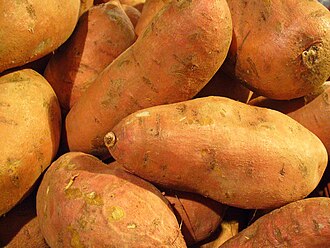
Photo: Wikipedia
Boiled sweet potato without skin is a soft, creamy, and naturally sweet root vegetable with a vibrant orange flesh. Its flavor is subtly earthy with a caramel-like sweetness, and its texture is tender and smooth when cooked. Nutritionally, it's a low-calorie, high-fiber carbohydrate source packed with beta-carotene.
Calorie split: 7% protein · 91% carbs · 2% fat
↓ Full nutrition💚 Why it's loved
People adore its comforting, naturally sweet flavor that requires no added sugar, and its incredibly versatile texture that works in both savory and sweet dishes. It holds deep cultural significance as a staple comfort food in many cuisines worldwide.
⚠️ Watch-outs & how to enjoy it better
Its high glycemic index can cause blood sugar spikes, so individuals managing diabetes should practice portion control and pair it with protein or healthy fats (like nuts or yogurt) to slow absorption. The oxalate content may be a concern for those prone to certain kidney stones.
Key benefits
- Excellent source of beta-carotene (vitamin A precursor)
- Good source of dietary fiber for digestive health
- Low in fat and a naturally cholesterol-free food
- Provides complex carbohydrates for sustained energy
- Contains essential minerals like potassium and manganese
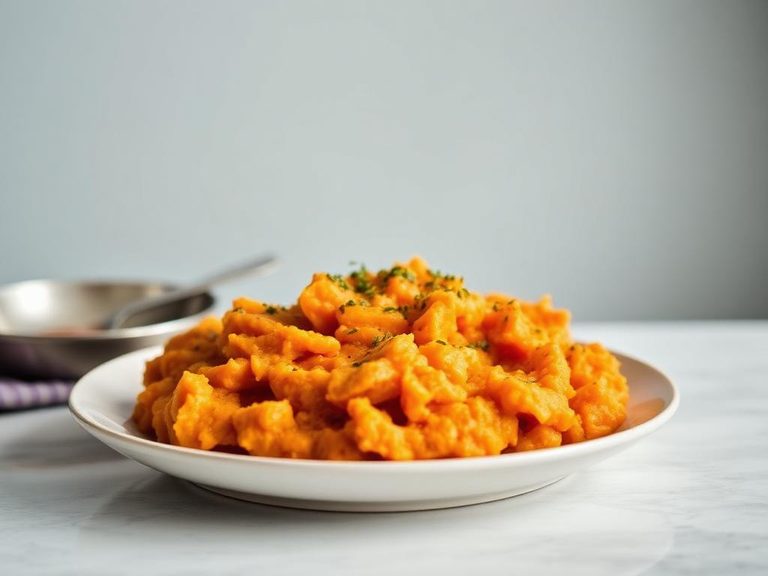
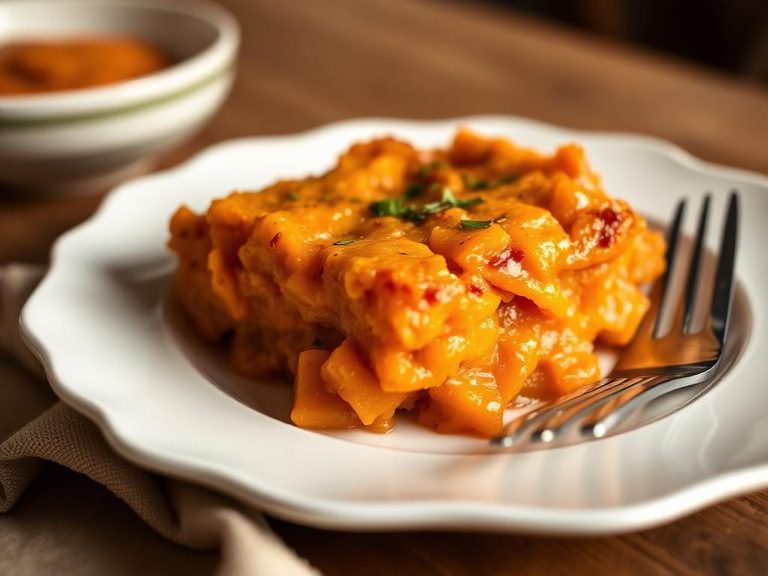
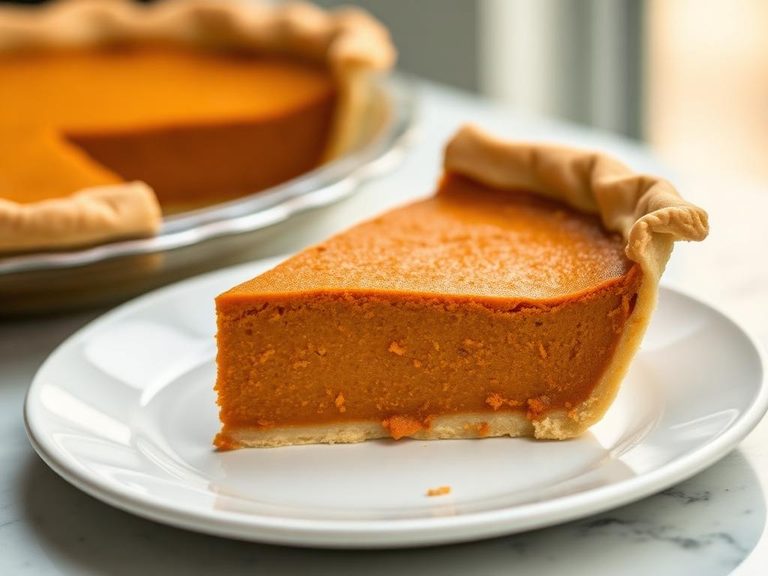
🍽️ Popular dishes
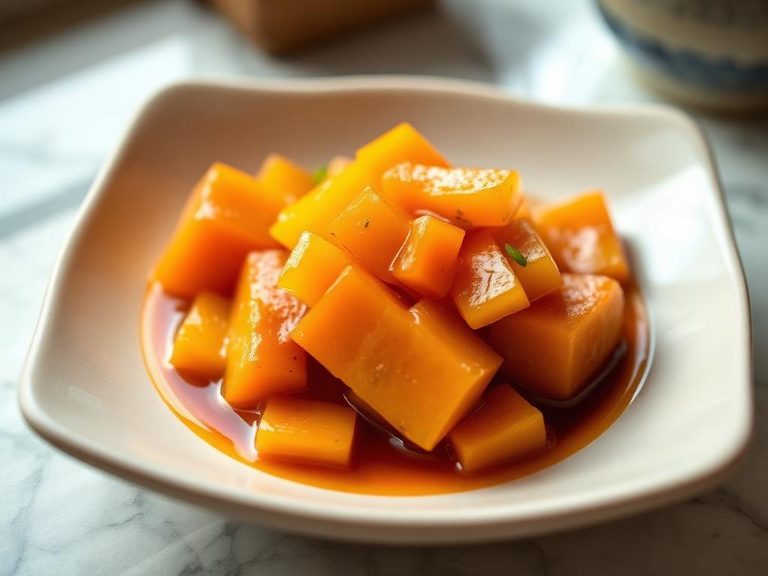
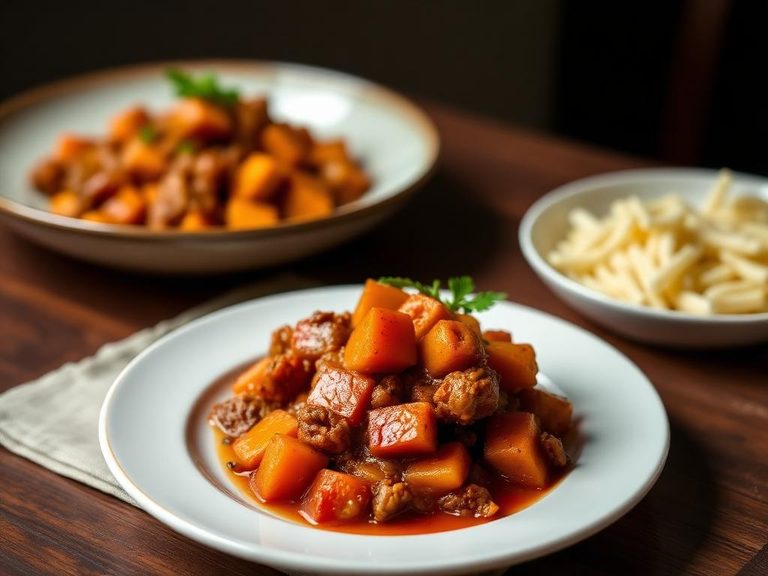
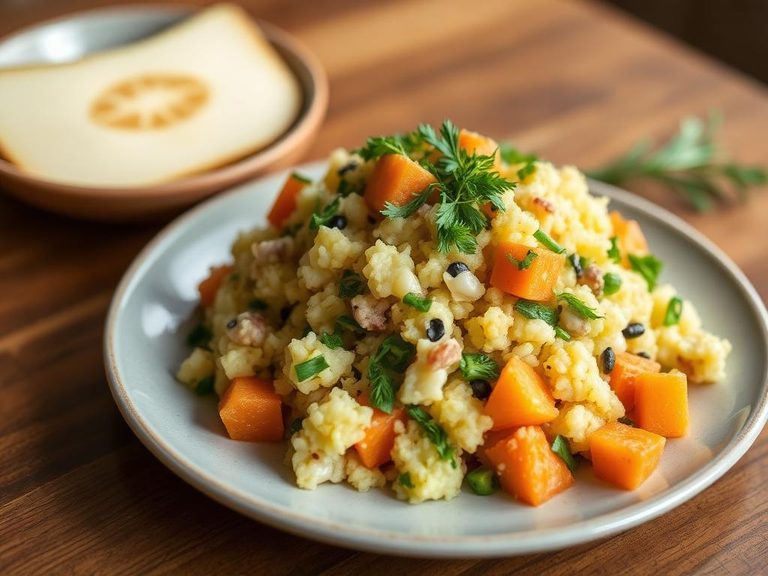
🌍 Where it's eaten
💡 Did you know?
The vibrant orange color comes from beta-carotene, which the body converts to vitamin A; a single medium sweet potato can provide over 400% of your daily recommended intake.
Full nutrition (USDA data · scales with serving)
| Water | 80.1 g |
| Energy | 76.0 kcal |
| Energy | 320 kj |
| Protein | 1.4 g |
| Total lipid (fat) | 0.14 g |
| Ash | 0.63 g |
| Carbohydrate, by difference | 17.7 g |
| Fiber, total dietary | 2.5 g |
| Total Sugars | 5.7 g |
| Sucrose | 1.4 g |
| Glucose | 0.54 g |
| Fructose | 0.43 g |
| Lactose | 0.00 g |
| Maltose | 3.3 g |
| Galactose | 0.00 g |
| Starch | 5.2 g |
| Calcium, Ca | 27.0 mg |
| Iron, Fe | 0.72 mg |
| Magnesium, Mg | 18.0 mg |
| Phosphorus, P | 32.0 mg |
| Potassium, K | 230 mg |
| Sodium, Na | 27.0 mg |
| Zinc, Zn | 0.20 mg |
| Copper, Cu | 0.09 mg |
| Manganese, Mn | 0.27 mg |
| Selenium, Se | 0.20 ug |
| Vitamin C, total ascorbic acid | 12.8 mg |
| Thiamin | 0.06 mg |
| Riboflavin | 0.05 mg |
| Niacin | 0.54 mg |
| Pantothenic acid | 0.58 mg |
| Vitamin B-6 | 0.17 mg |
| Folate, total | 6.0 ug |
| Folic acid | 0.00 ug |
| Folate, food | 6.0 ug |
| Folate, DFE | 6.0 ug |
| Choline, total | 10.8 mg |
| Vitamin B-12 | 0.00 ug |
| Vitamin B-12, added | 0.00 ug |
| Vitamin A, RAE | 787 ug |
| Retinol | 0.00 ug |
| Carotene, beta | 9444 ug |
| Carotene, alpha | 0.00 ug |
| Cryptoxanthin, beta | 0.00 ug |
| Vitamin A, IU | 15740 iu |
| Lycopene | 0.00 ug |
| Lutein + zeaxanthin | 0.00 ug |
| Vitamin E (alpha-tocopherol) | 0.94 mg |
| Vitamin E, added | 0.00 mg |
| Tocopherol, beta | 0.01 mg |
| Tocopherol, gamma | 0.00 mg |
| Tocopherol, delta | 0.00 mg |
| Tocotrienol, alpha | 0.00 mg |
| Tocotrienol, beta | 0.00 mg |
| Tocotrienol, gamma | 0.00 mg |
| Tocotrienol, delta | 0.00 mg |
| Vitamin D (D2 + D3), International Units | 0.00 iu |
| Vitamin D (D2 + D3) | 0.00 ug |
| Vitamin K (phylloquinone) | 2.1 ug |
| Vitamin K (Dihydrophylloquinone) | 0.00 ug |
| Alcohol, ethyl | 0.00 g |
| Caffeine | 0.00 mg |
| Theobromine | 0.00 mg |
Fat & fatty acid profile (per 100g)
| Fatty acids, total saturated | 0.03 g |
| SFA 4:0 | 0.00 g |
| SFA 6:0 | 0.00 g |
| SFA 8:0 | 0.00 g |
| SFA 10:0 | 0.00 g |
| SFA 12:0 | 0.00 g |
| SFA 14:0 | 0.00 g |
| SFA 15:0 | 0.00 g |
| SFA 16:0 | 0.03 g |
| SFA 17:0 | 0.00 g |
| SFA 18:0 | 0.00 g |
| SFA 20:0 | 0.00 g |
| SFA 22:0 | 0.00 g |
| SFA 24:0 | 0.00 g |
| Fatty acids, total monounsaturated | 0.00 g |
| MUFA 14:1 | 0.00 g |
| MUFA 15:1 | 0.00 g |
| MUFA 16:1 | 0.00 g |
| MUFA 17:1 | 0.00 g |
| MUFA 18:1 | 0.00 g |
| MUFA 20:1 | 0.00 g |
| MUFA 22:1 | 0.00 g |
| Fatty acids, total polyunsaturated | 0.06 g |
| PUFA 18:2 | 0.06 g |
| PUFA 18:3 | 0.00 g |
| PUFA 18:4 | 0.00 g |
| PUFA 20:2 n-6 c,c | 0.00 g |
| PUFA 20:3 | 0.00 g |
| PUFA 20:4 | 0.00 g |
| PUFA 20:5 n-3 (EPA) | 0.00 g |
| PUFA 22:5 n-3 (DPA) | 0.00 g |
| PUFA 22:6 n-3 (DHA) | 0.00 g |
| Fatty acids, total trans | 0.00 g |
| Cholesterol | 0.00 mg |
Amino acid profile (per 100g)
| Tryptophan | 0.03 g |
| Threonine | 0.07 g |
| Isoleucine | 0.05 g |
| Leucine | 0.08 g |
| Lysine | 0.06 g |
| Methionine | 0.03 g |
| Cystine | 0.02 g |
| Phenylalanine | 0.08 g |
| Tyrosine | 0.03 g |
| Valine | 0.07 g |
| Arginine | 0.05 g |
| Histidine | 0.03 g |
| Alanine | 0.07 g |
| Aspartic acid | 0.34 g |
| Glutamic acid | 0.14 g |
| Glycine | 0.06 g |
| Proline | 0.05 g |
| Serine | 0.08 g |
FAQ
Is boiled sweet potato healthier than baked?
Boiling can cause some water-soluble vitamins (like vitamin C and some B vitamins) to leach into the cooking water. Baking or roasting concentrates flavors and retains more nutrients, but both methods are healthy choices.
Why is my boiled sweet potato watery?
This often happens if the potato is overcooked or was very fresh and high in moisture. To prevent it, boil just until tender (a fork should pierce easily) and avoid over-boiling. Draining well is key.
Can I eat the skin of a boiled sweet potato?
Yes, the skin is edible and nutritious, containing fiber and potassium. However, if you've boiled it without skin as specified, the flesh is the primary part consumed. Ensure the potato is well-scrubbed before cooking if you plan to eat the skin.
Nutrient density (calculated · NRF9.3)
Nutrient Rich Foods index: beneficial nutrients (protein, fiber, vitamins, minerals) minus saturated fat, added sugar & sodium, per 100 kcal.
NRF9.3 index — Fulgoni, Keast & Drewnowski, 2009. Computed from USDA nutrients.
Weight-loss friendliness (composite index)
Energy density 0.76 kcal/g · 7% calories from protein · 2.5 g fiber · 5.7 g sugar per 100 g.
Composite of energy density (Rolls et al., 1999), protein & fiber satiety, minus sugar. A calculated heuristic — ranks satiety-per-calorie, not a clinical measure.
Dietary load (calculated from USDA values)
Potential renal acid load. Positive = acid-forming, negative = alkaline-forming.
Sodium-to-potassium ratio: 0.12 (lower is better — aim for ≤ 1)
Sodium:potassium per WHO potassium guidance. Computed from USDA nutrients.