

Seeds, sesame seed kernels, dried (decorticated)
Whole food · Nut and Seed Products

Photo: Wikipedia
These are the hulled, dried kernels of the sesame seed, prized for their rich, nutty flavor and satisfying crunch. Nutritionally, they are a powerhouse of healthy fats and a surprisingly complete source of plant-based protein. Their small size belies a dense concentration of minerals like copper, manganese, and calcium.
Calorie split: 12% protein · 7% carbs · 81% fat
↓ Full nutrition💚 Why it's loved
People adore them for their deep, toasty flavor that intensifies when roasted, adding a luxurious crunch and nutty depth to both sweet and savory dishes. They are a cornerstone ingredient in cuisines worldwide, from tahini to gomashio.
⚠️ Watch-outs & how to enjoy it better
Their extremely high fat content means they are calorie-dense, so portion control is key for those monitoring energy intake. As a common allergen, sesame must be avoided by those with a specific allergy. To mitigate calorie density, use them as a flavorful accent or garnish rather than a main ingredient.
Key benefits
- Excellent source of plant-based protein and healthy monounsaturated fats.
- Rich in essential minerals, particularly copper, manganese, and calcium.
- High in dietary fiber, promoting digestive health.
- Contains unique lignans (sesamin, sesamolin) with antioxidant properties.
🍽️ Popular dishes
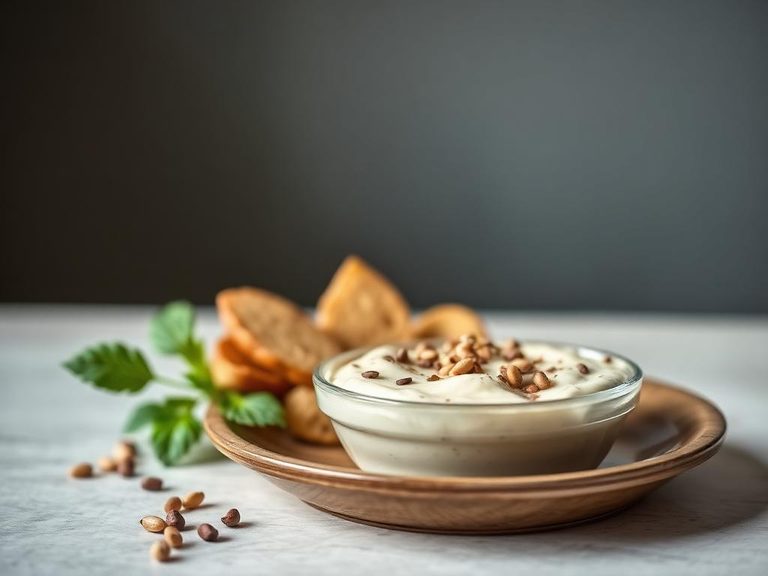
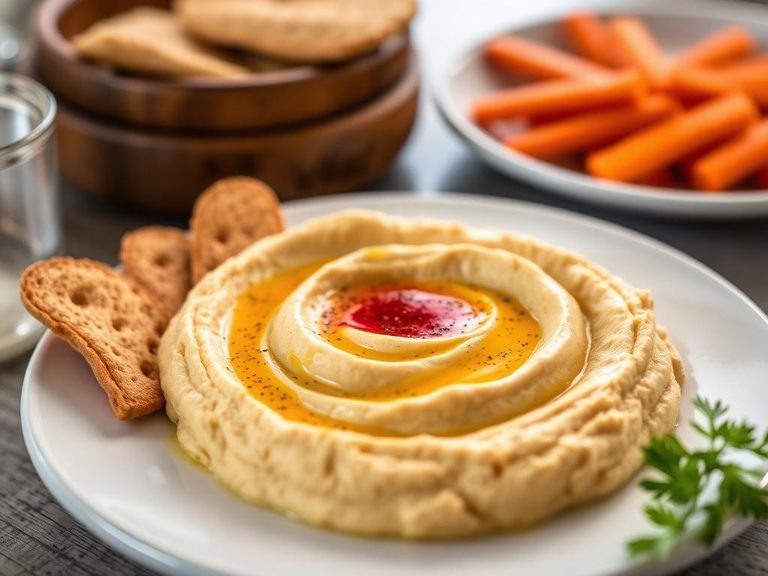

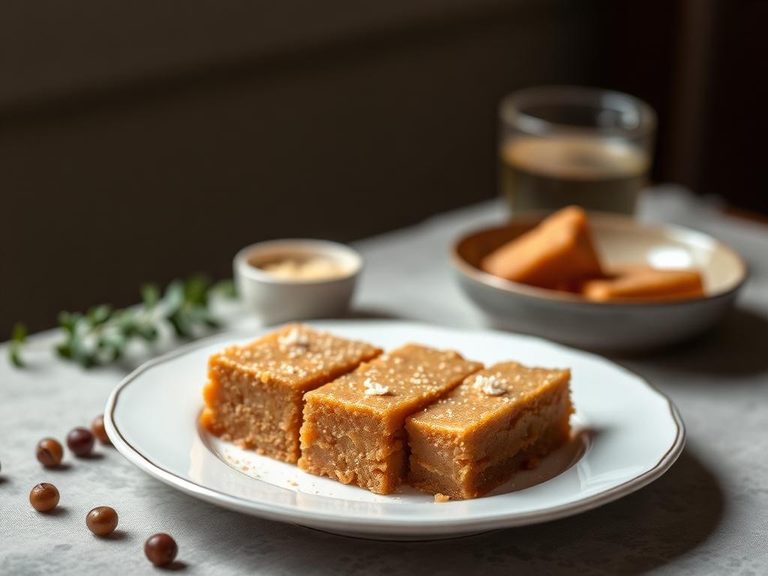
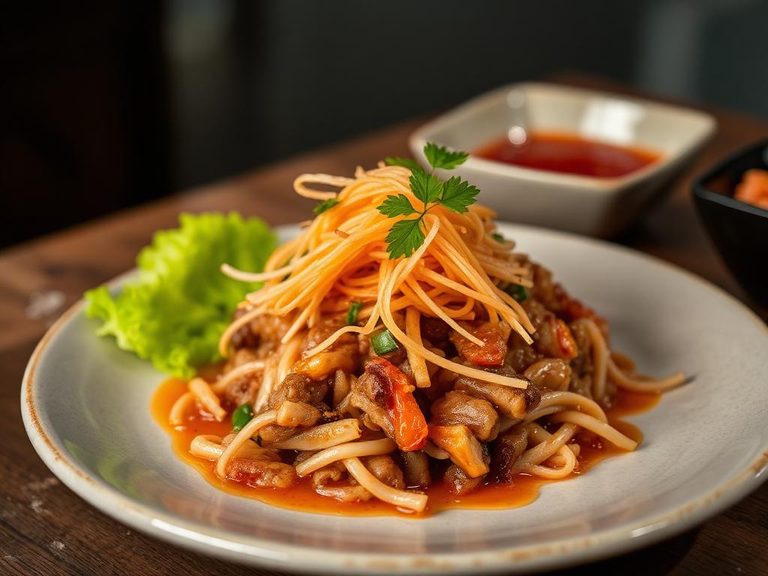
🌍 Where it's eaten
💡 Did you know?
Sesame is one of the oldest oilseed crops known to humanity, with evidence of its domestication in the Indus Valley dating back to around 3000 BCE.
Full nutrition (USDA data · scales with serving)
| Water | 3.8 g |
| Energy | 631 kcal |
| Energy | 2640 kj |
| Protein | 20.4 g |
| Total lipid (fat) | 61.2 g |
| Ash | 2.9 g |
| Carbohydrate, by difference | 11.7 g |
| Fiber, total dietary | 11.6 g |
| Total Sugars | 0.48 g |
| Sucrose | 0.31 g |
| Glucose | 0.10 g |
| Fructose | 0.07 g |
| Lactose | 0.00 g |
| Maltose | 0.00 g |
| Galactose | 0.00 g |
| Calcium, Ca | 60.0 mg |
| Iron, Fe | 6.4 mg |
| Magnesium, Mg | 345 mg |
| Phosphorus, P | 667 mg |
| Potassium, K | 370 mg |
| Sodium, Na | 47.0 mg |
| Zinc, Zn | 6.7 mg |
| Copper, Cu | 1.4 mg |
| Manganese, Mn | 1.4 mg |
| Selenium, Se | 34.4 ug |
| Vitamin C, total ascorbic acid | 0.00 mg |
| Thiamin | 0.70 mg |
| Riboflavin | 0.09 mg |
| Niacin | 5.8 mg |
| Pantothenic acid | 0.29 mg |
| Vitamin B-6 | 0.40 mg |
| Folate, total | 115 ug |
| Folic acid | 0.00 ug |
| Folate, food | 115 ug |
| Folate, DFE | 115 ug |
| Choline, total | 25.6 mg |
| Betaine | 0.40 mg |
| Vitamin B-12 | 0.00 ug |
| Vitamin B-12, added | 0.00 ug |
| Vitamin A, RAE | 3.0 ug |
| Retinol | 0.00 ug |
| Carotene, beta | 40.0 ug |
| Carotene, alpha | 0.00 ug |
| Cryptoxanthin, beta | 0.00 ug |
| Vitamin A, IU | 66.0 iu |
| Lycopene | 0.00 ug |
| Lutein + zeaxanthin | 0.00 ug |
| Vitamin E (alpha-tocopherol) | 1.7 mg |
| Vitamin E, added | 0.00 mg |
| Tocopherol, beta | 0.00 mg |
| Tocopherol, gamma | 0.00 mg |
| Tocopherol, delta | 0.00 mg |
| Vitamin D (D2 + D3), International Units | 0.00 iu |
| Vitamin D (D2 + D3) | 0.00 ug |
| Vitamin K (phylloquinone) | 0.00 ug |
| Vitamin K (Dihydrophylloquinone) | 0.00 ug |
| Alcohol, ethyl | 0.00 g |
| Caffeine | 0.00 mg |
| Theobromine | 0.00 mg |
Fat & fatty acid profile (per 100g)
| Fatty acids, total saturated | 9.1 g |
| SFA 4:0 | 0.00 g |
| SFA 6:0 | 0.00 g |
| SFA 8:0 | 0.00 g |
| SFA 10:0 | 0.00 g |
| SFA 12:0 | 0.00 g |
| SFA 13:0 | 0.00 g |
| SFA 14:0 | 0.00 g |
| SFA 16:0 | 5.3 g |
| SFA 18:0 | 3.3 g |
| SFA 20:0 | 0.35 g |
| SFA 22:0 | 0.07 g |
| SFA 24:0 | 0.05 g |
| Fatty acids, total monounsaturated | 23.9 g |
| MUFA 16:1 | 0.10 g |
| MUFA 18:1 | 23.6 g |
| MUFA 20:1 | 0.12 g |
| MUFA 22:1 | 0.07 g |
| MUFA 24:1 c | 0.04 g |
| Fatty acids, total polyunsaturated | 25.5 g |
| PUFA 18:2 | 25.2 g |
| PUFA 18:3 | 0.26 g |
| PUFA 18:4 | 0.00 g |
| PUFA 20:2 n-6 c,c | 0.00 g |
| PUFA 20:4 | 0.00 g |
| PUFA 20:5 n-3 (EPA) | 0.00 g |
| PUFA 22:5 n-3 (DPA) | 0.00 g |
| PUFA 22:6 n-3 (DHA) | 0.00 g |
| Fatty acids, total trans | 0.00 g |
| Fatty acids, total trans-monoenoic | 0.00 g |
| TFA 18:1 t | 0.00 g |
| Cholesterol | 0.00 mg |
| Stigmasterol | 22.0 mg |
| Campesterol | 53.0 mg |
| Beta-sitosterol | 232 mg |
Amino acid profile (per 100g)
| Tryptophan | 0.33 g |
| Threonine | 0.73 g |
| Isoleucine | 0.75 g |
| Leucine | 1.5 g |
| Lysine | 0.65 g |
| Methionine | 0.88 g |
| Cystine | 0.44 g |
| Phenylalanine | 0.94 g |
| Tyrosine | 0.79 g |
| Valine | 0.98 g |
| Arginine | 3.3 g |
| Histidine | 0.55 g |
| Alanine | 0.99 g |
| Aspartic acid | 2.1 g |
| Glutamic acid | 4.6 g |
| Glycine | 1.1 g |
| Proline | 1.0 g |
| Serine | 1.2 g |
| Hydroxyproline | 0.00 g |
FAQ
What is the difference between hulled and unhulled sesame seeds?
Hulled seeds have had their outer shell removed, resulting in a milder flavor and lighter color, ideal for tahini. Unhulled seeds (with the shell) are crunchier, more bitter, and higher in calcium.
How should I store sesame kernels to keep them fresh?
Store them in an airtight container in a cool, dark place. Due to their high oil content, they can go rancid; refrigeration or freezing is recommended for long-term storage.
Can I eat sesame seeds raw?
Yes, but toasting them lightly in a dry pan significantly enhances their nutty flavor and aroma. They are safe to consume raw.
Nutrient density (calculated · NRF9.3)
Nutrient Rich Foods index: beneficial nutrients (protein, fiber, vitamins, minerals) minus saturated fat, added sugar & sodium, per 100 kcal.
NRF9.3 index — Fulgoni, Keast & Drewnowski, 2009. Computed from USDA nutrients.
Weight-loss friendliness (composite index)
Energy density 6.31 kcal/g · 13% calories from protein · 11.6 g fiber · 0.5 g sugar per 100 g.
Composite of energy density (Rolls et al., 1999), protein & fiber satiety, minus sugar. A calculated heuristic — ranks satiety-per-calorie, not a clinical measure.
Dietary load (calculated from USDA values)
Potential renal acid load. Positive = acid-forming, negative = alkaline-forming.
Sodium-to-potassium ratio: 0.13 (lower is better — aim for ≤ 1)
Sodium:potassium per WHO potassium guidance. Computed from USDA nutrients.