

Halvah
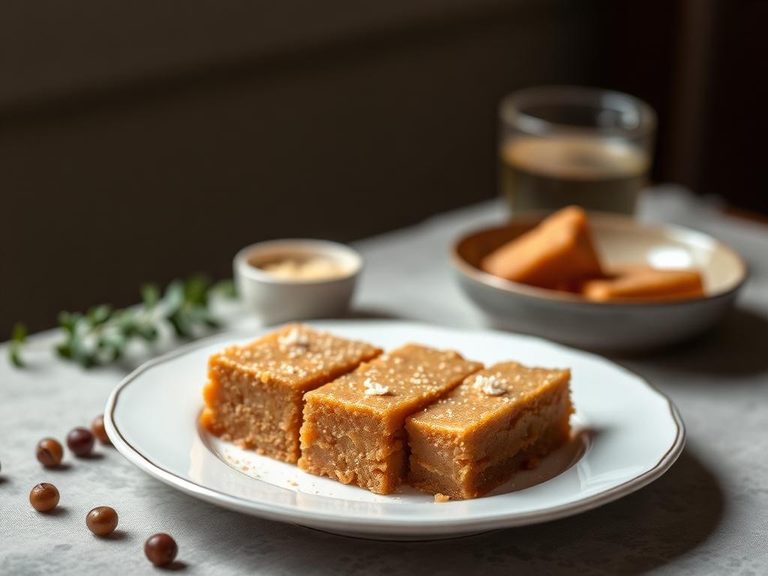
Halvah is a dense, sweet confection made primarily from tahini (sesame paste) and sugar, often flavored with vanilla or cocoa and sometimes studded with nuts. It has a distinctive crumbly, flaky texture and is a popular treat across the Middle East, Central Asia, and parts of Eastern Europe. The dish is traditionally prepared by cooking sugar into a syrup and then blending it with tahini until it solidifies.
🍳 View the full Halvah recipe →
🍽️ Nutrition at a glance
Halvah is high in both fat and carbohydrates, with tahini providing healthy fats, protein, and minerals like calcium and iron, while the sugar contributes to its high calorie density. A typical 100-gram serving contains around 500 calories, making it an energy-rich but nutrient-dense sweet.
Nutrition breakdown
| Calories | 410 kcal |
| Protein | 8 g |
| Carbs | 46 g |
| Fat | 22 g |
| Fiber | 3 g |
| Sugar | 32 g |
| Sodium | 35 mg |
| Iron | 3.5 mg |
| Magnesium | 100 mg |
| Phosphorus | 160 mg |
| Calcium | 60 mg |
| Zinc | 1.5 mg |
| Copper | 0.5 mg |
| Manganese | 0.8 mg |
| Thiamine (B1) | 0.2 mg |
Per 1 piece (85 g) · estimated, varies by recipe
💡 What's interesting
Halvah is unique for its fascinating texture transformation—starting as a smooth paste and becoming a crumbly solid as it cools, which is a result of sugar crystallization. It is also a traditional celebratory food in many cultures, often served during holidays like Purim in Jewish communities or as a staple in Middle Eastern markets.
AI estimate may be inaccurate · Terms