Sesame-crusted sushi (nigiri)
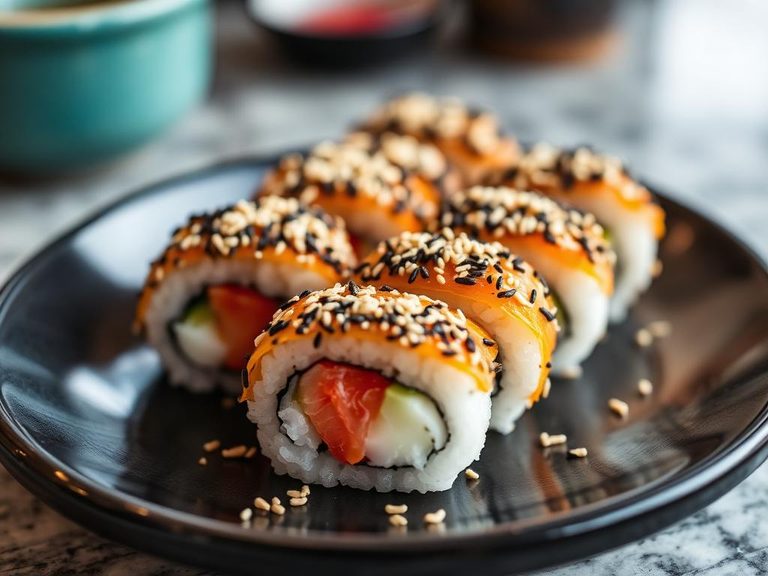
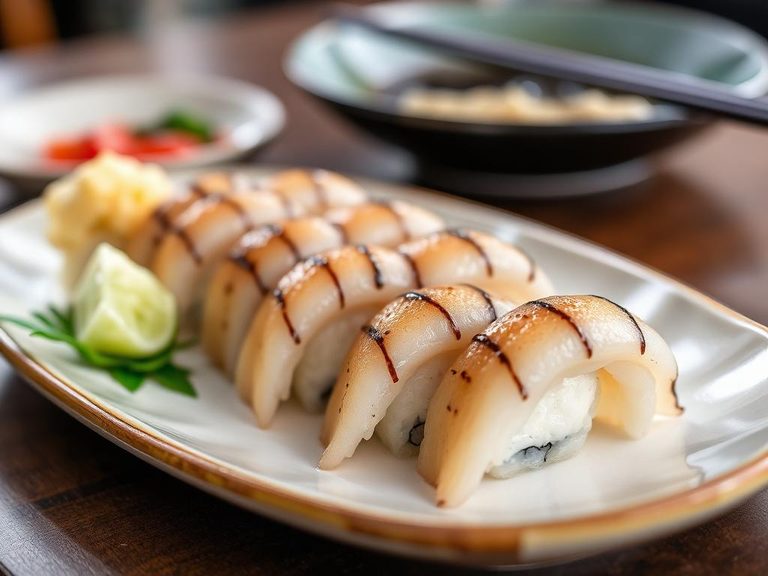
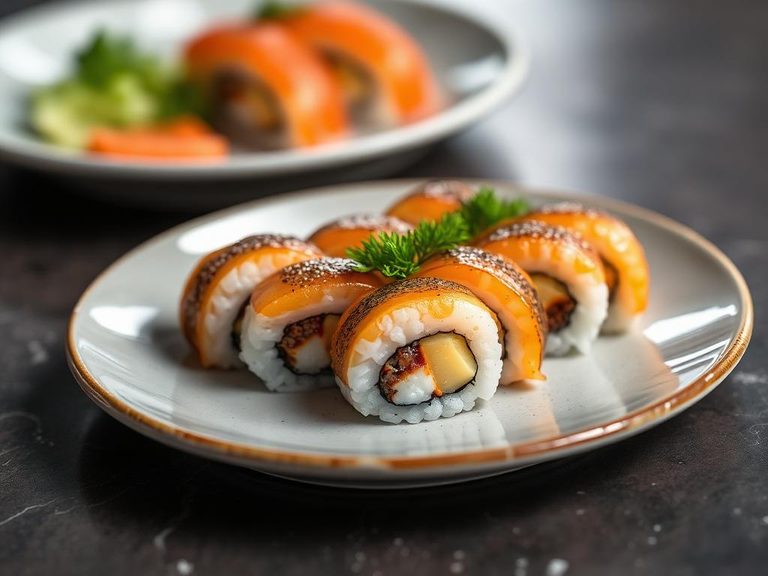
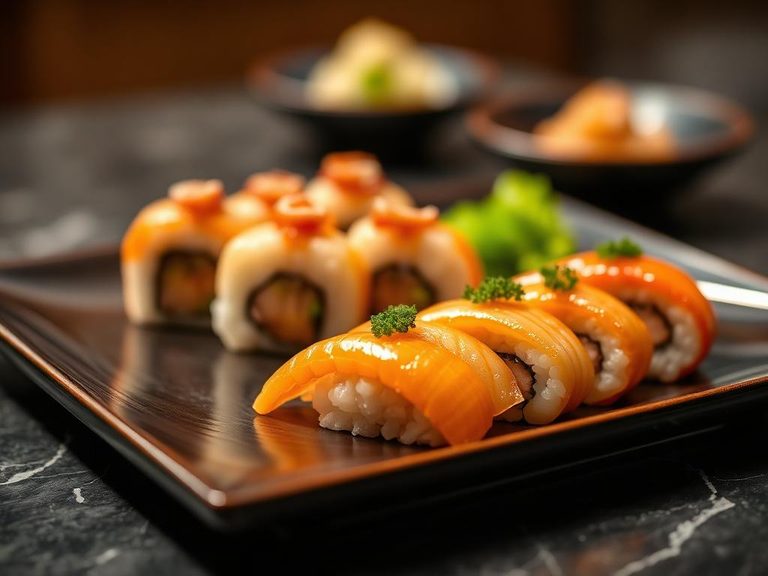
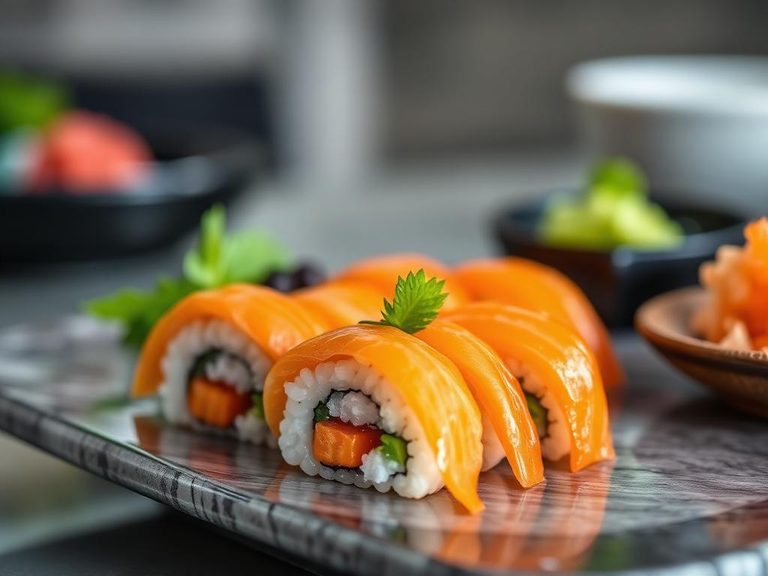
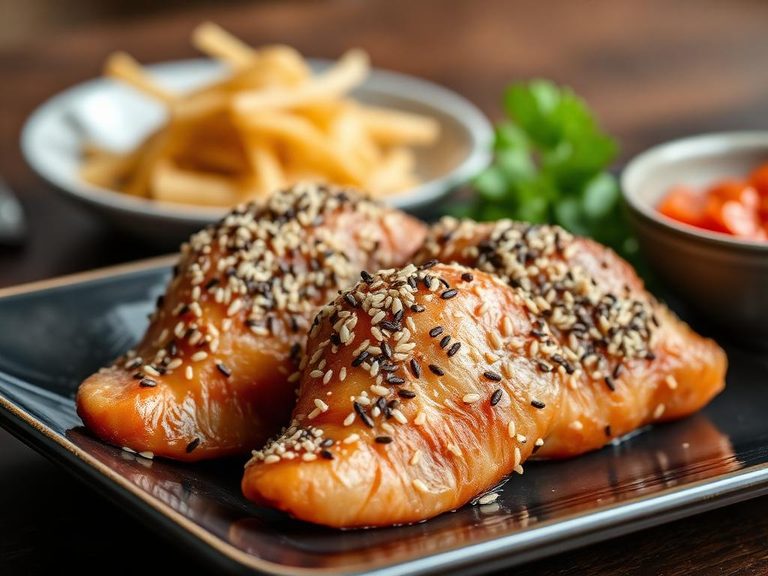
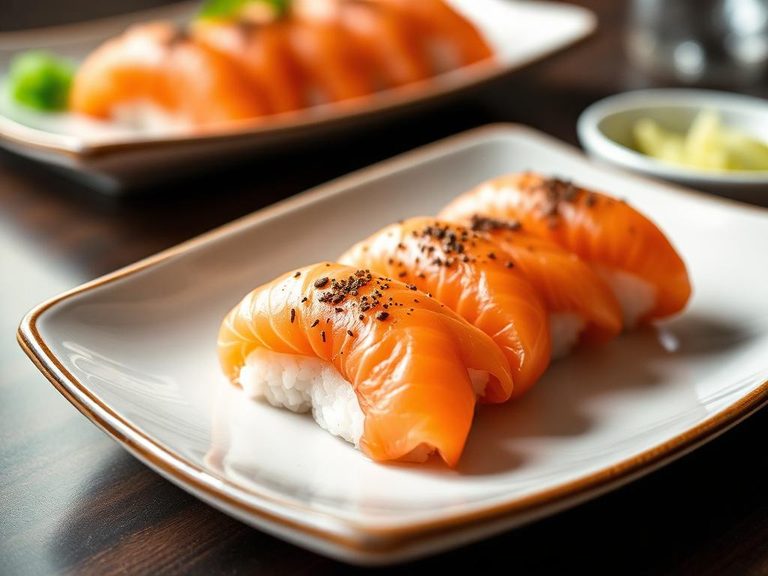
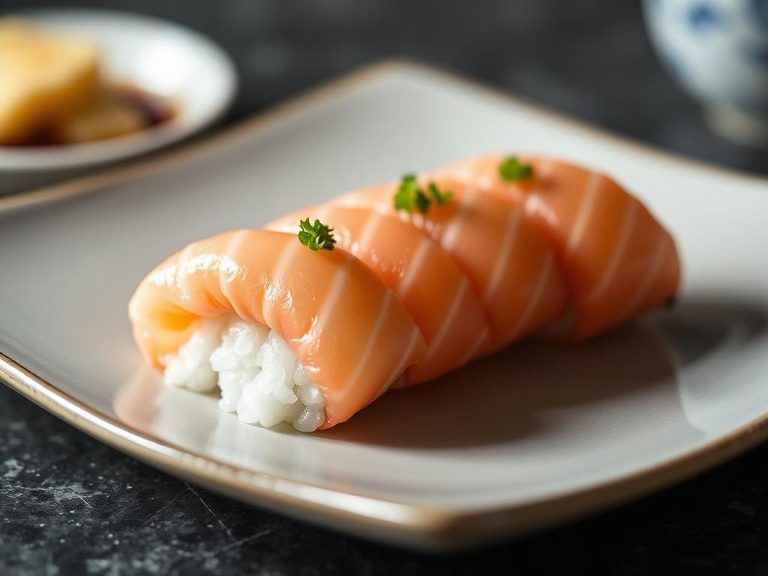
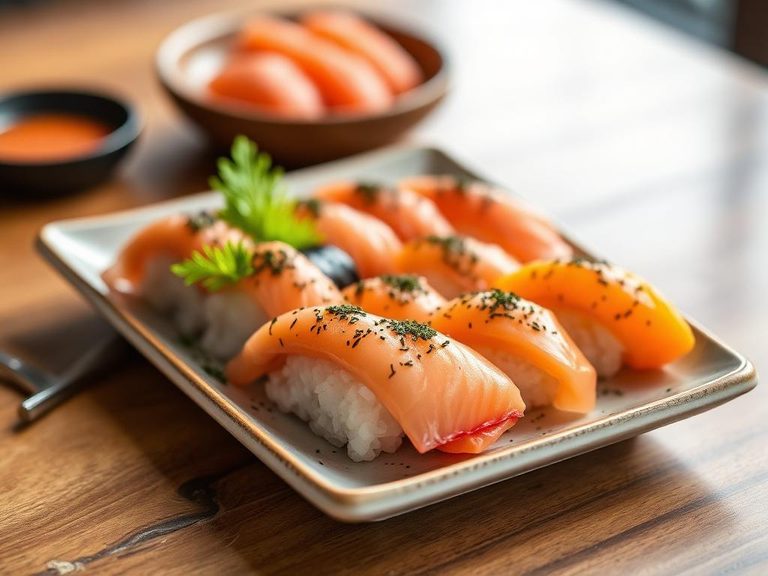
Sesame-crusted sushi (nigiri) is a Japanese dish where a slice of raw or cooked fish is pressed onto a small mound of vinegared rice and coated with toasted sesame seeds. The fish is typically tuna, salmon, or shrimp, and the sesame seeds add a nutty crunch. It originated in Japan as a popular form of sushi.
🍽️ Nutrition at a glance
This dish is a balanced source of carbohydrates from the rice, protein from the fish, and healthy fats from the sesame seeds. A typical two-piece serving provides roughly 150-200 calories, along with omega-3 fatty acids, B vitamins, and minerals like selenium.
Nutrition breakdown
| Calories | 120 kcal |
| Protein | 4.5 g |
| Carbs | 18 g |
| Fat | 3.5 g |
| Fiber | 0.5 g |
| Sugar | 2 g |
| Sodium | 280 mg |
| Selenium | 12 µg |
| Manganese | 0.4 mg |
| Phosphorus | 80 mg |
| Magnesium | 15 mg |
| Iron | 0.8 mg |
| Niacin (B3) | 1.5 mg |
| Thiamin (B1) | 0.1 mg |
| Copper | 0.1 mg |
Per 2 pieces (70 g) · estimated, varies by recipe
💡 What's interesting
The sesame crust is a creative variation that enhances texture and adds a layer of nutty flavor, showcasing the Japanese principle of balancing taste and presentation. Nutritionally, the sesame seeds boost the dish's fiber, calcium, and antioxidant content.