Mackerel Sushi or Nigiri
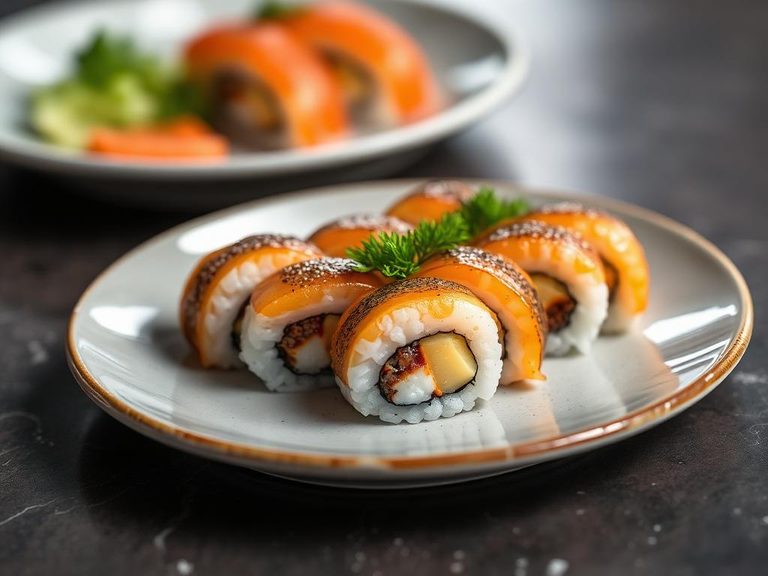
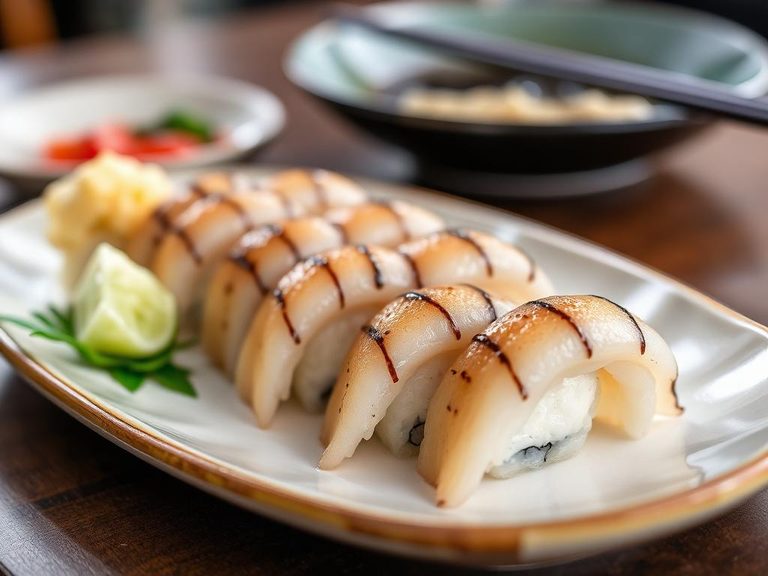
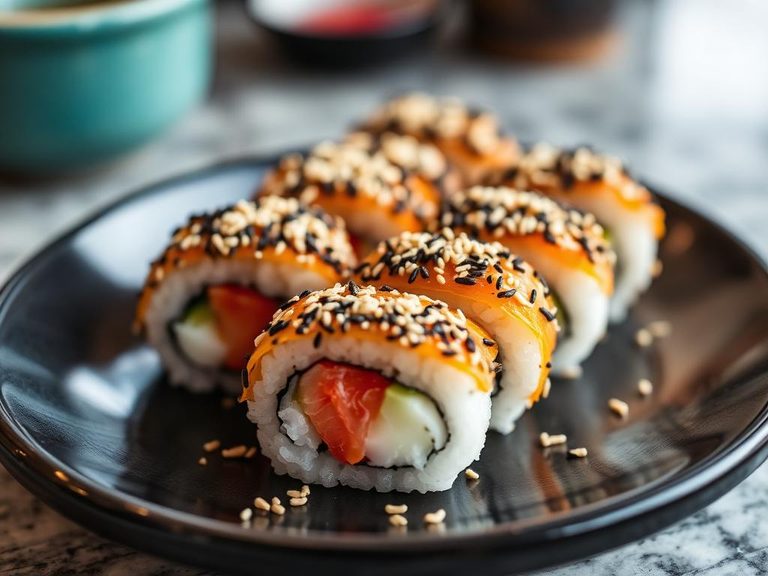
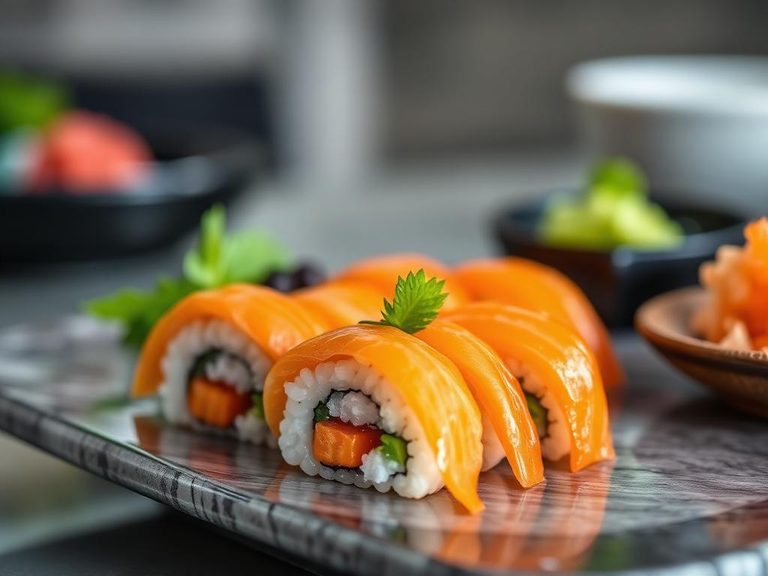
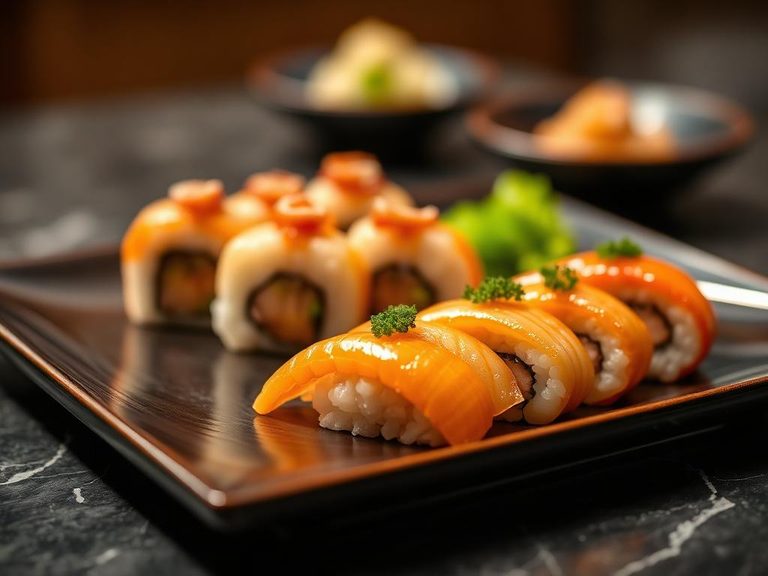
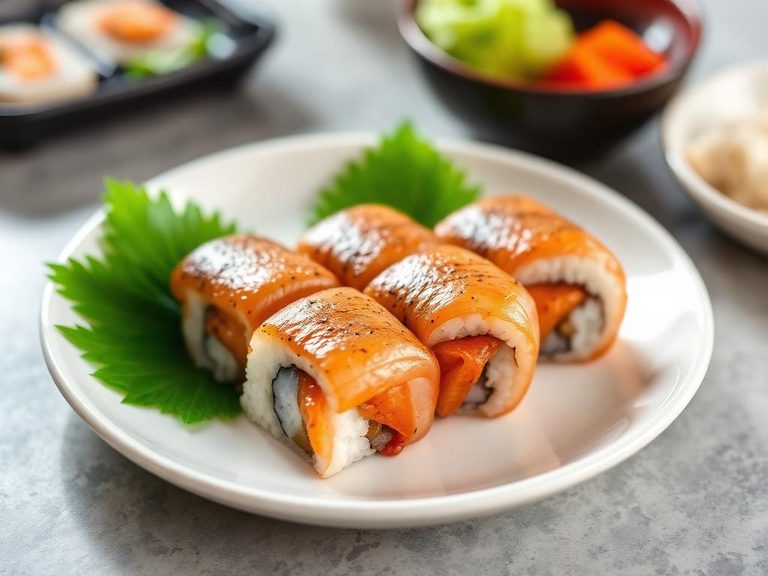
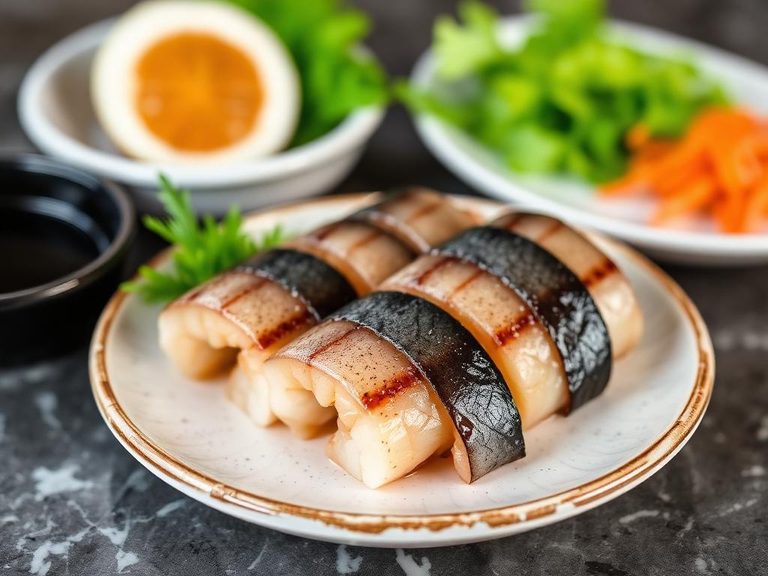
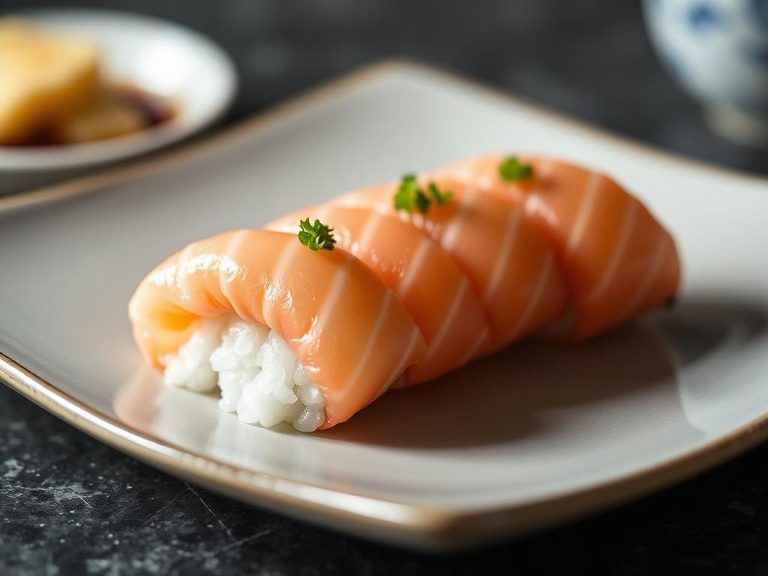
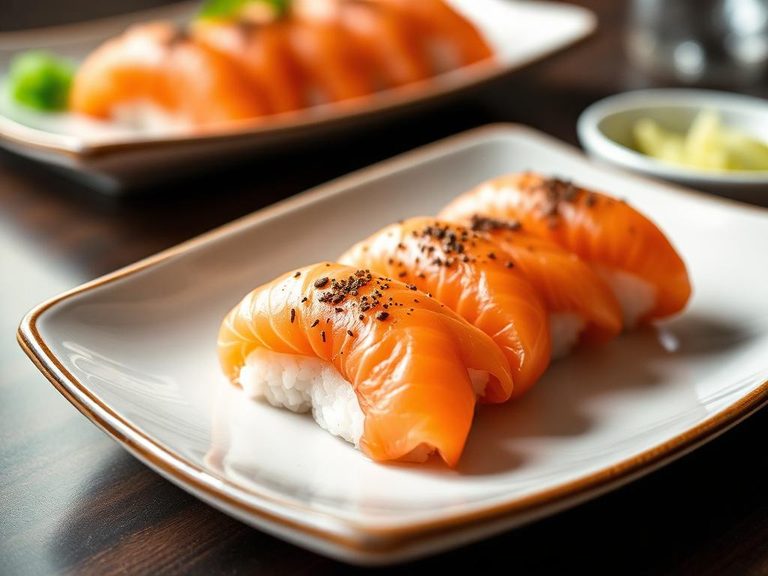
Mackerel sushi, often served as nigiri, features a slice of cured or seared mackerel (saba) atop a small bed of vinegared sushi rice. This dish is a staple of Edomae-style sushi, originating in Tokyo, Japan, where the fish was traditionally cured to preserve it before refrigeration existed.
🍽️ Nutrition at a glance
This dish is a good source of high-quality protein and healthy omega-3 fatty acids, with a moderate calorie count of roughly 200-250 calories per two-piece serving. It is relatively low in carbohydrates, with most coming from the sushi rice.
Nutrition breakdown
| Calories | 160 kcal |
| Protein | 11 g |
| Carbs | 22 g |
| Fat | 4 g |
| Fiber | 0.5 g |
| Sugar | 2 g |
| Sodium | 320 mg |
| Vitamin B12 | 4.5 mcg |
| Vitamin D | 1.5 mcg |
| Selenium | 30 mcg |
| Phosphorus | 150 mg |
| Niacin (B3) | 5 mg |
| Omega-3 (EPA+DHA) | 0.5 g |
| Iron | 1 mg |
| Magnesium | 25 mg |
Per 2 pieces (100 g) · estimated, varies by recipe
💡 What's interesting
Culturally, mackerel nigiri is a prime example of Edomae technique, where the fish is often cured in salt and vinegar or lightly seared to enhance flavor and texture. Nutritionally, mackerel is one of the richest sources of omega-3s, which are beneficial for heart and brain health.