

Nigiri
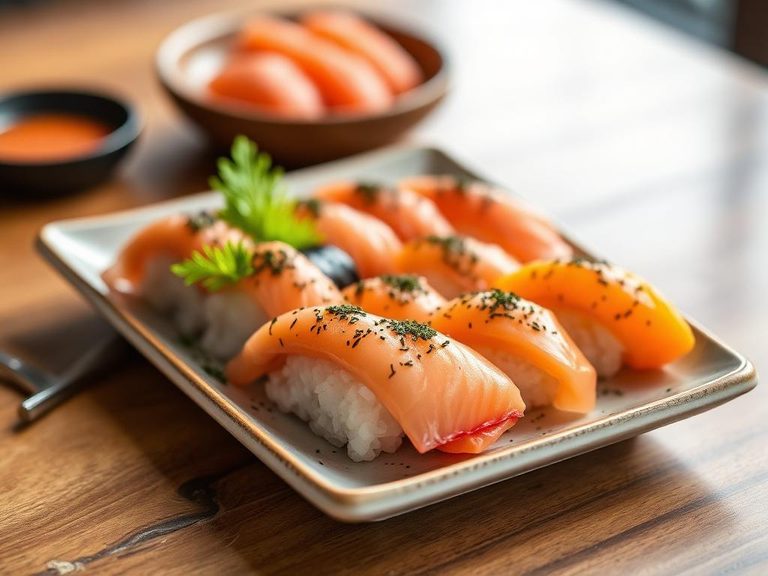
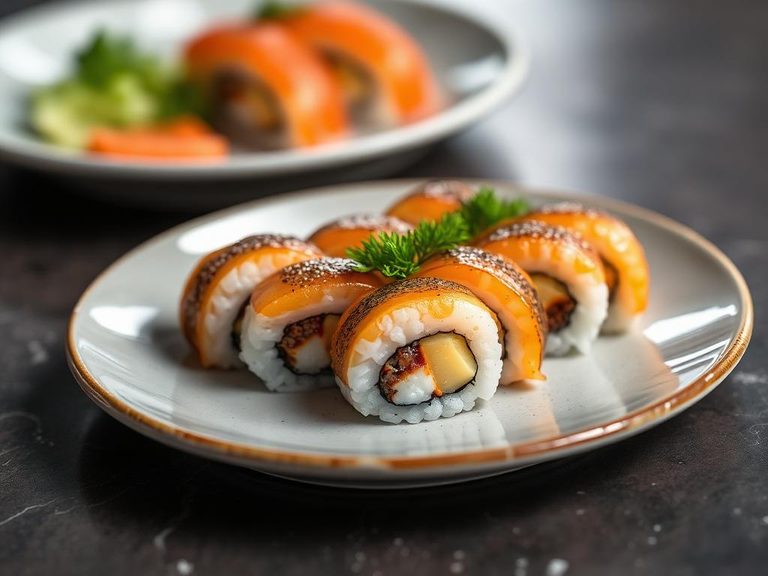
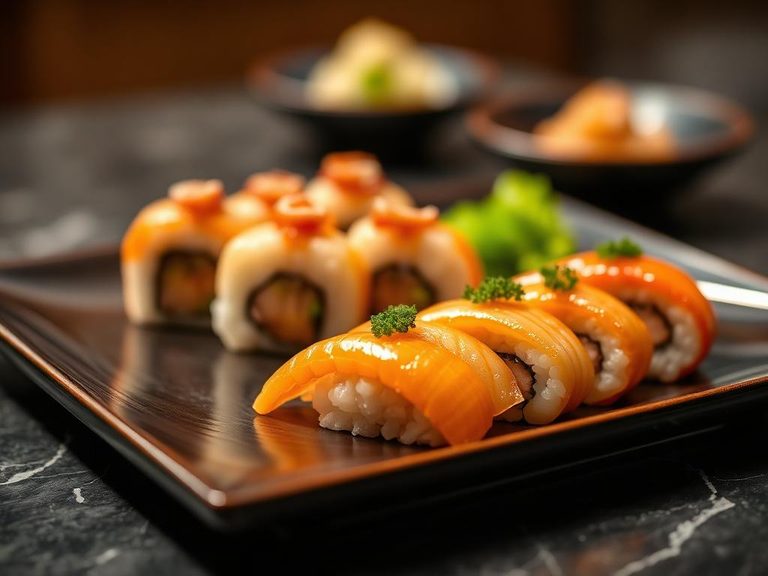
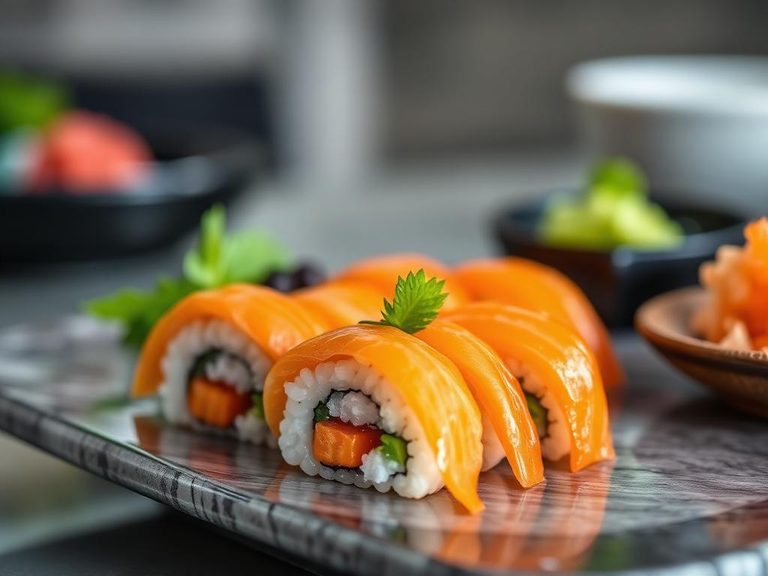
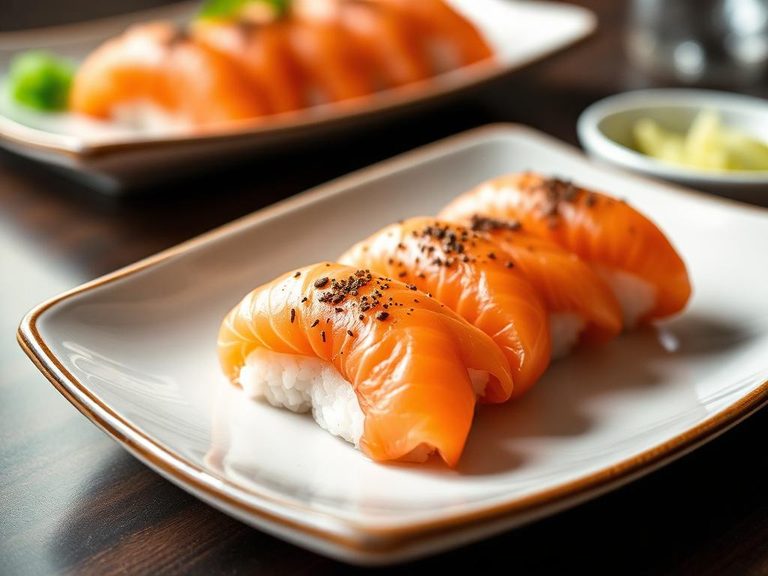
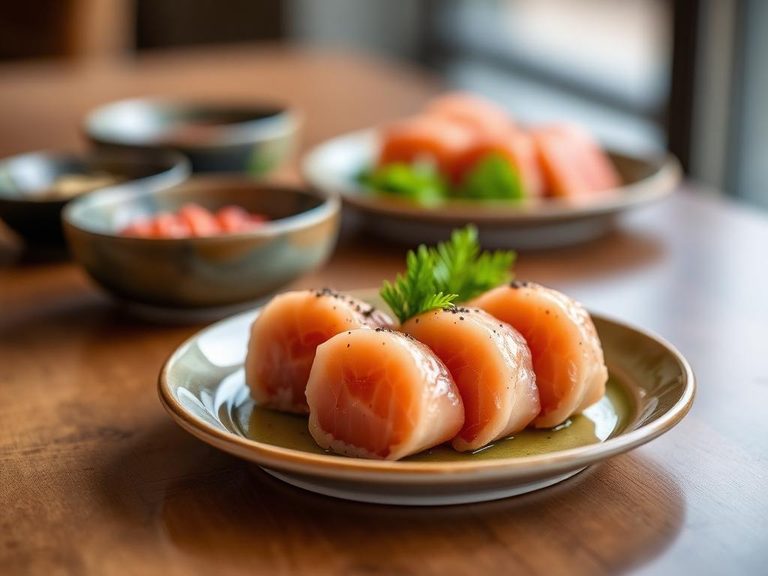
Nigiri is a classic Japanese sushi dish featuring a slice of raw or cooked seafood, such as tuna or shrimp, hand-pressed onto a small mound of vinegared rice. It originated in Edo (modern-day Tokyo) during the early 19th century as a fast-food style sushi. The dish is known for its simplicity, highlighting the freshness of the fish and the texture of the rice.
🍳 View the full Nigiri recipe →
🍽️ Nutrition at a glance
Nigiri is a balanced source of protein from the seafood and carbohydrates from the rice, with a moderate amount of fat depending on the fish type. A typical serving of two pieces provides roughly 150-200 calories, along with omega-3 fatty acids and essential vitamins.
Nutrition breakdown
| Calories | 140 kcal |
| Protein | 6 g |
| Carbs | 22 g |
| Fat | 2 g |
| Fiber | 0.5 g |
| Sugar | 1 g |
| Sodium | 320 mg |
| Selenium | 15 mcg |
| Niacin (B3) | 2.5 mg |
| Phosphorus | 80 mg |
| Magnesium | 15 mg |
| Vitamin B12 | 0.5 mcg |
| Iron | 0.8 mg |
| Zinc | 0.6 mg |
| Manganese | 0.3 mg |
Per 2 pieces (70 g) · estimated, varies by recipe
💡 What's interesting
Nigiri is culturally significant as it embodies the Japanese principle of 'shun'—using ingredients at their peak seasonal freshness. Nutritionally, the combination of fish and rice offers a complete protein profile, making it a wholesome and efficient meal.
🍽️ Related dishes
AI estimate may be inaccurate · Terms