

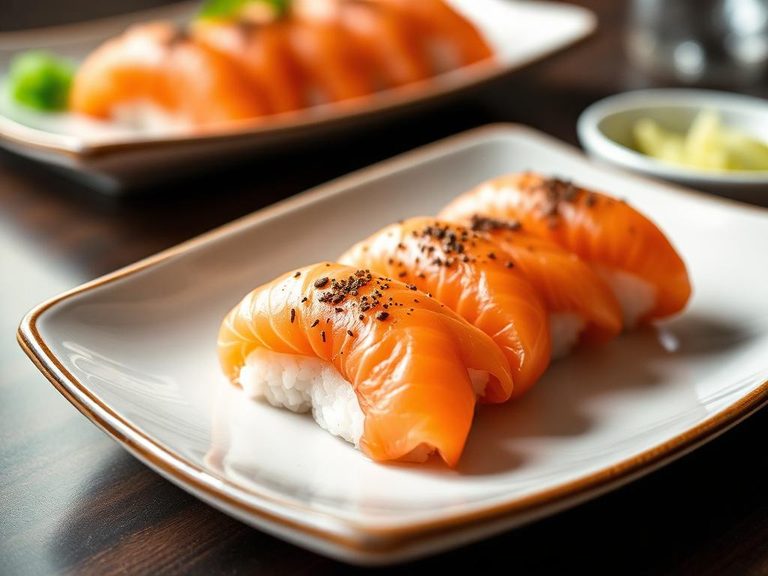
Tuna Nigiri
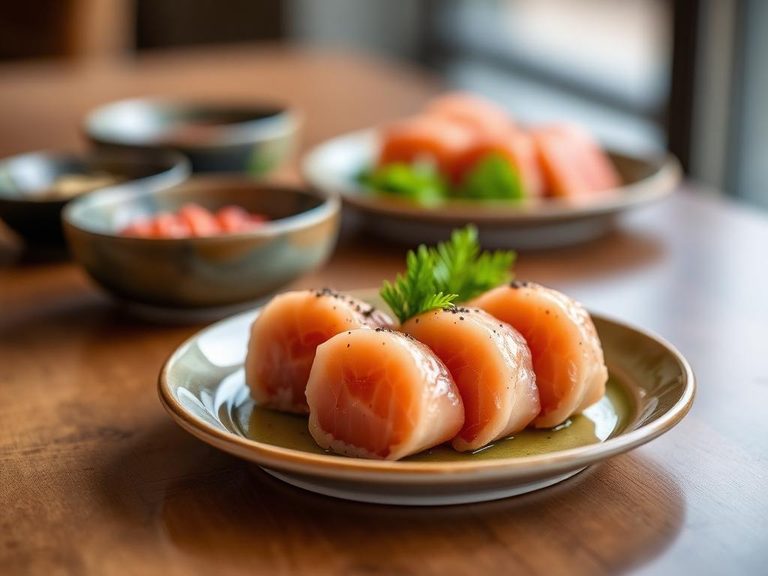
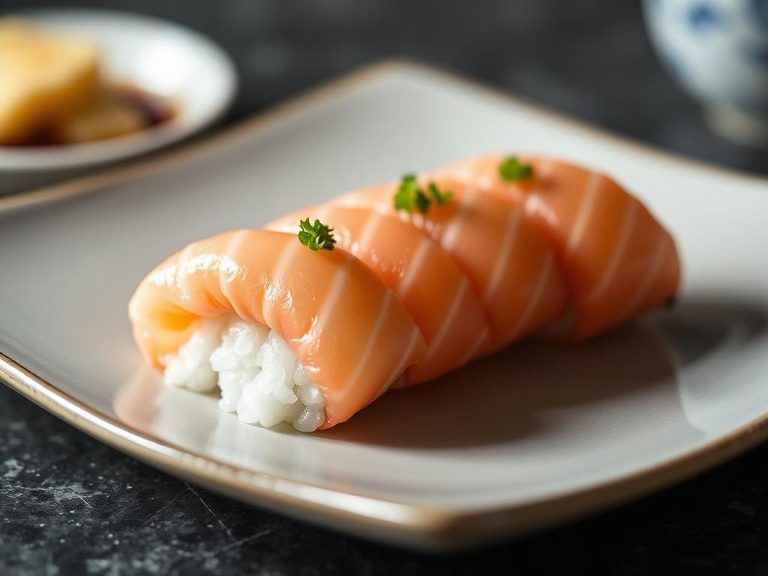
Tuna Nigiri is a classic Japanese sushi dish consisting of a slice of raw tuna (typically bluefin or bigeye) draped over a small, hand-pressed mound of vinegared rice. It is a staple of Edomae-style sushi, originating from Tokyo, Japan, and is celebrated for its simplicity and focus on the quality of the fish.
🍽️ Nutrition at a glance
This dish is high in protein and healthy fats, particularly omega-3 fatty acids, while being relatively low in carbohydrates. A single piece typically contains around 40-60 calories, providing a good source of vitamin D, selenium, and B vitamins.
Nutrition breakdown
| Calories | 100 kcal |
| Protein | 12 g |
| Carbs | 12 g |
| Fat | 1 g |
| Fiber | 0 g |
| Sugar | 1 g |
| Sodium | 300 mg |
| Selenium | 30 mcg |
| Vitamin B12 | 2.5 mcg |
| Niacin (B3) | 8 mg |
| Phosphorus | 120 mg |
| Potassium | 150 mg |
| Vitamin D | 1.5 mcg |
| Iron | 0.8 mg |
| Magnesium | 20 mg |
Per 2 pieces (70 g) · estimated, varies by recipe
💡 What's interesting
Culturally, the quality of tuna for nigiri is graded by color and fat content, with prized cuts like 'akami' (lean) and 'otoro' (fatty belly). Nutritionally, the omega-3s in tuna are linked to heart and brain health, making it a nutrient-dense choice.
🍽️ Related dishes
AI estimate may be inaccurate · Terms