

Raspberries, frozen, red, unsweetened
Whole food · Fruits and Fruit Juices

Photo: Wikipedia
These are whole red raspberries, flash-frozen at peak ripeness to lock in their bright, tangy flavor and delicate, juicy texture. Each 100-gram serving is remarkably low in calories at just 56 kcal, yet delivers an impressive 4.3 grams of dietary fiber. Their vibrant color signals a wealth of natural antioxidants.
Calorie split: 7% protein · 81% carbs · 12% fat
↓ Full nutrition💚 Why it's loved
People love them for their perfect balance of sweet and tart, which intensifies in frozen form, making them a versatile ingredient for everything from smoothies to sauces. They are a staple in summer desserts and a symbol of seasonal abundance in many cultures.
⚠️ Watch-outs & how to enjoy it better
The high fiber content, while beneficial, can cause digestive discomfort like bloating in some individuals if consumed in large amounts. To mitigate this, start with smaller portions and ensure adequate water intake. They also contain natural sugars, so those monitoring blood sugar should pair them with a protein or fat source like yogurt or nuts.
Key benefits
- Excellent source of dietary fiber for digestive health
- Rich in antioxidants like vitamin C and ellagic acid
- Low in calories, supporting weight management
- Naturally high in manganese for bone health
- Provides a good amount of folate
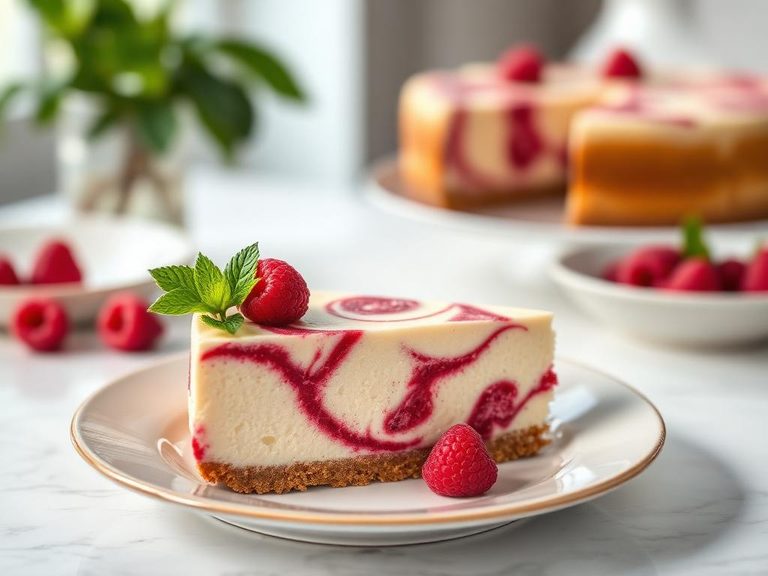
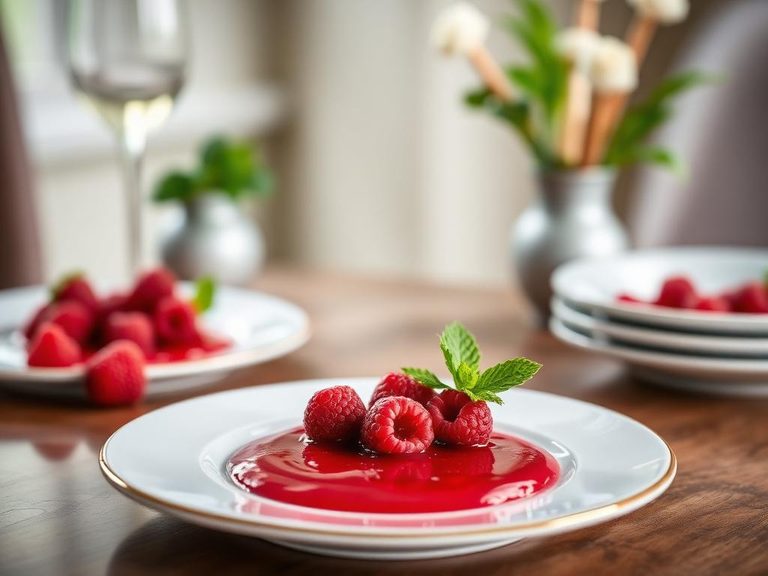
🍽️ Popular dishes
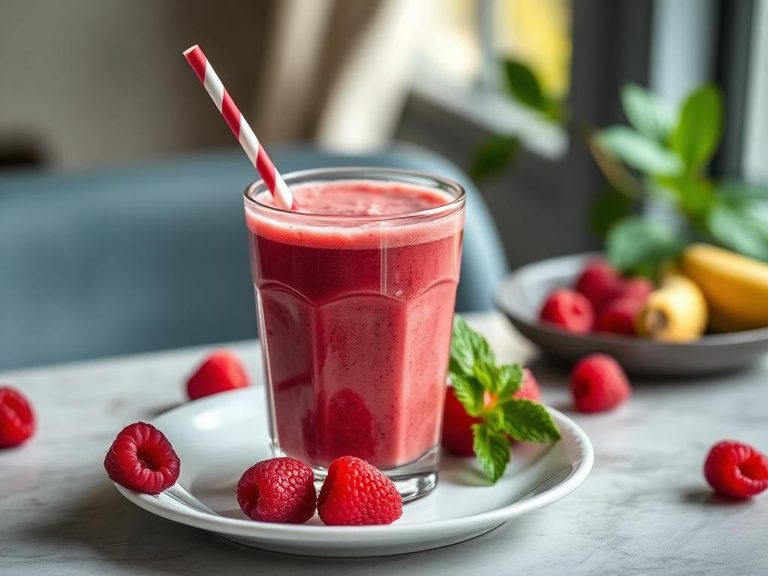
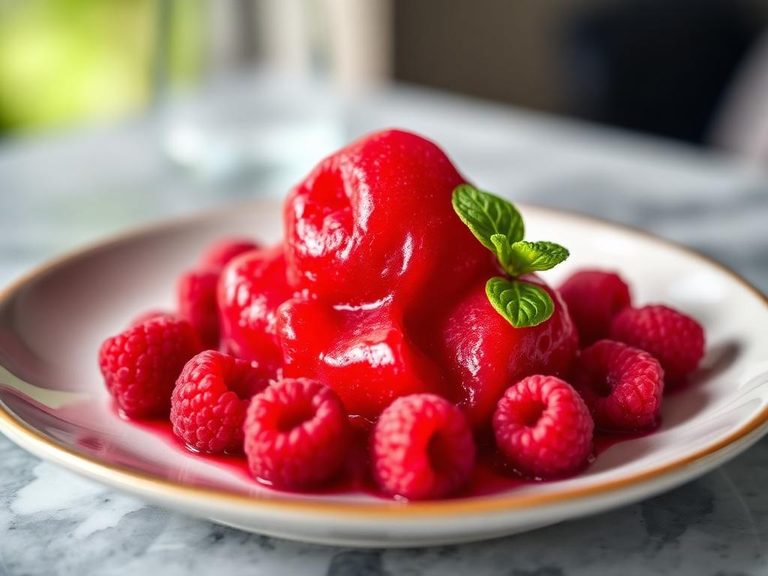
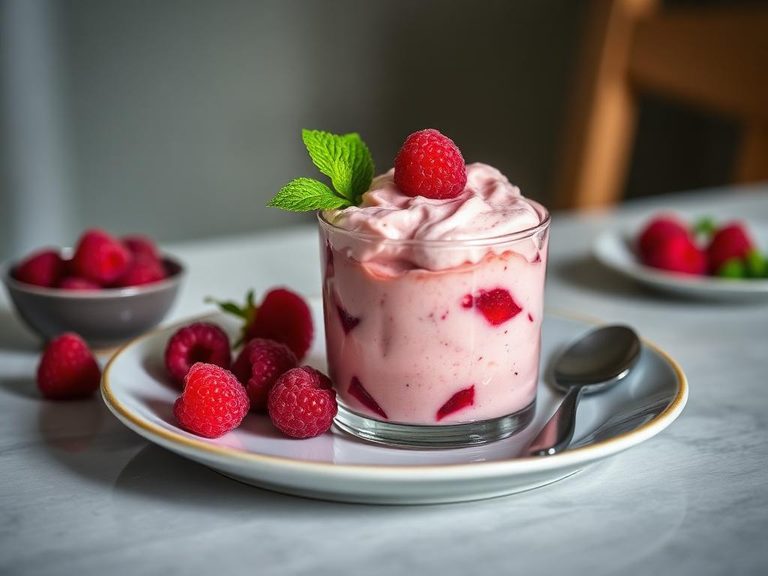
🌍 Where it's eaten
💡 Did you know?
A single raspberry is not a true berry botanically; it's an aggregate fruit made up of dozens of tiny individual drupelets, each containing its own seed.
Full nutrition (USDA data · scales with serving)
| Water | 85.0 g |
| Energy | 56.0 kcal |
| Energy | 234 kj |
| Protein | 1.1 g |
| Total lipid (fat) | 0.81 g |
| Ash | 0.48 g |
| Carbohydrate, by difference | 12.6 g |
| Fiber, total dietary | 4.3 g |
| Total Sugars | 6.5 g |
| Sucrose | 0.44 g |
| Glucose | 2.9 g |
| Fructose | 3.2 g |
| Lactose | 0.00 g |
| Maltose | 0.00 g |
| Galactose | 0.00 g |
| Starch | 0.19 g |
| Calcium, Ca | 24.0 mg |
| Iron, Fe | 0.76 mg |
| Magnesium, Mg | 23.0 mg |
| Phosphorus, P | 30.0 mg |
| Potassium, K | 184 mg |
| Sodium, Na | 4.0 mg |
| Zinc, Zn | 0.31 mg |
| Copper, Cu | 0.09 mg |
| Manganese, Mn | 0.61 mg |
| Vitamin C, total ascorbic acid | 17.6 mg |
| Thiamin | 0.09 mg |
| Riboflavin | 0.10 mg |
| Niacin | 0.68 mg |
| Pantothenic acid | 0.40 mg |
| Vitamin B-6 | 0.06 mg |
| Folate, total | 28.0 ug |
| Folic acid | 0.00 ug |
| Folate, food | 28.0 ug |
| Folate, DFE | 28.0 ug |
| Vitamin B-12 | 0.00 ug |
| Vitamin B-12, added | 0.00 ug |
| Vitamin A, RAE | 4.0 ug |
| Retinol | 0.00 ug |
| Carotene, beta | 10.0 ug |
| Carotene, alpha | 68.0 ug |
| Cryptoxanthin, beta | 0.00 ug |
| Vitamin A, IU | 74.0 iu |
| Lycopene | 0.00 ug |
| Lutein + zeaxanthin | 240 ug |
| Vitamin E (alpha-tocopherol) | 0.75 mg |
| Vitamin E, added | 0.00 mg |
| Tocopherol, beta | 0.26 mg |
| Tocopherol, gamma | 1.1 mg |
| Tocopherol, delta | 0.37 mg |
| Tocotrienol, alpha | 0.00 mg |
| Tocotrienol, beta | 0.00 mg |
| Tocotrienol, gamma | 0.00 mg |
| Tocotrienol, delta | 0.00 mg |
| Vitamin D (D2 + D3), International Units | 0.00 iu |
| Vitamin D (D2 + D3) | 0.00 ug |
| Caffeine | 0.00 mg |
| Theobromine | 0.00 mg |
Fat & fatty acid profile (per 100g)
| Fatty acids, total saturated | 0.06 g |
| SFA 4:0 | 0.01 g |
| SFA 6:0 | 0.00 g |
| SFA 8:0 | 0.00 g |
| SFA 10:0 | 0.00 g |
| SFA 12:0 | 0.00 g |
| SFA 14:0 | 0.00 g |
| SFA 15:0 | 0.00 g |
| SFA 16:0 | 0.03 g |
| SFA 17:0 | 0.00 g |
| SFA 18:0 | 0.01 g |
| SFA 20:0 | 0.00 g |
| SFA 22:0 | 0.00 g |
| SFA 24:0 | 0.00 g |
| Fatty acids, total monounsaturated | 0.03 g |
| MUFA 14:1 | 0.00 g |
| MUFA 15:1 | 0.00 g |
| MUFA 16:1 | 0.00 g |
| MUFA 16:1 c | 0.00 g |
| MUFA 17:1 | 0.00 g |
| MUFA 18:1 | 0.02 g |
| MUFA 18:1 c | 0.02 g |
| MUFA 20:1 | 0.00 g |
| MUFA 22:1 | 0.00 g |
| MUFA 22:1 c | 0.00 g |
| MUFA 24:1 c | 0.00 g |
| Fatty acids, total polyunsaturated | 0.03 g |
| PUFA 18:2 | 0.01 g |
| PUFA 18:2 n-6 c,c | 0.01 g |
| PUFA 18:2 CLAs | 0.00 g |
| PUFA 18:3 | 0.02 g |
| PUFA 18:3 n-3 c,c,c (ALA) | 0.02 g |
| PUFA 18:3 n-6 c,c,c | 0.00 g |
| PUFA 18:3i | 0.00 g |
| PUFA 18:4 | 0.00 g |
| PUFA 20:2 n-6 c,c | 0.00 g |
| PUFA 20:3 | 0.00 g |
| PUFA 20:3 n-3 | 0.00 g |
| PUFA 20:3 n-6 | 0.00 g |
| PUFA 20:4 | 0.00 g |
| PUFA 20:5 n-3 (EPA) | 0.00 g |
| PUFA 22:4 | 0.00 g |
| PUFA 22:5 n-3 (DPA) | 0.00 g |
| PUFA 22:6 n-3 (DHA) | 0.00 g |
| Fatty acids, total trans | 0.00 g |
| Fatty acids, total trans-monoenoic | 0.00 g |
| TFA 16:1 t | 0.00 g |
| TFA 18:1 t | 0.00 g |
| TFA 22:1 t | 0.00 g |
| TFA 18:2 t not further defined | 0.00 g |
| Fatty acids, total trans-polyenoic | 0.00 g |
| Cholesterol | 0.00 mg |
FAQ
How do frozen raspberries compare nutritionally to fresh?
Flash-frozen raspberries are nutritionally comparable to fresh, sometimes even superior, as freezing at peak ripeness preserves vitamins and antioxidants that can degrade in fresh berries during transport and storage.
Can I use frozen raspberries directly in baking?
Yes, you can often use them straight from the freezer in muffins, cakes, and pies. For fillings, you may want to thaw and drain them first to control excess moisture.
Why do my frozen raspberries sometimes turn mushy when thawed?
The ice crystals formed during freezing can rupture the fruit's cell walls. To minimize this, thaw them gently in the refrigerator or use them frozen in applications like smoothies where texture is less critical.
Nutrient density (calculated · NRF9.3)
Nutrient Rich Foods index: beneficial nutrients (protein, fiber, vitamins, minerals) minus saturated fat, added sugar & sodium, per 100 kcal.
NRF9.3 index — Fulgoni, Keast & Drewnowski, 2009. Computed from USDA nutrients.
Weight-loss friendliness (composite index)
Energy density 0.56 kcal/g · 8% calories from protein · 4.3 g fiber · 6.5 g sugar per 100 g.
Composite of energy density (Rolls et al., 1999), protein & fiber satiety, minus sugar. A calculated heuristic — ranks satiety-per-calorie, not a clinical measure.
Dietary load (calculated from USDA values)
Potential renal acid load. Positive = acid-forming, negative = alkaline-forming.
Sodium-to-potassium ratio: 0.02 (lower is better — aim for ≤ 1)
Sodium:potassium per WHO potassium guidance. Computed from USDA nutrients.