

Pork, fresh, spareribs, separable lean and fat, raw
Whole food · Pork Products
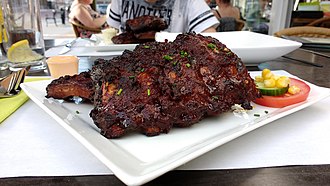
Photo: Wikipedia
Pork spareribs are a primal cut from the pig's ribcage, prized for their perfect balance of rich, marbled fat and tender, flavorful meat clinging to the bone. When raw, they have a deep pink to red hue with visible white fat striations, promising a succulent, savory result when cooked. Nutritionally, they are a dense source of high-quality protein and energy, with nearly all calories coming from protein and fat.
Calorie split: 23% protein · 0% carbs · 77% fat
↓ Full nutrition💚 Why it's loved
People adore spareribs for their unparalleled ability to absorb marinades and smoky flavors, delivering a deeply savory, umami-rich taste. The ritual of eating them—gnawing the tender meat from the bone—is a beloved, hands-on experience central to many social gatherings and comfort food traditions.
⚠️ Watch-outs & how to enjoy it better
Their high fat and calorie density can be a concern for those managing weight or cardiovascular health. To enjoy them mindfully, practice portion control, trim excess visible fat before cooking, and pair with large servings of fibrous, non-starchy vegetables like roasted broccoli or a vinegar-based slaw to balance the meal. Opting for grilling, broiling, or baking allows excess fat to render off compared to frying.
Key benefits
- Excellent source of complete protein for muscle maintenance and repair.
- Rich in B vitamins, particularly B12 and niacin, essential for energy metabolism.
- Provides minerals like zinc and selenium, which support immune function.
- High in monounsaturated fats, which can be part of a balanced diet.
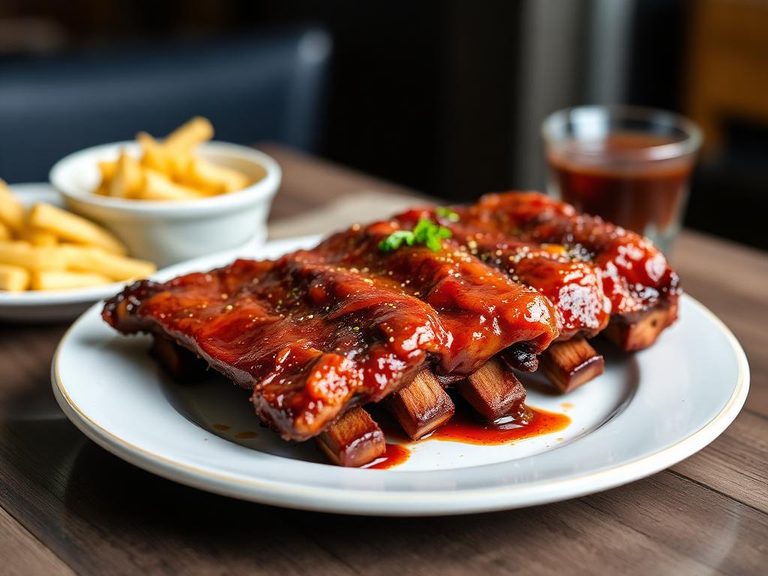
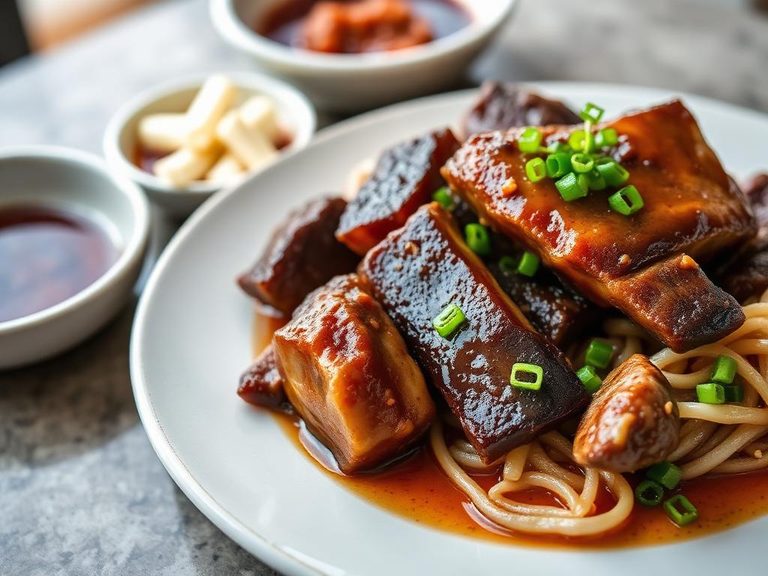
🍽️ Popular dishes

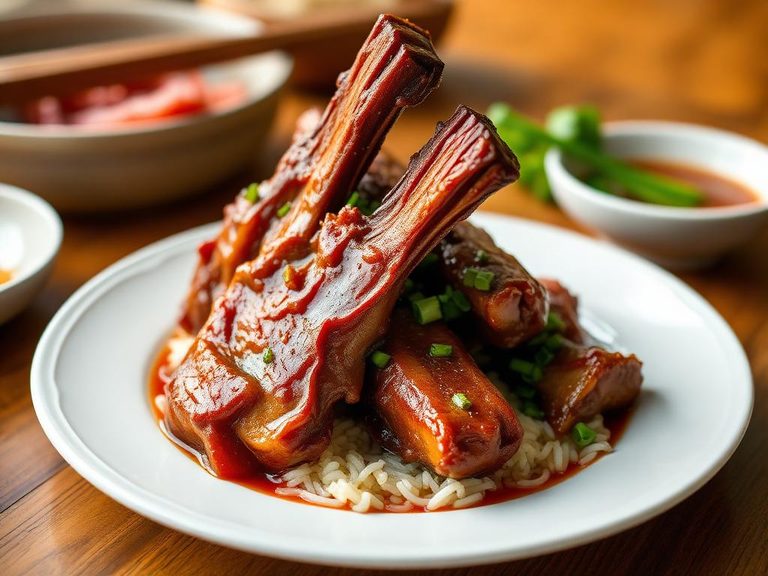
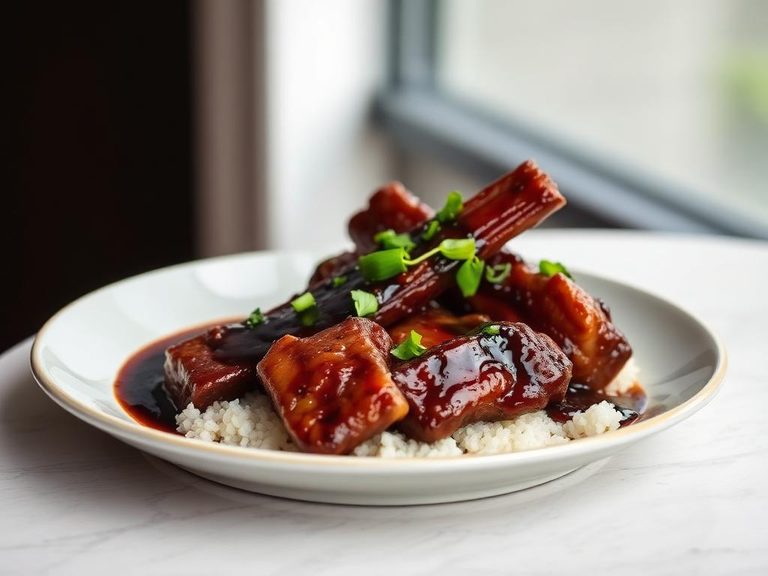
🌍 Where it's eaten
💡 Did you know?
The term 'spare ribs' is a culinary corruption of the German 'Spareribs,' which itself was an adaptation of the English 'spare rib,' meaning a rib cut 'spared' or removed from the main side of pork.
Full nutrition (USDA data · scales with serving)
| Water | 59.8 g |
| Energy | 277 kcal |
| Energy | 1159 kj |
| Protein | 15.5 g |
| Total lipid (fat) | 23.4 g |
| Ash | 0.67 g |
| Carbohydrate, by difference | 0.00 g |
| Fiber, total dietary | 0.00 g |
| Total Sugars | 0.00 g |
| Calcium, Ca | 15.0 mg |
| Iron, Fe | 0.91 mg |
| Magnesium, Mg | 16.0 mg |
| Phosphorus, P | 141 mg |
| Potassium, K | 242 mg |
| Sodium, Na | 81.0 mg |
| Zinc, Zn | 2.5 mg |
| Copper, Cu | 0.08 mg |
| Manganese, Mn | 0.01 mg |
| Selenium, Se | 22.0 ug |
| Vitamin C, total ascorbic acid | 0.00 mg |
| Thiamin | 0.32 mg |
| Riboflavin | 0.25 mg |
| Niacin | 4.7 mg |
| Pantothenic acid | 0.63 mg |
| Vitamin B-6 | 0.57 mg |
| Folate, total | 0.00 ug |
| Folic acid | 0.00 ug |
| Folate, food | 0.00 ug |
| Folate, DFE | 0.00 ug |
| Choline, total | 59.7 mg |
| Betaine | 2.2 mg |
| Vitamin B-12 | 0.38 ug |
| Vitamin B-12, added | 0.00 ug |
| Vitamin A, RAE | 0.00 ug |
| Retinol | 0.00 ug |
| Carotene, beta | 0.00 ug |
| Carotene, alpha | 0.00 ug |
| Cryptoxanthin, beta | 0.00 ug |
| Vitamin A, IU | 0.00 iu |
| Lycopene | 0.00 ug |
| Lutein + zeaxanthin | 0.00 ug |
| Vitamin E (alpha-tocopherol) | 0.37 mg |
| Vitamin E, added | 0.00 mg |
| Vitamin D (D2 + D3), International Units | 91.0 iu |
| Vitamin D (D2 + D3) | 2.3 ug |
| Vitamin D3 (cholecalciferol) | 2.3 ug |
| Vitamin K (phylloquinone) | 0.00 ug |
| Vitamin K (Dihydrophylloquinone) | 0.00 ug |
| Alcohol, ethyl | 0.00 g |
| Caffeine | 0.00 mg |
| Theobromine | 0.00 mg |
Fat & fatty acid profile (per 100g)
| Fatty acids, total saturated | 7.5 g |
| SFA 4:0 | 0.00 g |
| SFA 6:0 | 0.00 g |
| SFA 8:0 | 0.00 g |
| SFA 10:0 | 0.00 g |
| SFA 12:0 | 0.00 g |
| SFA 14:0 | 0.24 g |
| SFA 15:0 | 0.00 g |
| SFA 16:0 | 4.7 g |
| SFA 17:0 | 0.04 g |
| SFA 18:0 | 2.6 g |
| SFA 22:0 | 0.00 g |
| Fatty acids, total monounsaturated | 8.5 g |
| MUFA 14:1 | 0.00 g |
| MUFA 15:1 | 0.00 g |
| MUFA 16:1 | 0.53 g |
| MUFA 17:1 | 0.00 g |
| MUFA 18:1 | 7.9 g |
| MUFA 18:1 c | 7.8 g |
| MUFA 20:1 | 0.12 g |
| MUFA 22:1 | 0.00 g |
| Fatty acids, total polyunsaturated | 4.0 g |
| PUFA 18:2 | 3.2 g |
| PUFA 18:2 n-6 c,c | 3.1 g |
| PUFA 18:3 | 0.08 g |
| PUFA 18:3 n-3 c,c,c (ALA) | 0.08 g |
| PUFA 18:3 n-6 c,c,c | 0.00 g |
| PUFA 18:4 | 0.00 g |
| PUFA 20:2 n-6 c,c | 0.08 g |
| PUFA 20:3 | 0.00 g |
| PUFA 20:4 | 0.56 g |
| PUFA 20:5 n-3 (EPA) | 0.00 g |
| PUFA 22:5 n-3 (DPA) | 0.00 g |
| PUFA 22:6 n-3 (DHA) | 0.00 g |
| Fatty acids, total trans | 0.22 g |
| Fatty acids, total trans-monoenoic | 0.14 g |
| TFA 18:1 t | 0.14 g |
| TFA 18:2 t,t | 0.08 g |
| Fatty acids, total trans-polyenoic | 0.08 g |
| Cholesterol | 80.0 mg |
Amino acid profile (per 100g)
| Tryptophan | 0.16 g |
| Threonine | 0.69 g |
| Isoleucine | 0.76 g |
| Leucine | 1.3 g |
| Lysine | 1.4 g |
| Methionine | 0.43 g |
| Cystine | 0.18 g |
| Phenylalanine | 0.65 g |
| Tyrosine | 0.59 g |
| Valine | 0.81 g |
| Arginine | 1.0 g |
| Histidine | 0.67 g |
| Alanine | 0.91 g |
| Aspartic acid | 1.5 g |
| Glutamic acid | 2.5 g |
| Glycine | 0.70 g |
| Proline | 0.63 g |
| Serine | 0.67 g |
| Hydroxyproline | 0.04 g |
FAQ
What's the difference between spareribs and baby back ribs?
Spareribs are larger, flatter, and come from the belly side of the rib cage, containing more bone and connective tissue. Baby back ribs are smaller, more curved, and leaner, taken from the loin area where the rib meets the spine.
How can I tell if raw spareribs are fresh?
Look for meat that is pinkish-red with white fat marbling, not gray or brown. The bones should be moist, not dry or green-tinged. Fresh pork should have a mild, slightly sweet smell—any sour or ammonia-like odor is a sign of spoilage.
Why are my cooked spareribs tough?
Toughness usually means they were undercooked. Spareribs need low, slow heat (like braising, smoking, or baking at a low temperature) to break down the tough collagen into gelatin. If they're tough, return them to the heat for another 30-60 minutes.
Nutrient density (calculated · NRF9.3)
Nutrient Rich Foods index: beneficial nutrients (protein, fiber, vitamins, minerals) minus saturated fat, added sugar & sodium, per 100 kcal.
NRF9.3 index — Fulgoni, Keast & Drewnowski, 2009. Computed from USDA nutrients.
Weight-loss friendliness (composite index)
Energy density 2.77 kcal/g · 22% calories from protein · 0.0 g fiber · 0.0 g sugar per 100 g.
Composite of energy density (Rolls et al., 1999), protein & fiber satiety, minus sugar. A calculated heuristic — ranks satiety-per-calorie, not a clinical measure.
Dietary load (calculated from USDA values)
Potential renal acid load. Positive = acid-forming, negative = alkaline-forming.
Sodium-to-potassium ratio: 0.33 (lower is better — aim for ≤ 1)
Sodium:potassium per WHO potassium guidance. Computed from USDA nutrients.