

Pork, fresh, loin, center rib (roasts), bone-in, separable lean and fat, cooked, roasted
Whole food · Pork Products

Photo: Wikipedia
This is a succulent, bone-in pork loin roast, prized for its tender, juicy lean meat marbled with a rich layer of fat that bastes the cut from within during roasting. The flavor is savory and mildly sweet, with a satisfying, firm-yet-tender texture that holds up well to carving. Nutritionally, it's a powerhouse of complete protein with virtually no carbohydrates, making it a staple for high-protein, low-carb diets.
Calorie split: 45% protein · 0% carbs · 55% fat
↓ Full nutrition💚 Why it's loved
People adore this cut for its perfect balance of lean meat and flavorful fat, which ensures a moist, tender roast without the need for heavy sauces. It's a centerpiece of Sunday dinners and holiday feasts across cultures, symbolizing comfort and celebration.
⚠️ Watch-outs & how to enjoy it better
The significant fat content (nearly 15g per 100g) can be a concern for those monitoring saturated fat intake. To counteract this, trim excess external fat before cooking and pair the meat with fiber-rich vegetables like roasted broccoli or a vinegar-based slaw to aid digestion and balance the meal.
Key benefits
- Excellent source of complete, high-quality protein (27g per 100g).
- Zero carbohydrates, making it ideal for ketogenic and low-carb diets.
- Rich in B vitamins, particularly thiamine (B1) and niacin (B3).
- Provides essential minerals like selenium and phosphorus.
- The bone-in cut adds flavor and may contribute minerals during cooking.
🍽️ Popular dishes
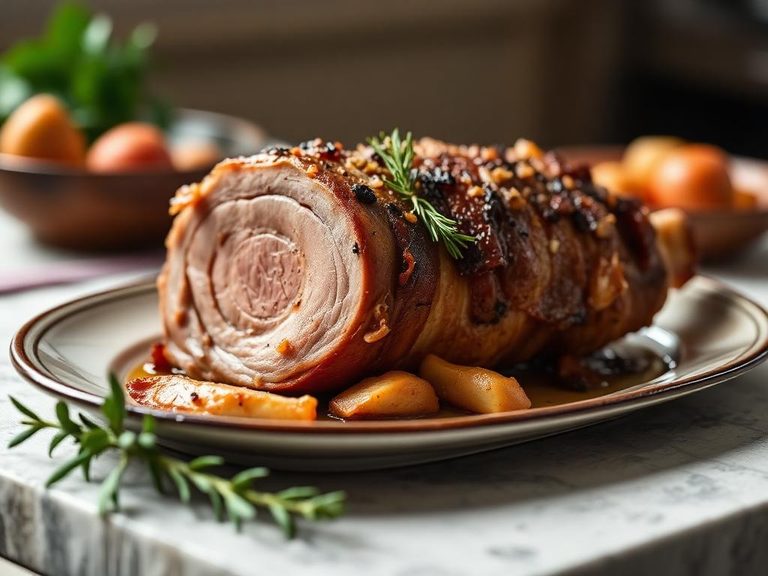
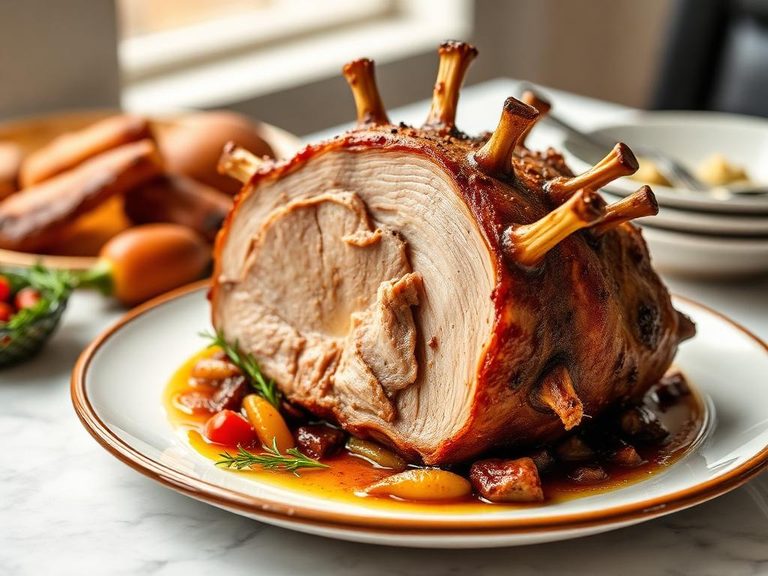
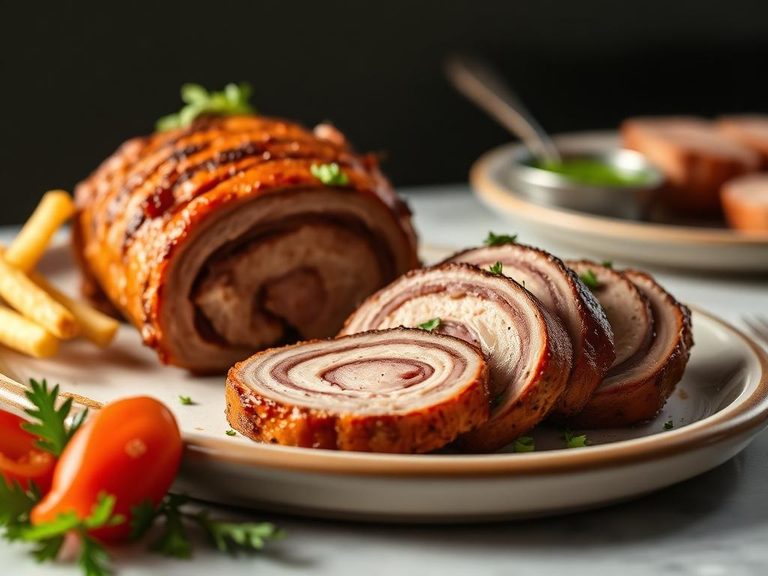

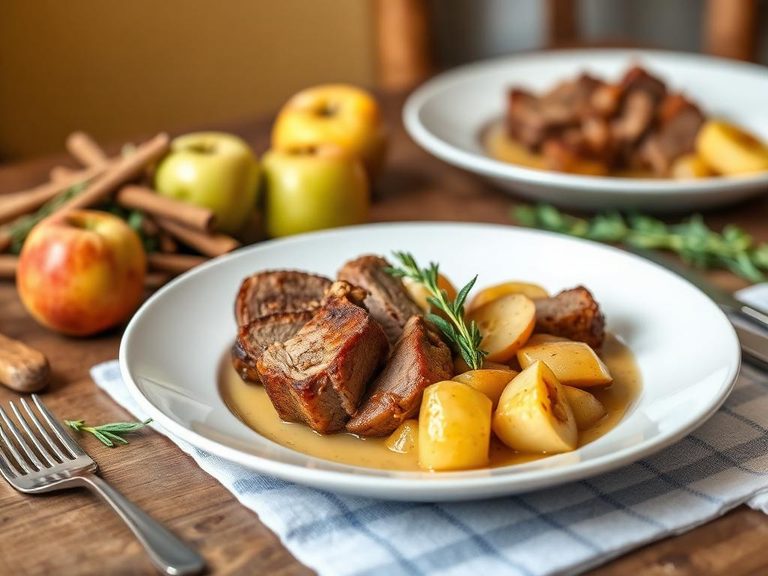
🌍 Where it's eaten
💡 Did you know?
The 'crackling' on a roasted pork loin is achieved by scoring the skin and fat layer, then applying high heat to make it puff and crisp—a prized delicacy in British and Australian cuisine.
Full nutrition (USDA data · scales with serving)
| Water | 57.8 g |
| Energy | 248 kcal |
| Energy | 1036 kj |
| Protein | 27.0 g |
| Total lipid (fat) | 14.7 g |
| Ash | 1.1 g |
| Carbohydrate, by difference | 0.00 g |
| Fiber, total dietary | 0.00 g |
| Total Sugars | 0.00 g |
| Calcium, Ca | 19.0 mg |
| Iron, Fe | 0.96 mg |
| Magnesium, Mg | 21.0 mg |
| Phosphorus, P | 230 mg |
| Potassium, K | 272 mg |
| Sodium, Na | 91.0 mg |
| Zinc, Zn | 2.9 mg |
| Copper, Cu | 0.09 mg |
| Manganese, Mn | 0.01 mg |
| Selenium, Se | 40.2 ug |
| Vitamin C, total ascorbic acid | 0.00 mg |
| Thiamin | 0.52 mg |
| Riboflavin | 0.29 mg |
| Niacin | 9.5 mg |
| Pantothenic acid | 1.5 mg |
| Vitamin B-6 | 0.48 mg |
| Folate, total | 0.00 ug |
| Folic acid | 0.00 ug |
| Folate, food | 0.00 ug |
| Folate, DFE | 0.00 ug |
| Choline, total | 92.2 mg |
| Betaine | 3.6 mg |
| Vitamin B-12 | 0.87 ug |
| Vitamin B-12, added | 0.00 ug |
| Vitamin A, RAE | 5.0 ug |
| Retinol | 5.0 ug |
| Carotene, beta | 0.00 ug |
| Carotene, alpha | 0.00 ug |
| Cryptoxanthin, beta | 0.00 ug |
| Vitamin A, IU | 16.0 iu |
| Lycopene | 0.00 ug |
| Lutein + zeaxanthin | 0.00 ug |
| Vitamin E (alpha-tocopherol) | 0.21 mg |
| Vitamin E, added | 0.00 mg |
| Vitamin D (D2 + D3), International Units | 29.0 iu |
| Vitamin D (D2 + D3) | 0.70 ug |
| Vitamin D3 (cholecalciferol) | 0.70 ug |
| Vitamin K (phylloquinone) | 0.00 ug |
| Vitamin K (Dihydrophylloquinone) | 0.00 ug |
| Alcohol, ethyl | 0.00 g |
| Caffeine | 0.00 mg |
| Theobromine | 0.00 mg |
Fat & fatty acid profile (per 100g)
| Fatty acids, total saturated | 5.4 g |
| SFA 4:0 | 0.00 g |
| SFA 6:0 | 0.00 g |
| SFA 8:0 | 0.00 g |
| SFA 10:0 | 0.01 g |
| SFA 12:0 | 0.01 g |
| SFA 14:0 | 0.19 g |
| SFA 15:0 | 0.01 g |
| SFA 16:0 | 3.3 g |
| SFA 17:0 | 0.05 g |
| SFA 18:0 | 1.8 g |
| SFA 20:0 | 0.03 g |
| SFA 22:0 | 0.00 g |
| SFA 24:0 | 0.00 g |
| Fatty acids, total monounsaturated | 6.2 g |
| MUFA 14:1 | 0.00 g |
| MUFA 15:1 | 0.00 g |
| MUFA 16:1 | 0.30 g |
| MUFA 17:1 | 0.00 g |
| MUFA 18:1 | 5.8 g |
| MUFA 18:1 c | 5.7 g |
| MUFA 20:1 | 0.10 g |
| MUFA 22:1 | 0.00 g |
| MUFA 22:1 c | 0.00 g |
| Fatty acids, total polyunsaturated | 2.5 g |
| PUFA 18:2 | 2.2 g |
| PUFA 18:2 n-6 c,c | 2.2 g |
| PUFA 18:3 | 0.09 g |
| PUFA 18:3 n-3 c,c,c (ALA) | 0.08 g |
| PUFA 18:3 n-6 c,c,c | 0.00 g |
| PUFA 18:3i | 0.01 g |
| PUFA 18:4 | 0.00 g |
| PUFA 20:2 n-6 c,c | 0.09 g |
| PUFA 20:3 | 0.01 g |
| PUFA 20:4 | 0.07 g |
| PUFA 20:5 n-3 (EPA) | 0.00 g |
| PUFA 22:5 n-3 (DPA) | 0.01 g |
| PUFA 22:6 n-3 (DHA) | 0.00 g |
| Fatty acids, total trans | 0.10 g |
| Fatty acids, total trans-monoenoic | 0.07 g |
| TFA 18:1 t | 0.07 g |
| TFA 18:2 t not further defined | 0.02 g |
| Fatty acids, total trans-polyenoic | 0.03 g |
| Cholesterol | 78.0 mg |
Amino acid profile (per 100g)
| Tryptophan | 0.32 g |
| Threonine | 1.2 g |
| Isoleucine | 1.3 g |
| Leucine | 2.2 g |
| Lysine | 2.4 g |
| Methionine | 0.74 g |
| Cystine | 0.30 g |
| Phenylalanine | 1.1 g |
| Tyrosine | 1.1 g |
| Valine | 1.4 g |
| Arginine | 1.7 g |
| Histidine | 1.1 g |
| Alanine | 1.5 g |
| Aspartic acid | 2.5 g |
| Glutamic acid | 4.1 g |
| Glycine | 1.2 g |
| Proline | 1.1 g |
| Serine | 1.1 g |
| Hydroxyproline | 0.09 g |
FAQ
What is the difference between pork loin and pork tenderloin?
Pork loin is a larger, wider cut from the back, often bone-in, with a fat cap and more marbling, ideal for roasting. Pork tenderloin is a long, narrow, very lean muscle from under the loin, best for quick cooking like grilling or sautéing.
How do I prevent a pork loin roast from drying out?
Use a meat thermometer to cook to an internal temperature of 145°F (63°C) followed by a 3-minute rest. The bone-in cut and fat layer help retain moisture, but avoid overcooking. Brining or using a slow-roasting method also helps.
Is this cut suitable for a low-fat diet?
While it contains fat, you can significantly reduce the fat content by trimming the external fat cap before cooking and choosing lean slices. The protein content remains very high, making it a good choice for a balanced, protein-focused diet.
Nutrient density (calculated · NRF9.3)
Nutrient Rich Foods index: beneficial nutrients (protein, fiber, vitamins, minerals) minus saturated fat, added sugar & sodium, per 100 kcal.
NRF9.3 index — Fulgoni, Keast & Drewnowski, 2009. Computed from USDA nutrients.
Weight-loss friendliness (composite index)
Energy density 2.48 kcal/g · 44% calories from protein · 0.0 g fiber · 0.0 g sugar per 100 g.
Composite of energy density (Rolls et al., 1999), protein & fiber satiety, minus sugar. A calculated heuristic — ranks satiety-per-calorie, not a clinical measure.
Dietary load (calculated from USDA values)
Potential renal acid load. Positive = acid-forming, negative = alkaline-forming.
Sodium-to-potassium ratio: 0.33 (lower is better — aim for ≤ 1)
Sodium:potassium per WHO potassium guidance. Computed from USDA nutrients.