

Pork, fresh, leg (ham), rump half, separable lean and fat, cooked, roasted
Whole food · Pork Products
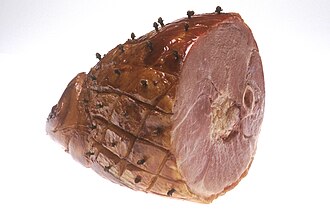
Photo: Wikipedia
This is roasted pork leg (ham), specifically the rump half, cooked to a savory, tender finish with a balance of lean meat and fat. Its flavor is rich and meaty, with a satisfying texture that ranges from succulent to slightly firm depending on the cut. Nutritionally, it's a powerhouse of protein with minimal carbs, making it a substantial, low-glycemic option for high-protein meals.
Calorie split: 54% protein · 0% carbs · 46% fat
↓ Full nutrition💚 Why it's loved
People love it for its deep, savory umami flavor and the comforting, hearty texture that comes from slow roasting. Its versatility allows it to be the star of a holiday feast or a simple weeknight dinner, fitting into many culinary traditions.
⚠️ Watch-outs & how to enjoy it better
The fat content (10g per 100g) can be a concern for those monitoring saturated fat intake, and the cooking process can sometimes make it dry if overcooked. To counteract dryness, brine the meat before roasting or use a slow-cooking method with a moist heat element. For fat management, trim visible fat before cooking and pair with fiber-rich vegetables to balance the meal.
Key benefits
- High-quality protein source (27g per 100g) for muscle maintenance.
- Zero carbohydrates, making it suitable for low-carb and ketogenic diets.
- Provides essential B vitamins, particularly B1 (thiamine) and B6, for energy metabolism.
- Contains minerals like selenium and phosphorus, important for immune function and bone health.
- A versatile, satiating protein that can anchor a wide variety of meals.
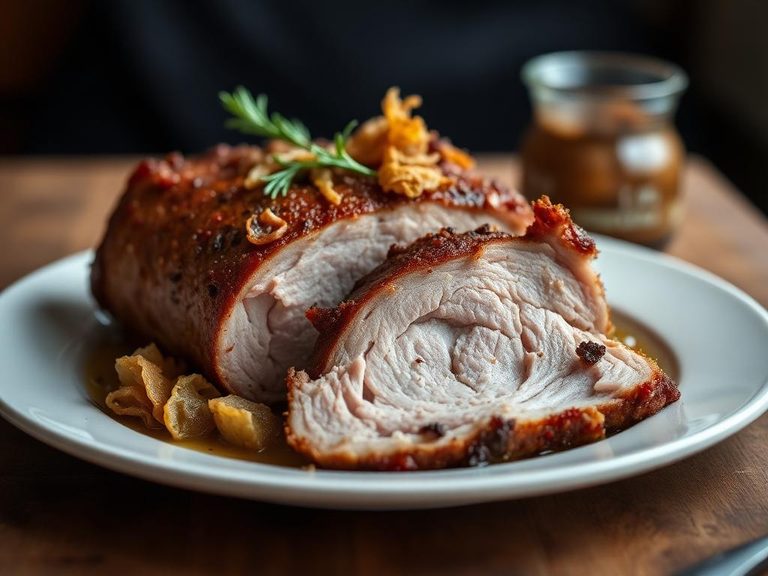
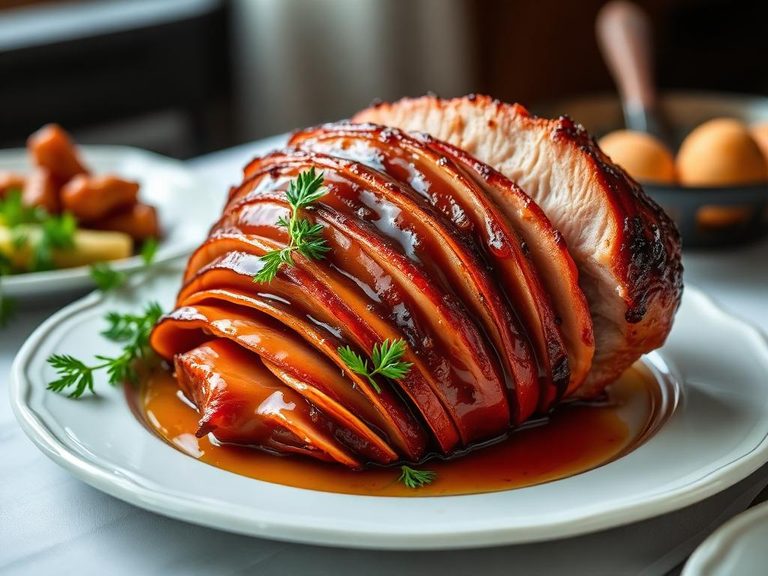
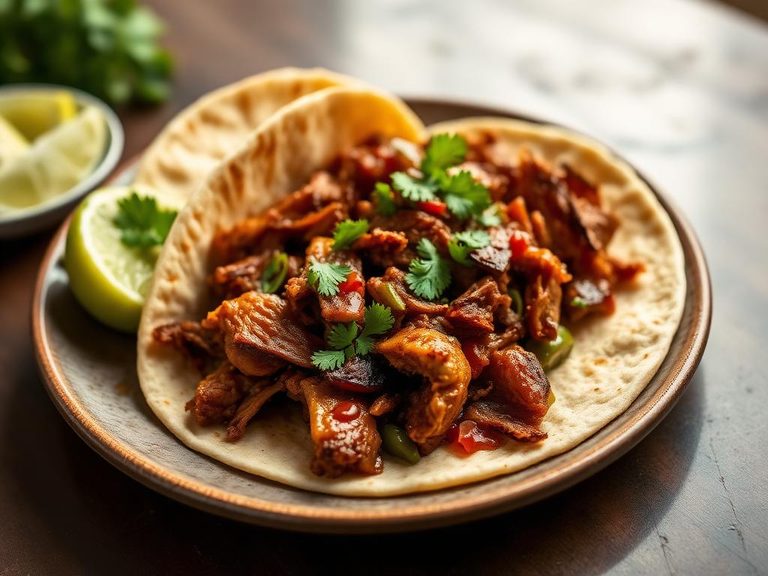
🍽️ Popular dishes
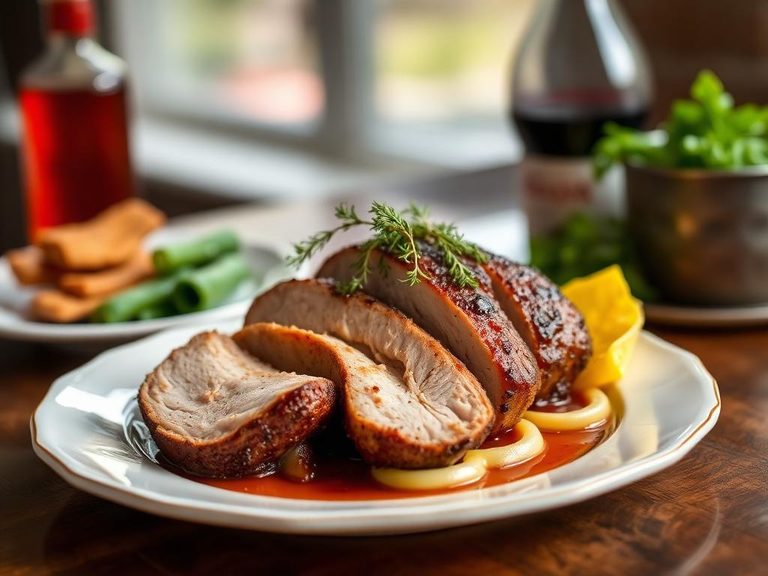
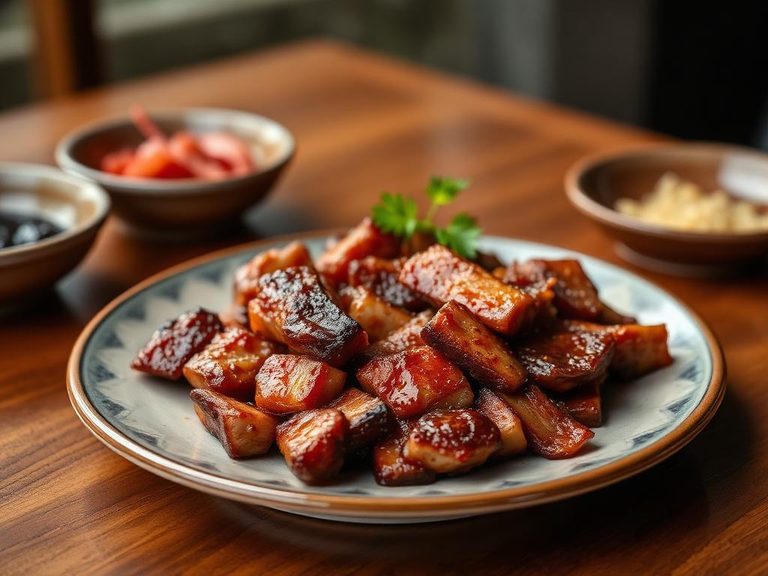
🌍 Where it's eaten
💡 Did you know?
The 'rump half' of the pork leg is historically prized because it contains a mix of muscles that cook evenly and are ideal for both roasting and slicing, making it a favorite for traditional Sunday roasts in many cultures.
Full nutrition (USDA data · scales with serving)
| Water | 61.9 g |
| Energy | 209 kcal |
| Energy | 873 kj |
| Protein | 27.0 g |
| Total lipid (fat) | 10.3 g |
| Ash | 1.2 g |
| Carbohydrate, by difference | 0.00 g |
| Fiber, total dietary | 0.00 g |
| Total Sugars | 0.00 g |
| Calcium, Ca | 16.0 mg |
| Iron, Fe | 0.90 mg |
| Magnesium, Mg | 25.0 mg |
| Phosphorus, P | 255 mg |
| Potassium, K | 416 mg |
| Sodium, Na | 77.0 mg |
| Zinc, Zn | 2.3 mg |
| Copper, Cu | 0.11 mg |
| Manganese, Mn | 0.02 mg |
| Selenium, Se | 25.0 ug |
| Vitamin C, total ascorbic acid | 0.00 mg |
| Thiamin | 0.49 mg |
| Riboflavin | 0.38 mg |
| Niacin | 7.4 mg |
| Pantothenic acid | 0.86 mg |
| Vitamin B-6 | 0.50 mg |
| Folate, total | 0.00 ug |
| Folic acid | 0.00 ug |
| Folate, food | 0.00 ug |
| Folate, DFE | 0.00 ug |
| Choline, total | 92.8 mg |
| Betaine | 3.6 mg |
| Vitamin B-12 | 0.67 ug |
| Vitamin B-12, added | 0.00 ug |
| Vitamin A, RAE | 3.0 ug |
| Retinol | 3.0 ug |
| Carotene, beta | 0.00 ug |
| Carotene, alpha | 0.00 ug |
| Cryptoxanthin, beta | 0.00 ug |
| Vitamin A, IU | 10.0 iu |
| Lycopene | 0.00 ug |
| Lutein + zeaxanthin | 0.00 ug |
| Vitamin E (alpha-tocopherol) | 0.27 mg |
| Vitamin E, added | 0.00 mg |
| Vitamin D (D2 + D3), International Units | 17.0 iu |
| Vitamin D (D2 + D3) | 0.40 ug |
| Vitamin D3 (cholecalciferol) | 0.40 ug |
| Vitamin K (phylloquinone) | 0.00 ug |
| Vitamin K (Dihydrophylloquinone) | 0.00 ug |
| Alcohol, ethyl | 0.00 g |
| Caffeine | 0.00 mg |
| Theobromine | 0.00 mg |
Fat & fatty acid profile (per 100g)
| Fatty acids, total saturated | 3.4 g |
| SFA 4:0 | 0.00 g |
| SFA 6:0 | 0.00 g |
| SFA 8:0 | 0.00 g |
| SFA 10:0 | 0.01 g |
| SFA 12:0 | 0.01 g |
| SFA 14:0 | 0.12 g |
| SFA 15:0 | 0.00 g |
| SFA 16:0 | 2.1 g |
| SFA 17:0 | 0.03 g |
| SFA 18:0 | 1.1 g |
| SFA 20:0 | 0.01 g |
| SFA 22:0 | 0.00 g |
| SFA 24:0 | 0.00 g |
| Fatty acids, total monounsaturated | 4.3 g |
| MUFA 14:1 | 0.00 g |
| MUFA 15:1 | 0.00 g |
| MUFA 16:1 | 0.21 g |
| MUFA 17:1 | 0.00 g |
| MUFA 18:1 | 4.0 g |
| MUFA 18:1 c | 4.0 g |
| MUFA 20:1 | 0.07 g |
| MUFA 22:1 | 0.00 g |
| MUFA 22:1 c | 0.00 g |
| Fatty acids, total polyunsaturated | 2.2 g |
| PUFA 18:2 | 1.9 g |
| PUFA 18:2 n-6 c,c | 1.9 g |
| PUFA 18:3 | 0.08 g |
| PUFA 18:3 n-3 c,c,c (ALA) | 0.08 g |
| PUFA 18:3 n-6 c,c,c | 0.00 g |
| PUFA 18:3i | 0.00 g |
| PUFA 18:4 | 0.00 g |
| PUFA 20:2 n-6 c,c | 0.07 g |
| PUFA 20:3 | 0.01 g |
| PUFA 20:4 | 0.09 g |
| PUFA 20:5 n-3 (EPA) | 0.00 g |
| PUFA 22:5 n-3 (DPA) | 0.01 g |
| PUFA 22:6 n-3 (DHA) | 0.00 g |
| Fatty acids, total trans | 0.09 g |
| Fatty acids, total trans-monoenoic | 0.07 g |
| TFA 18:1 t | 0.07 g |
| TFA 18:2 t not further defined | 0.01 g |
| Fatty acids, total trans-polyenoic | 0.01 g |
| Cholesterol | 85.0 mg |
Amino acid profile (per 100g)
| Tryptophan | 0.32 g |
| Threonine | 1.2 g |
| Isoleucine | 1.3 g |
| Leucine | 2.2 g |
| Lysine | 2.4 g |
| Methionine | 0.74 g |
| Cystine | 0.30 g |
| Phenylalanine | 1.1 g |
| Tyrosine | 1.1 g |
| Valine | 1.4 g |
| Arginine | 1.7 g |
| Histidine | 1.1 g |
| Alanine | 1.5 g |
| Aspartic acid | 2.5 g |
| Glutamic acid | 4.1 g |
| Glycine | 1.2 g |
| Proline | 1.1 g |
| Serine | 1.1 g |
| Hydroxyproline | 0.09 g |
FAQ
How does this cut differ from a pork loin or shoulder?
Pork leg (ham) is leaner and more uniform than shoulder (which has more fat and connective tissue), and it's typically less tender than loin but more flavorful due to its slightly higher fat content and bone structure.
Is this a good option for a low-fat diet?
While it has some fat (10g per 100g), it's still a relatively lean protein source compared to fattier cuts like pork belly or shoulder. Trimming visible fat before cooking can further reduce the fat content.
How should I store and reheat leftovers?
Store cooked pork in an airtight container in the refrigerator for up to 3-4 days. Reheat gently in the oven or microwave with a splash of broth or water to prevent drying out.
Nutrient density (calculated · NRF9.3)
Nutrient Rich Foods index: beneficial nutrients (protein, fiber, vitamins, minerals) minus saturated fat, added sugar & sodium, per 100 kcal.
NRF9.3 index — Fulgoni, Keast & Drewnowski, 2009. Computed from USDA nutrients.
Weight-loss friendliness (composite index)
Energy density 2.09 kcal/g · 52% calories from protein · 0.0 g fiber · 0.0 g sugar per 100 g.
Composite of energy density (Rolls et al., 1999), protein & fiber satiety, minus sugar. A calculated heuristic — ranks satiety-per-calorie, not a clinical measure.
Dietary load (calculated from USDA values)
Potential renal acid load. Positive = acid-forming, negative = alkaline-forming.
Sodium-to-potassium ratio: 0.19 (lower is better — aim for ≤ 1)
Sodium:potassium per WHO potassium guidance. Computed from USDA nutrients.