

Schweinebraten
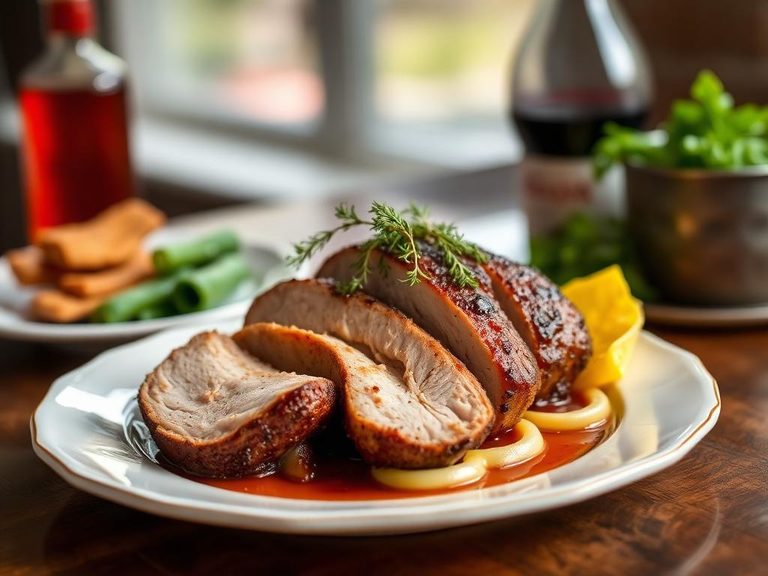
Schweinebraten is a traditional German roast pork dish, typically made from a pork shoulder or loin, seasoned with caraway seeds, garlic, and marjoram, and slowly roasted until the skin becomes crispy crackling. It is a hearty centerpiece of Bavarian and broader German cuisine, often served with rich gravy, dumplings, and red cabbage.
🍳 View the full Schweinebraten recipe →
🍽️ Nutrition at a glance
This dish is high in protein and fat, with minimal carbohydrates, providing essential nutrients like B vitamins, zinc, and selenium. A typical serving of around 150-200 grams contains approximately 400-600 calories, depending on the cut and preparation.
Nutrition breakdown
| Calories | 550 kcal |
| Protein | 45 g |
| Carbs | 15 g |
| Fat | 35 g |
| Fiber | 1 g |
| Sugar | 3 g |
| Sodium | 800 mg |
| Iron | 4 mg |
| Zinc | 6 mg |
| Potassium | 600 mg |
| Phosphorus | 400 mg |
| Vitamin B1 (Thiamine) | 0.8 mg |
| Vitamin B6 | 0.9 mg |
| Vitamin B12 | 1.5 mcg |
| Niacin (B3) | 12 mg |
Per 1 serving (250 g) · estimated, varies by recipe
💡 What's interesting
Culturally, Schweinebraten is a staple at German beer gardens and festivals, embodying the communal and celebratory aspects of Bavarian food traditions. Nutritionally, the slow-roasting method helps render fat, making the meat tender while the crackling adds a unique textural contrast that is highly prized.
🍽️ Related dishes
AI estimate may be inaccurate · Terms