

Dumpling, no meat
Common food

Photo: Wikipedia
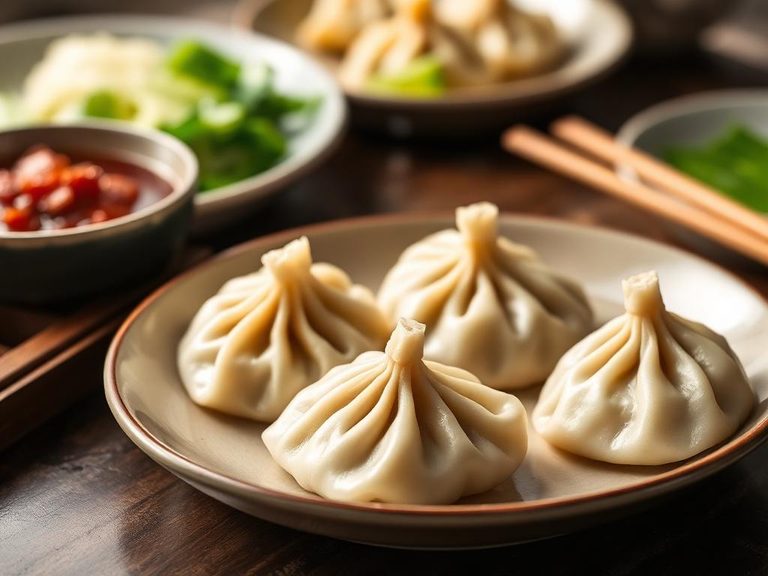
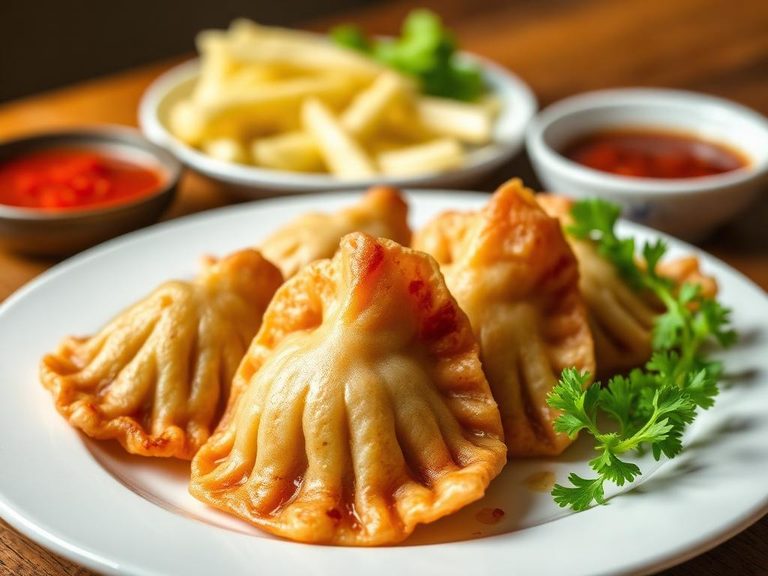
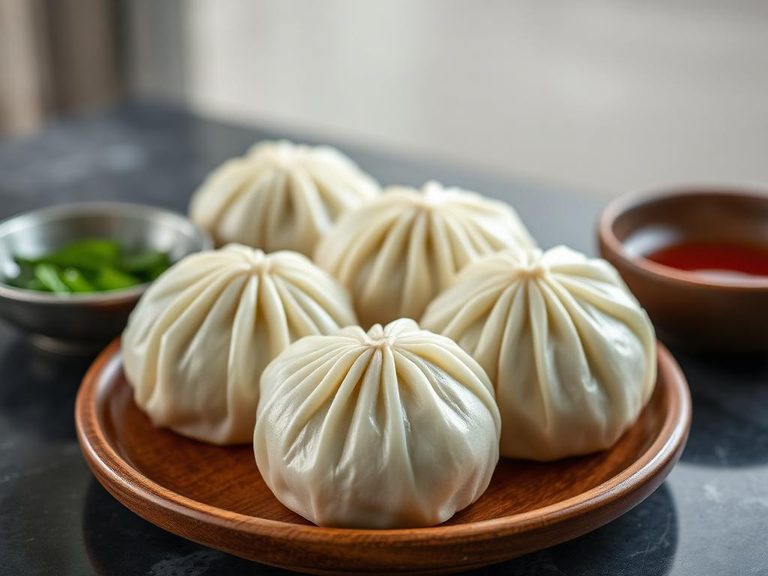
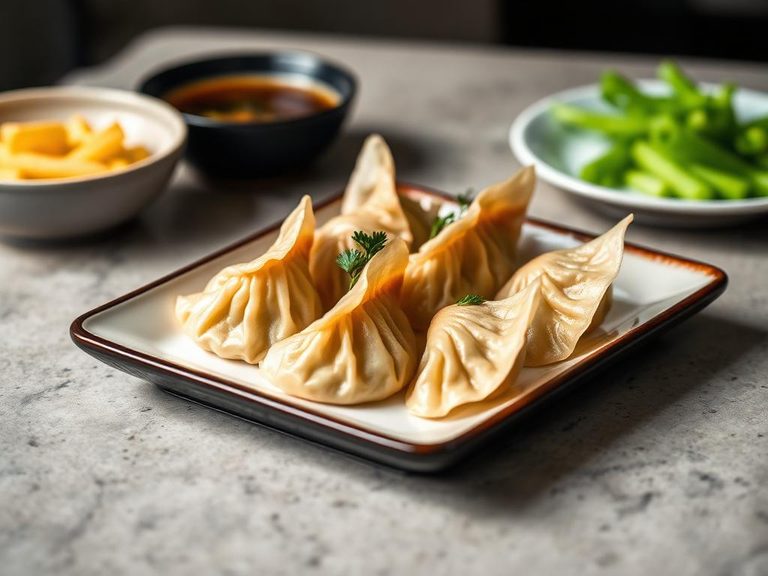
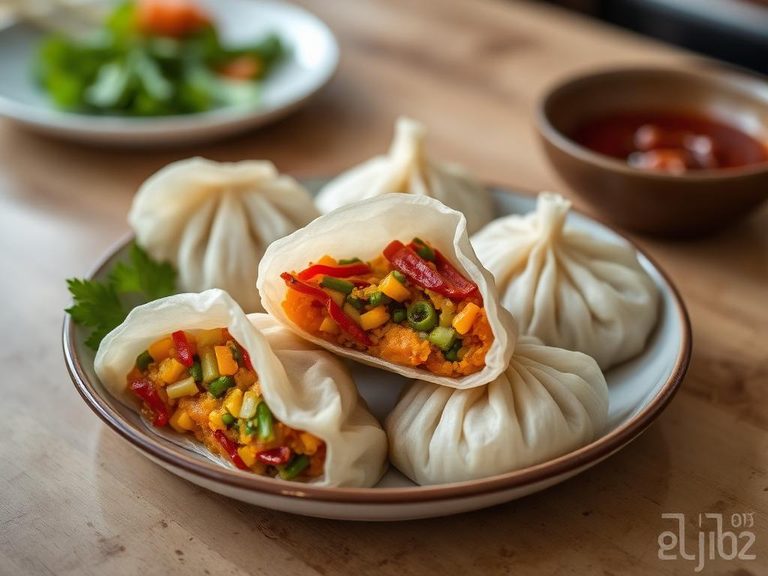
A delicate, savory pocket of seasoned vegetables and starch, the meatless dumpling offers a tender, slightly chewy wrapper encasing a flavorful filling that can range from earthy cabbage and mushroom to bright, herby greens. Nutritionally, it's a light, carb-forward option, providing a modest energy boost with minimal fat. Its simplicity makes it a blank canvas for bold dipping sauces.
Calorie split: 11% protein · 65% carbs · 24% fat
↓ Full nutrition💚 Why it's loved
People love it for the comforting, familiar taste and the satisfying textural contrast between the soft wrapper and the savory filling. It's a beloved cultural staple, perfect for sharing and customizable with a wide array of dipping sauces.
⚠️ Watch-outs & how to enjoy it better
The primary concern is the high carbohydrate content relative to protein and fiber, which can lead to a rapid blood-sugar spike, especially when eaten alone or in large quantities. The wrapper is typically made from refined wheat flour, and store-bought versions can be high in sodium. To counteract this, pair them with a protein-rich dish (like a tofu stir-fry) or a vegetable-heavy soup, and opt for a dipping sauce with vinegar or chili to add flavor without excess sodium.
Key benefits
- Low in fat, making it a lighter appetizer or meal component
- Good source of quick energy from carbohydrates
- Versatile base for various vegetable and herb fillings
- Often steamed or boiled, a lower-fat cooking method
🍽️ Popular dishes
🌍 Where it's eaten
💡 Did you know?
The Chinese word for dumpling, 'jiaozi' (饺子), is a homophone for '交子' (jiāozǐ), which means the transition from the old year to the new, making them a symbolic food for Lunar New Year celebrations.
Full nutrition (USDA data · scales with serving)
| Water | 70.6 g |
| Energy | 125 kcal |
| Protein | 3.5 g |
| Total lipid (fat) | 3.4 g |
| Carbohydrate, by difference | 20.5 g |
| Fiber, total dietary | 0.70 g |
| Total Sugars | 1.2 g |
| Calcium, Ca | 142 mg |
| Iron, Fe | 1.6 mg |
| Magnesium, Mg | 10.0 mg |
| Phosphorus, P | 90.0 mg |
| Potassium, K | 71.0 mg |
| Sodium, Na | 428 mg |
| Zinc, Zn | 0.28 mg |
| Copper, Cu | 0.04 mg |
| Selenium, Se | 4.3 ug |
| Vitamin C, total ascorbic acid | 0.00 mg |
| Thiamin | 0.20 mg |
| Riboflavin | 0.13 mg |
| Niacin | 1.5 mg |
| Vitamin B-6 | 0.03 mg |
| Folate, total | 28.0 ug |
| Folic acid | 23.0 ug |
| Folate, food | 4.0 ug |
| Folate, DFE | 44.0 ug |
| Choline, total | 6.3 mg |
| Vitamin B-12 | 0.11 ug |
| Vitamin B-12, added | 0.00 ug |
| Vitamin A, RAE | 14.0 ug |
| Retinol | 14.0 ug |
| Carotene, beta | 1.0 ug |
| Carotene, alpha | 0.00 ug |
| Cryptoxanthin, beta | 0.00 ug |
| Lycopene | 0.00 ug |
| Lutein + zeaxanthin | 4.0 ug |
| Vitamin E (alpha-tocopherol) | 0.18 mg |
| Vitamin E, added | 0.00 mg |
| Vitamin D (D2 + D3) | 0.30 ug |
| Vitamin K (phylloquinone) | 1.5 ug |
| Alcohol, ethyl | 0.00 g |
| Caffeine | 0.00 mg |
| Theobromine | 0.00 mg |
Fat & fatty acid profile (per 100g)
| Fatty acids, total saturated | 0.96 g |
| SFA 4:0 | 0.01 g |
| SFA 6:0 | 0.01 g |
| SFA 8:0 | 0.01 g |
| SFA 10:0 | 0.01 g |
| SFA 12:0 | 0.01 g |
| SFA 14:0 | 0.05 g |
| SFA 16:0 | 0.48 g |
| SFA 18:0 | 0.34 g |
| Fatty acids, total monounsaturated | 1.2 g |
| MUFA 16:1 | 0.01 g |
| MUFA 18:1 | 1.2 g |
| MUFA 20:1 | 0.00 g |
| MUFA 22:1 | 0.00 g |
| Fatty acids, total polyunsaturated | 0.82 g |
| PUFA 18:2 | 0.77 g |
| PUFA 18:3 | 0.05 g |
| PUFA 18:4 | 0.00 g |
| PUFA 20:4 | 0.00 g |
| PUFA 20:5 n-3 (EPA) | 0.00 g |
| PUFA 22:5 n-3 (DPA) | 0.00 g |
| PUFA 22:6 n-3 (DHA) | 0.00 g |
| Cholesterol | 2.0 mg |
FAQ
Are meatless dumplings a good source of protein?
Not typically. At about 3.5g of protein per 100g, they are a modest source at best. For a more protein-balanced meal, serve them alongside a dish like edamame, tofu, or a clear broth with beans.
What's the best way to cook frozen meatless dumplings?
For a tender wrapper, steam them. For a crispy bottom, pan-fry them in a little oil until golden, then add a splash of water and cover to steam through. Boiling is also an option, but can make them softer.
Can I make them gluten-free?
The traditional wrapper is wheat-based. However, you can find or make wrappers using rice flour, tapioca starch, or other gluten-free blends, though the texture will be slightly different.
Nutrient density (calculated · NRF9.3)
Nutrient Rich Foods index: beneficial nutrients (protein, fiber, vitamins, minerals) minus saturated fat, added sugar & sodium, per 100 kcal.
NRF9.3 index — Fulgoni, Keast & Drewnowski, 2009. Computed from USDA nutrients.
Weight-loss friendliness (composite index)
Energy density 1.25 kcal/g · 11% calories from protein · 0.7 g fiber · 1.2 g sugar per 100 g.
Composite of energy density (Rolls et al., 1999), protein & fiber satiety, minus sugar. A calculated heuristic — ranks satiety-per-calorie, not a clinical measure.
Dietary load (calculated from USDA values)
Potential renal acid load. Positive = acid-forming, negative = alkaline-forming.
Sodium-to-potassium ratio: 6.03 (lower is better — aim for ≤ 1)
Sodium:potassium per WHO potassium guidance. Computed from USDA nutrients.