

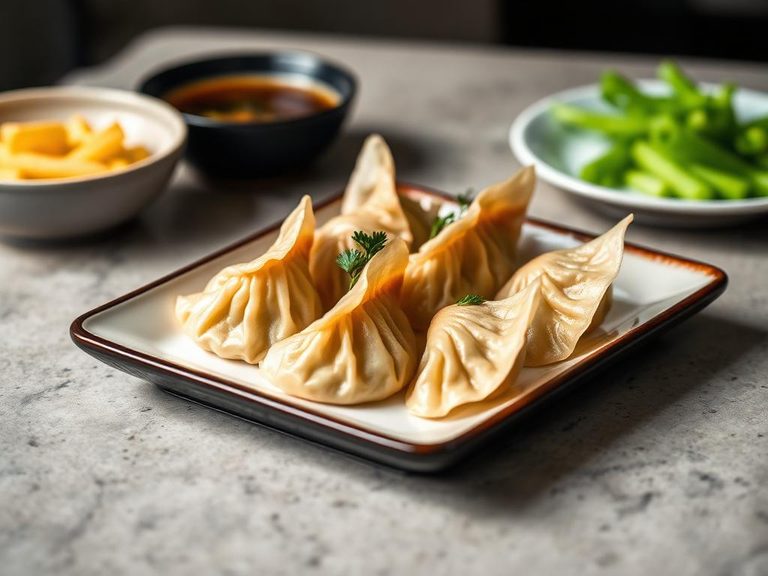
Wonton, dumpling or pot sticker, fried, no meat
Common food

Photo: Wikipedia
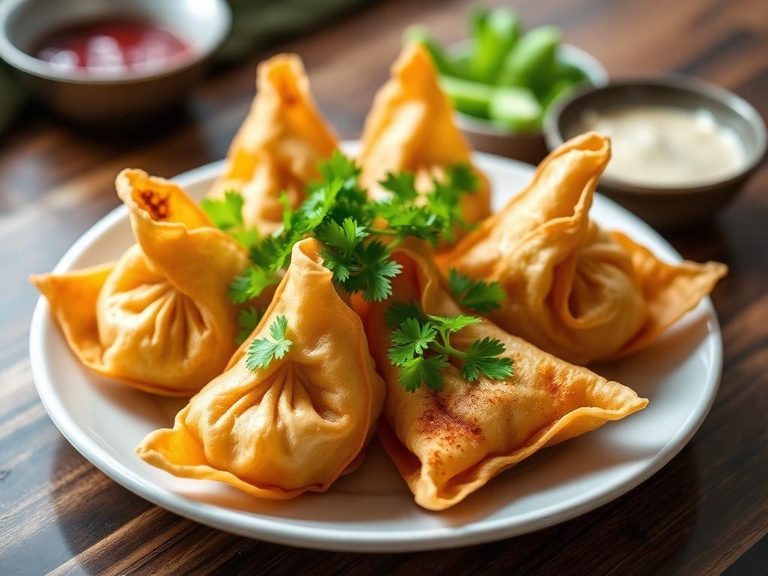
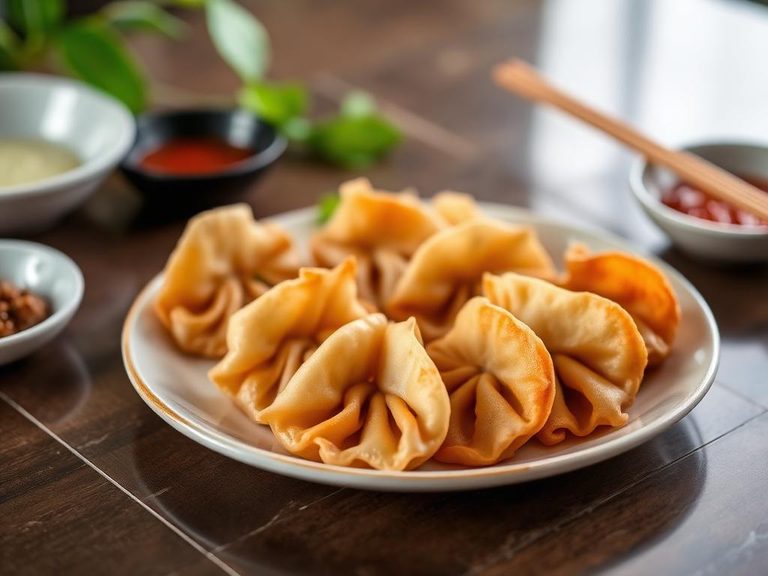
A crispy, golden pocket of dough, typically filled with vegetables like cabbage and mushroom, offering a satisfying crunch with a savory, umami-rich bite. Nutritionally, it's a moderate-energy food with a notable fat content from frying, balanced by plant-based protein from its filling and wrapper.
Calorie split: 18% protein · 29% carbs · 52% fat
↓ Full nutrition💚 Why it's loved
People adore the irresistible textural contrast of a shatteringly crisp exterior giving way to a tender, savory filling. It's a beloved comfort food and street snack, deeply woven into the culinary fabric of East Asian festivals and family meals.
⚠️ Watch-outs & how to enjoy it better
The deep-frying process significantly increases the calorie and fat content, which can be a concern for those monitoring intake. The refined flour wrapper can cause a quick blood-sugar rise, and they are often high in sodium. To counteract, pair with a vinegar-based sauce and plenty of steamed vegetables, practice portion control (e.g., 4-5 pieces as a meal component), or opt for pan-frying or steaming versions when available.
Key benefits
- Provides plant-based protein from wheat and vegetable filling
- Source of dietary fiber from vegetable contents
- Contains essential minerals like iron and B vitamins from the dough
- Offers a satisfying, energy-dense meal or snack
- Versatile base for various dipping sauces and accompaniments
🍽️ Popular dishes
🌍 Where it's eaten
💡 Did you know?
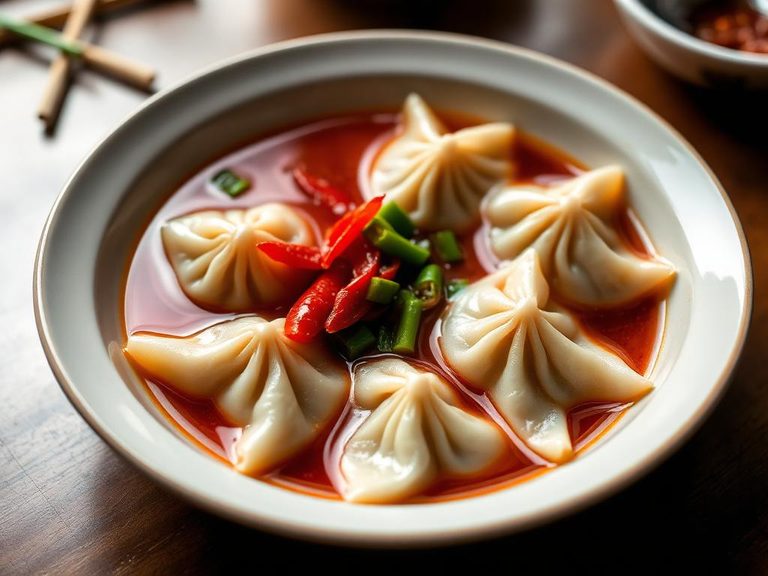
The word 'wonton' (云吞) in Cantonese sounds like 'cloud swallow,' poetically describing the dumpling's delicate, floating appearance when served in soup.
Full nutrition (USDA data · scales with serving)
| Water | 64.0 g |
| Energy | 192 kcal |
| Protein | 8.8 g |
| Total lipid (fat) | 11.1 g |
| Carbohydrate, by difference | 14.1 g |
| Fiber, total dietary | 1.5 g |
| Total Sugars | 2.9 g |
| Calcium, Ca | 30.0 mg |
| Iron, Fe | 0.79 mg |
| Magnesium, Mg | 22.0 mg |
| Phosphorus, P | 134 mg |
| Potassium, K | 301 mg |
| Sodium, Na | 467 mg |
| Zinc, Zn | 1.8 mg |
| Copper, Cu | 0.04 mg |
| Selenium, Se | 18.7 ug |
| Vitamin C, total ascorbic acid | 7.0 mg |
| Thiamin | 0.29 mg |
| Riboflavin | 0.12 mg |
| Niacin | 2.1 mg |
| Vitamin B-6 | 0.24 mg |
| Folate, total | 12.0 ug |
| Folic acid | 0.00 ug |
| Folate, food | 12.0 ug |
| Folate, DFE | 12.0 ug |
| Choline, total | 52.7 mg |
| Vitamin B-12 | 0.28 ug |
| Vitamin B-12, added | 0.00 ug |
| Vitamin A, RAE | 4.0 ug |
| Retinol | 1.0 ug |
| Carotene, beta | 40.0 ug |
| Carotene, alpha | 0.00 ug |
| Cryptoxanthin, beta | 0.00 ug |
| Lycopene | 0.00 ug |
| Lutein + zeaxanthin | 19.0 ug |
| Vitamin E (alpha-tocopherol) | 1.3 mg |
| Vitamin E, added | 0.00 mg |
| Vitamin D (D2 + D3) | 0.20 ug |
| Vitamin K (phylloquinone) | 63.5 ug |
| Alcohol, ethyl | 0.00 g |
| Caffeine | 0.00 mg |
| Theobromine | 0.00 mg |
Fat & fatty acid profile (per 100g)
| Fatty acids, total saturated | 2.5 g |
| SFA 4:0 | 0.00 g |
| SFA 6:0 | 0.00 g |
| SFA 8:0 | 0.00 g |
| SFA 10:0 | 0.01 g |
| SFA 12:0 | 0.00 g |
| SFA 14:0 | 0.08 g |
| SFA 16:0 | 1.6 g |
| SFA 18:0 | 0.74 g |
| Fatty acids, total monounsaturated | 4.9 g |
| MUFA 16:1 | 0.19 g |
| MUFA 18:1 | 4.6 g |
| MUFA 20:1 | 0.08 g |
| MUFA 22:1 | 0.00 g |
| Fatty acids, total polyunsaturated | 2.9 g |
| PUFA 18:2 | 2.5 g |
| PUFA 18:3 | 0.29 g |
| PUFA 18:4 | 0.00 g |
| PUFA 20:4 | 0.02 g |
| PUFA 20:5 n-3 (EPA) | 0.00 g |
| PUFA 22:5 n-3 (DPA) | 0.00 g |
| PUFA 22:6 n-3 (DHA) | 0.00 g |
| Cholesterol | 18.0 mg |
Amino acid profile (per 100g)
Estimated from Soup, wonton, Chinese restaurant — USDA does not publish this profile for Wonton.
| Tryptophan | 0.01 g |
| Threonine | 0.08 g |
| Isoleucine | 0.06 g |
| Leucine | 0.12 g |
| Lysine | 0.06 g |
| Methionine | 0.03 g |
| Cystine | 0.04 g |
| Phenylalanine | 0.07 g |
| Tyrosine | 0.05 g |
| Valine | 0.07 g |
| Arginine | 0.09 g |
| Histidine | 0.04 g |
| Alanine | 0.07 g |
| Aspartic acid | 0.11 g |
| Glutamic acid | 1.2 g |
| Glycine | 0.11 g |
| Proline | 0.20 g |
| Serine | 0.07 g |
FAQ
What is the main difference between a wonton and a pot sticker?
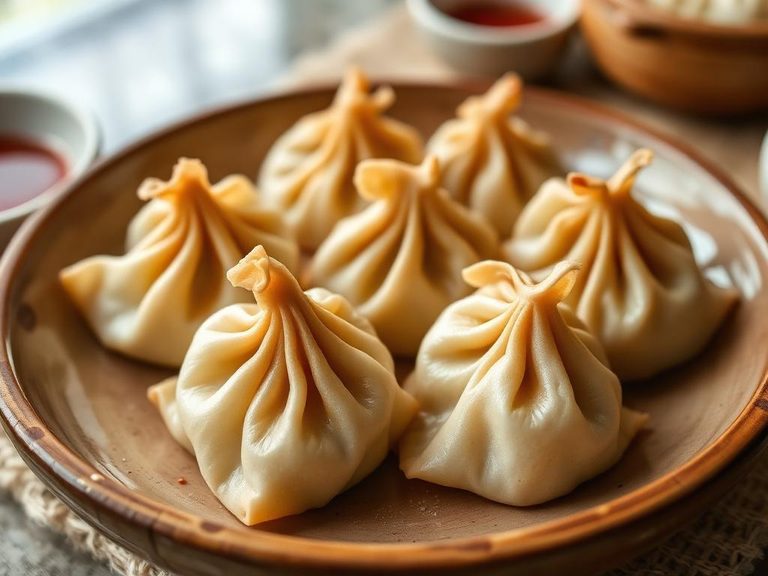
Wontons typically have a thinner, more delicate wrapper and are often served in soup or deep-fried. Pot stickers (guotie) use a slightly thicker, chewier wrapper and are characteristically pan-fried to create a crispy bottom while the top steams.
Can I make these healthier at home?
Absolutely. You can bake them on a parchment-lined sheet, use an air fryer with a light spray of oil, or pan-fry with minimal oil. Loading the filling with extra vegetables like finely chopped mushrooms, carrots, and bok choy also boosts fiber and nutrients.
Why are my fried dumplings soggy instead of crispy?
Sogginess usually comes from excess moisture in the filling or not using high enough heat. Ensure your vegetable filling is well-drained. Use a hot pan with a thin layer of oil and don't overcrowd them, allowing each piece direct contact with the pan's surface.
Nutrient density (calculated · NRF9.3)
Nutrient Rich Foods index: beneficial nutrients (protein, fiber, vitamins, minerals) minus saturated fat, added sugar & sodium, per 100 kcal.
NRF9.3 index — Fulgoni, Keast & Drewnowski, 2009. Computed from USDA nutrients.
Weight-loss friendliness (composite index)
Energy density 1.92 kcal/g · 18% calories from protein · 1.5 g fiber · 2.9 g sugar per 100 g.
Composite of energy density (Rolls et al., 1999), protein & fiber satiety, minus sugar. A calculated heuristic — ranks satiety-per-calorie, not a clinical measure.
Dietary load (calculated from USDA values)
Potential renal acid load. Positive = acid-forming, negative = alkaline-forming.
Sodium-to-potassium ratio: 1.55 (lower is better — aim for ≤ 1)
Sodium:potassium per WHO potassium guidance. Computed from USDA nutrients.