

Pork, fresh, backribs, separable lean and fat, raw
Whole food · Pork Products

Photo: Wikipedia
Fresh pork back ribs are a prized cut from the loin, featuring a perfect balance of tender, marbled lean meat and flavorful fat attached to the bone. When raw, the meat is a deep pink-red with a smooth, firm texture, promising rich, savory flavor once cooked. Nutritionally, they are a dense source of high-quality protein and provide a significant amount of energy from fat.
Calorie split: 34% protein · 0% carbs · 66% fat
↓ Full nutrition💚 Why it's loved
People adore pork back ribs for their unparalleled ability to become fall-off-the-bone tender while developing a deeply savory, caramelized crust. Their versatility allows them to shine in everything from slow-smoked barbecue to elegant braised dishes, making them a centerpiece of comfort food and celebratory meals across many cultures.
⚠️ Watch-outs & how to enjoy it better
The high fat content, while flavorful, can be a concern for those managing calorie or saturated fat intake. To counteract this, practice portion control and trim excess external fat before cooking. Opt for cooking methods that allow fat to render and drip away, such as grilling, broiling, or roasting on a rack.
Key benefits
- Excellent source of complete protein for muscle maintenance.
- Provides essential B vitamins like thiamine (B1) and niacin (B3).
- Rich in minerals such as phosphorus and selenium.
- Contains heme iron, which is highly bioavailable.
- The fat content aids in the absorption of fat-soluble vitamins.
🍽️ Popular dishes
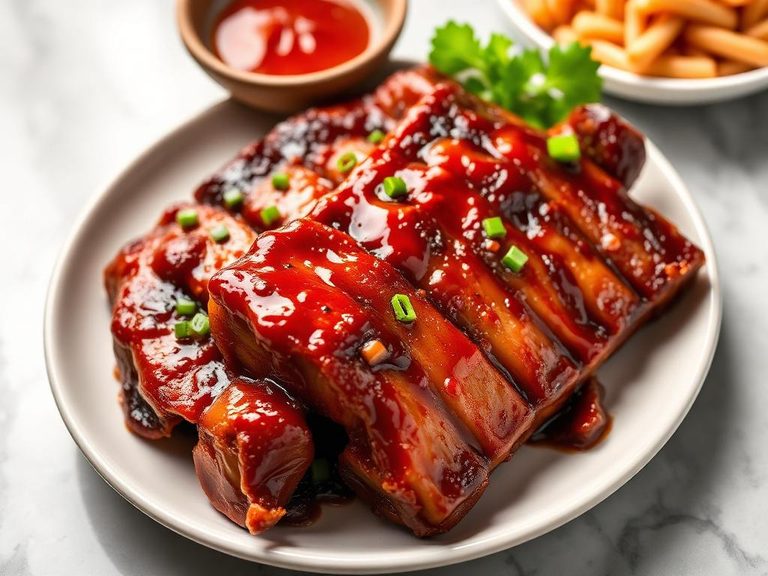
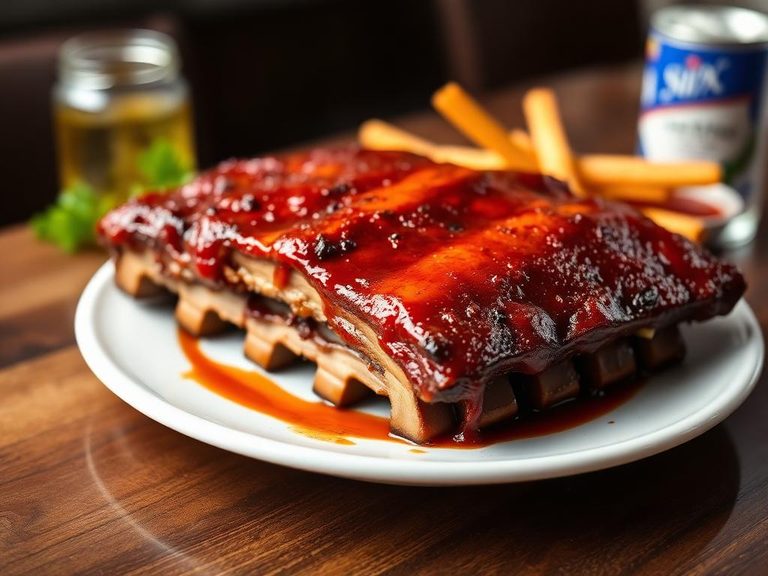
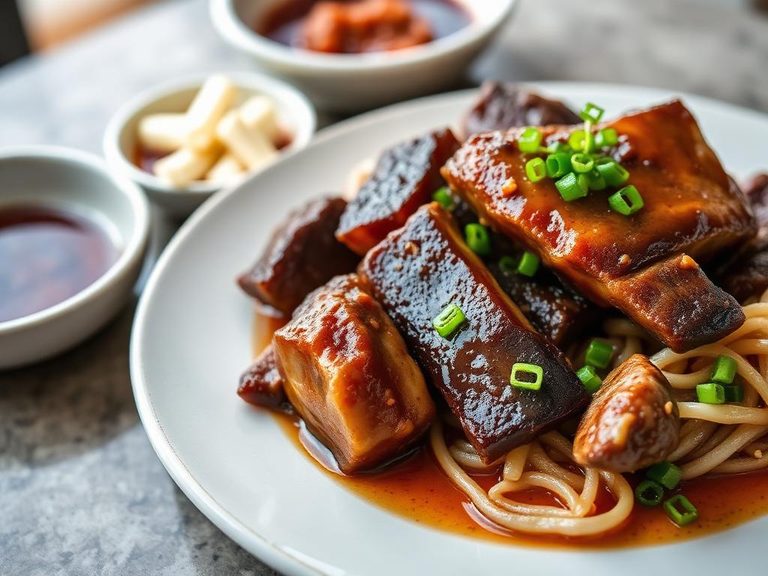
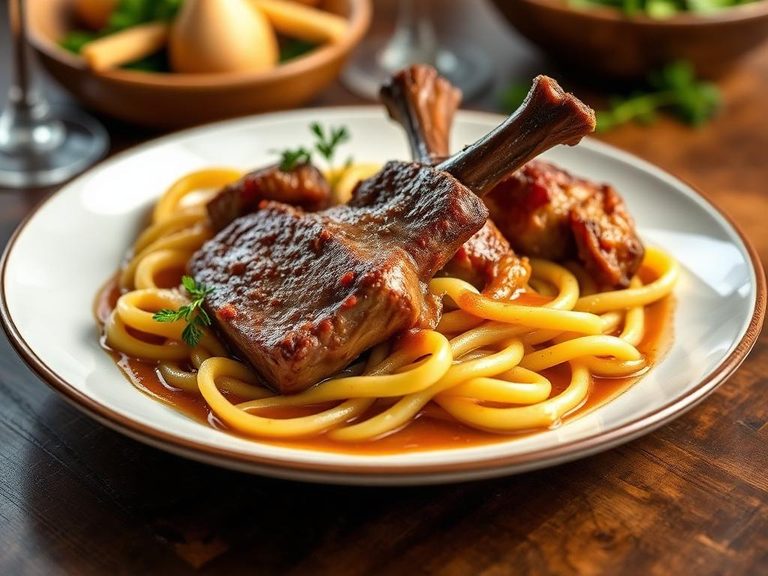
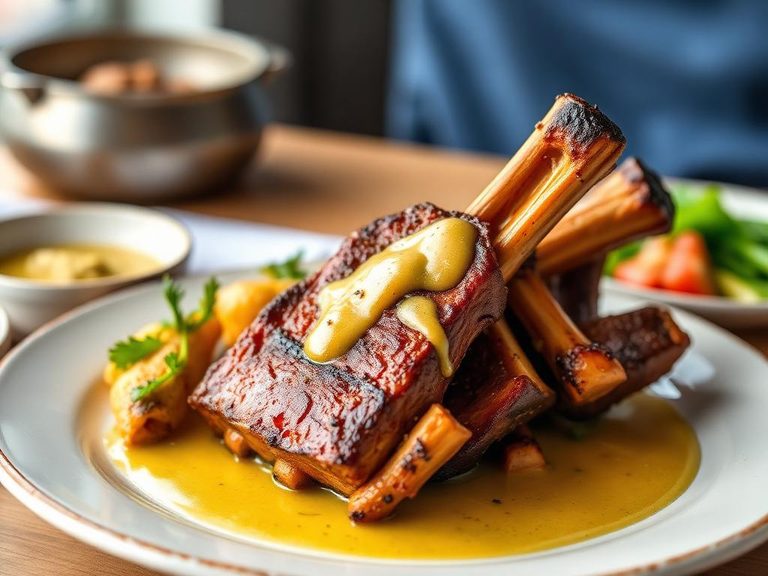
🌍 Where it's eaten
💡 Did you know?
The 'back ribs' are specifically cut from the rib section adjacent to the loin, meaning each rib has a portion of the prized loin muscle attached, making them meatier than side ribs.
Full nutrition (USDA data · scales with serving)
| Water | 63.5 g |
| Energy | 224 kcal |
| Energy | 936 kj |
| Protein | 19.1 g |
| Total lipid (fat) | 16.3 g |
| Ash | 1.0 g |
| Carbohydrate, by difference | 0.00 g |
| Fiber, total dietary | 0.00 g |
| Total Sugars | 0.00 g |
| Calcium, Ca | 31.0 mg |
| Iron, Fe | 0.76 mg |
| Magnesium, Mg | 16.0 mg |
| Phosphorus, P | 154 mg |
| Potassium, K | 247 mg |
| Sodium, Na | 87.0 mg |
| Zinc, Zn | 2.5 mg |
| Copper, Cu | 0.09 mg |
| Manganese, Mn | 0.01 mg |
| Selenium, Se | 30.7 ug |
| Vitamin C, total ascorbic acid | 0.00 mg |
| Thiamin | 0.46 mg |
| Riboflavin | 0.30 mg |
| Niacin | 6.8 mg |
| Pantothenic acid | 0.82 mg |
| Vitamin B-6 | 0.42 mg |
| Folate, total | 0.00 ug |
| Folic acid | 0.00 ug |
| Folate, food | 0.00 ug |
| Folate, DFE | 0.00 ug |
| Choline, total | 65.5 mg |
| Betaine | 2.5 mg |
| Vitamin B-12 | 0.56 ug |
| Vitamin B-12, added | 0.00 ug |
| Vitamin A, RAE | 7.0 ug |
| Retinol | 7.0 ug |
| Carotene, beta | 0.00 ug |
| Carotene, alpha | 0.00 ug |
| Cryptoxanthin, beta | 0.00 ug |
| Vitamin A, IU | 22.0 iu |
| Lycopene | 0.00 ug |
| Lutein + zeaxanthin | 0.00 ug |
| Vitamin E (alpha-tocopherol) | 0.24 mg |
| Vitamin E, added | 0.00 mg |
| Vitamin D (D2 + D3), International Units | 42.0 iu |
| Vitamin D (D2 + D3) | 1.1 ug |
| Vitamin D3 (cholecalciferol) | 1.1 ug |
| Vitamin K (phylloquinone) | 0.00 ug |
| Vitamin K (Dihydrophylloquinone) | 0.00 ug |
| Alcohol, ethyl | 0.00 g |
| Caffeine | 0.00 mg |
| Theobromine | 0.00 mg |
Fat & fatty acid profile (per 100g)
| Fatty acids, total saturated | 5.8 g |
| SFA 4:0 | 0.00 g |
| SFA 6:0 | 0.00 g |
| SFA 8:0 | 0.00 g |
| SFA 10:0 | 0.02 g |
| SFA 12:0 | 0.01 g |
| SFA 14:0 | 0.21 g |
| SFA 15:0 | 0.01 g |
| SFA 16:0 | 3.5 g |
| SFA 17:0 | 0.06 g |
| SFA 18:0 | 1.9 g |
| SFA 20:0 | 0.03 g |
| SFA 22:0 | 0.00 g |
| SFA 24:0 | 0.00 g |
| Fatty acids, total monounsaturated | 6.9 g |
| MUFA 14:1 | 0.00 g |
| MUFA 15:1 | 0.00 g |
| MUFA 16:1 | 0.34 g |
| MUFA 17:1 | 0.00 g |
| MUFA 18:1 | 6.4 g |
| MUFA 18:1 c | 6.3 g |
| MUFA 20:1 | 0.11 g |
| MUFA 22:1 | 0.00 g |
| MUFA 22:1 c | 0.00 g |
| Fatty acids, total polyunsaturated | 2.7 g |
| PUFA 18:2 | 2.4 g |
| PUFA 18:2 n-6 c,c | 2.3 g |
| PUFA 18:3 | 0.11 g |
| PUFA 18:3 n-3 c,c,c (ALA) | 0.10 g |
| PUFA 18:3 n-6 c,c,c | 0.00 g |
| PUFA 18:3i | 0.01 g |
| PUFA 18:4 | 0.00 g |
| PUFA 20:2 n-6 c,c | 0.09 g |
| PUFA 20:3 | 0.01 g |
| PUFA 20:4 | 0.08 g |
| PUFA 20:5 n-3 (EPA) | 0.00 g |
| PUFA 22:5 n-3 (DPA) | 0.01 g |
| PUFA 22:6 n-3 (DHA) | 0.00 g |
| Fatty acids, total trans | 0.14 g |
| Fatty acids, total trans-monoenoic | 0.10 g |
| TFA 18:1 t | 0.10 g |
| TFA 18:2 t not further defined | 0.03 g |
| Fatty acids, total trans-polyenoic | 0.04 g |
| Cholesterol | 69.0 mg |
Amino acid profile (per 100g)
| Tryptophan | 0.22 g |
| Threonine | 0.82 g |
| Isoleucine | 0.88 g |
| Leucine | 1.5 g |
| Lysine | 1.7 g |
| Methionine | 0.51 g |
| Cystine | 0.21 g |
| Phenylalanine | 0.77 g |
| Tyrosine | 0.74 g |
| Valine | 0.94 g |
| Arginine | 1.2 g |
| Histidine | 0.76 g |
| Alanine | 1.1 g |
| Aspartic acid | 1.7 g |
| Glutamic acid | 2.8 g |
| Glycine | 0.84 g |
| Proline | 0.75 g |
| Serine | 0.78 g |
| Hydroxyproline | 0.07 g |
FAQ
What's the difference between back ribs and spare ribs?
Back ribs come from the loin area, are shorter, and have more meat on top of the bone. Spare ribs are from the belly, are flatter, have more connective tissue and fat, and are often larger.
How can I tell if they are fresh?
Look for meat that is pinkish-red with white fat, has a firm texture, and a mild, pleasant smell. Avoid any with a sour odor, grayish color, or excessive liquid in the package.
What's the best way to cook them for tenderness?
Low-and-slow cooking is key. Methods like braising, slow-roasting, or smoking break down collagen into gelatin, resulting in tender meat. A two-step method (e.g., braise then finish under a broiler) is also very effective.
Nutrient density (calculated · NRF9.3)
Nutrient Rich Foods index: beneficial nutrients (protein, fiber, vitamins, minerals) minus saturated fat, added sugar & sodium, per 100 kcal.
NRF9.3 index — Fulgoni, Keast & Drewnowski, 2009. Computed from USDA nutrients.
Weight-loss friendliness (composite index)
Energy density 2.24 kcal/g · 34% calories from protein · 0.0 g fiber · 0.0 g sugar per 100 g.
Composite of energy density (Rolls et al., 1999), protein & fiber satiety, minus sugar. A calculated heuristic — ranks satiety-per-calorie, not a clinical measure.
Dietary load (calculated from USDA values)
Potential renal acid load. Positive = acid-forming, negative = alkaline-forming.
Sodium-to-potassium ratio: 0.35 (lower is better — aim for ≤ 1)
Sodium:potassium per WHO potassium guidance. Computed from USDA nutrients.