

Pie, pecan, commercially prepared
Whole food · Baked Products

Photo: Wikipedia
A classic American dessert featuring a rich, gooey filling of caramelized corn syrup and brown sugar, studded with toasted pecans, all nestled in a flaky pastry crust. The texture is a delightful contrast between the crisp, buttery crust and the soft, chewy, nutty filling. Nutritionally, it's a calorie-dense treat, with a single 100g slice delivering over 400 kcal and significant sugar.
Calorie split: 4% protein · 59% carbs · 37% fat
↓ Full nutrition💚 Why it's loved
People adore it for the irresistible combination of buttery, flaky crust and the sweet, crunchy, caramelized pecan topping. It's deeply tied to American holiday traditions, especially Thanksgiving, evoking nostalgia and comfort.
⚠️ Watch-outs & how to enjoy it better
The high sugar and refined carbohydrate content can cause rapid blood-sugar spikes, making it a poor choice for those managing diabetes. The calorie density and potential for overconsumption are also downsides. To counteract this, practice strict portion control and pair a small slice with a source of protein (like a dollop of plain Greek yogurt) or healthy fat to slow sugar absorption.
Key benefits
- Pecans provide monounsaturated fats and a source of manganese.
- Contains dietary fiber from the nuts and crust.
- Offers a quick source of energy from carbohydrates.
- A traditional centerpiece for holiday meals and gatherings.
🍽️ Popular dishes
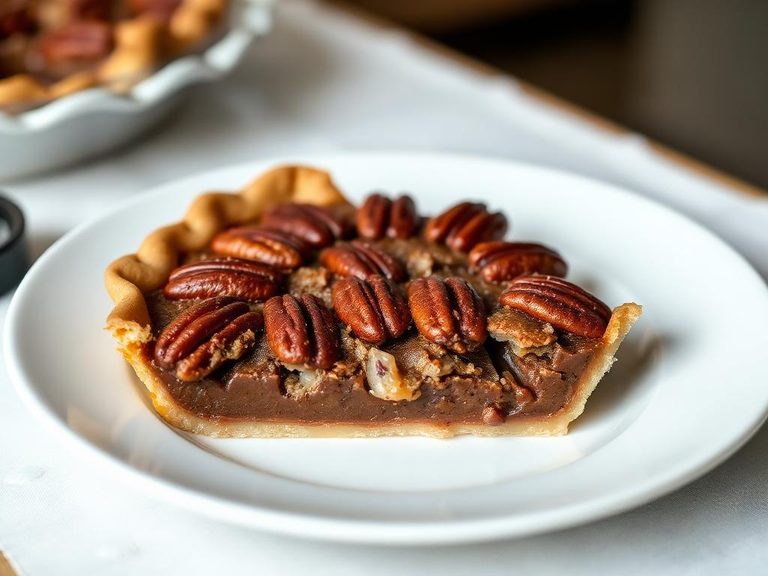
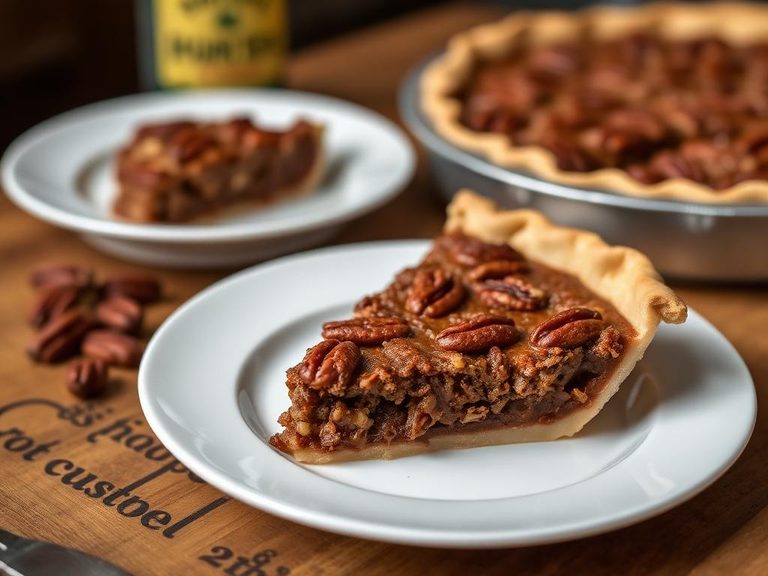
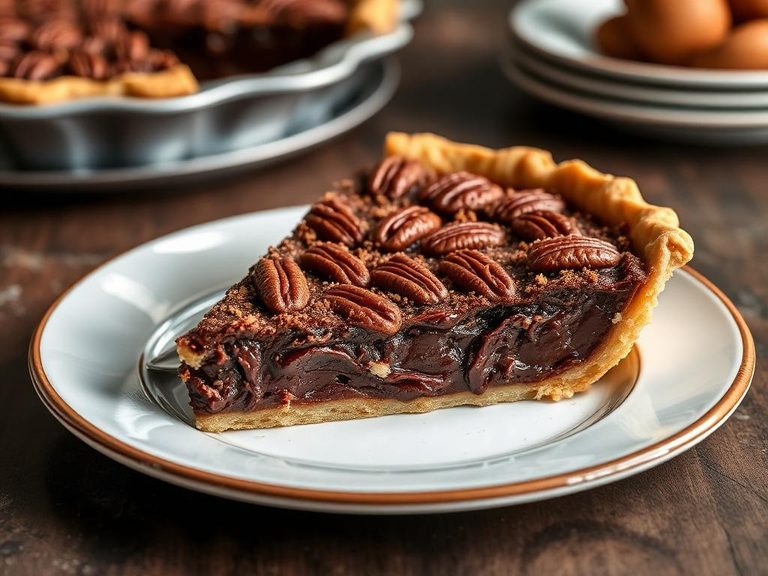
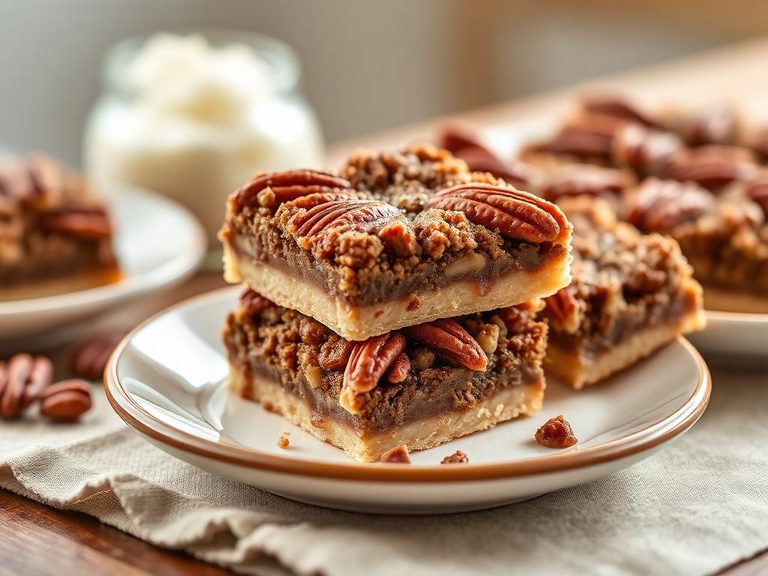
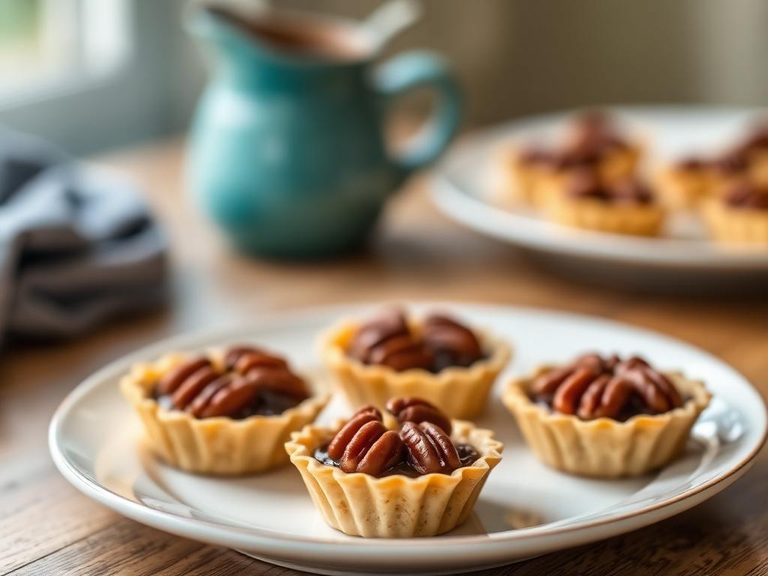
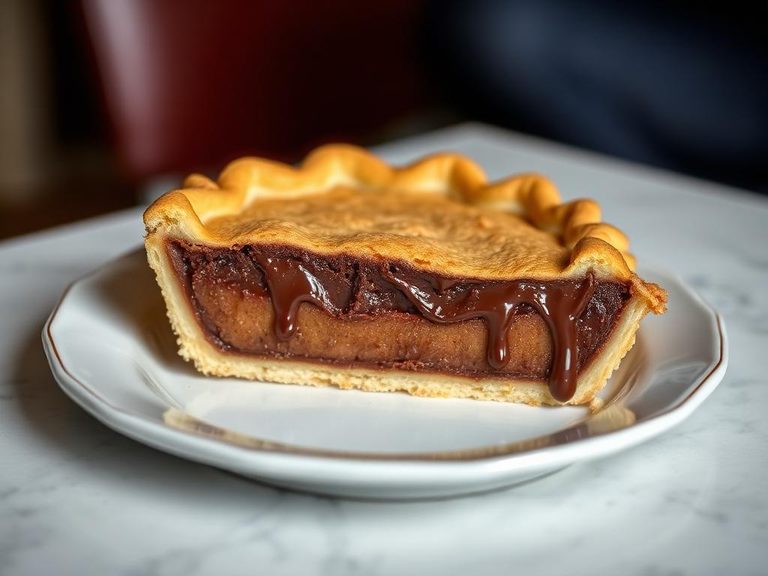
🌍 Where it's eaten
💡 Did you know?
The iconic gooey filling in most commercial pecan pies isn't made from maple syrup or honey, but primarily from corn syrup, which was popularized in the early 20th century as a cheap, stable sweetener.
Full nutrition (USDA data · scales with serving)
| Water | 18.3 g |
| Energy | 407 kcal |
| Energy | 1702 kj |
| Protein | 4.5 g |
| Total lipid (fat) | 16.7 g |
| Ash | 0.95 g |
| Carbohydrate, by difference | 59.6 g |
| Fiber, total dietary | 2.1 g |
| Total Sugars | 25.2 g |
| Sucrose | 14.4 g |
| Glucose | 5.5 g |
| Fructose | 0.00 g |
| Lactose | 0.23 g |
| Maltose | 5.0 g |
| Galactose | 0.00 g |
| Starch | 16.9 g |
| Calcium, Ca | 22.0 mg |
| Iron, Fe | 0.93 mg |
| Magnesium, Mg | 22.0 mg |
| Phosphorus, P | 83.0 mg |
| Potassium, K | 99.0 mg |
| Sodium, Na | 275 mg |
| Zinc, Zn | 0.87 mg |
| Copper, Cu | 0.18 mg |
| Manganese, Mn | 0.71 mg |
| Selenium, Se | 7.0 ug |
| Vitamin C, total ascorbic acid | 0.00 mg |
| Thiamin | 0.20 mg |
| Riboflavin | 0.08 mg |
| Niacin | 1.3 mg |
| Pantothenic acid | 0.39 mg |
| Vitamin B-6 | 0.04 mg |
| Folate, total | 32.0 ug |
| Folic acid | 16.0 ug |
| Folate, food | 17.0 ug |
| Folate, DFE | 43.0 ug |
| Choline, total | 49.5 mg |
| Betaine | 5.2 mg |
| Vitamin B-12 | 0.12 ug |
| Vitamin B-12, added | 0.00 ug |
| Vitamin A, RAE | 51.0 ug |
| Retinol | 50.0 ug |
| Carotene, beta | 4.0 ug |
| Carotene, alpha | 0.00 ug |
| Cryptoxanthin, beta | 2.0 ug |
| Vitamin A, IU | 175 iu |
| Lycopene | 0.00 ug |
| Lutein + zeaxanthin | 39.0 ug |
| Vitamin E (alpha-tocopherol) | 0.80 mg |
| Vitamin E, added | 0.00 mg |
| Tocopherol, beta | 0.08 mg |
| Tocopherol, gamma | 6.6 mg |
| Tocopherol, delta | 1.6 mg |
| Tocotrienol, alpha | 0.02 mg |
| Tocotrienol, beta | 0.00 mg |
| Tocotrienol, gamma | 0.00 mg |
| Tocotrienol, delta | 0.00 mg |
| Vitamin D (D2 + D3), International Units | 3.0 iu |
| Vitamin D (D2 + D3) | 0.10 ug |
| Vitamin K (phylloquinone) | 15.5 ug |
| Vitamin K (Menaquinone-4) | 0.20 ug |
| Alcohol, ethyl | 0.00 g |
| Caffeine | 0.00 mg |
| Theobromine | 0.00 mg |
Fat & fatty acid profile (per 100g)
| Fatty acids, total saturated | 2.7 g |
| SFA 4:0 | 0.00 g |
| SFA 6:0 | 0.00 g |
| SFA 8:0 | 0.00 g |
| SFA 10:0 | 0.01 g |
| SFA 12:0 | 0.00 g |
| SFA 13:0 | 0.00 g |
| SFA 14:0 | 0.03 g |
| SFA 15:0 | 0.00 g |
| SFA 16:0 | 1.6 g |
| SFA 17:0 | 0.00 g |
| SFA 18:0 | 1.0 g |
| SFA 20:0 | 0.02 g |
| SFA 22:0 | 0.02 g |
| SFA 24:0 | 0.00 g |
| Fatty acids, total monounsaturated | 8.3 g |
| MUFA 14:1 | 0.00 g |
| MUFA 15:1 | 0.00 g |
| MUFA 16:1 | 0.04 g |
| MUFA 17:1 | 0.00 g |
| MUFA 18:1 | 8.2 g |
| MUFA 20:1 | 0.04 g |
| MUFA 22:1 | 0.00 g |
| MUFA 24:1 c | 0.00 g |
| Fatty acids, total polyunsaturated | 3.6 g |
| PUFA 18:2 | 3.4 g |
| PUFA 18:3 | 0.19 g |
| PUFA 18:4 | 0.00 g |
| PUFA 20:2 n-6 c,c | 0.00 g |
| PUFA 20:3 | 0.00 g |
| PUFA 20:4 | 0.00 g |
| PUFA 20:5 n-3 (EPA) | 0.00 g |
| PUFA 21:5 | 0.00 g |
| PUFA 22:4 | 0.00 g |
| PUFA 22:5 n-3 (DPA) | 0.00 g |
| PUFA 22:6 n-3 (DHA) | 0.00 g |
| Cholesterol | 42.0 mg |
Amino acid profile (per 100g)
| Tryptophan | 0.05 g |
| Threonine | 0.15 g |
| Isoleucine | 0.17 g |
| Leucine | 0.31 g |
| Lysine | 0.13 g |
| Methionine | 0.08 g |
| Cystine | 0.08 g |
| Phenylalanine | 0.20 g |
| Tyrosine | 0.09 g |
| Valine | 0.21 g |
| Arginine | 0.29 g |
| Histidine | 0.10 g |
| Alanine | 0.20 g |
| Aspartic acid | 0.34 g |
| Glutamic acid | 0.95 g |
| Glycine | 0.17 g |
| Proline | 0.25 g |
| Serine | 0.22 g |
FAQ
Why is corn syrup used in pecan pie instead of other sweeteners?
Corn syrup is used because it's inexpensive, readily available, and its high viscosity and resistance to crystallization help create the signature smooth, gooey texture without becoming grainy.
Can I make pecan pie without corn syrup?
Yes, common substitutes include maple syrup, honey, or golden syrup. However, this will alter the flavor profile and potentially the final texture, as each has different sugar compositions and water content.
Is pecan pie gluten-free?
The filling itself is typically gluten-free, but the traditional pie crust contains wheat flour. To make it gluten-free, you must use a certified gluten-free pie crust or a crust made from alternative flours.
Nutrient density (calculated · NRF9.3)
Nutrient Rich Foods index: beneficial nutrients (protein, fiber, vitamins, minerals) minus saturated fat, added sugar & sodium, per 100 kcal.
NRF9.3 index — Fulgoni, Keast & Drewnowski, 2009. Computed from USDA nutrients.
Weight-loss friendliness (composite index)
Energy density 4.07 kcal/g · 4% calories from protein · 2.1 g fiber · 25.2 g sugar per 100 g.
Composite of energy density (Rolls et al., 1999), protein & fiber satiety, minus sugar. A calculated heuristic — ranks satiety-per-calorie, not a clinical measure.
Dietary load (calculated from USDA values)
Potential renal acid load. Positive = acid-forming, negative = alkaline-forming.
Sodium-to-potassium ratio: 2.78 (lower is better — aim for ≤ 1)
Sodium:potassium per WHO potassium guidance. Computed from USDA nutrients.