

Peppers, sweet, green, sauteed
Whole food · Vegetables and Vegetable Products

Photo: Wikipedia
Sautéed sweet green peppers are tender-crisp strips, glistening with a light oil sheen, offering a mild, sweet flavor with a subtle vegetal note. Nutritionally, they are a low-calorie, high-fiber side, with the cooking process enhancing their natural sweetness and making certain antioxidants more bioavailable.
Calorie split: 2% protein · 13% carbs · 84% fat
↓ Full nutrition💚 Why it's loved
People love sautéed sweet green peppers for their ability to add a burst of fresh, sweet flavor and satisfying texture to countless dishes, from breakfast scrambles to dinner stir-fries. They are a culinary chameleon, readily absorbing seasonings and complementing a wide range of proteins and grains.
⚠️ Watch-outs & how to enjoy it better
The primary downside is the added fat and calories from the cooking oil, which can be significant if used liberally. To counteract this, measure your oil (e.g., 1 tsp per serving) and use a non-stick pan. Those monitoring blood sugar should note the natural sugars, though the fiber content helps moderate the impact; pairing with a protein source is ideal.
Key benefits
- Excellent source of vitamin C, an antioxidant that supports immune function.
- Provides dietary fiber for digestive health and satiety.
- Contains antioxidants like lutein and zeaxanthin, beneficial for eye health.
- Low in calories, making it a volume-friendly addition to meals.
- Cooking in healthy fats (like olive oil) can increase absorption of fat-soluble vitamins.
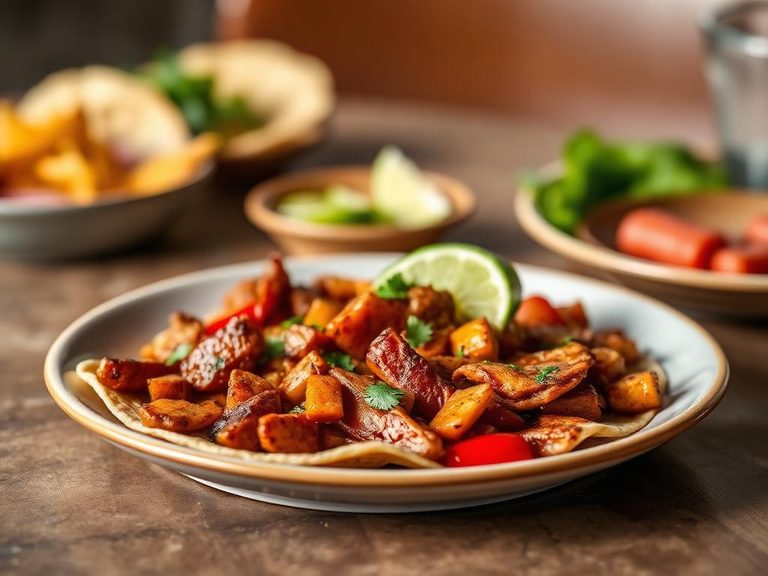
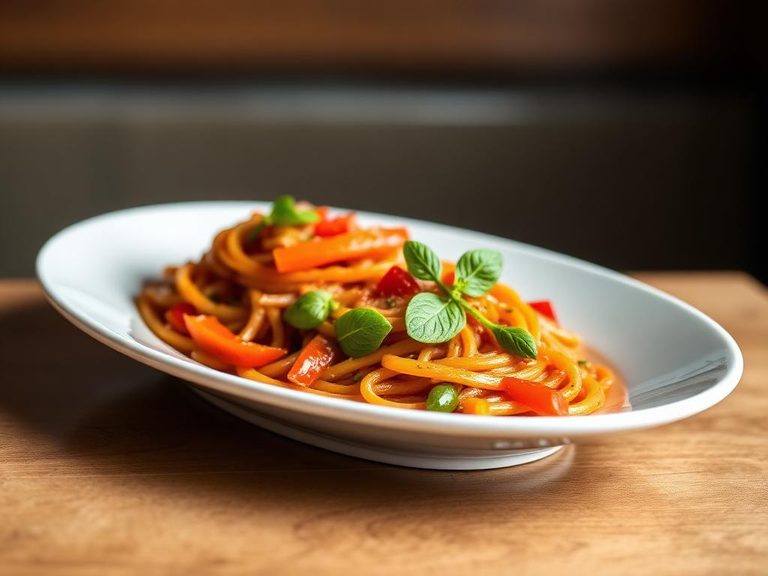
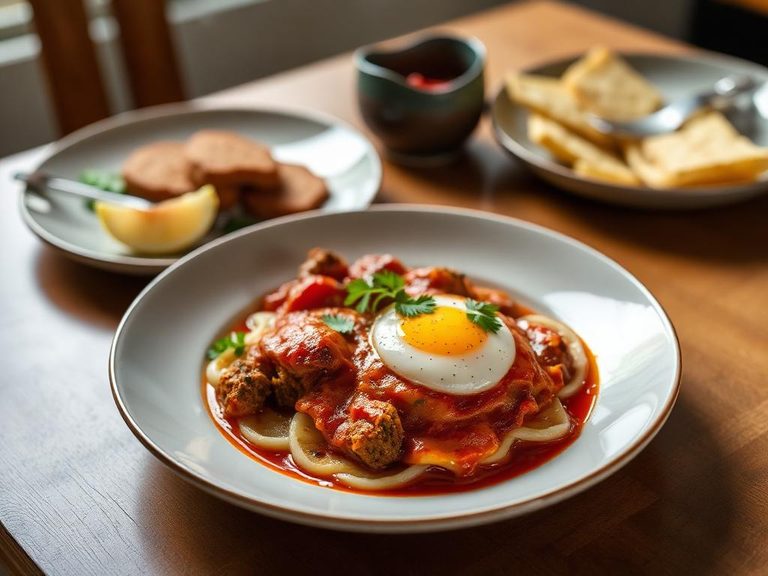
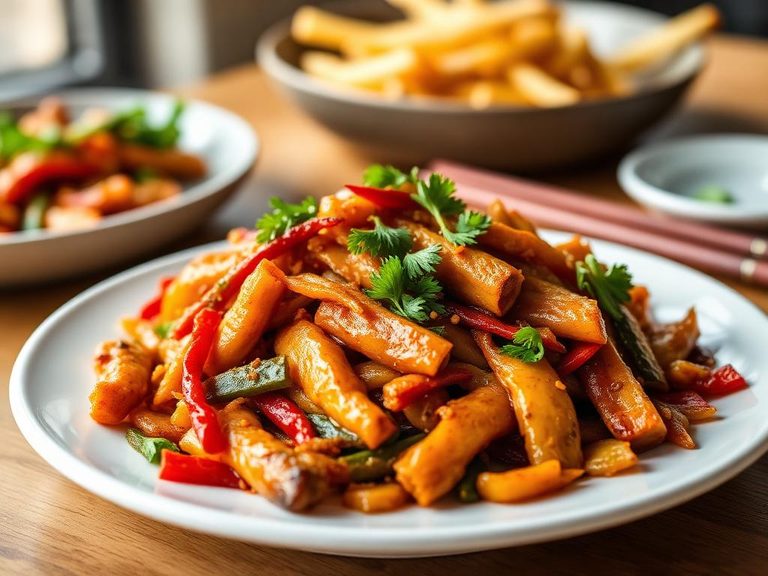
🍽️ Popular dishes
🌍 Where it's eaten
💡 Did you know?
Bell peppers are fruits botanically, and the green variety is simply an unripe pepper; allowing it to ripen fully on the plant would turn it red, yellow, or orange, dramatically increasing its vitamin C content.
Full nutrition (USDA data · scales with serving)
| Water | 82.7 g |
| Energy | 116 kcal |
| Energy | 486 kj |
| Protein | 0.78 g |
| Total lipid (fat) | 11.8 g |
| Ash | 0.50 g |
| Carbohydrate, by difference | 4.2 g |
| Fiber, total dietary | 1.8 g |
| Total Sugars | 2.2 g |
| Sucrose | 0.00 g |
| Glucose | 1.1 g |
| Fructose | 1.1 g |
| Lactose | 0.00 g |
| Maltose | 0.00 g |
| Galactose | 0.00 g |
| Starch | 0.00 g |
| Calcium, Ca | 8.0 mg |
| Iron, Fe | 0.30 mg |
| Magnesium, Mg | 8.0 mg |
| Phosphorus, P | 15.0 mg |
| Potassium, K | 134 mg |
| Sodium, Na | 17.0 mg |
| Zinc, Zn | 0.06 mg |
| Copper, Cu | 0.02 mg |
| Manganese, Mn | 0.06 mg |
| Selenium, Se | 0.60 ug |
| Vitamin C, total ascorbic acid | 177 mg |
| Thiamin | 0.04 mg |
| Riboflavin | 0.05 mg |
| Niacin | 0.58 mg |
| Pantothenic acid | 0.11 mg |
| Vitamin B-6 | 0.20 mg |
| Folate, total | 2.0 ug |
| Folate, food | 2.0 ug |
| Choline, total | 4.8 mg |
| Betaine | 0.10 mg |
| Vitamin B-12 | 0.00 ug |
| Vitamin A, RAE | 14.0 ug |
| Retinol | 0.00 ug |
| Carotene, beta | 135 ug |
| Carotene, alpha | 42.0 ug |
| Cryptoxanthin, beta | 17.0 ug |
| Vitamin A, IU | 273 iu |
| Lycopene | 0.00 ug |
| Vitamin E (alpha-tocopherol) | 1.4 mg |
| Tocopherol, beta | 0.07 mg |
| Tocopherol, gamma | 7.5 mg |
| Tocopherol, delta | 2.3 mg |
| Tocotrienol, alpha | 0.00 mg |
| Tocotrienol, beta | 0.00 mg |
| Tocotrienol, gamma | 0.00 mg |
| Tocotrienol, delta | 0.00 mg |
| Vitamin D (D2 + D3), International Units | 0.00 iu |
| Vitamin D (D2 + D3) | 0.00 ug |
| Vitamin K (phylloquinone) | 21.3 ug |
| Vitamin K (Dihydrophylloquinone) | 0.00 ug |
Fat & fatty acid profile (per 100g)
| Fatty acids, total saturated | 1.6 g |
| SFA 4:0 | 0.00 g |
| SFA 6:0 | 0.00 g |
| SFA 8:0 | 0.00 g |
| SFA 10:0 | 0.00 g |
| SFA 12:0 | 0.00 g |
| SFA 14:0 | 0.00 g |
| SFA 15:0 | 0.00 g |
| SFA 16:0 | 1.1 g |
| SFA 17:0 | 0.00 g |
| SFA 18:0 | 0.42 g |
| SFA 20:0 | 0.04 g |
| SFA 22:0 | 0.04 g |
| SFA 24:0 | 0.00 g |
| Fatty acids, total monounsaturated | 2.3 g |
| MUFA 14:1 | 0.00 g |
| MUFA 15:1 | 0.00 g |
| MUFA 16:1 | 0.00 g |
| MUFA 17:1 | 0.00 g |
| MUFA 18:1 | 2.3 g |
| MUFA 20:1 | 0.03 g |
| MUFA 22:1 | 0.00 g |
| Fatty acids, total polyunsaturated | 5.9 g |
| PUFA 18:2 | 5.1 g |
| PUFA 18:3 | 0.77 g |
| PUFA 18:4 | 0.00 g |
| PUFA 20:2 n-6 c,c | 0.00 g |
| PUFA 20:3 | 0.00 g |
| PUFA 20:4 | 0.00 g |
| PUFA 20:5 n-3 (EPA) | 0.00 g |
| PUFA 22:5 n-3 (DPA) | 0.00 g |
| PUFA 22:6 n-3 (DHA) | 0.00 g |
| Fatty acids, total trans | 0.00 g |
| Cholesterol | 0.00 mg |
Amino acid profile (per 100g)
| Tryptophan | 0.01 g |
| Threonine | 0.03 g |
| Isoleucine | 0.02 g |
| Leucine | 0.03 g |
| Lysine | 0.04 g |
| Methionine | 0.01 g |
| Cystine | 0.01 g |
| Phenylalanine | 0.08 g |
| Tyrosine | 0.01 g |
| Valine | 0.03 g |
| Arginine | 0.02 g |
| Histidine | 0.01 g |
| Alanine | 0.03 g |
| Aspartic acid | 0.19 g |
| Glutamic acid | 0.18 g |
| Glycine | 0.03 g |
| Proline | 0.02 g |
| Serine | 0.05 g |
FAQ
Are sautéed green peppers healthy?
Yes, they are a nutritious vegetable dish rich in fiber, vitamin C, and antioxidants. The healthiness depends mainly on the amount and type of oil used for sautéing.
How do you sauté peppers without them getting soggy?
Use high heat, don't overcrowd the pan, and cook them quickly (3-5 minutes) so they char slightly at the edges while retaining a crisp-tender texture.
Can I use frozen green peppers for sautéing?
Yes, but they will release more water during cooking. Pat them dry thoroughly and cook over slightly higher heat to evaporate the moisture and achieve good texture.
Nutrient density (calculated · NRF9.3)
Nutrient Rich Foods index: beneficial nutrients (protein, fiber, vitamins, minerals) minus saturated fat, added sugar & sodium, per 100 kcal.
NRF9.3 index — Fulgoni, Keast & Drewnowski, 2009. Computed from USDA nutrients.
Weight-loss friendliness (composite index)
Energy density 1.16 kcal/g · 3% calories from protein · 1.8 g fiber · 2.2 g sugar per 100 g.
Composite of energy density (Rolls et al., 1999), protein & fiber satiety, minus sugar. A calculated heuristic — ranks satiety-per-calorie, not a clinical measure.
Dietary load (calculated from USDA values)
Potential renal acid load. Positive = acid-forming, negative = alkaline-forming.
Sodium-to-potassium ratio: 0.13 (lower is better — aim for ≤ 1)
Sodium:potassium per WHO potassium guidance. Computed from USDA nutrients.