

Peperonata
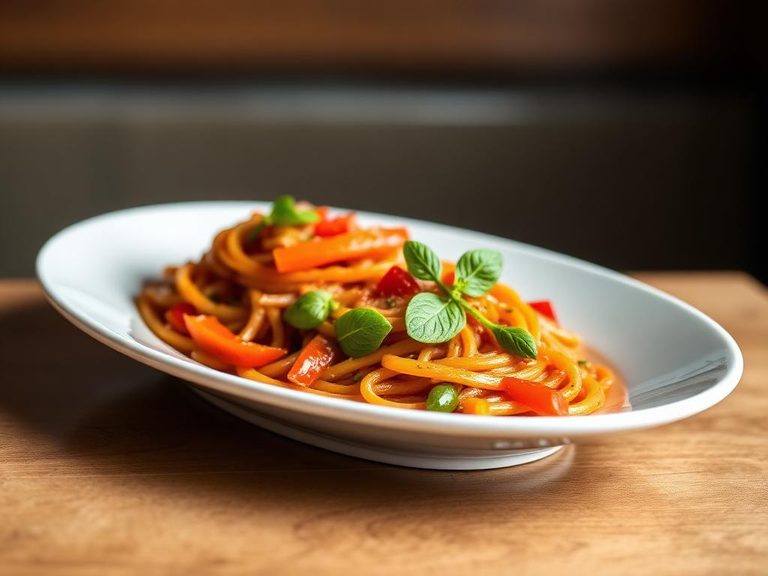
Peperonata is a vibrant Italian stew made primarily from bell peppers, onions, tomatoes, and herbs, slow-cooked until tender and flavorful. It originates from southern Italy, particularly regions like Campania and Calabria, and is often served as a side dish, antipasto, or even a topping for bruschetta.
🍳 View the full Peperonata recipe →
🍽️ Nutrition at a glance
Peperonata is low in protein and fat but provides a good source of carbohydrates from the vegetables, along with fiber, vitamin C, and antioxidants. A typical serving (about 1 cup) contains roughly 80-120 calories, depending on the amount of olive oil used.
Nutrition breakdown
| Calories | 120 kcal |
| Protein | 2 g |
| Carbs | 15 g |
| Fat | 7 g |
| Fiber | 4 g |
| Sugar | 9 g |
| Sodium | 300 mg |
| Vitamin C | 90 mg |
| Vitamin A | 2500 IU |
| Potassium | 450 mg |
| Vitamin B6 | 0.3 mg |
| Folate | 55 mcg |
| Vitamin K | 12 mcg |
| Manganese | 0.4 mg |
| Magnesium | 30 mg |
Per 1 cup (240 g) · estimated, varies by recipe
💡 What's interesting
Culturally, peperonata is a staple of Italian summer cooking, showcasing the use of seasonal produce, and it's often preserved in jars to enjoy year-round. Nutritionally, its high vitamin C content from peppers can aid in iron absorption if paired with other foods.
AI estimate may be inaccurate · Terms