

Pastry, Pastelitos de Guava (guava pastries)
Whole food · Baked Products

Photo: Wikipedia
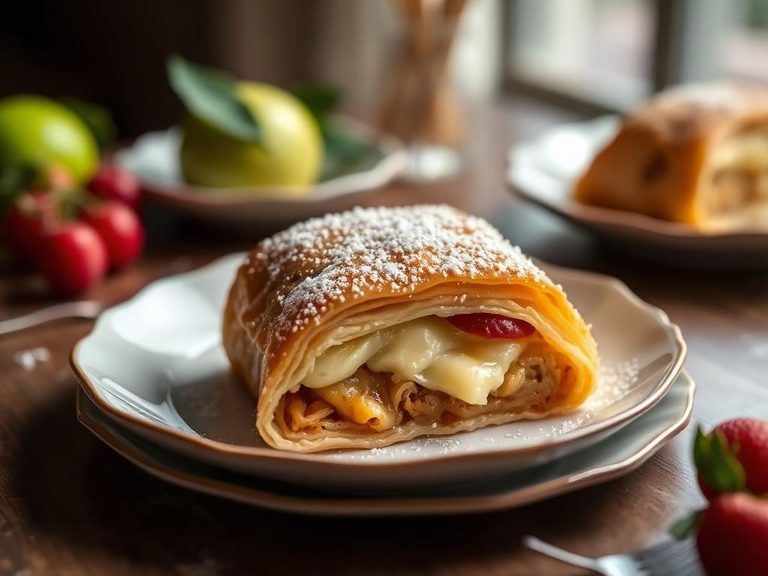
Pastelitos de Guava are flaky, golden Cuban pastries filled with sweet, fragrant guava paste, offering a delightful contrast between crisp layers of puff pastry and a jammy, floral center. Each bite delivers a burst of tropical sweetness balanced by a subtle, tangy undertone from the fruit. Nutritionally, they are a high-carb treat, with nearly 48g of carbs and 17g of sugar per 100g, providing quick energy but little protein or fiber.
Calorie split: 6% protein · 50% carbs · 44% fat
↓ Full nutrition💚 Why it's loved
People adore the perfect marriage of buttery, shatteringly crisp pastry with the intensely sweet, aromatic guava filling. It's a beloved staple in Cuban and Latin American bakeries, evoking nostalgia and serving as a versatile snack or dessert.
⚠️ Watch-outs & how to enjoy it better
The high sugar and refined carbohydrate content can lead to blood sugar spikes, making it less ideal for those managing diabetes or insulin resistance. To counteract this, enjoy a small portion alongside a source of protein or healthy fat, like a handful of nuts or a piece of cheese, to slow sugar absorption.
Key benefits
- Provides quick energy from carbohydrates
- Contains small amounts of iron and vitamin C from guava
- Offers a comforting, culturally significant treat
- Can be a source of dietary fiber if made with whole fruit
🍽️ Popular dishes
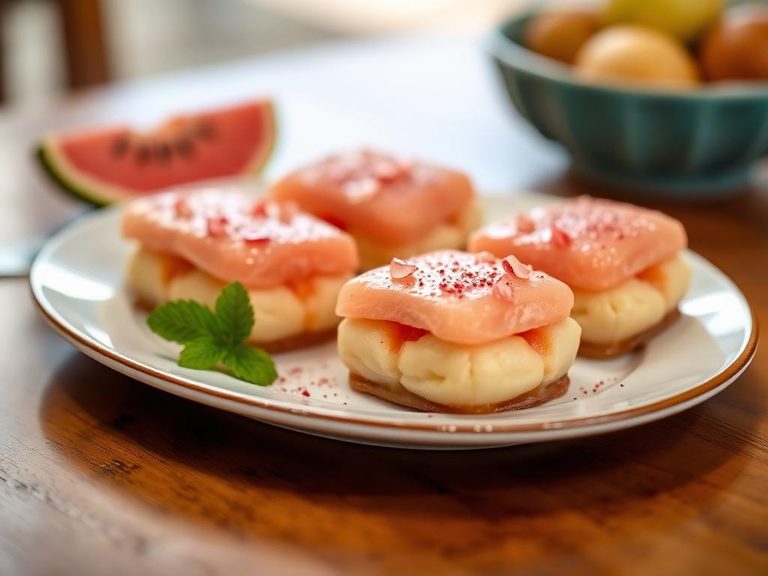
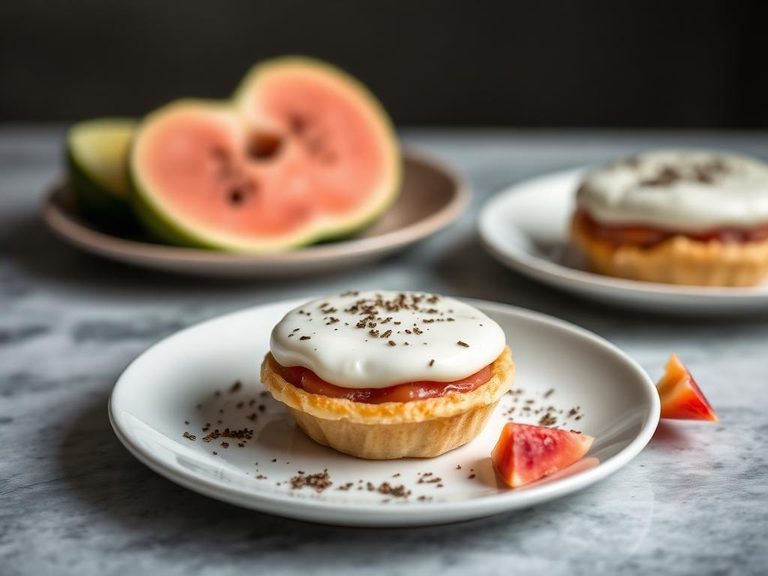
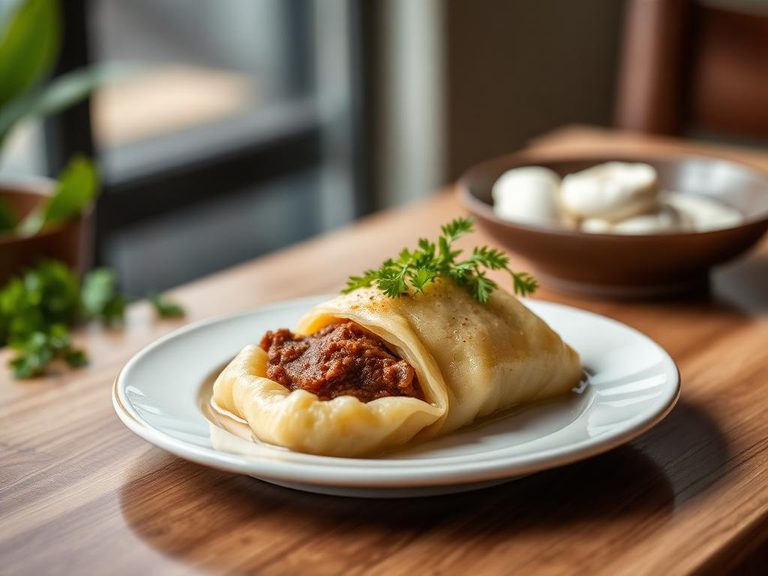
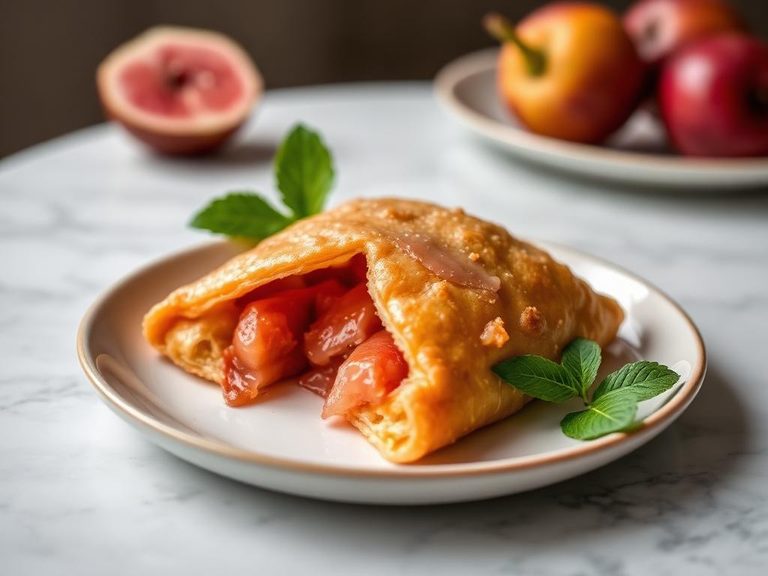
🌍 Where it's eaten
💡 Did you know?
The guava paste used in these pastries is often sold in a firm, sliceable block called 'pasta de guayaba,' which allows for clean, precise filling that melts into a perfect gooey layer during baking.
Full nutrition (USDA data · scales with serving)
| Water | 27.3 g |
| Energy | 379 kcal |
| Energy | 1588 kj |
| Protein | 5.5 g |
| Total lipid (fat) | 18.5 g |
| Ash | 0.99 g |
| Carbohydrate, by difference | 47.8 g |
| Fiber, total dietary | 2.2 g |
| Total Sugars | 17.0 g |
| Sucrose | 12.4 g |
| Glucose | 2.3 g |
| Fructose | 1.4 g |
| Lactose | 0.00 g |
| Maltose | 0.93 g |
| Galactose | 0.00 g |
| Starch | 24.6 g |
| Calcium, Ca | 14.0 mg |
| Iron, Fe | 2.1 mg |
| Magnesium, Mg | 15.0 mg |
| Phosphorus, P | 56.0 mg |
| Potassium, K | 103 mg |
| Sodium, Na | 231 mg |
| Zinc, Zn | 0.42 mg |
| Copper, Cu | 0.08 mg |
| Manganese, Mn | 0.27 mg |
| Selenium, Se | 17.5 ug |
| Thiamin | 0.19 mg |
| Riboflavin | 0.12 mg |
| Niacin | 2.5 mg |
| Pantothenic acid | 0.27 mg |
| Vitamin B-6 | 0.05 mg |
| Carotene, beta | 17.0 ug |
| Carotene, alpha | 0.00 ug |
| Cryptoxanthin, beta | 3.0 ug |
| Lycopene | 348 ug |
| Lutein + zeaxanthin | 14.0 ug |
| Vitamin E (alpha-tocopherol) | 0.95 mg |
| Tocopherol, beta | 0.12 mg |
| Tocopherol, gamma | 6.8 mg |
| Tocopherol, delta | 2.4 mg |
| Tocotrienol, alpha | 0.00 mg |
| Tocotrienol, beta | 0.00 mg |
| Tocotrienol, gamma | 0.00 mg |
| Tocotrienol, delta | 0.00 mg |
| Vitamin K (phylloquinone) | 12.5 ug |
| Vitamin K (Dihydrophylloquinone) | 29.1 ug |
| Vitamin K (Menaquinone-4) | 0.00 ug |
Fat & fatty acid profile (per 100g)
| Fatty acids, total saturated | 5.5 g |
| SFA 6:0 | 0.00 g |
| SFA 8:0 | 0.00 g |
| SFA 10:0 | 0.02 g |
| SFA 12:0 | 0.01 g |
| SFA 14:0 | 0.06 g |
| SFA 15:0 | 0.01 g |
| SFA 16:0 | 2.3 g |
| SFA 17:0 | 0.04 g |
| SFA 18:0 | 3.0 g |
| SFA 20:0 | 0.06 g |
| SFA 22:0 | 0.05 g |
| SFA 24:0 | 0.02 g |
| Fatty acids, total monounsaturated | 8.5 g |
| MUFA 14:1 | 0.01 g |
| MUFA 15:1 | 0.00 g |
| MUFA 16:1 | 0.06 g |
| MUFA 16:1 c | 0.05 g |
| MUFA 17:1 | 0.00 g |
| MUFA 18:1 | 8.4 g |
| MUFA 18:1 c | 6.1 g |
| MUFA 20:1 | 0.04 g |
| MUFA 22:1 | 0.00 g |
| MUFA 22:1 c | 0.00 g |
| MUFA 24:1 c | 0.00 g |
| Fatty acids, total polyunsaturated | 2.8 g |
| PUFA 18:2 | 2.7 g |
| PUFA 18:2 n-6 c,c | 2.1 g |
| PUFA 18:2 CLAs | 0.02 g |
| PUFA 18:3 | 0.16 g |
| PUFA 18:3 n-3 c,c,c (ALA) | 0.16 g |
| PUFA 18:3 n-6 c,c,c | 0.00 g |
| PUFA 18:4 | 0.00 g |
| PUFA 20:2 n-6 c,c | 0.00 g |
| PUFA 20:3 | 0.00 g |
| PUFA 20:3 n-3 | 0.00 g |
| PUFA 20:3 n-6 | 0.00 g |
| PUFA 20:4 | 0.00 g |
| PUFA 20:5 n-3 (EPA) | 0.00 g |
| PUFA 22:4 | 0.00 g |
| PUFA 22:5 n-3 (DPA) | 0.00 g |
| PUFA 22:6 n-3 (DHA) | 0.00 g |
| Fatty acids, total trans | 2.9 g |
| Fatty acids, total trans-monoenoic | 2.4 g |
| TFA 16:1 t | 0.00 g |
| TFA 18:1 t | 2.4 g |
| TFA 22:1 t | 0.00 g |
| TFA 18:2 t not further defined | 0.50 g |
| Fatty acids, total trans-polyenoic | 0.50 g |
| Cholesterol | 10.0 mg |
Amino acid profile (per 100g)
Estimated from Danish pastry, cinnamon, enriched — USDA does not publish this profile for Pastry.
| Tryptophan | 0.08 g |
| Threonine | 0.24 g |
| Isoleucine | 0.31 g |
| Leucine | 0.53 g |
| Lysine | 0.30 g |
| Methionine | 0.14 g |
| Cystine | 0.14 g |
| Phenylalanine | 0.35 g |
| Tyrosine | 0.23 g |
| Valine | 0.34 g |
| Arginine | 0.31 g |
| Histidine | 0.16 g |
| Alanine | 0.27 g |
| Aspartic acid | 0.46 g |
| Glutamic acid | 1.9 g |
| Glycine | 0.24 g |
| Proline | 0.64 g |
| Serine | 0.38 g |
FAQ
What is the difference between guava paste and guava jam?
Guava paste (pasta de guayaba) is a very thick, firm, sliceable concentrate cooked down with sugar, ideal for baking as it holds its shape. Guava jam is softer, spreadable, and has more moisture.
Can I freeze unbaked pastelitos?
Yes. Assemble the pastries, place them on a baking sheet to freeze solid, then transfer to a bag. Bake from frozen, adding a few extra minutes to the baking time.
What cheese is traditionally paired with guava pastries?
The classic pairing is with a mild, slightly salty white cheese like cream cheese, queso fresco, or queso crema, which balances the intense sweetness of the guava.
Nutrient density (calculated · NRF9.3)
Nutrient Rich Foods index: beneficial nutrients (protein, fiber, vitamins, minerals) minus saturated fat, added sugar & sodium, per 100 kcal.
NRF9.3 index — Fulgoni, Keast & Drewnowski, 2009. Computed from USDA nutrients.
Weight-loss friendliness (composite index)
Energy density 3.79 kcal/g · 6% calories from protein · 2.2 g fiber · 17.0 g sugar per 100 g.
Composite of energy density (Rolls et al., 1999), protein & fiber satiety, minus sugar. A calculated heuristic — ranks satiety-per-calorie, not a clinical measure.
Dietary load (calculated from USDA values)
Potential renal acid load. Positive = acid-forming, negative = alkaline-forming.
Sodium-to-potassium ratio: 2.24 (lower is better — aim for ≤ 1)
Sodium:potassium per WHO potassium guidance. Computed from USDA nutrients.