Nuts, almonds, dry roasted, with salt added
Whole food · Nut and Seed Products
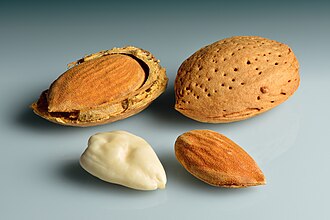
Photo: Wikipedia
Dry roasted almonds with salt are a crunchy, savory snack with a deep, nutty flavor and a satisfying snap. They are a calorie-dense powerhouse, packing nearly 58g of healthy monounsaturated fats and over 20g of protein per 100g. The added salt enhances their natural sweetness, making them a popular choice for a quick, energy-boosting bite.
💚 Why it's loved
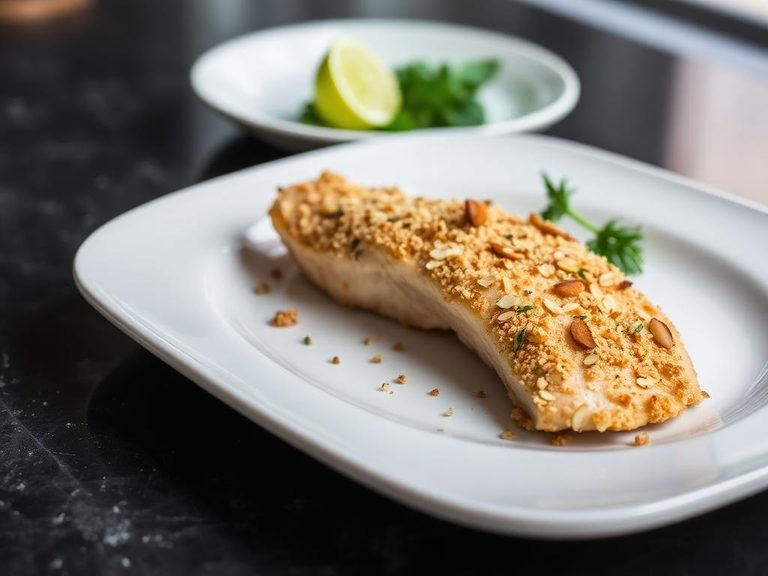
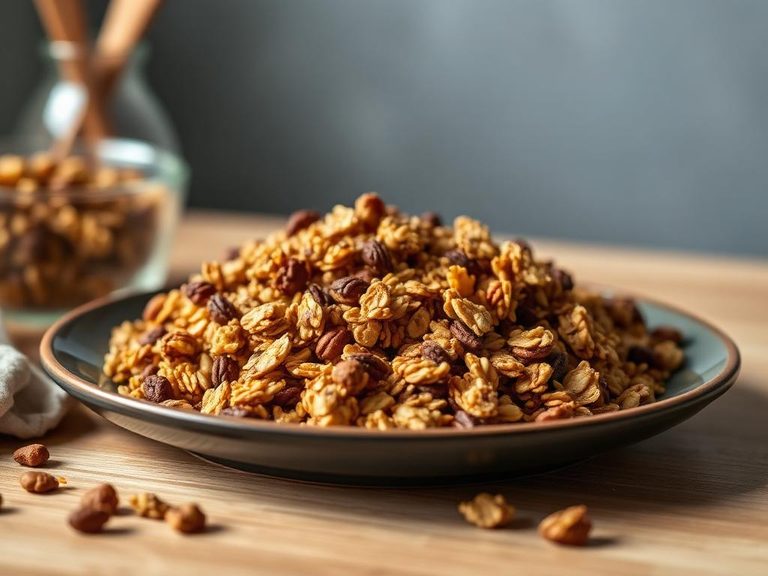
People love the satisfying crunch and the perfect balance of salty and nutty flavors, making them an addictive and convenient snack. They are incredibly versatile, used in everything from trail mixes and salads to baked goods and as a standalone treat.
⚠️ Watch-outs & how to enjoy it better
The added salt can be a concern for those monitoring sodium intake, and the high calorie density means portions should be mindful. As a common allergen, almonds are unsafe for individuals with tree nut allergies, and their oxalate content may be a consideration for those prone to kidney stones. To mitigate sodium, look for low-salt versions or pair with unsalted nuts; for portion control, pre-portion into small bags to avoid overeating.
Key benefits
- Rich in heart-healthy monounsaturated fats
- Excellent source of plant-based protein
- High in dietary fiber for digestive health
- Provides key minerals like magnesium and vitamin E
- Offers sustained energy due to low sugar content
🍽️ Popular dishes
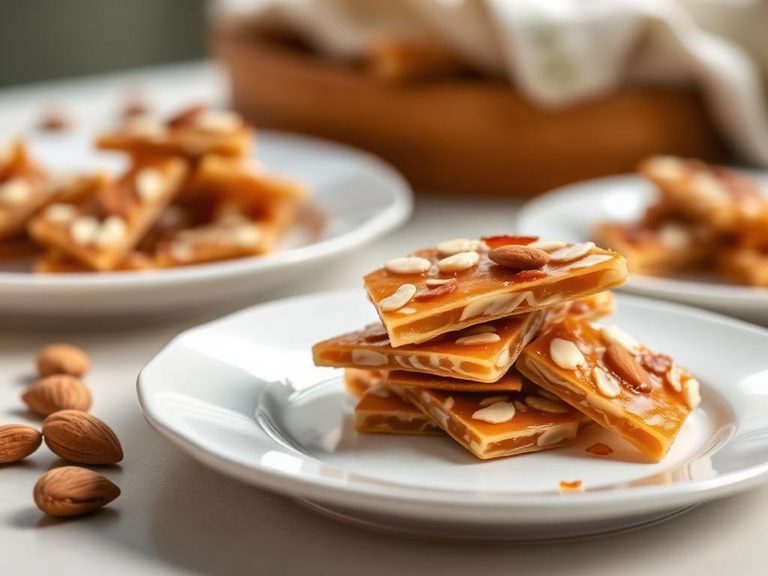
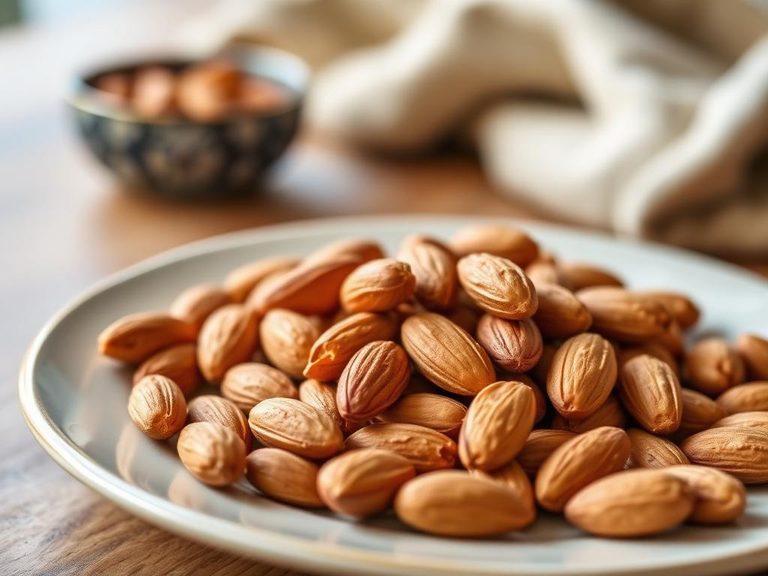

🌍 Where it's eaten
💡 Did you know?
Almonds are technically not true nuts but are the seeds of a fruit from the Prunus genus, making them close relatives of peaches and cherries.
Full nutrition (scales with serving)
| Water | 2.2 g |
| Energy (Atwater General Factors) | 667 kcal |
| Energy (Atwater Specific Factors) | 621 kcal |
| Energy | 620 kcal |
| Energy | 2590 kj |
| Nitrogen | 3.9 g |
| Protein | 20.4 g |
| Total lipid (fat) | 57.8 g |
| Total fat (NLEA) | 53.4 g |
| Ash | 3.5 g |
| Carbohydrate, by difference | 16.2 g |
| Fiber, total dietary | 11.0 g |
| Sugars, Total | 4.2 g |
| Sucrose | 4.2 g |
| Glucose | 0.00 g |
| Fructose | 0.00 g |
| Lactose | 0.00 g |
| Maltose | 0.00 g |
| Galactose | 0.00 g |
| Calcium, Ca | 273 mg |
| Iron, Fe | 3.2 mg |
| Magnesium, Mg | 258 mg |
| Phosphorus, P | 456 mg |
| Potassium, K | 684 mg |
| Sodium, Na | 256 mg |
| Zinc, Zn | 2.8 mg |
| Copper, Cu | 0.87 mg |
| Manganese, Mn | 2.0 mg |
| Selenium, Se | 0.00 ug |
| Vitamin C, total ascorbic acid | 0.00 mg |
| Thiamin | 0.08 mg |
| Riboflavin | 1.6 mg |
| Niacin | 3.1 mg |
| Pantothenic acid | 0.24 mg |
| Vitamin B-6 | 0.07 mg |
| Folate, total | 35.0 ug |
| Choline, total | 60.8 mg |
| Choline, free | 4.3 mg |
| Choline, from phosphocholine | 56.1 mg |
| Choline, from phosphotidyl choline | 0.00 mg |
| Choline, from glycerophosphocholine | 0.40 mg |
| Choline, from sphingomyelin | 0.00 mg |
| Betaine | 0.00 mg |
| Vitamin A, RAE | 2.0 ug |
| Carotene, beta | 17.0 ug |
| Carotene, alpha | 0.00 ug |
| Cryptoxanthin, beta | 9.0 ug |
| Lycopene | 0.00 ug |
| Lutein + zeaxanthin | 25.0 ug |
| Vitamin E (alpha-tocopherol) | 19.0 mg |
| Tocopherol, beta | 0.18 mg |
| Tocopherol, gamma | 0.92 mg |
| Tocopherol, delta | 0.00 mg |
| Tocotrienol, alpha | 0.28 mg |
| Tocotrienol, beta | 0.00 mg |
| Tocotrienol, gamma | 0.00 mg |
| Tocotrienol, delta | 0.00 mg |
| Vitamin K (phylloquinone) | 0.00 ug |
| Vitamin K (Dihydrophylloquinone) | 0.00 ug |
| Vitamin K (Menaquinone-4) | 0.00 ug |
| Fatty acids, total saturated | 4.6 g |
| SFA 4:0 | 0.00 g |
| SFA 6:0 | 0.00 g |
| SFA 8:0 | 0.00 g |
| SFA 10:0 | 0.00 g |
| SFA 11:0 | 0.00 g |
| SFA 12:0 | 0.00 g |
| SFA 14:0 | 0.03 g |
| SFA 15:0 | 0.01 g |
| SFA 16:0 | 3.5 g |
| SFA 17:0 | 0.03 g |
| SFA 18:0 | 0.83 g |
| SFA 20:0 | 0.06 g |
| SFA 22:0 | 0.04 g |
| SFA 24:0 | 0.02 g |
| Fatty acids, total monounsaturated | 34.2 g |
| MUFA 14:1 c | 0.00 g |
| MUFA 15:1 | 0.00 g |
| MUFA 16:1 c | 0.26 g |
| MUFA 17:1 | 0.06 g |
| MUFA 17:1 c | 0.06 g |
| MUFA 18:1 c | 33.8 g |
| MUFA 20:1 c | 0.08 g |
| MUFA 22:1 c | 0.00 g |
| MUFA 22:1 n-9 | 0.00 g |
| MUFA 24:1 c | 0.00 g |
| Fatty acids, total polyunsaturated | 14.5 g |
| PUFA 18:2 c | 14.5 g |
| PUFA 18:2 n-6 c,c | 14.5 g |
| PUFA 18:2 CLAs | 0.01 g |
| PUFA 18:3 c | 0.05 g |
| PUFA 18:3 n-3 c,c,c (ALA) | 0.05 g |
| PUFA 18:3 n-6 c,c,c | 0.00 g |
| PUFA 18:4 | 0.00 g |
| PUFA 20:2 c | 0.00 g |
| PUFA 20:2 n-6 c,c | 0.00 g |
| PUFA 20:3 c | 0.00 g |
| PUFA 20:3 n-3 | 0.00 g |
| PUFA 20:3 n-6 | 0.00 g |
| PUFA 20:3 n-9 | 0.00 g |
| PUFA 20:4 | 0.01 g |
| PUFA 20:4c | 0.01 g |
| PUFA 20:5c | 0.00 g |
| PUFA 20:5 n-3 (EPA) | 0.00 g |
| PUFA 22:2 | 0.00 g |
| PUFA 22:5 c | 0.00 g |
| PUFA 22:4 | 0.00 g |
| PUFA 22:5 n-3 (DPA) | 0.00 g |
| PUFA 22:6 c | 0.00 g |
| PUFA 22:6 n-3 (DHA) | 0.00 g |
| Fatty acids, total trans | 0.03 g |
| Fatty acids, total trans-monoenoic | 0.02 g |
| TFA 16:1 t | 0.00 g |
| TFA 18:1 t | 0.02 g |
| TFA 22:1 t | 0.00 g |
| Fatty acids, total trans-dienoic | 0.02 g |
| TFA 18:2 t not further defined | 0.02 g |
| Fatty acids, total trans-polyenoic | 0.00 g |
| TFA 18:3 t | 0.00 g |
FAQ
Are dry roasted almonds healthier than raw almonds?
Dry roasting doesn't significantly change the nutritional profile, but it can reduce some heat-sensitive vitamins. The key difference is the added salt, which increases sodium content. For a healthier option, choose unsalted dry roasted or raw almonds.
How should I store dry roasted almonds to keep them fresh?
Store them in an airtight container in a cool, dark place, like a pantry, for up to 3 months. For longer storage, keep them in the refrigerator or freezer, where they can last for up to a year without going rancid.
Can I make dry roasted almonds at home?
Yes! Spread raw almonds on a baking sheet and roast at 350°F (175°C) for 10-15 minutes, stirring halfway. Let them cool, then toss with a small amount of salt. This gives you control over the salt level and ensures freshness.