

Fish, salmon, Atlantic, farmed, raw
Whole food · Finfish and Shellfish Products

Photo: Wikipedia
Farmed Atlantic salmon is prized for its rich, buttery flavor and moist, flaky texture that melts in the mouth. It's a nutritional powerhouse, delivering a substantial 20.42 grams of high-quality protein and heart-healthy fats per 100-gram serving, with virtually no carbohydrates.
Calorie split: 40% protein · 0% carbs · 60% fat
↓ Full nutrition💚 Why it's loved
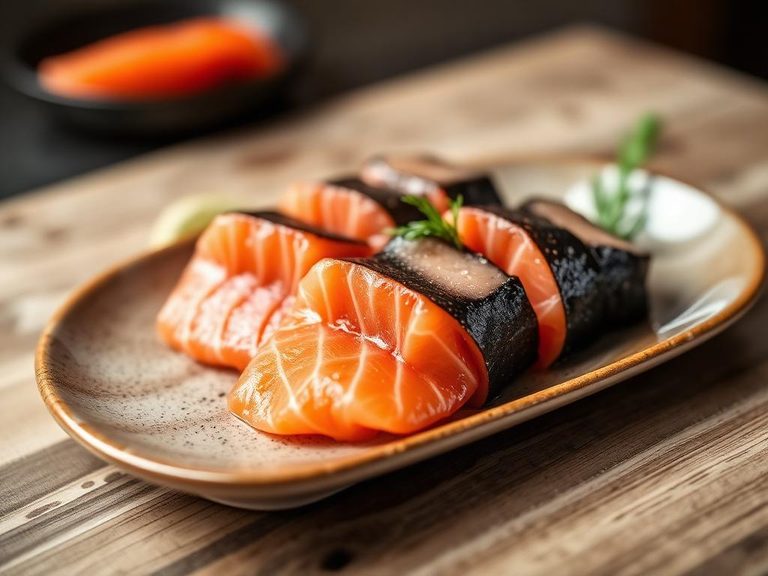
People adore its luxurious, fatty mouthfeel and mild, sweet flavor that serves as a perfect canvas for a wide array of seasonings and cooking methods. It's a cultural staple in Nordic and Japanese cuisines, symbolizing both rustic feasts and elegant sushi.
⚠️ Watch-outs & how to enjoy it better
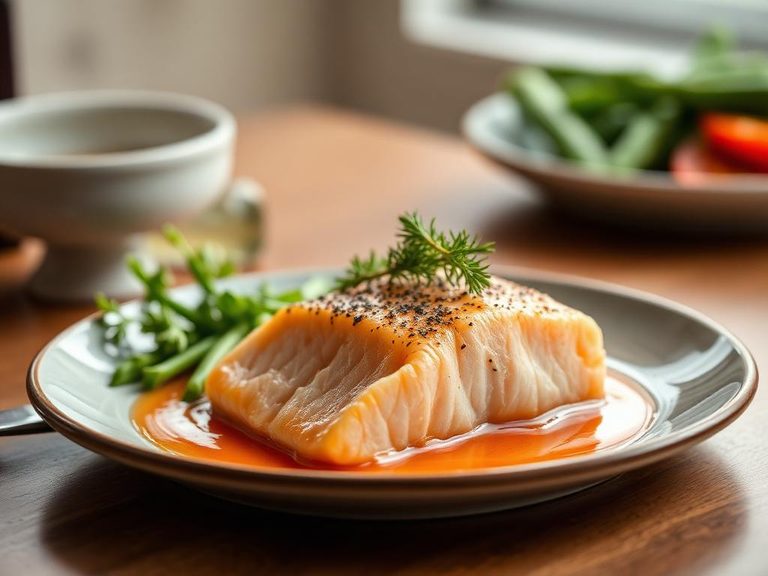
As a farmed fish, it can be higher in certain fats and potential contaminants than wild varieties; choosing certified sustainable sources (like ASC or BAP) can mitigate this. Its strong flavor can be overpowering if overcooked, so careful timing and using methods like poaching or baking en papillote are recommended to preserve moisture.
Key benefits
- Excellent source of complete protein for muscle maintenance.
- Rich in omega-3 fatty acids (EPA and DHA) for brain and heart health.
- Provides significant amounts of vitamin D and B12.
- Naturally low in carbohydrates and sugars.
- A versatile protein source for various diets.
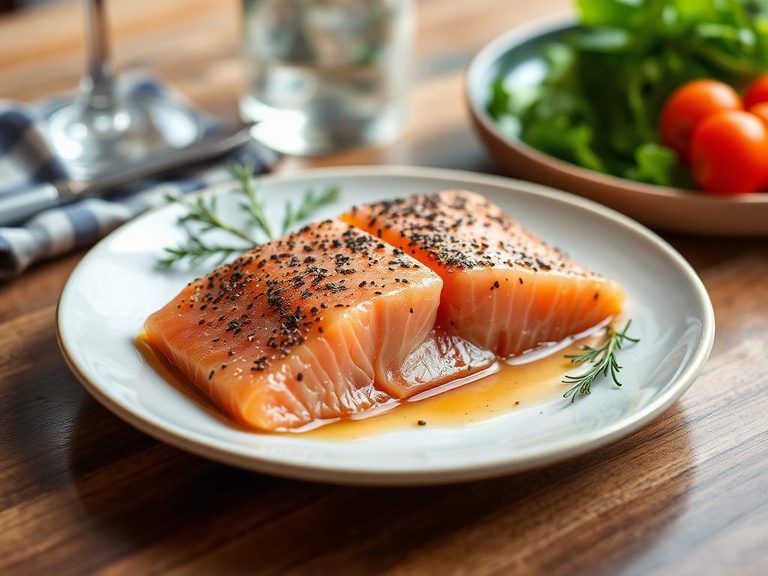
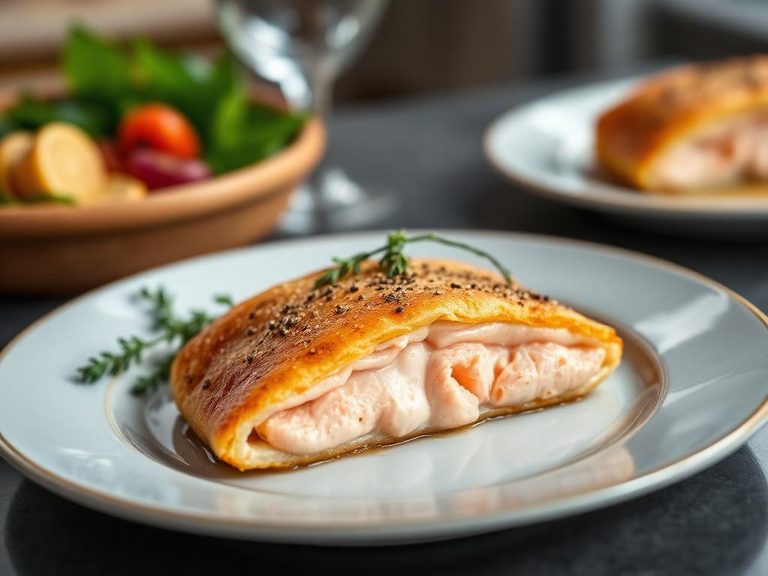
🍽️ Popular dishes

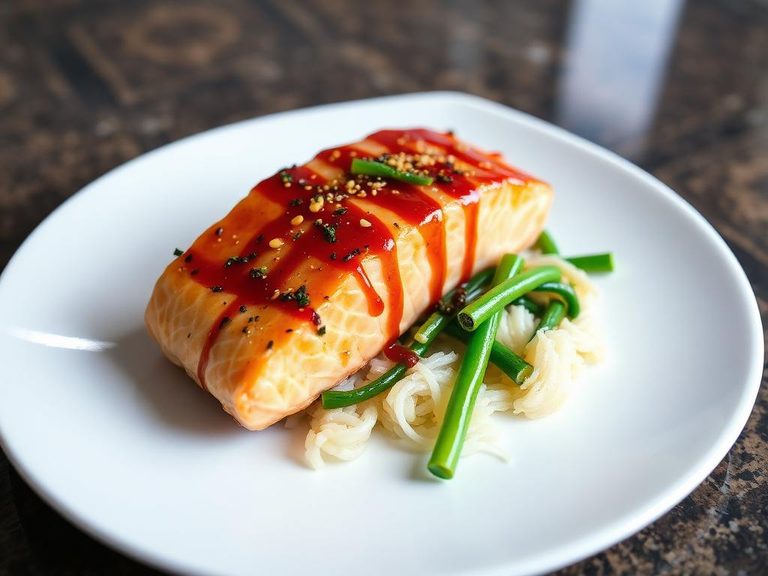
🌍 Where it's eaten
💡 Did you know?
The pink-orange color of farmed salmon flesh is not natural; it comes from added astaxanthin in their feed, a pigment also found in wild salmon from eating shrimp and krill.
Full nutrition (USDA data · scales with serving)
| Water | 64.9 g |
| Energy | 208 kcal |
| Energy | 871 kj |
| Protein | 20.4 g |
| Total lipid (fat) | 13.4 g |
| Ash | 1.1 g |
| Carbohydrate, by difference | 0.00 g |
| Fiber, total dietary | 0.00 g |
| Total Sugars | 0.00 g |
| Calcium, Ca | 9.0 mg |
| Iron, Fe | 0.34 mg |
| Magnesium, Mg | 27.0 mg |
| Phosphorus, P | 240 mg |
| Potassium, K | 363 mg |
| Sodium, Na | 59.0 mg |
| Zinc, Zn | 0.36 mg |
| Copper, Cu | 0.04 mg |
| Manganese, Mn | 0.01 mg |
| Selenium, Se | 24.0 ug |
| Vitamin C, total ascorbic acid | 3.9 mg |
| Thiamin | 0.21 mg |
| Riboflavin | 0.15 mg |
| Niacin | 8.7 mg |
| Pantothenic acid | 1.5 mg |
| Vitamin B-6 | 0.64 mg |
| Folate, total | 26.0 ug |
| Folic acid | 0.00 ug |
| Folate, food | 26.0 ug |
| Folate, DFE | 26.0 ug |
| Choline, total | 78.5 mg |
| Betaine | 3.0 mg |
| Vitamin B-12 | 3.2 ug |
| Vitamin B-12, added | 0.00 ug |
| Vitamin A, RAE | 58.0 ug |
| Retinol | 58.0 ug |
| Carotene, beta | 0.00 ug |
| Carotene, alpha | 0.00 ug |
| Cryptoxanthin, beta | 0.00 ug |
| Vitamin A, IU | 193 iu |
| Lycopene | 0.00 ug |
| Lutein + zeaxanthin | 0.00 ug |
| Vitamin E (alpha-tocopherol) | 3.5 mg |
| Vitamin E, added | 0.00 mg |
| Tocopherol, beta | 0.01 mg |
| Tocopherol, gamma | 0.30 mg |
| Tocopherol, delta | 0.05 mg |
| Tocotrienol, alpha | 0.06 mg |
| Tocotrienol, beta | 0.00 mg |
| Tocotrienol, gamma | 0.00 mg |
| Tocotrienol, delta | 0.00 mg |
| Vitamin D (D2 + D3), International Units | 441 iu |
| Vitamin D (D2 + D3) | 11.0 ug |
| Vitamin K (phylloquinone) | 0.50 ug |
| Vitamin K (Dihydrophylloquinone) | 0.00 ug |
| Vitamin K (Menaquinone-4) | 0.00 ug |
| Alcohol, ethyl | 0.00 g |
| Caffeine | 0.00 mg |
| Theobromine | 0.00 mg |
Fat & fatty acid profile (per 100g)
| Fatty acids, total saturated | 3.0 g |
| SFA 4:0 | 0.00 g |
| SFA 6:0 | 0.00 g |
| SFA 8:0 | 0.00 g |
| SFA 10:0 | 0.00 g |
| SFA 12:0 | 0.00 g |
| SFA 14:0 | 0.56 g |
| SFA 15:0 | 0.05 g |
| SFA 16:0 | 1.9 g |
| SFA 17:0 | 0.04 g |
| SFA 18:0 | 0.49 g |
| SFA 20:0 | 0.02 g |
| SFA 22:0 | 0.01 g |
| SFA 24:0 | 0.00 g |
| Fatty acids, total monounsaturated | 3.8 g |
| MUFA 14:1 | 0.00 g |
| MUFA 15:1 | 0.00 g |
| MUFA 16:1 | 0.79 g |
| MUFA 17:1 | 0.00 g |
| MUFA 18:1 | 2.7 g |
| MUFA 20:1 | 0.27 g |
| MUFA 22:1 | 0.00 g |
| Fatty acids, total polyunsaturated | 3.9 g |
| PUFA 18:2 | 0.90 g |
| PUFA 18:3 | 0.17 g |
| PUFA 18:3 n-3 c,c,c (ALA) | 0.15 g |
| PUFA 18:3 n-6 c,c,c | 0.02 g |
| PUFA 18:4 | 0.12 g |
| PUFA 20:2 n-6 c,c | 0.06 g |
| PUFA 20:3 | 0.02 g |
| PUFA 20:4 | 0.09 g |
| PUFA 20:5 n-3 (EPA) | 0.86 g |
| PUFA 22:5 n-3 (DPA) | 0.39 g |
| PUFA 22:6 n-3 (DHA) | 1.1 g |
| Cholesterol | 55.0 mg |
Amino acid profile (per 100g)
| Tryptophan | 0.21 g |
| Threonine | 0.86 g |
| Isoleucine | 0.97 g |
| Leucine | 1.6 g |
| Lysine | 1.9 g |
| Methionine | 0.63 g |
| Cystine | 0.22 g |
| Phenylalanine | 0.84 g |
| Tyrosine | 0.76 g |
| Valine | 1.1 g |
| Arginine | 1.2 g |
| Histidine | 0.55 g |
| Alanine | 1.3 g |
| Aspartic acid | 2.0 g |
| Glutamic acid | 2.8 g |
| Glycine | 0.96 g |
| Proline | 0.72 g |
| Serine | 0.90 g |
| Hydroxyproline | 0.04 g |
FAQ
Is farmed salmon as healthy as wild salmon?
Both are excellent sources of protein and omega-3s. Farmed salmon often has a higher total fat content (including beneficial omega-3s), while wild salmon may have a slightly better fatty acid profile and lower contaminant levels. Choosing reputable, sustainably farmed sources is key.
How can I tell if salmon is cooked through?
The flesh should be opaque and flake easily with a fork. For a moist result, use an instant-read thermometer; it should read 125-130°F (52-54°C) for medium-rare, as it will continue cooking after removal from heat.
What's the best way to store fresh salmon?
Place it on a plate or tray, cover tightly with plastic wrap, and store on the coldest part of your refrigerator (usually the bottom shelf) for up to 2 days. For longer storage, wrap tightly and freeze for up to 3 months.
Nutrient density (calculated · NRF9.3)
Nutrient Rich Foods index: beneficial nutrients (protein, fiber, vitamins, minerals) minus saturated fat, added sugar & sodium, per 100 kcal.
NRF9.3 index — Fulgoni, Keast & Drewnowski, 2009. Computed from USDA nutrients.
Weight-loss friendliness (composite index)
Energy density 2.08 kcal/g · 39% calories from protein · 0.0 g fiber · 0.0 g sugar per 100 g.
Composite of energy density (Rolls et al., 1999), protein & fiber satiety, minus sugar. A calculated heuristic — ranks satiety-per-calorie, not a clinical measure.
Dietary load (calculated from USDA values)
Potential renal acid load. Positive = acid-forming, negative = alkaline-forming.
Sodium-to-potassium ratio: 0.16 (lower is better — aim for ≤ 1)
Sodium:potassium per WHO potassium guidance. Computed from USDA nutrients.