

Cookies, gluten-free, lemon wafer
Whole food · Baked Products

Photo: Wikipedia
A delicate, crisp wafer cookie with a bright, zesty lemon flavor and a satisfyingly light, airy crunch. It's a gluten-free treat that delivers a sweet-tart punch, primarily from a high sugar content and a notable amount of fat for richness.
Calorie split: 0% protein · 58% carbs · 42% fat
↓ Full nutrition💚 Why it's loved
People love it for the refreshing burst of lemon that cuts through the sweetness, making it a popular palate cleanser or tea-time companion. Its crisp, melt-in-the-mouth texture is uniquely satisfying.
⚠️ Watch-outs & how to enjoy it better
With 42g of sugar and 24g of fat per 100g, it can contribute to blood-sugar spikes and offers little satiety. To counteract this, pair a small portion (1-2 wafers) with a source of protein or fat like Greek yogurt or a handful of nuts to slow sugar absorption.
Key benefits
- Gluten-free option for celiac or gluten-sensitive diets.
- Provides quick energy from carbohydrates.
- Offers a satisfying sweet treat with a distinct citrus flavor.
- Light texture can be less filling than dense cookies.
🍽️ Popular dishes
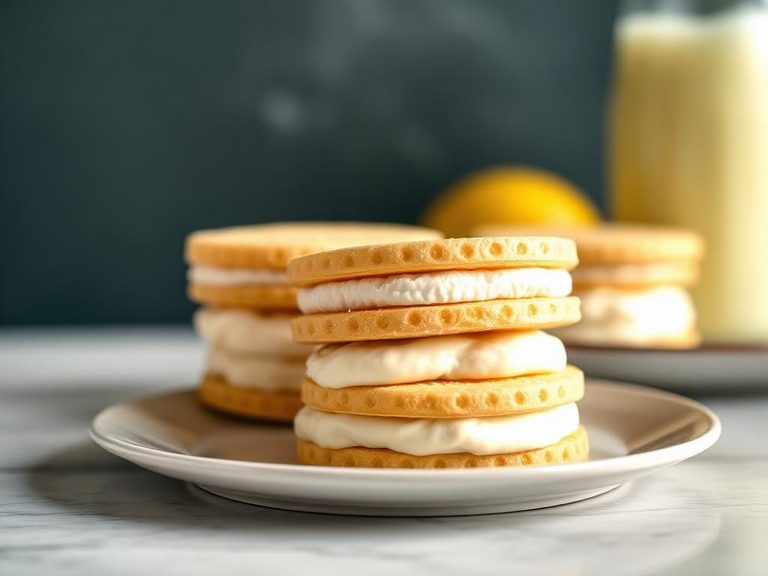
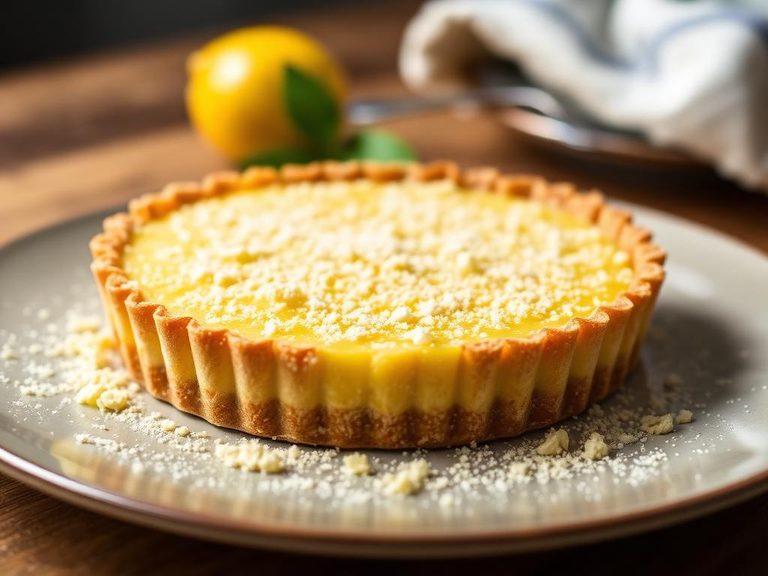
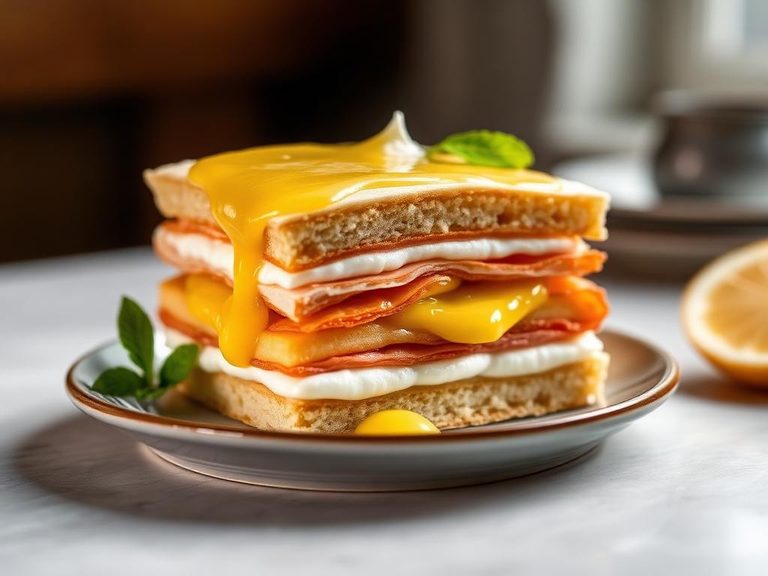
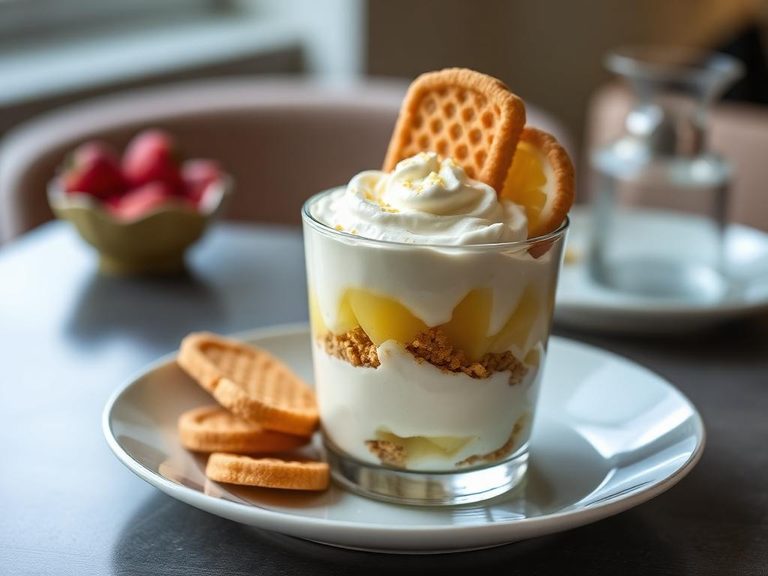
🌍 Where it's eaten
💡 Did you know?
The term 'wafer' comes from the Old Norse 'váfa', meaning 'to waver' or 'to wave', referencing the thin, flat shape of the cookie baked between patterned irons.
Full nutrition (USDA data · scales with serving)
| Water | 1.1 g |
| Energy | 515 kcal |
| Energy | 2156 kj |
| Protein | 0.00 g |
| Total lipid (fat) | 24.2 g |
| Ash | 0.30 g |
| Carbohydrate, by difference | 74.4 g |
| Fiber, total dietary | 0.00 g |
| Total Sugars | 42.3 g |
| Sucrose | 42.3 g |
| Glucose | 0.00 g |
| Fructose | 0.00 g |
| Lactose | 0.00 g |
| Maltose | 0.00 g |
| Galactose | 0.00 g |
| Starch | 33.5 g |
| Calcium, Ca | 9.0 mg |
| Iron, Fe | 0.18 mg |
| Magnesium, Mg | 3.0 mg |
| Phosphorus, P | 39.0 mg |
| Potassium, K | 36.0 mg |
| Sodium, Na | 111 mg |
| Zinc, Zn | 0.03 mg |
| Copper, Cu | 0.00 mg |
| Manganese, Mn | 0.02 mg |
| Selenium, Se | 0.00 ug |
| Thiamin | 0.04 mg |
| Riboflavin | 0.07 mg |
| Niacin | 0.07 mg |
| Pantothenic acid | 0.00 mg |
| Vitamin B-6 | 0.00 mg |
| Folate, total | 0.00 ug |
| Folate, food | 0.00 ug |
| Vitamin E (alpha-tocopherol) | 3.1 mg |
| Tocopherol, beta | 0.09 mg |
| Tocopherol, gamma | 1.2 mg |
| Tocopherol, delta | 0.36 mg |
| Tocotrienol, alpha | 3.3 mg |
| Tocotrienol, beta | 0.35 mg |
| Tocotrienol, gamma | 4.8 mg |
| Tocotrienol, delta | 0.00 mg |
Fat & fatty acid profile (per 100g)
| Fatty acids, total saturated | 10.5 g |
| SFA 4:0 | 0.00 g |
| SFA 6:0 | 0.00 g |
| SFA 8:0 | 0.00 g |
| SFA 10:0 | 0.00 g |
| SFA 12:0 | 0.07 g |
| SFA 14:0 | 0.23 g |
| SFA 15:0 | 0.01 g |
| SFA 16:0 | 9.1 g |
| SFA 17:0 | 0.02 g |
| SFA 18:0 | 0.94 g |
| SFA 20:0 | 0.08 g |
| SFA 22:0 | 0.02 g |
| SFA 24:0 | 0.01 g |
| Fatty acids, total monounsaturated | 8.3 g |
| MUFA 14:1 | 0.00 g |
| MUFA 15:1 | 0.00 g |
| MUFA 16:1 | 0.03 g |
| MUFA 16:1 c | 0.03 g |
| MUFA 17:1 | 0.01 g |
| MUFA 18:1 | 8.2 g |
| MUFA 18:1 c | 8.2 g |
| MUFA 20:1 | 0.04 g |
| MUFA 22:1 | 0.00 g |
| MUFA 22:1 c | 0.00 g |
| MUFA 24:1 c | 0.00 g |
| Fatty acids, total polyunsaturated | 2.7 g |
| PUFA 18:2 | 2.6 g |
| PUFA 18:2 n-6 c,c | 2.5 g |
| PUFA 18:2 CLAs | 0.01 g |
| PUFA 18:3 | 0.10 g |
| PUFA 18:3 n-3 c,c,c (ALA) | 0.09 g |
| PUFA 18:3 n-6 c,c,c | 0.01 g |
| PUFA 18:3i | 0.00 g |
| PUFA 18:4 | 0.00 g |
| PUFA 20:2 n-6 c,c | 0.00 g |
| PUFA 20:3 | 0.01 g |
| PUFA 20:3 n-3 | 0.01 g |
| PUFA 20:3 n-6 | 0.00 g |
| PUFA 20:4 | 0.00 g |
| PUFA 20:5 n-3 (EPA) | 0.00 g |
| PUFA 22:4 | 0.00 g |
| PUFA 22:5 n-3 (DPA) | 0.00 g |
| PUFA 22:6 n-3 (DHA) | 0.00 g |
| Fatty acids, total trans | 0.04 g |
| Fatty acids, total trans-monoenoic | 0.01 g |
| TFA 16:1 t | 0.00 g |
| TFA 18:1 t | 0.01 g |
| TFA 22:1 t | 0.00 g |
| TFA 18:2 t not further defined | 0.03 g |
| Fatty acids, total trans-polyenoic | 0.03 g |
Amino acid profile (per 100g)
Estimated from Cookies, animal crackers (includes arrowroot, tea biscuits) — USDA does not publish this profile for Cookies.
| Tryptophan | 0.10 g |
| Threonine | 0.19 g |
| Isoleucine | 0.26 g |
| Leucine | 0.47 g |
| Lysine | 0.24 g |
| Methionine | 0.12 g |
| Cystine | 0.15 g |
| Phenylalanine | 0.32 g |
| Tyrosine | 0.20 g |
| Valine | 0.30 g |
| Arginine | 0.26 g |
| Histidine | 0.14 g |
| Alanine | 0.21 g |
| Aspartic acid | 0.29 g |
| Glutamic acid | 2.3 g |
| Glycine | 0.23 g |
| Proline | 0.76 g |
| Serine | 0.36 g |
FAQ
Why is there 0g of protein and fiber?
The primary ingredients are refined gluten-free flours (like rice or tapioca starch), sugar, and fat, which are low in protein and fiber by nature.
Is it a good snack for sustained energy?
Not ideal. Its high sugar and low protein/fiber content means it provides a quick energy spike followed by a potential crash.
Can I use it in a no-bake dessert?
Absolutely! Its crisp texture holds up well when layered with creams or custards in parfaits or trifles, though it will soften over time.
Nutrient density (calculated · NRF9.3)
Nutrient Rich Foods index: beneficial nutrients (protein, fiber, vitamins, minerals) minus saturated fat, added sugar & sodium, per 100 kcal.
NRF9.3 index — Fulgoni, Keast & Drewnowski, 2009. Computed from USDA nutrients.
Weight-loss friendliness (composite index)
Energy density 5.15 kcal/g · 0% calories from protein · 0.0 g fiber · 42.3 g sugar per 100 g.
Composite of energy density (Rolls et al., 1999), protein & fiber satiety, minus sugar. A calculated heuristic — ranks satiety-per-calorie, not a clinical measure.
Dietary load (calculated from USDA values)
Potential renal acid load. Positive = acid-forming, negative = alkaline-forming.
Sodium-to-potassium ratio: 3.08 (lower is better — aim for ≤ 1)
Sodium:potassium per WHO potassium guidance. Computed from USDA nutrients.