

Beef, short loin, t-bone steak, bone-in, separable lean only, trimmed to 1/8" fat, select, cooked, grilled
Whole food · Beef Products

Photo: Wikipedia
The T-bone steak is a premium, bone-in cut from the short loin, prized for its iconic T-shaped bone that separates two distinct muscles: the larger, beefy strip loin and the smaller, tender filet mignon. Grilled to perfection, it offers a rich, savory flavor with a satisfyingly firm yet juicy texture, and is a powerhouse of high-quality protein with minimal fat and zero carbohydrates.
Calorie split: 57% protein · 0% carbs · 43% fat
↓ Full nutrition💚 Why it's loved
People love the T-bone for its dual-texture experience—the robust chew of the strip and the buttery tenderness of the filet in one cut. It's a celebratory centerpiece, synonymous with backyard grilling, steakhouse luxury, and the primal satisfaction of cooking meat on the bone.
⚠️ Watch-outs & how to enjoy it better
While nutritious, it is a calorie-dense red meat, and its saturated fat content means it should be enjoyed in moderation, especially by those managing cholesterol or heart health. To counteract this, practice portion control (see below), pair it with fiber-rich vegetables like grilled asparagus or a leafy salad, and choose grilling over frying to allow excess fat to drip away.
Key benefits
- Excellent source of complete protein for muscle maintenance.
- Rich in essential minerals like iron, zinc, and selenium.
- Provides B vitamins, especially B12 and niacin.
- Naturally low in carbohydrates and sugar.
- Contains conjugated linoleic acid (CLA), a type of healthy fat.
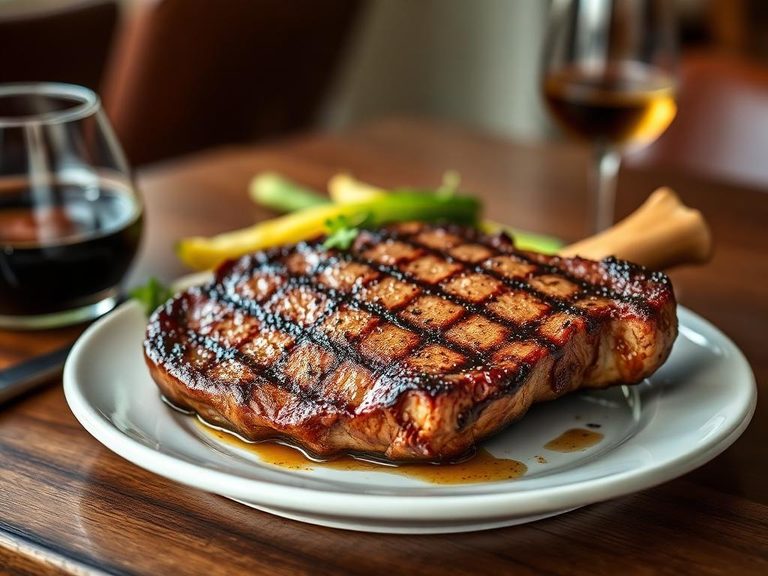
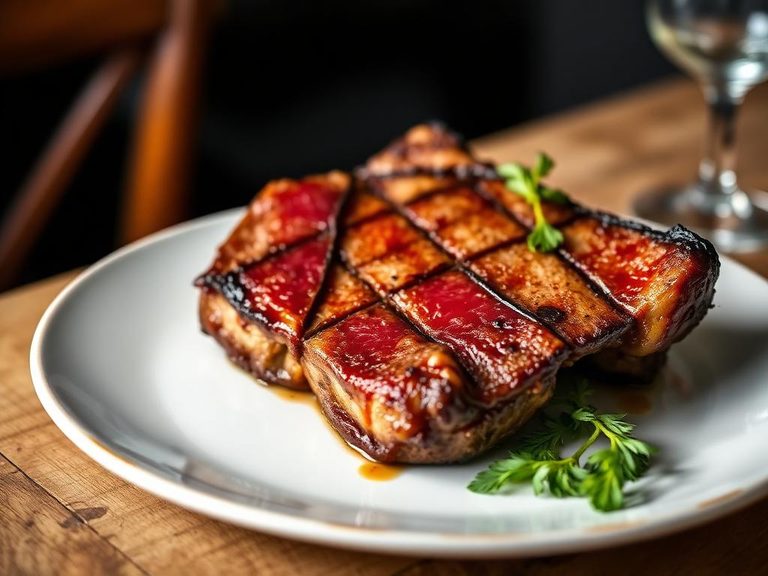
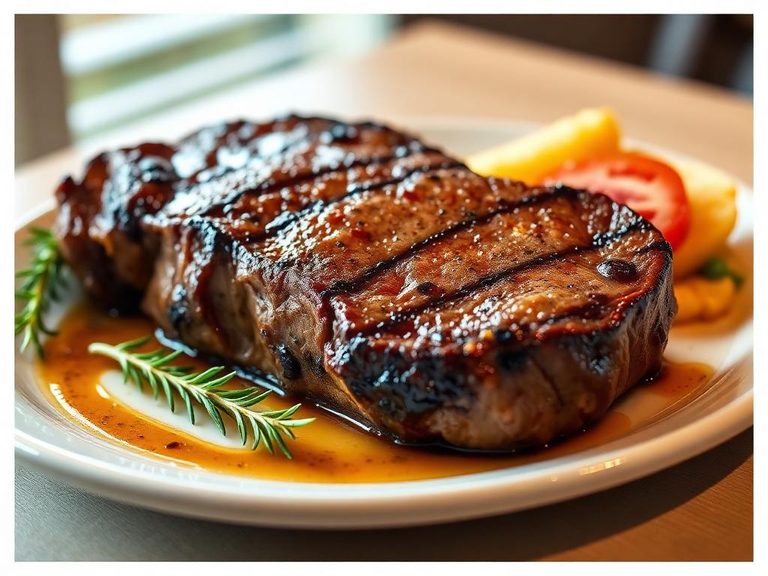
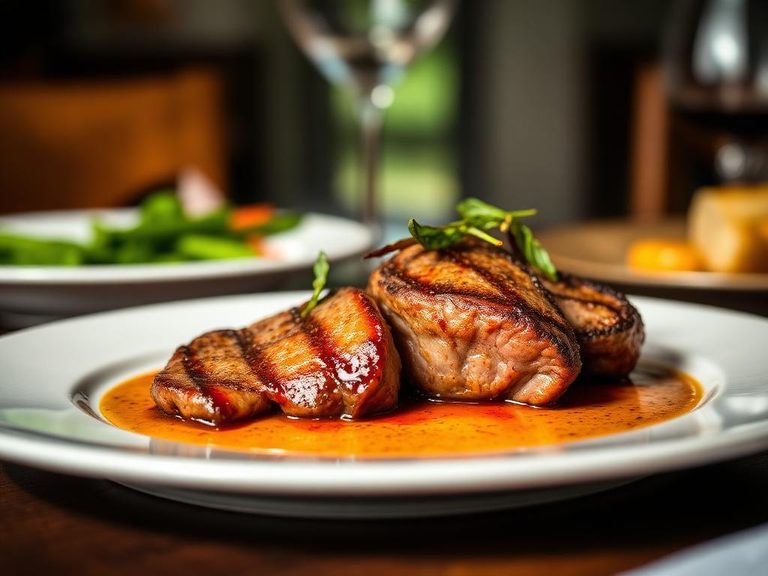
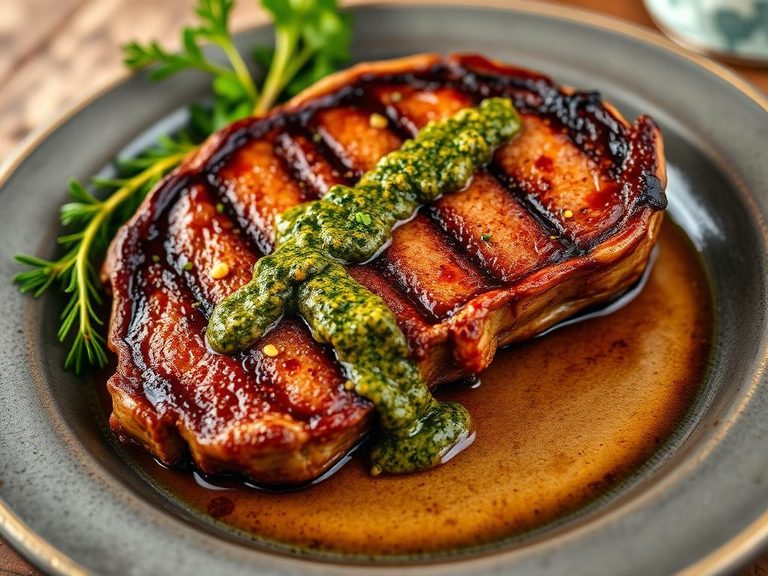
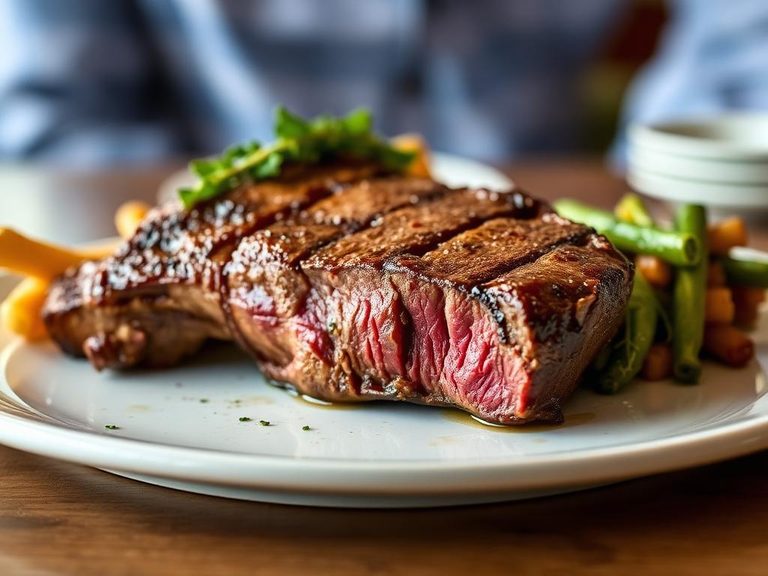
🍽️ Popular dishes
🌍 Where it's eaten
💡 Did you know?
The T-bone and the porterhouse are essentially the same cut, but the USDA defines a porterhouse as having a tenderloin section at least 1.5 inches wide at its widest point, making it the larger, more premium sibling of the T-bone.
Full nutrition (USDA data · scales with serving)
| Water | 62.0 g |
| Energy | 206 kcal |
| Energy | 861 kj |
| Protein | 28.4 g |
| Total lipid (fat) | 9.3 g |
| Ash | 1.1 g |
| Carbohydrate, by difference | 0.00 g |
| Fiber, total dietary | 0.00 g |
| Total Sugars | 0.00 g |
| Calcium, Ca | 18.0 mg |
| Iron, Fe | 3.6 mg |
| Magnesium, Mg | 24.0 mg |
| Phosphorus, P | 234 mg |
| Potassium, K | 304 mg |
| Sodium, Na | 66.0 mg |
| Zinc, Zn | 4.5 mg |
| Copper, Cu | 0.06 mg |
| Manganese, Mn | 0.00 mg |
| Selenium, Se | 28.5 ug |
| Vitamin C, total ascorbic acid | 0.00 mg |
| Thiamin | 0.06 mg |
| Riboflavin | 0.23 mg |
| Niacin | 5.8 mg |
| Pantothenic acid | 0.37 mg |
| Vitamin B-6 | 0.75 mg |
| Folate, total | 7.0 ug |
| Folic acid | 0.00 ug |
| Folate, food | 7.0 ug |
| Folate, DFE | 7.0 ug |
| Choline, total | 61.5 mg |
| Betaine | 8.0 mg |
| Vitamin B-12 | 2.1 ug |
| Vitamin B-12, added | 0.00 ug |
| Vitamin A, RAE | 2.0 ug |
| Retinol | 2.0 ug |
| Carotene, beta | 0.00 ug |
| Carotene, alpha | 0.00 ug |
| Cryptoxanthin, beta | 0.00 ug |
| Vitamin A, IU | 7.0 iu |
| Lycopene | 0.00 ug |
| Lutein + zeaxanthin | 0.00 ug |
| Vitamin E (alpha-tocopherol) | 0.24 mg |
| Vitamin E, added | 0.00 mg |
| Vitamin D (D2 + D3), International Units | 3.0 iu |
| Vitamin D (D2 + D3) | 0.10 ug |
| Vitamin D3 (cholecalciferol) | 0.10 ug |
| Vitamin K (phylloquinone) | 1.5 ug |
| Alcohol, ethyl | 0.00 g |
| Caffeine | 0.00 mg |
| Theobromine | 0.00 mg |
Fat & fatty acid profile (per 100g)
| Fatty acids, total saturated | 3.6 g |
| SFA 4:0 | 0.00 g |
| SFA 6:0 | 0.00 g |
| SFA 8:0 | 0.00 g |
| SFA 10:0 | 0.01 g |
| SFA 12:0 | 0.01 g |
| SFA 14:0 | 0.25 g |
| SFA 15:0 | 0.05 g |
| SFA 16:0 | 2.0 g |
| SFA 17:0 | 0.11 g |
| SFA 18:0 | 1.2 g |
| SFA 20:0 | 0.01 g |
| SFA 24:0 | 0.00 g |
| Fatty acids, total monounsaturated | 3.8 g |
| MUFA 14:1 | 0.04 g |
| MUFA 16:1 | 0.27 g |
| MUFA 16:1 c | 0.25 g |
| MUFA 17:1 | 0.07 g |
| MUFA 18:1 | 3.4 g |
| MUFA 18:1 c | 2.9 g |
| MUFA 20:1 | 0.01 g |
| MUFA 22:1 | 0.00 g |
| Fatty acids, total polyunsaturated | 0.48 g |
| PUFA 18:2 | 0.39 g |
| PUFA 18:2 n-6 c,c | 0.30 g |
| PUFA 18:2 CLAs | 0.03 g |
| PUFA 18:3 | 0.01 g |
| PUFA 18:3 n-3 c,c,c (ALA) | 0.01 g |
| PUFA 18:4 | 0.00 g |
| PUFA 20:2 n-6 c,c | 0.00 g |
| PUFA 20:3 | 0.02 g |
| PUFA 20:3 n-6 | 0.02 g |
| PUFA 20:4 | 0.05 g |
| PUFA 20:5 n-3 (EPA) | 0.00 g |
| PUFA 22:5 n-3 (DPA) | 0.01 g |
| PUFA 22:6 n-3 (DHA) | 0.00 g |
| Fatty acids, total trans | 0.54 g |
| Fatty acids, total trans-monoenoic | 0.48 g |
| TFA 16:1 t | 0.03 g |
| TFA 18:1 t | 0.46 g |
| TFA 18:2 t not further defined | 0.06 g |
| Fatty acids, total trans-polyenoic | 0.06 g |
| Cholesterol | 83.0 mg |
Amino acid profile (per 100g)
| Tryptophan | 0.36 g |
| Threonine | 1.5 g |
| Isoleucine | 1.5 g |
| Leucine | 2.8 g |
| Lysine | 3.2 g |
| Methionine | 0.86 g |
| Cystine | 0.33 g |
| Phenylalanine | 1.3 g |
| Tyrosine | 1.2 g |
| Valine | 1.6 g |
| Arginine | 2.2 g |
| Histidine | 1.2 g |
| Alanine | 1.9 g |
| Aspartic acid | 3.2 g |
| Glutamic acid | 5.3 g |
| Glycine | 1.4 g |
| Proline | 1.4 g |
| Serine | 1.3 g |
| Hydroxyproline | 0.14 g |
FAQ
What's the difference between a T-bone and a porterhouse steak?
They come from the same part of the cow, but the porterhouse is cut from further back and has a larger portion of the tenderloin (filet) muscle. The USDA requires the tenderloin to be at least 1.5 inches wide for a porterhouse, while a T-bone's tenderloin is smaller.
How should I cook a T-bone steak for the best results?
For a thick-cut T-bone, a reverse sear is ideal: bake in a low oven (275°F/135°C) until nearly done, then sear in a screaming-hot cast-iron skillet or on a grill for a perfect crust. Always rest the steak for 5-10 minutes after cooking to let the juices redistribute.
Is the bone edible?
The bone itself is not typically eaten, but cooking the steak on the bone adds flavor and helps conduct heat more evenly. After cooking, you can gnaw off the delicious, caramelized bits of meat and fat attached to it, a practice known as 'eating off the bone.'
Nutrient density (calculated · NRF9.3)
Nutrient Rich Foods index: beneficial nutrients (protein, fiber, vitamins, minerals) minus saturated fat, added sugar & sodium, per 100 kcal.
NRF9.3 index — Fulgoni, Keast & Drewnowski, 2009. Computed from USDA nutrients.
Weight-loss friendliness (composite index)
Energy density 2.06 kcal/g · 55% calories from protein · 0.0 g fiber · 0.0 g sugar per 100 g.
Composite of energy density (Rolls et al., 1999), protein & fiber satiety, minus sugar. A calculated heuristic — ranks satiety-per-calorie, not a clinical measure.
Dietary load (calculated from USDA values)
Potential renal acid load. Positive = acid-forming, negative = alkaline-forming.
Sodium-to-potassium ratio: 0.22 (lower is better — aim for ≤ 1)
Sodium:potassium per WHO potassium guidance. Computed from USDA nutrients.