

Beef, round, top round roast, boneless, separable lean only, trimmed to 0" fat, select, cooked, roasted
Whole food · Beef Products

Photo: Wikipedia
This is a lean, boneless cut from the beef round, roasted to a firm, dense texture with a clean, beefy flavor. Its defining characteristic is its extreme leanness, with virtually no intramuscular fat, making it a pure protein source. Nutritionally, it's a powerhouse, delivering nearly 30 grams of protein per 100 grams with minimal calories and fat.
Calorie split: 80% protein · 0% carbs · 20% fat
↓ Full nutrition💚 Why it's loved
People love it for its reliability as a lean protein workhorse—it slices neatly for sandwiches, salads, and meal prep, and its mild flavor readily absorbs marinades and rubs. It's a staple in health-conscious and budget-friendly cooking, valued for its efficiency in delivering protein without excess fat.
⚠️ Watch-outs & how to enjoy it better
Its extreme leanness means it can easily become dry and tough if overcooked. To counteract this, use a meat thermometer to pull it at 130-135°F (medium-rare to medium), and let it rest thoroughly before slicing. Marinating or using a slow, moist-heat cooking method (like braising) can also ensure tenderness.
Key benefits
- Exceptionally high in complete protein for muscle maintenance.
- Very low in total and saturated fat.
- Good source of iron, zinc, and B vitamins (especially B12).
- Supports satiety and weight management goals.
- Versatile for meal prep and portion-controlled diets.
🍽️ Popular dishes
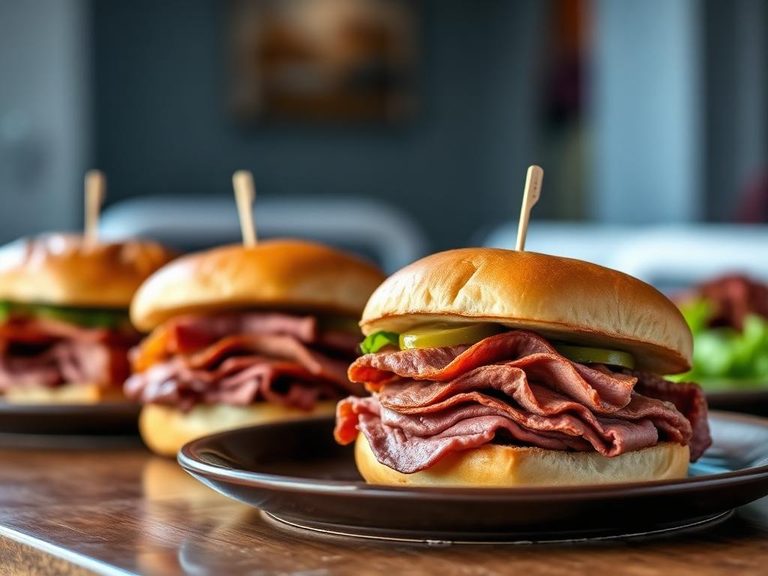
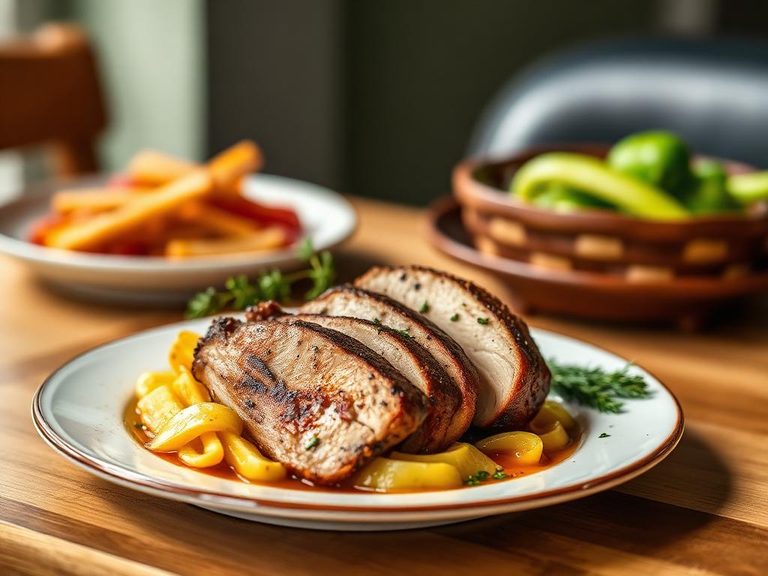
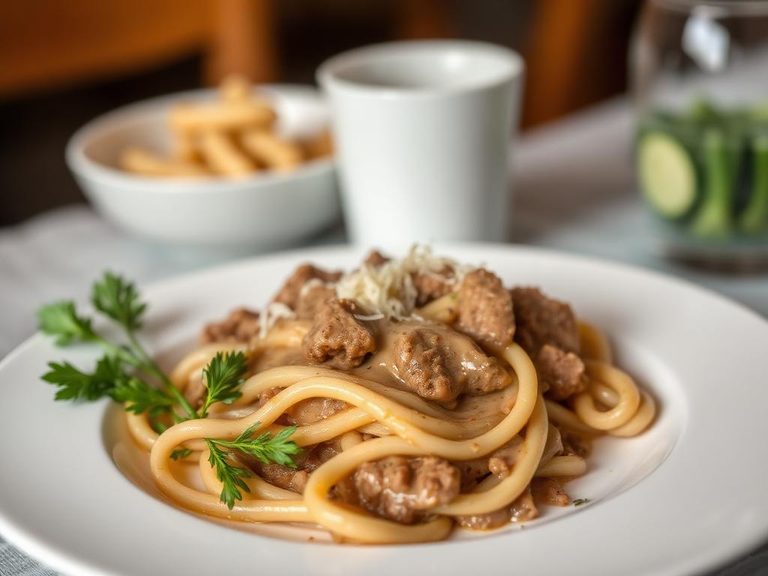
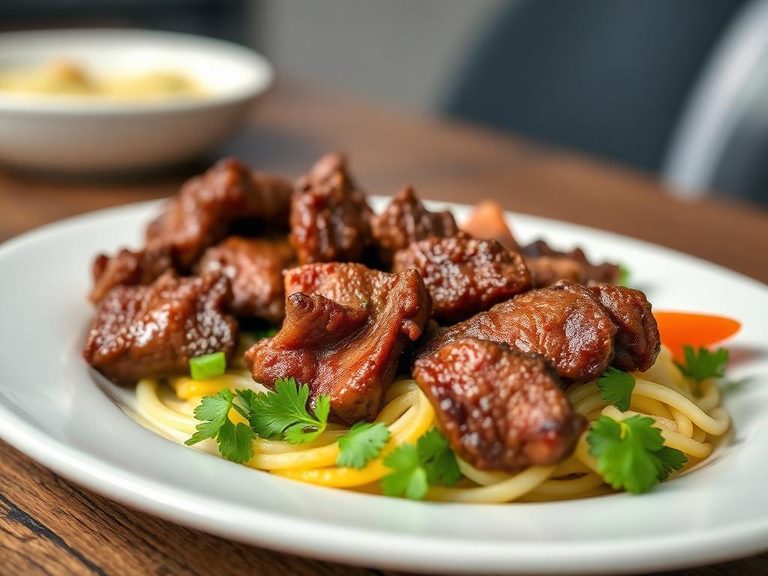
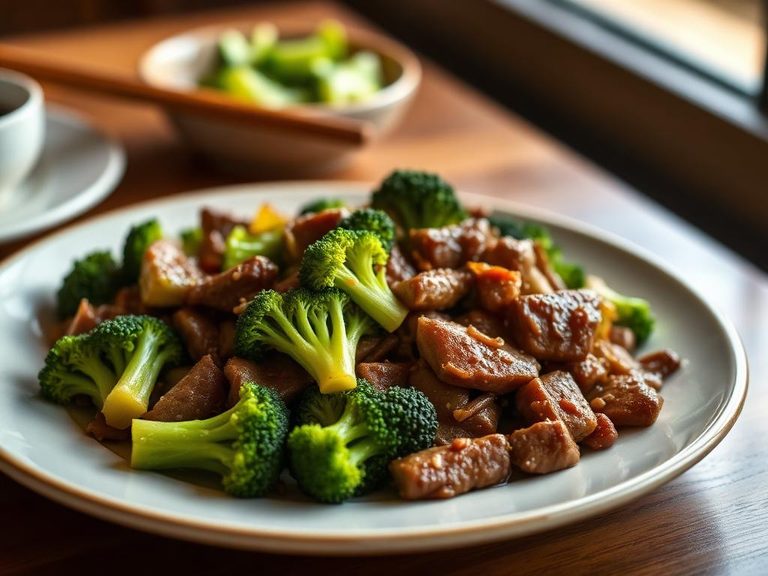
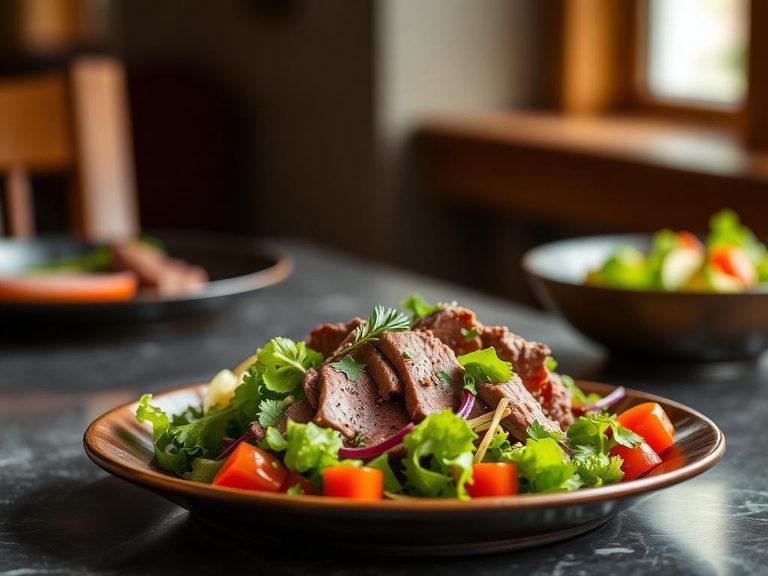
🌍 Where it's eaten
💡 Did you know?
The top round comes from the heavily exercised leg of the cow, which is why it's so lean and dense—it's essentially the bovine equivalent of a well-developed quadriceps muscle.
Full nutrition (USDA data · scales with serving)
| Water | 65.9 g |
| Energy | 150 kcal |
| Energy | 626 kj |
| Protein | 29.8 g |
| Total lipid (fat) | 3.4 g |
| Ash | 1.3 g |
| Carbohydrate, by difference | 0.00 g |
| Fiber, total dietary | 0.00 g |
| Total Sugars | 0.00 g |
| Calcium, Ca | 17.0 mg |
| Iron, Fe | 2.9 mg |
| Magnesium, Mg | 15.0 mg |
| Phosphorus, P | 271 mg |
| Potassium, K | 390 mg |
| Sodium, Na | 67.0 mg |
| Zinc, Zn | 4.4 mg |
| Copper, Cu | 0.06 mg |
| Manganese, Mn | 0.00 mg |
| Selenium, Se | 28.0 ug |
| Vitamin C, total ascorbic acid | 0.00 mg |
| Thiamin | 0.08 mg |
| Riboflavin | 0.31 mg |
| Niacin | 7.6 mg |
| Pantothenic acid | 0.46 mg |
| Vitamin B-6 | 0.77 mg |
| Folate, total | 5.0 ug |
| Folic acid | 0.00 ug |
| Folate, food | 5.0 ug |
| Folate, DFE | 5.0 ug |
| Choline, total | 79.1 mg |
| Betaine | 13.3 mg |
| Vitamin B-12 | 2.0 ug |
| Vitamin B-12, added | 0.00 ug |
| Vitamin A, RAE | 3.0 ug |
| Retinol | 3.0 ug |
| Carotene, beta | 0.00 ug |
| Carotene, alpha | 0.00 ug |
| Cryptoxanthin, beta | 0.00 ug |
| Vitamin A, IU | 8.0 iu |
| Lycopene | 0.00 ug |
| Lutein + zeaxanthin | 0.00 ug |
| Vitamin E (alpha-tocopherol) | 0.26 mg |
| Vitamin E, added | 0.00 mg |
| Vitamin D (D2 + D3), International Units | 1.0 iu |
| Vitamin D (D2 + D3) | 0.00 ug |
| Vitamin D3 (cholecalciferol) | 0.00 ug |
| Vitamin K (phylloquinone) | 1.9 ug |
| Alcohol, ethyl | 0.00 g |
| Caffeine | 0.00 mg |
| Theobromine | 0.00 mg |
Fat & fatty acid profile (per 100g)
| Fatty acids, total saturated | 1.1 g |
| SFA 4:0 | 0.00 g |
| SFA 6:0 | 0.00 g |
| SFA 8:0 | 0.00 g |
| SFA 10:0 | 0.01 g |
| SFA 12:0 | 0.00 g |
| SFA 14:0 | 0.06 g |
| SFA 15:0 | 0.01 g |
| SFA 16:0 | 0.64 g |
| SFA 17:0 | 0.03 g |
| SFA 18:0 | 0.38 g |
| SFA 20:0 | 0.00 g |
| SFA 24:0 | 0.00 g |
| Fatty acids, total monounsaturated | 1.2 g |
| MUFA 14:1 | 0.01 g |
| MUFA 16:1 | 0.08 g |
| MUFA 16:1 c | 0.07 g |
| MUFA 17:1 | 0.02 g |
| MUFA 18:1 | 1.1 g |
| MUFA 18:1 c | 0.98 g |
| MUFA 20:1 | 0.00 g |
| MUFA 22:1 | 0.00 g |
| Fatty acids, total polyunsaturated | 0.26 g |
| PUFA 18:2 | 0.18 g |
| PUFA 18:2 n-6 c,c | 0.16 g |
| PUFA 18:2 CLAs | 0.01 g |
| PUFA 18:3 | 0.00 g |
| PUFA 18:3 n-3 c,c,c (ALA) | 0.00 g |
| PUFA 18:4 | 0.00 g |
| PUFA 20:2 n-6 c,c | 0.00 g |
| PUFA 20:3 | 0.02 g |
| PUFA 20:3 n-6 | 0.02 g |
| PUFA 20:4 | 0.04 g |
| PUFA 20:5 n-3 (EPA) | 0.00 g |
| PUFA 22:5 n-3 (DPA) | 0.01 g |
| PUFA 22:6 n-3 (DHA) | 0.00 g |
| Fatty acids, total trans | 0.16 g |
| Fatty acids, total trans-monoenoic | 0.15 g |
| TFA 16:1 t | 0.01 g |
| TFA 18:1 t | 0.14 g |
| TFA 18:2 t not further defined | 0.01 g |
| Fatty acids, total trans-polyenoic | 0.01 g |
| Cholesterol | 78.0 mg |
Amino acid profile (per 100g)
| Tryptophan | 0.41 g |
| Threonine | 1.7 g |
| Isoleucine | 1.7 g |
| Leucine | 3.2 g |
| Lysine | 3.6 g |
| Methionine | 0.99 g |
| Cystine | 0.38 g |
| Phenylalanine | 1.5 g |
| Tyrosine | 1.4 g |
| Valine | 1.8 g |
| Arginine | 2.5 g |
| Histidine | 1.4 g |
| Alanine | 2.2 g |
| Aspartic acid | 3.6 g |
| Glutamic acid | 6.1 g |
| Glycine | 1.6 g |
| Proline | 1.6 g |
| Serine | 1.5 g |
| Hydroxyproline | 0.16 g |
FAQ
How do I prevent this lean roast from drying out?
The key is to not overcook it. Roast to an internal temperature of 130-135°F (54-57°C) for medium-rare, then tent loosely with foil and rest for at least 15 minutes. Slicing thinly against the grain also maximizes perceived tenderness.
What's the best way to add flavor to this lean cut?
Marinating for several hours in an acidic mixture (like vinegar or citrus juice) with herbs and spices works well. Dry brining with salt and pepper overnight in the fridge also enhances flavor and moisture retention. Searing before roasting adds a flavorful crust.
Is this a good cut for slow cooking?
Yes, it can be. While not as marbled as chuck, its leanness makes it suitable for moist-heat methods like braising in liquid (for dishes like stroganoff) or thin slicing for stir-fries. It won't become as fall-apart tender as fattier cuts but will be flavorful and tender if not overcooked.
Nutrient density (calculated · NRF9.3)
Nutrient Rich Foods index: beneficial nutrients (protein, fiber, vitamins, minerals) minus saturated fat, added sugar & sodium, per 100 kcal.
NRF9.3 index — Fulgoni, Keast & Drewnowski, 2009. Computed from USDA nutrients.
Weight-loss friendliness (composite index)
Energy density 1.50 kcal/g · 79% calories from protein · 0.0 g fiber · 0.0 g sugar per 100 g.
Composite of energy density (Rolls et al., 1999), protein & fiber satiety, minus sugar. A calculated heuristic — ranks satiety-per-calorie, not a clinical measure.
Dietary load (calculated from USDA values)
Potential renal acid load. Positive = acid-forming, negative = alkaline-forming.
Sodium-to-potassium ratio: 0.17 (lower is better — aim for ≤ 1)
Sodium:potassium per WHO potassium guidance. Computed from USDA nutrients.