

Beef, round, outside round, bottom round, steak, separable lean and fat, trimmed to 0" fat, choice, raw
Whole food · Beef Products
This is a lean, boneless cut from the rear leg of the cow, prized for its deep beefy flavor and firm, dense texture. When raw, it has a rich, dark red color and a tight grain that promises a satisfying chew when cooked properly. Its standout nutritional feature is its exceptional protein-to-fat ratio, offering over 21 grams of protein with just 6.5 grams of fat per 100 grams.
Calorie split: 59% protein · 0% carbs · 41% fat
↓ Full nutrition💚 Why it's loved
People love it for its robust, straightforward beef flavor that stands up to bold seasonings and slow cooking. Its versatility makes it a staple for everything from quick weeknight stir-fries to hearty, slow-simmered stews.
⚠️ Watch-outs & how to enjoy it better
Its leanness means it can become tough and dry if overcooked, as it lacks internal marbling to keep it moist. To counteract this, use quick, high-heat methods like stir-frying or marinate it before slow-cooking to break down connective tissue and add moisture.
Key benefits
- Excellent source of complete, high-quality protein for muscle maintenance.
- Very low in carbohydrates and sugars, suitable for low-carb diets.
- Good source of B vitamins like B12 and niacin for energy metabolism.
- Contains minerals like zinc and selenium for immune function.
- A naturally lean cut, making it a heart-healthier red meat option.
🍽️ Popular dishes
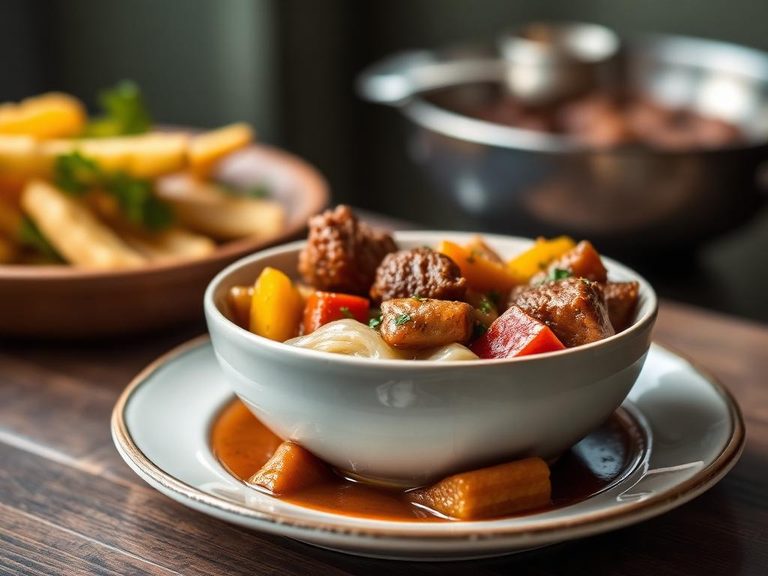
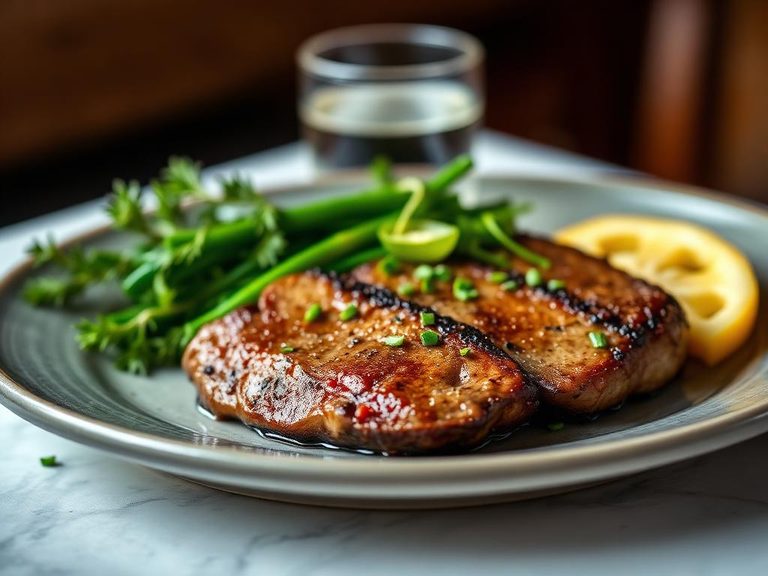
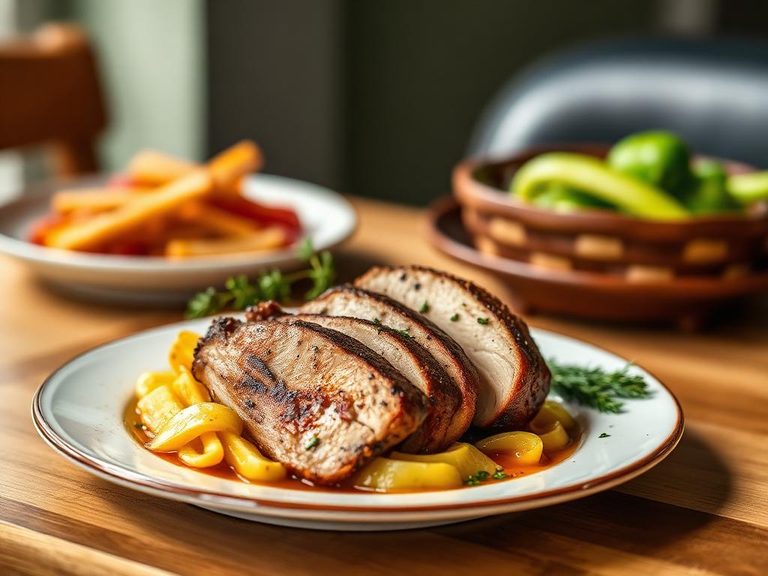
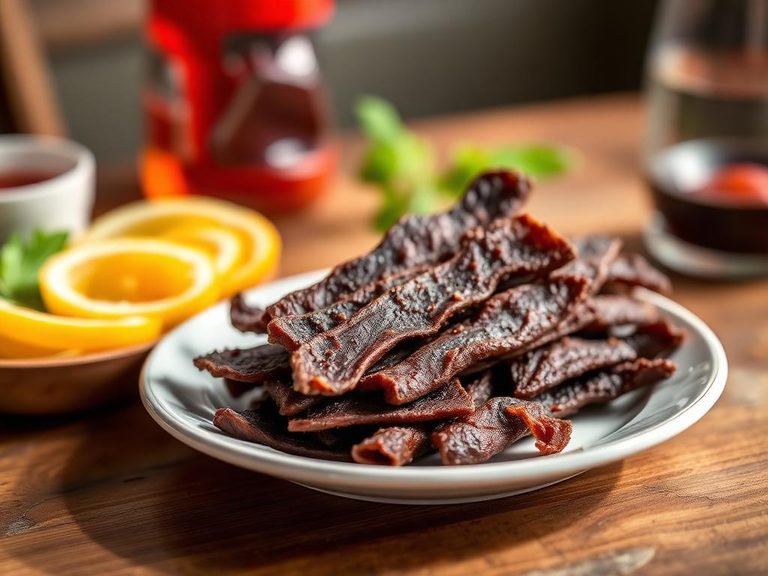
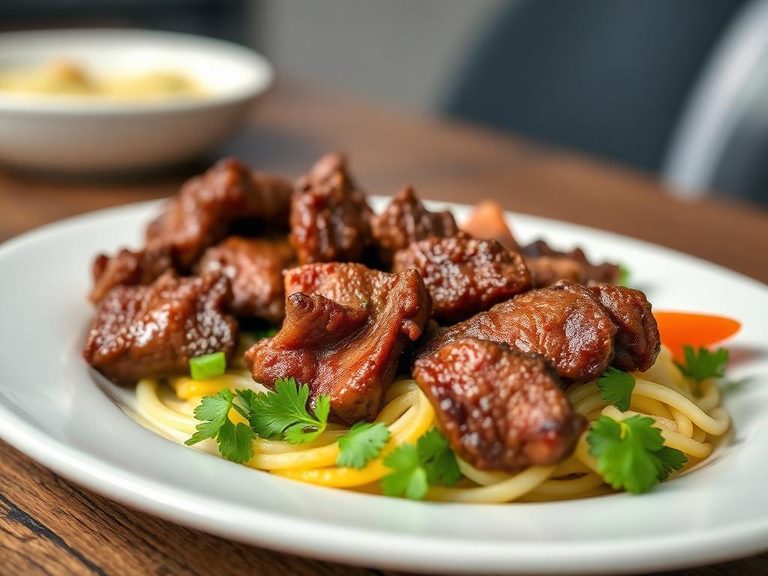
🌍 Where it's eaten
💡 Did you know?
Despite its name, 'London Broil' is an American cooking technique, not a specific cut; an outside round or top round steak is the most common cut used for this broiled and sliced preparation.
Full nutrition (USDA data · scales with serving)
| Water | 71.5 g |
| Energy | 150 kcal |
| Energy | 628 kj |
| Protein | 21.2 g |
| Total lipid (fat) | 6.6 g |
| Ash | 1.0 g |
| Carbohydrate, by difference | 0.00 g |
| Fiber, total dietary | 0.00 g |
| Total Sugars | 0.00 g |
| Calcium, Ca | 5.0 mg |
| Iron, Fe | 2.3 mg |
| Magnesium, Mg | 24.0 mg |
| Phosphorus, P | 209 mg |
| Potassium, K | 338 mg |
| Sodium, Na | 63.0 mg |
| Zinc, Zn | 3.8 mg |
| Copper, Cu | 0.14 mg |
| Manganese, Mn | 0.02 mg |
| Selenium, Se | 33.3 ug |
| Vitamin C, total ascorbic acid | 0.00 mg |
| Thiamin | 0.06 mg |
| Riboflavin | 0.19 mg |
| Niacin | 6.4 mg |
| Pantothenic acid | 0.65 mg |
| Vitamin B-6 | 0.72 mg |
| Folate, total | 6.0 ug |
| Folic acid | 0.00 ug |
| Folate, food | 6.0 ug |
| Folate, DFE | 6.0 ug |
| Choline, total | 83.5 mg |
| Betaine | 14.7 mg |
| Vitamin B-12 | 4.7 ug |
| Vitamin B-12, added | 0.00 ug |
| Vitamin A, RAE | 0.00 ug |
| Retinol | 0.00 ug |
| Carotene, beta | 0.00 ug |
| Carotene, alpha | 0.00 ug |
| Cryptoxanthin, beta | 0.00 ug |
| Vitamin A, IU | 0.00 iu |
| Lycopene | 0.00 ug |
| Lutein + zeaxanthin | 0.00 ug |
| Vitamin E (alpha-tocopherol) | 0.08 mg |
| Vitamin E, added | 0.00 mg |
| Tocopherol, beta | 0.01 mg |
| Tocopherol, gamma | 0.02 mg |
| Tocopherol, delta | 0.00 mg |
| Tocotrienol, alpha | 0.01 mg |
| Tocotrienol, beta | 0.00 mg |
| Tocotrienol, gamma | 0.00 mg |
| Tocotrienol, delta | 0.00 mg |
| Vitamin K (phylloquinone) | 0.00 ug |
| Vitamin K (Dihydrophylloquinone) | 0.00 ug |
| Vitamin K (Menaquinone-4) | 1.7 ug |
| Alcohol, ethyl | 0.00 g |
| Caffeine | 0.00 mg |
| Theobromine | 0.00 mg |
Fat & fatty acid profile (per 100g)
| Fatty acids, total saturated | 2.3 g |
| SFA 4:0 | 0.00 g |
| SFA 6:0 | 0.00 g |
| SFA 8:0 | 0.00 g |
| SFA 10:0 | 0.00 g |
| SFA 12:0 | 0.00 g |
| SFA 14:0 | 0.18 g |
| SFA 15:0 | 0.03 g |
| SFA 16:0 | 1.4 g |
| SFA 17:0 | 0.06 g |
| SFA 18:0 | 0.59 g |
| SFA 20:0 | 0.00 g |
| SFA 22:0 | 0.02 g |
| Fatty acids, total monounsaturated | 2.9 g |
| MUFA 14:1 | 0.06 g |
| MUFA 15:1 | 0.00 g |
| MUFA 16:1 | 0.28 g |
| MUFA 17:1 | 0.00 g |
| MUFA 18:1 | 2.6 g |
| MUFA 18:1 c | 2.5 g |
| MUFA 20:1 | 0.01 g |
| Fatty acids, total polyunsaturated | 0.31 g |
| PUFA 18:2 | 0.25 g |
| PUFA 18:2 n-6 c,c | 0.21 g |
| PUFA 18:3 | 0.00 g |
| PUFA 18:3 n-3 c,c,c (ALA) | 0.00 g |
| PUFA 18:3 n-6 c,c,c | 0.00 g |
| PUFA 18:4 | 0.00 g |
| PUFA 20:2 n-6 c,c | 0.00 g |
| PUFA 20:3 | 0.00 g |
| PUFA 20:4 | 0.06 g |
| Fatty acids, total trans | 0.18 g |
| Fatty acids, total trans-monoenoic | 0.14 g |
| TFA 18:1 t | 0.14 g |
| TFA 18:2 t,t | 0.04 g |
| Fatty acids, total trans-polyenoic | 0.04 g |
| Cholesterol | 61.0 mg |
Amino acid profile (per 100g)
| Tryptophan | 0.14 g |
| Threonine | 0.85 g |
| Isoleucine | 0.97 g |
| Leucine | 1.7 g |
| Lysine | 1.8 g |
| Methionine | 0.55 g |
| Cystine | 0.27 g |
| Phenylalanine | 0.84 g |
| Tyrosine | 0.68 g |
| Valine | 1.1 g |
| Arginine | 1.4 g |
| Histidine | 0.68 g |
| Alanine | 1.3 g |
| Aspartic acid | 1.9 g |
| Glutamic acid | 3.2 g |
| Glycine | 1.3 g |
| Proline | 1.0 g |
| Serine | 0.84 g |
| Hydroxyproline | 0.11 g |
FAQ
What's the best way to cook outside round steak to keep it tender?
For tenderness, use moist-heat methods like braising or stewing, which break down the tough fibers. If grilling or broiling, marinate it first and cook quickly to medium-rare, then slice thinly against the grain.
Is this the same as top round?
They are neighboring muscles from the round primal. The bottom round (outside round) is slightly leaner and can be a bit tougher than the top round, but they are often used interchangeably in recipes.
How does the nutrition compare to a ribeye or sirloin?
This cut is significantly leaner. A 100g serving has about half the fat of a typical sirloin and a third of the fat of a ribeye, making it a lower-calorie, higher-protein-density choice.
Nutrient density (calculated · NRF9.3)
Nutrient Rich Foods index: beneficial nutrients (protein, fiber, vitamins, minerals) minus saturated fat, added sugar & sodium, per 100 kcal.
NRF9.3 index — Fulgoni, Keast & Drewnowski, 2009. Computed from USDA nutrients.
Weight-loss friendliness (composite index)
Energy density 1.50 kcal/g · 57% calories from protein · 0.0 g fiber · 0.0 g sugar per 100 g.
Composite of energy density (Rolls et al., 1999), protein & fiber satiety, minus sugar. A calculated heuristic — ranks satiety-per-calorie, not a clinical measure.
Dietary load (calculated from USDA values)
Potential renal acid load. Positive = acid-forming, negative = alkaline-forming.
Sodium-to-potassium ratio: 0.19 (lower is better — aim for ≤ 1)
Sodium:potassium per WHO potassium guidance. Computed from USDA nutrients.