

Beef, rib eye steak/roast, bone-in, lip-on, separable lean and fat, trimmed to 1/8" fat, choice, raw
Whole food · Beef Products

Photo: Wikipedia
This is a premium, richly marbled cut from the rib section, known for its deep beefy flavor and tender, buttery texture. The generous fat cap and intramuscular marbling render during cooking, basting the meat from within. Nutritionally, it's a dense source of high-quality protein and energy, with virtually no carbohydrates.
Calorie split: 28% protein · 0% carbs · 72% fat
↓ Full nutrition💚 Why it's loved
People adore it for its unparalleled, robust beef flavor and luxurious, melt-in-your-mouth texture when cooked properly. It's a celebratory centerpiece, perfect for grilling, pan-searing, or roasting, embodying classic steakhouse indulgence.
⚠️ Watch-outs & how to enjoy it better
The high fat content makes it calorie-dense and may be unsuitable for low-fat diets. Those monitoring saturated fat intake should practice portion control. To balance a meal, pair a smaller steak with a large portion of fibrous, non-starchy vegetables like roasted broccoli or a leafy salad to add volume and nutrients without excessive calories.
Key benefits
- Excellent source of complete protein for muscle maintenance.
- Rich in bioavailable heme iron, crucial for oxygen transport.
- Provides significant amounts of zinc for immune function.
- Contains B vitamins, especially B12, for nerve health.
- High in conjugated linoleic acid (CLA), a naturally occurring fatty acid.
🍽️ Popular dishes

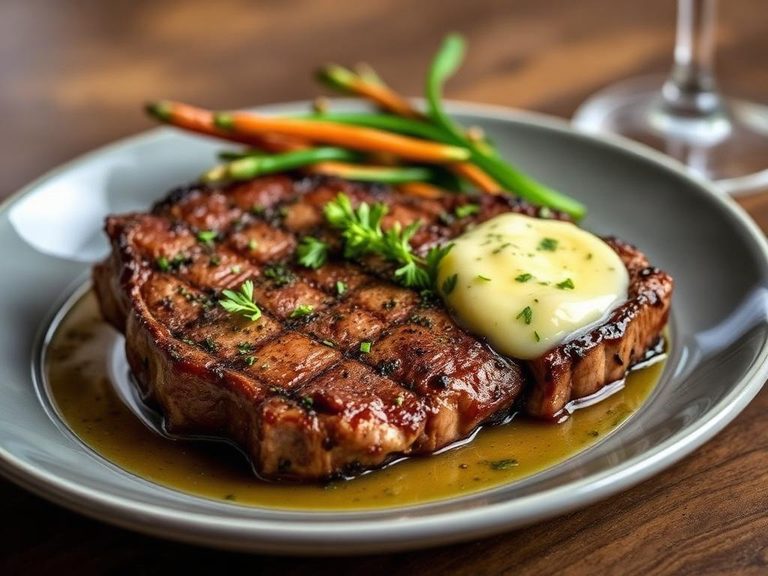
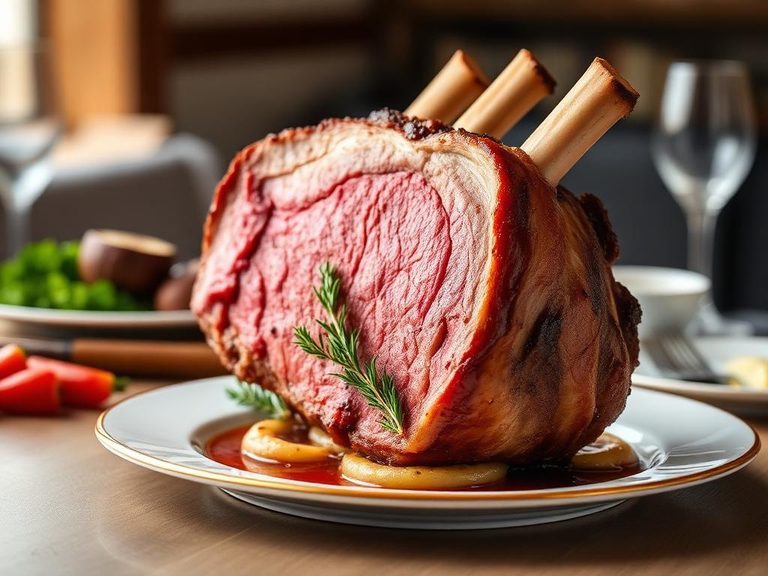
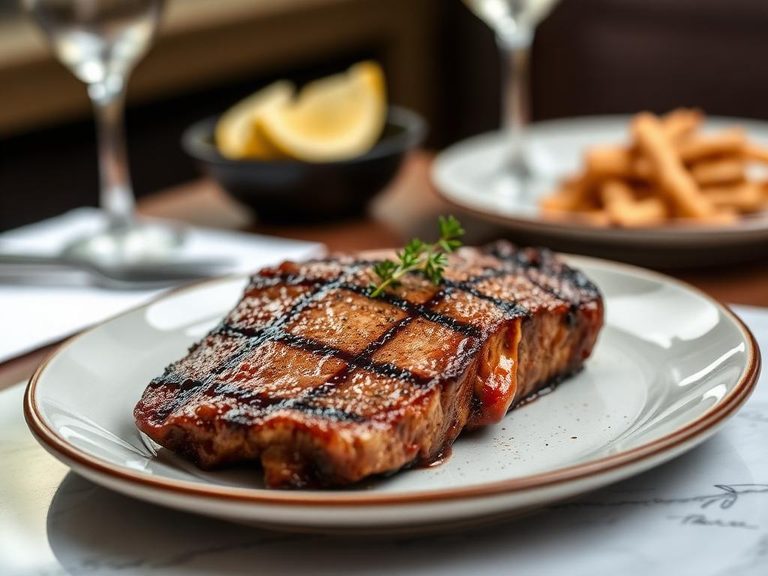
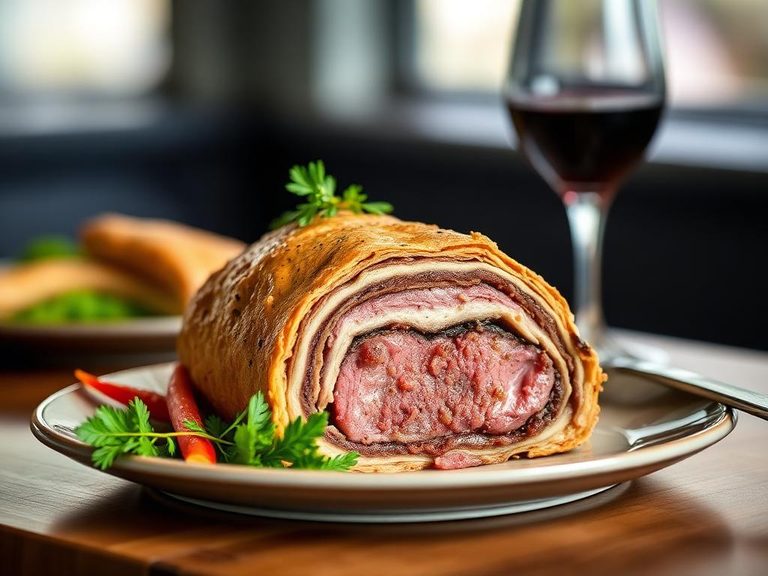
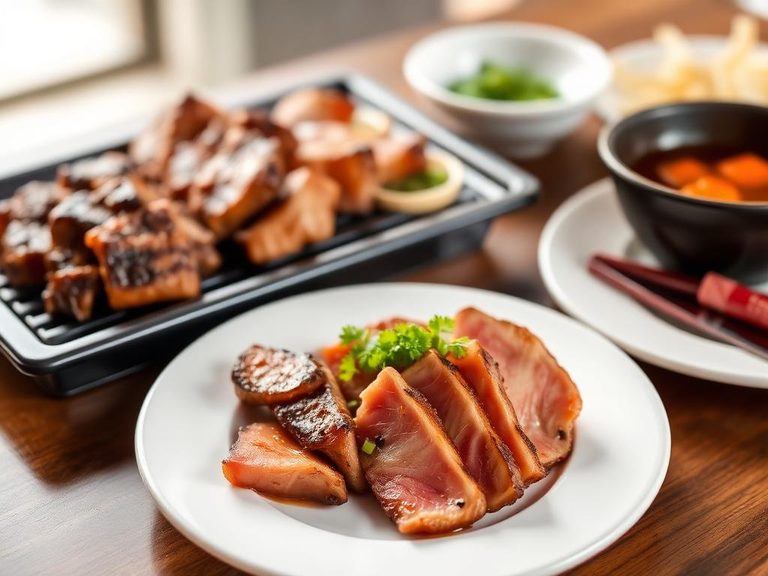
🌍 Where it's eaten
💡 Did you know?
The 'lip-on' refers to the *spinalis dorsi* muscle, or the ribeye cap, which is often considered the most tender and flavorful part of the entire animal, separated by a thin layer of fat from the main eye muscle.
Full nutrition (USDA data · scales with serving)
| Water | 60.4 g |
| Energy | 260 kcal |
| Energy | 1089 kj |
| Protein | 17.9 g |
| Total lipid (fat) | 21.0 g |
| Ash | 0.84 g |
| Carbohydrate, by difference | 0.00 g |
| Fiber, total dietary | 0.00 g |
| Total Sugars | 0.00 g |
| Calcium, Ca | 10.0 mg |
| Iron, Fe | 1.7 mg |
| Magnesium, Mg | 18.0 mg |
| Phosphorus, P | 131 mg |
| Potassium, K | 231 mg |
| Sodium, Na | 57.0 mg |
| Zinc, Zn | 4.0 mg |
| Copper, Cu | 0.06 mg |
| Manganese, Mn | 0.06 mg |
| Selenium, Se | 18.6 ug |
| Vitamin C, total ascorbic acid | 0.00 mg |
| Thiamin | 0.08 mg |
| Riboflavin | 0.24 mg |
| Niacin | 4.2 mg |
| Pantothenic acid | 0.47 mg |
| Vitamin B-6 | 0.40 mg |
| Folate, total | 3.0 ug |
| Folic acid | 0.00 ug |
| Folate, food | 3.0 ug |
| Folate, DFE | 3.0 ug |
| Choline, total | 44.1 mg |
| Betaine | 13.8 mg |
| Vitamin B-12 | 1.7 ug |
| Vitamin B-12, added | 0.00 ug |
| Vitamin A, RAE | 5.0 ug |
| Retinol | 5.0 ug |
| Carotene, beta | 0.00 ug |
| Carotene, alpha | 0.00 ug |
| Cryptoxanthin, beta | 0.00 ug |
| Vitamin A, IU | 15.0 iu |
| Lycopene | 0.00 ug |
| Lutein + zeaxanthin | 0.00 ug |
| Vitamin E (alpha-tocopherol) | 0.15 mg |
| Vitamin E, added | 0.00 mg |
| Vitamin D (D2 + D3), International Units | 7.0 iu |
| Vitamin D (D2 + D3) | 0.20 ug |
| Vitamin D3 (cholecalciferol) | 0.20 ug |
| Vitamin K (phylloquinone) | 1.5 ug |
| Alcohol, ethyl | 0.00 g |
| Caffeine | 0.00 mg |
| Theobromine | 0.00 mg |
Fat & fatty acid profile (per 100g)
| Fatty acids, total saturated | 9.3 g |
| SFA 4:0 | 0.00 g |
| SFA 6:0 | 0.00 g |
| SFA 8:0 | 0.00 g |
| SFA 10:0 | 0.02 g |
| SFA 12:0 | 0.02 g |
| SFA 14:0 | 0.63 g |
| SFA 15:0 | 0.12 g |
| SFA 16:0 | 5.0 g |
| SFA 17:0 | 0.28 g |
| SFA 18:0 | 3.2 g |
| SFA 20:0 | 0.01 g |
| SFA 24:0 | 0.01 g |
| Fatty acids, total monounsaturated | 9.9 g |
| MUFA 14:1 | 0.12 g |
| MUFA 15:1 | 0.03 g |
| MUFA 16:1 | 0.68 g |
| MUFA 16:1 c | 0.62 g |
| MUFA 17:1 | 0.17 g |
| MUFA 18:1 | 8.9 g |
| MUFA 18:1 c | 7.7 g |
| MUFA 20:1 | 0.04 g |
| MUFA 22:1 | 0.00 g |
| Fatty acids, total polyunsaturated | 0.92 g |
| PUFA 18:2 | 0.81 g |
| PUFA 18:2 n-6 c,c | 0.63 g |
| PUFA 18:2 CLAs | 0.09 g |
| PUFA 18:3 | 0.03 g |
| PUFA 18:3 n-3 c,c,c (ALA) | 0.03 g |
| PUFA 18:4 | 0.00 g |
| PUFA 20:2 n-6 c,c | 0.00 g |
| PUFA 20:3 | 0.02 g |
| PUFA 20:3 n-6 | 0.02 g |
| PUFA 20:4 | 0.04 g |
| PUFA 20:5 n-3 (EPA) | 0.00 g |
| PUFA 22:5 n-3 (DPA) | 0.01 g |
| PUFA 22:6 n-3 (DHA) | 0.00 g |
| Fatty acids, total trans | 1.3 g |
| Fatty acids, total trans-monoenoic | 1.2 g |
| TFA 16:1 t | 0.06 g |
| TFA 18:1 t | 1.2 g |
| TFA 18:2 t not further defined | 0.09 g |
| Fatty acids, total trans-polyenoic | 0.09 g |
| Cholesterol | 70.0 mg |
Amino acid profile (per 100g)
| Tryptophan | 0.20 g |
| Threonine | 0.84 g |
| Isoleucine | 0.83 g |
| Leucine | 1.5 g |
| Lysine | 1.7 g |
| Methionine | 0.48 g |
| Cystine | 0.18 g |
| Phenylalanine | 0.71 g |
| Tyrosine | 0.66 g |
| Valine | 0.90 g |
| Arginine | 1.2 g |
| Histidine | 0.66 g |
| Alanine | 1.1 g |
| Aspartic acid | 1.7 g |
| Glutamic acid | 2.9 g |
| Glycine | 0.88 g |
| Proline | 0.80 g |
| Serine | 0.73 g |
| Hydroxyproline | 0.12 g |
FAQ
What does 'choice' mean on the label?
It's the second-highest USDA quality grade for beef, indicating above-average marbling and tenderness, just below 'Prime' and above 'Select'.
What's the best way to cook it to preserve flavor?
A two-zone method is ideal: sear over high heat (grill or cast-iron) to develop a crust, then finish with indirect heat or in a moderate oven to your desired doneness without burning the fat.
Is the bone important?
Yes, the bone acts as an insulator, promoting even cooking, and can add subtle flavor to the meat and any pan sauces made from the drippings.
Nutrient density (calculated · NRF9.3)
Nutrient Rich Foods index: beneficial nutrients (protein, fiber, vitamins, minerals) minus saturated fat, added sugar & sodium, per 100 kcal.
NRF9.3 index — Fulgoni, Keast & Drewnowski, 2009. Computed from USDA nutrients.
Weight-loss friendliness (composite index)
Energy density 2.60 kcal/g · 28% calories from protein · 0.0 g fiber · 0.0 g sugar per 100 g.
Composite of energy density (Rolls et al., 1999), protein & fiber satiety, minus sugar. A calculated heuristic — ranks satiety-per-calorie, not a clinical measure.
Dietary load (calculated from USDA values)
Potential renal acid load. Positive = acid-forming, negative = alkaline-forming.
Sodium-to-potassium ratio: 0.25 (lower is better — aim for ≤ 1)
Sodium:potassium per WHO potassium guidance. Computed from USDA nutrients.