

Beef, rib eye steak, boneless, lip off, separable lean only, trimmed to 0" fat, choice, raw
Whole food · Beef Products

Photo: Wikipedia
This is a premium, lean cut from the rib section of beef, prized for its fine marbling and rich, beefy flavor. When raw, it has a firm, dense texture and a deep red color, with a buttery mouthfeel once cooked. Nutritionally, it's a powerhouse of high-quality protein with minimal fat and zero carbohydrates, making it a staple for high-protein, low-carb diets.
Calorie split: 53% protein · 0% carbs · 47% fat
↓ Full nutrition💚 Why it's loved
People adore it for its robust, beefy flavor and tender, juicy texture when cooked properly, making it a celebratory centerpiece. Its versatility allows it to shine in simple preparations like grilling or in complex dishes, appealing to both purists and culinary adventurers.
⚠️ Watch-outs & how to enjoy it better
As a red meat, it should be consumed in moderation as part of a balanced diet. To counteract this, practice portion control (e.g., 4-6 oz servings) and balance your plate with fiber-rich vegetables and whole grains. Those monitoring cholesterol should trim any visible fat and opt for grilling or broiling to allow excess fat to drip away.
Key benefits
- Excellent source of complete, high-quality protein
- Very low in carbohydrates and sugars
- Provides essential minerals like iron and zinc
- Contains B vitamins, especially B12, for energy metabolism
- Versatile for various cooking methods
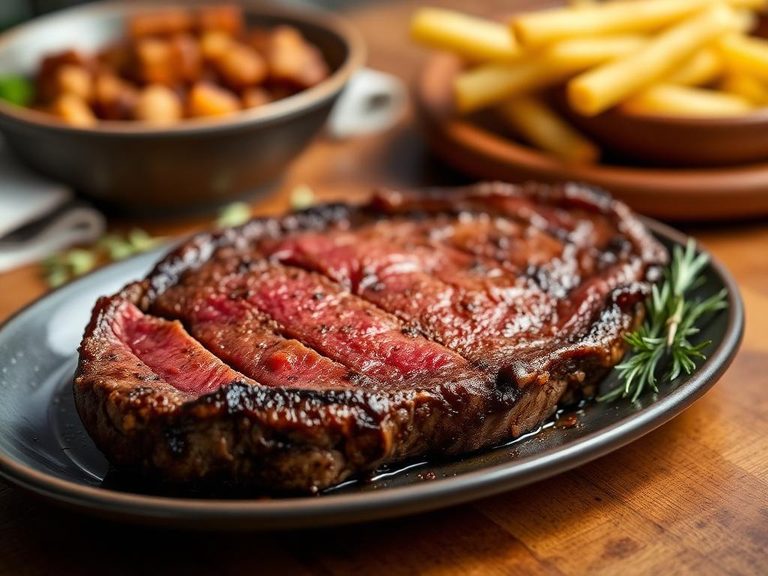
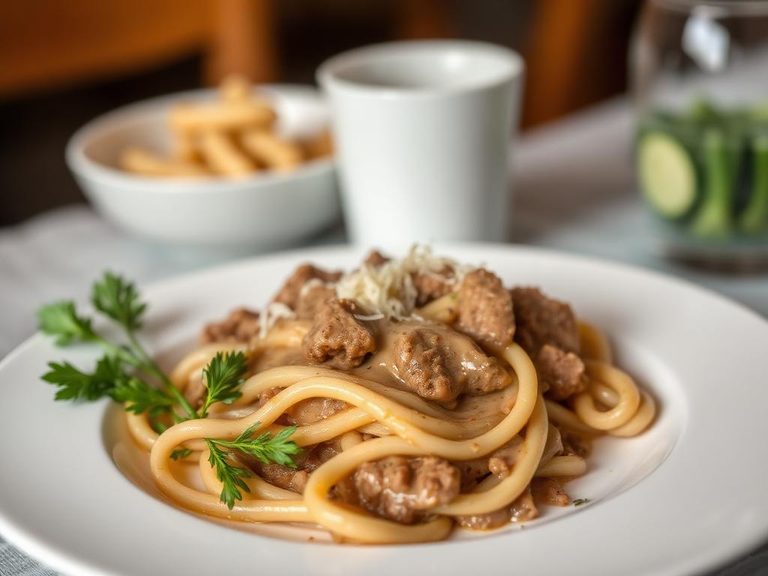
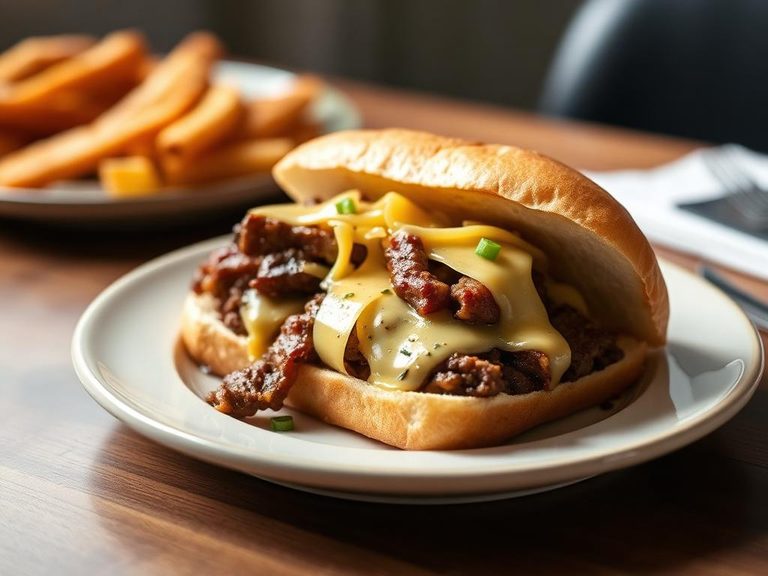
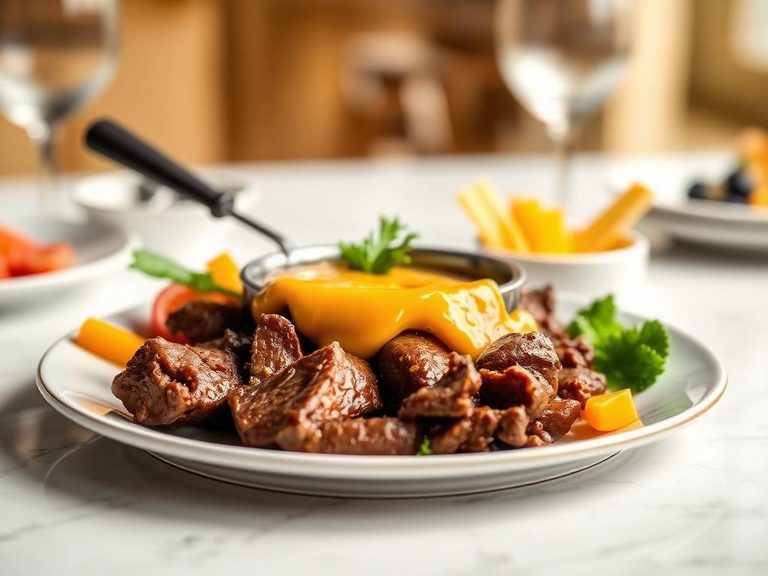
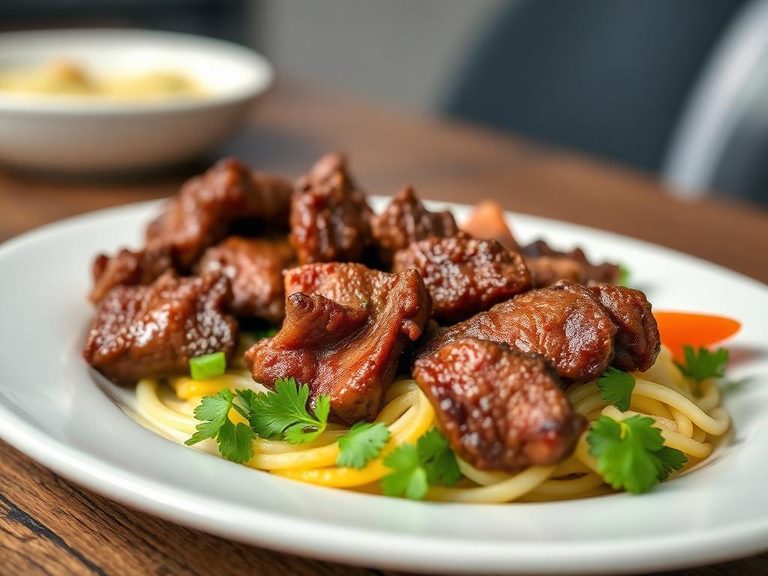
🍽️ Popular dishes
🌍 Where it's eaten
💡 Did you know?
The 'ribeye' name comes from the fact that this cut is from the rib section and the 'eye' refers to the large, central muscle (the longissimus dorsi) that is surrounded by a characteristic cap of fat.
Full nutrition (USDA data · scales with serving)
| Water | 69.2 g |
| Energy | 162 kcal |
| Energy | 679 kj |
| Protein | 21.4 g |
| Total lipid (fat) | 8.5 g |
| Ash | 0.97 g |
| Carbohydrate, by difference | 0.00 g |
| Fiber, total dietary | 0.00 g |
| Total Sugars | 0.00 g |
| Calcium, Ca | 7.0 mg |
| Iron, Fe | 2.0 mg |
| Magnesium, Mg | 22.0 mg |
| Phosphorus, P | 153 mg |
| Potassium, K | 262 mg |
| Sodium, Na | 56.0 mg |
| Zinc, Zn | 5.6 mg |
| Copper, Cu | 0.07 mg |
| Manganese, Mn | 0.07 mg |
| Selenium, Se | 27.5 ug |
| Vitamin C, total ascorbic acid | 0.00 mg |
| Thiamin | 0.13 mg |
| Riboflavin | 0.28 mg |
| Niacin | 5.5 mg |
| Pantothenic acid | 0.53 mg |
| Vitamin B-6 | 0.48 mg |
| Folate, total | 3.0 ug |
| Folic acid | 0.00 ug |
| Folate, food | 3.0 ug |
| Folate, DFE | 3.0 ug |
| Choline, total | 47.9 mg |
| Betaine | 14.2 mg |
| Vitamin B-12 | 2.0 ug |
| Vitamin B-12, added | 0.00 ug |
| Vitamin A, RAE | 2.0 ug |
| Retinol | 2.0 ug |
| Carotene, beta | 0.00 ug |
| Carotene, alpha | 0.00 ug |
| Cryptoxanthin, beta | 0.00 ug |
| Vitamin A, IU | 6.0 iu |
| Lycopene | 0.00 ug |
| Lutein + zeaxanthin | 0.00 ug |
| Vitamin E (alpha-tocopherol) | 0.18 mg |
| Vitamin E, added | 0.00 mg |
| Vitamin D (D2 + D3), International Units | 4.0 iu |
| Vitamin D (D2 + D3) | 0.10 ug |
| Vitamin D3 (cholecalciferol) | 0.10 ug |
| Vitamin K (phylloquinone) | 1.5 ug |
| Alcohol, ethyl | 0.00 g |
| Caffeine | 0.00 mg |
| Theobromine | 0.00 mg |
Fat & fatty acid profile (per 100g)
| Fatty acids, total saturated | 3.1 g |
| SFA 4:0 | 0.00 g |
| SFA 6:0 | 0.00 g |
| SFA 8:0 | 0.00 g |
| SFA 10:0 | 0.00 g |
| SFA 12:0 | 0.01 g |
| SFA 14:0 | 0.18 g |
| SFA 15:0 | 0.04 g |
| SFA 16:0 | 1.7 g |
| SFA 17:0 | 0.10 g |
| SFA 18:0 | 1.0 g |
| SFA 20:0 | 0.00 g |
| SFA 24:0 | 0.01 g |
| Fatty acids, total monounsaturated | 3.6 g |
| MUFA 14:1 | 0.04 g |
| MUFA 15:1 | 0.04 g |
| MUFA 16:1 | 0.21 g |
| MUFA 16:1 c | 0.21 g |
| MUFA 17:1 | 0.07 g |
| MUFA 18:1 | 3.2 g |
| MUFA 18:1 c | 2.9 g |
| MUFA 20:1 | 0.01 g |
| MUFA 22:1 | 0.00 g |
| Fatty acids, total polyunsaturated | 0.47 g |
| PUFA 18:2 | 0.37 g |
| PUFA 18:2 n-6 c,c | 0.34 g |
| PUFA 18:2 CLAs | 0.02 g |
| PUFA 18:3 | 0.01 g |
| PUFA 18:3 n-3 c,c,c (ALA) | 0.01 g |
| PUFA 18:4 | 0.00 g |
| PUFA 20:2 n-6 c,c | 0.00 g |
| PUFA 20:3 | 0.01 g |
| PUFA 20:3 n-6 | 0.01 g |
| PUFA 20:4 | 0.06 g |
| PUFA 20:5 n-3 (EPA) | 0.00 g |
| PUFA 22:5 n-3 (DPA) | 0.01 g |
| PUFA 22:6 n-3 (DHA) | 0.00 g |
| Fatty acids, total trans | 0.36 g |
| Fatty acids, total trans-monoenoic | 0.36 g |
| TFA 16:1 t | 0.01 g |
| TFA 18:1 t | 0.35 g |
| TFA 18:2 t not further defined | 0.01 g |
| Fatty acids, total trans-polyenoic | 0.01 g |
| Cholesterol | 63.0 mg |
Amino acid profile (per 100g)
| Tryptophan | 0.26 g |
| Threonine | 1.1 g |
| Isoleucine | 1.1 g |
| Leucine | 1.9 g |
| Lysine | 2.2 g |
| Methionine | 0.60 g |
| Cystine | 0.23 g |
| Phenylalanine | 0.90 g |
| Tyrosine | 0.84 g |
| Valine | 1.1 g |
| Arginine | 1.5 g |
| Histidine | 0.83 g |
| Alanine | 1.3 g |
| Aspartic acid | 2.2 g |
| Glutamic acid | 3.7 g |
| Glycine | 0.97 g |
| Proline | 0.94 g |
| Serine | 0.91 g |
| Hydroxyproline | 0.11 g |
FAQ
What's the difference between 'choice' and 'prime' ribeye?
Prime grade has more abundant marbling (intramuscular fat) than Choice, leading to greater tenderness, juiciness, and flavor. Choice is still excellent and more widely available.
How should I cook a boneless ribeye for the best results?
For a thick cut, the reverse-sear method is ideal: bake at a low temperature (225-250°F) until 10-15°F below your target doneness, then sear in a very hot skillet for 1-2 minutes per side for a perfect crust.
Why is it called 'lip off'?
'Lip off' indicates that the fatty 'lip' or 'tail' portion that runs along the edge of the ribeye has been trimmed away, leaving a more uniform, leaner steak.
Nutrient density (calculated · NRF9.3)
Nutrient Rich Foods index: beneficial nutrients (protein, fiber, vitamins, minerals) minus saturated fat, added sugar & sodium, per 100 kcal.
NRF9.3 index — Fulgoni, Keast & Drewnowski, 2009. Computed from USDA nutrients.
Weight-loss friendliness (composite index)
Energy density 1.62 kcal/g · 53% calories from protein · 0.0 g fiber · 0.0 g sugar per 100 g.
Composite of energy density (Rolls et al., 1999), protein & fiber satiety, minus sugar. A calculated heuristic — ranks satiety-per-calorie, not a clinical measure.
Dietary load (calculated from USDA values)
Potential renal acid load. Positive = acid-forming, negative = alkaline-forming.
Sodium-to-potassium ratio: 0.21 (lower is better — aim for ≤ 1)
Sodium:potassium per WHO potassium guidance. Computed from USDA nutrients.