

Beef, rib eye roast, boneless, lip-on, separable lean and fat, trimmed to 1/8" fat, choice, cooked, roasted
Whole food · Beef Products

Photo: Wikipedia
This is a boneless, lip-on rib eye roast, a premium cut from the rib section known for its rich marbling and robust beefy flavor. When roasted, the fat renders to create a succulent, tender interior with a satisfying, slightly charred crust, while the lip-on fat cap adds an extra layer of juiciness and depth. Nutritionally, it's a powerhouse of high-quality protein and healthy fats, providing a substantial, satiating meal with zero carbohydrates.
Calorie split: 32% protein · 0% carbs · 68% fat
↓ Full nutrition💚 Why it's loved
People adore the rib eye for its unmatched balance of tenderness and intense, beefy flavor, often considered the king of steaks. Its versatility shines whether simply roasted with herbs or sliced thin for a luxurious sandwich, making it a centerpiece for celebrations and comfort meals alike.
⚠️ Watch-outs & how to enjoy it better
The high fat content, while flavorful, can be a concern for those monitoring saturated fat intake or managing cholesterol levels. To counteract this, practice portion control (aim for a 3-4 oz serving) and pair it with fiber-rich, non-starchy vegetables like roasted broccoli or a leafy green salad to balance the meal and slow fat absorption.
Key benefits
- Excellent source of complete protein for muscle maintenance and repair.
- Rich in iron and B vitamins, crucial for energy metabolism and red blood cell formation.
- Provides conjugated linoleic acid (CLA), a naturally occurring fatty acid studied for its potential health benefits.
- The marbling (intramuscular fat) ensures tenderness and a rich mouthfeel without added sauces.
- Naturally low in carbohydrates, making it suitable for low-carb and ketogenic diets.
🍽️ Popular dishes
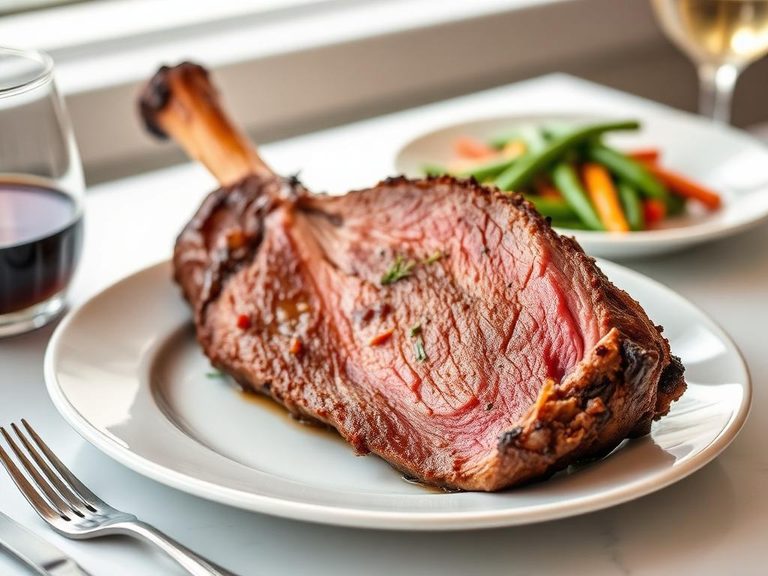
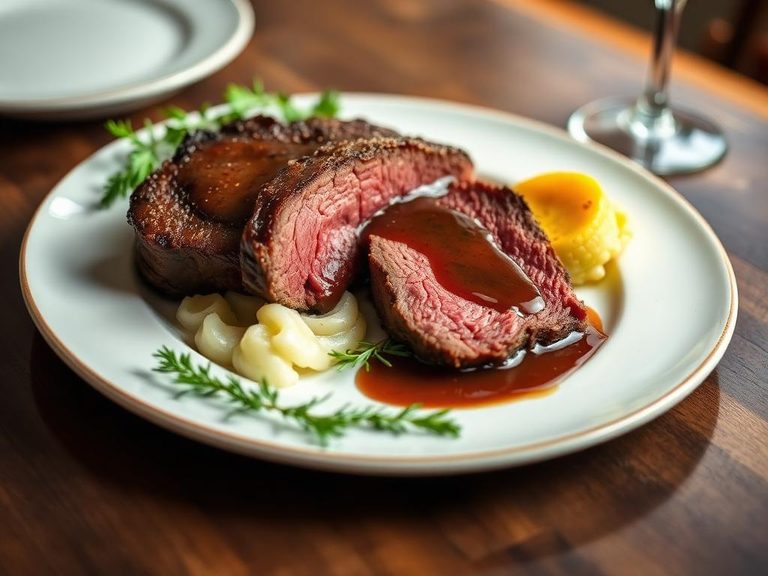
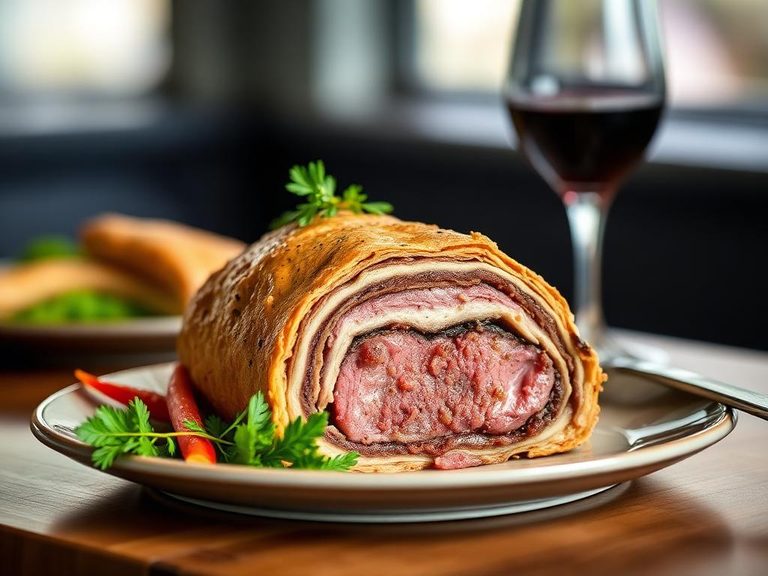
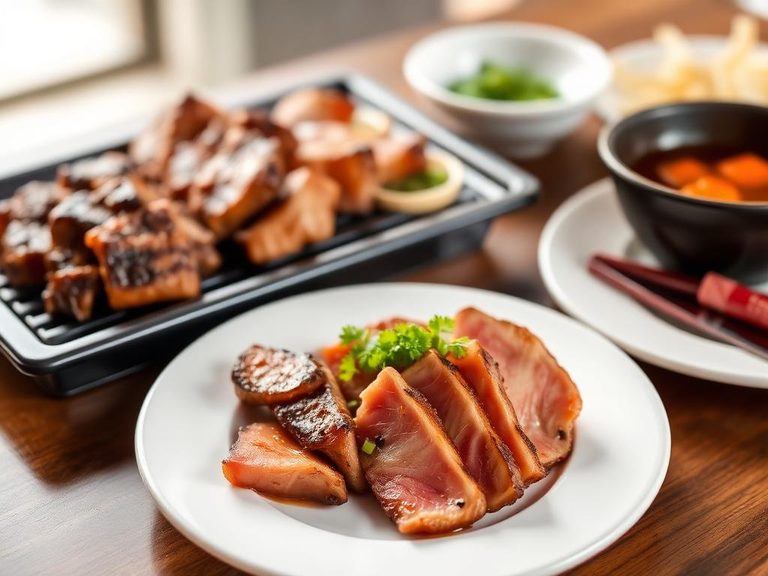
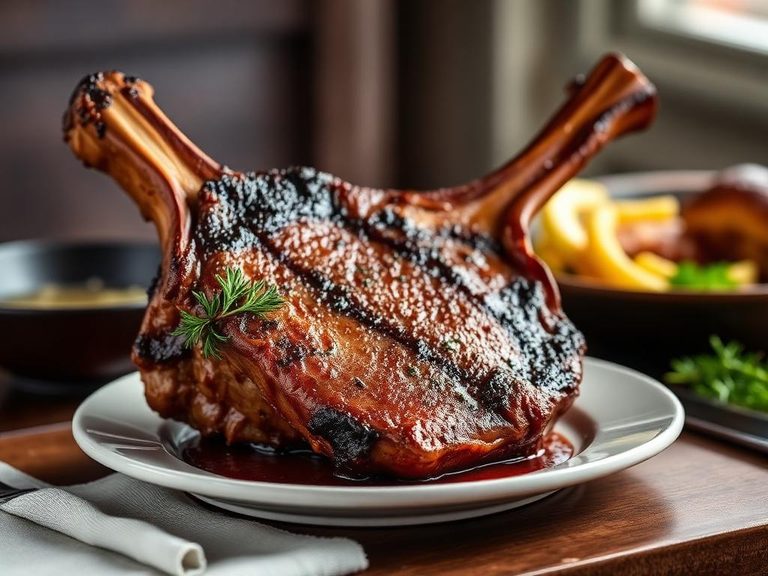
🌍 Where it's eaten
💡 Did you know?
The 'lip-on' designation refers to the fat cap left on the outer edge of the roast, which acts as a natural baster during cooking, self-basting the meat and contributing significantly to the final flavor and moisture.
Full nutrition (USDA data · scales with serving)
| Water | 52.6 g |
| Energy | 303 kcal |
| Energy | 1266 kj |
| Protein | 23.9 g |
| Total lipid (fat) | 23.0 g |
| Ash | 0.89 g |
| Carbohydrate, by difference | 0.00 g |
| Fiber, total dietary | 0.00 g |
| Total Sugars | 0.00 g |
| Calcium, Ca | 11.0 mg |
| Iron, Fe | 2.0 mg |
| Magnesium, Mg | 21.0 mg |
| Phosphorus, P | 152 mg |
| Potassium, K | 281 mg |
| Sodium, Na | 51.0 mg |
| Zinc, Zn | 6.1 mg |
| Copper, Cu | 0.08 mg |
| Manganese, Mn | 0.08 mg |
| Selenium, Se | 29.5 ug |
| Vitamin C, total ascorbic acid | 0.00 mg |
| Thiamin | 0.09 mg |
| Riboflavin | 0.25 mg |
| Niacin | 4.9 mg |
| Pantothenic acid | 0.59 mg |
| Vitamin B-6 | 0.46 mg |
| Folate, total | 6.0 ug |
| Folic acid | 0.00 ug |
| Folate, food | 6.0 ug |
| Folate, DFE | 6.0 ug |
| Choline, total | 49.0 mg |
| Betaine | 12.4 mg |
| Vitamin B-12 | 2.2 ug |
| Vitamin B-12, added | 0.00 ug |
| Vitamin A, RAE | 8.0 ug |
| Retinol | 8.0 ug |
| Carotene, beta | 0.00 ug |
| Carotene, alpha | 0.00 ug |
| Cryptoxanthin, beta | 0.00 ug |
| Vitamin A, IU | 25.0 iu |
| Lycopene | 0.00 ug |
| Lutein + zeaxanthin | 0.00 ug |
| Vitamin E (alpha-tocopherol) | 0.11 mg |
| Vitamin E, added | 0.00 mg |
| Vitamin D (D2 + D3), International Units | 7.0 iu |
| Vitamin D (D2 + D3) | 0.20 ug |
| Vitamin D3 (cholecalciferol) | 0.20 ug |
| Vitamin K (phylloquinone) | 1.6 ug |
| Alcohol, ethyl | 0.00 g |
| Caffeine | 0.00 mg |
| Theobromine | 0.00 mg |
Fat & fatty acid profile (per 100g)
| Fatty acids, total saturated | 10.0 g |
| SFA 4:0 | 0.00 g |
| SFA 6:0 | 0.00 g |
| SFA 8:0 | 0.00 g |
| SFA 10:0 | 0.01 g |
| SFA 12:0 | 0.02 g |
| SFA 14:0 | 0.65 g |
| SFA 15:0 | 0.13 g |
| SFA 16:0 | 5.3 g |
| SFA 17:0 | 0.32 g |
| SFA 18:0 | 3.6 g |
| SFA 20:0 | 0.02 g |
| SFA 24:0 | 0.02 g |
| Fatty acids, total monounsaturated | 11.0 g |
| MUFA 14:1 | 0.13 g |
| MUFA 15:1 | 0.04 g |
| MUFA 16:1 | 0.72 g |
| MUFA 16:1 c | 0.67 g |
| MUFA 17:1 | 0.20 g |
| MUFA 18:1 | 9.9 g |
| MUFA 18:1 c | 8.5 g |
| MUFA 20:1 | 0.04 g |
| MUFA 22:1 | 0.00 g |
| Fatty acids, total polyunsaturated | 1.2 g |
| PUFA 18:2 | 0.99 g |
| PUFA 18:2 n-6 c,c | 0.80 g |
| PUFA 18:2 CLAs | 0.10 g |
| PUFA 18:3 | 0.04 g |
| PUFA 18:3 n-3 c,c,c (ALA) | 0.04 g |
| PUFA 18:4 | 0.00 g |
| PUFA 20:2 n-6 c,c | 0.01 g |
| PUFA 20:3 | 0.03 g |
| PUFA 20:3 n-6 | 0.03 g |
| PUFA 20:4 | 0.09 g |
| PUFA 20:5 n-3 (EPA) | 0.01 g |
| PUFA 22:5 n-3 (DPA) | 0.01 g |
| PUFA 22:6 n-3 (DHA) | 0.00 g |
| Fatty acids, total trans | 1.5 g |
| Fatty acids, total trans-monoenoic | 1.4 g |
| TFA 16:1 t | 0.06 g |
| TFA 18:1 t | 1.4 g |
| TFA 18:2 t not further defined | 0.09 g |
| Fatty acids, total trans-polyenoic | 0.09 g |
| Cholesterol | 82.0 mg |
Amino acid profile (per 100g)
| Tryptophan | 0.27 g |
| Threonine | 1.1 g |
| Isoleucine | 1.1 g |
| Leucine | 2.0 g |
| Lysine | 2.3 g |
| Methionine | 0.65 g |
| Cystine | 0.24 g |
| Phenylalanine | 0.95 g |
| Tyrosine | 0.89 g |
| Valine | 1.2 g |
| Arginine | 1.6 g |
| Histidine | 0.88 g |
| Alanine | 1.5 g |
| Aspartic acid | 2.3 g |
| Glutamic acid | 3.9 g |
| Glycine | 1.2 g |
| Proline | 1.1 g |
| Serine | 0.98 g |
| Hydroxyproline | 0.16 g |
FAQ
What does 'choice' mean in the context of this beef?
'Choice' is a USDA beef grade indicating high quality with abundant marbling, making it tender and flavorful. It's the second-highest grade, below 'Prime' but above 'Select'.
Why is it called 'separable lean and fat'?
This term indicates that the nutritional data accounts for both the lean meat and the fat that can be physically separated from it, providing a complete picture of the cut's composition.
How does the 'lip-on' fat cap affect cooking?
The lip-on fat cap renders during roasting, basting the meat from the outside, which helps keep the roast moist and adds a rich, savory flavor to the drippings used for gravy or au jus.
Is this cut suitable for grilling?
While this specific cut is a roast, the rib eye steak (from the same primal section) is excellent for grilling. For a roast, it's best cooked via roasting, braising, or slow-roasting methods to render the fat properly.
Nutrient density (calculated · NRF9.3)
Nutrient Rich Foods index: beneficial nutrients (protein, fiber, vitamins, minerals) minus saturated fat, added sugar & sodium, per 100 kcal.
NRF9.3 index — Fulgoni, Keast & Drewnowski, 2009. Computed from USDA nutrients.
Weight-loss friendliness (composite index)
Energy density 3.03 kcal/g · 32% calories from protein · 0.0 g fiber · 0.0 g sugar per 100 g.
Composite of energy density (Rolls et al., 1999), protein & fiber satiety, minus sugar. A calculated heuristic — ranks satiety-per-calorie, not a clinical measure.
Dietary load (calculated from USDA values)
Potential renal acid load. Positive = acid-forming, negative = alkaline-forming.
Sodium-to-potassium ratio: 0.18 (lower is better — aim for ≤ 1)
Sodium:potassium per WHO potassium guidance. Computed from USDA nutrients.