

Beef, rib eye roast, boneless, lip-on, separable lean and fat, trimmed to 1/8" fat, all grades, cooked, roasted
Whole food · Beef Products

Photo: Wikipedia
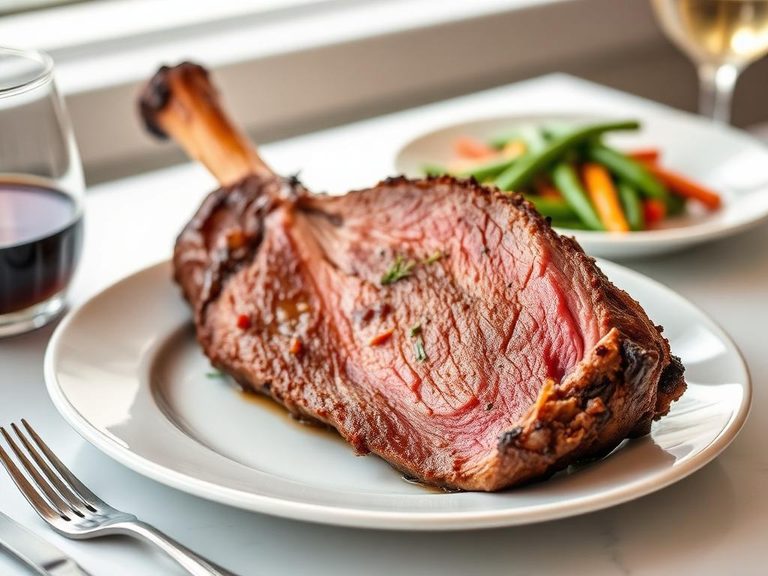
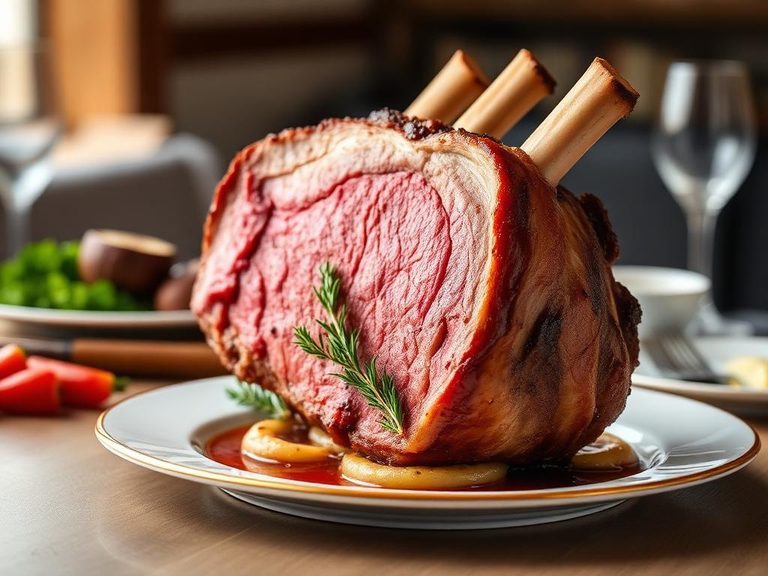
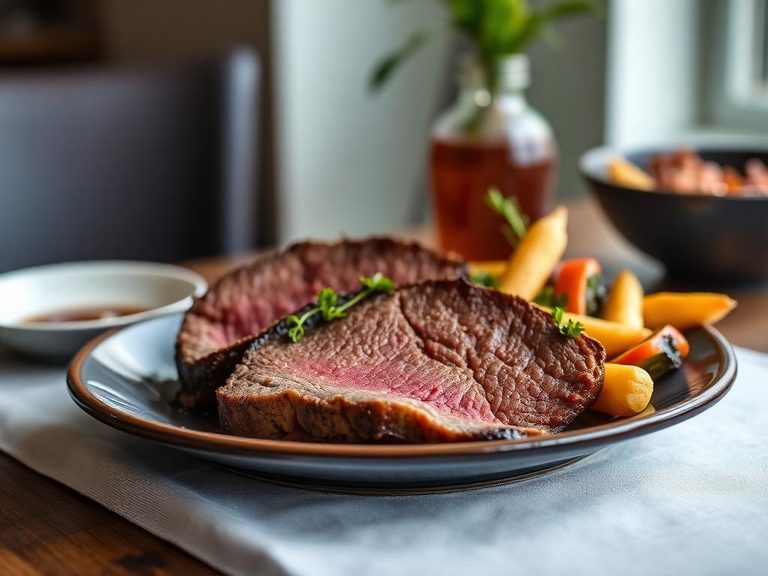
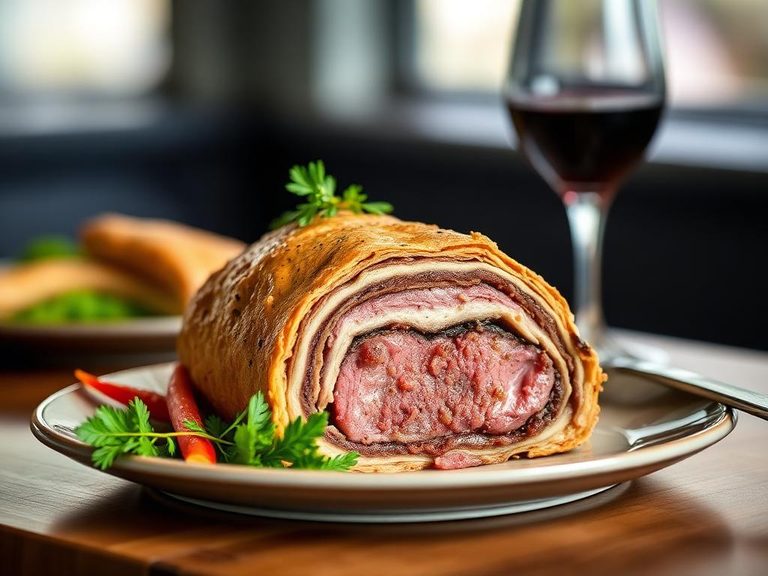
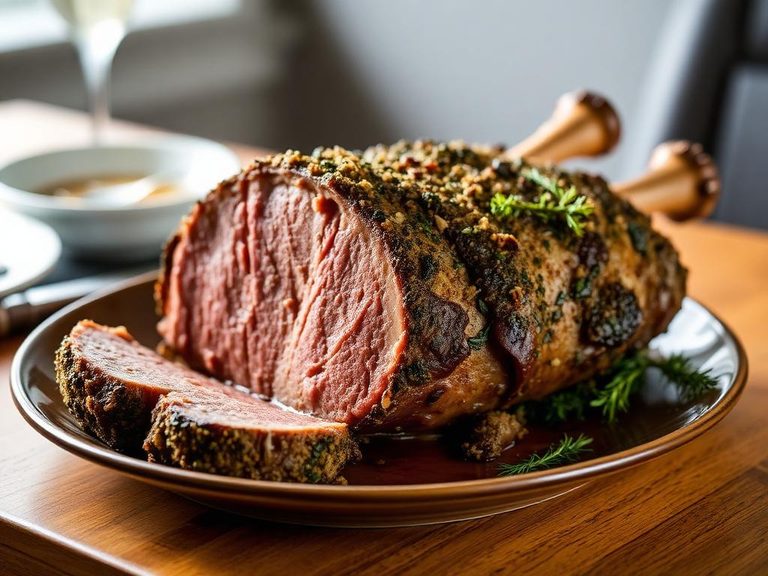
This is a rich, marbled cut of beef from the rib section, roasted to a succulent, tender finish with a deep, beefy flavor and a satisfying, buttery texture. With nearly 22g of fat per 100g, it delivers a luxurious mouthfeel and is a powerhouse of high-quality protein and energy-dense calories.
Calorie split: 33% protein · 0% carbs · 67% fat
↓ Full nutrition💚 Why it's loved
People adore the rib eye roast for its exceptional marbling, which melts during cooking to create a juicy, flavorful, and tender experience that is considered the pinnacle of steakhouse dining. Its rich, savory taste makes it a celebratory centerpiece, often associated with holidays and special gatherings.
⚠️ Watch-outs & how to enjoy it better
Due to its high saturated fat and calorie content, it should be consumed in moderation by those managing heart health or weight. To counteract this, pair it with fiber-rich vegetables like roasted broccoli or a large salad, and practice portion control by sticking to a 3-4 ounce serving. Choosing leaner cuts occasionally or trimming visible fat before cooking can also help.
Key benefits
- Excellent source of complete protein for muscle repair and maintenance.
- Rich in heme iron, which is highly bioavailable for preventing anemia.
- Provides essential B vitamins, especially B12, crucial for nerve function.
- Contains zinc, which supports immune health and wound healing.
- A good source of selenium, an antioxidant that protects cells.
🍽️ Popular dishes
🌍 Where it's eaten
💡 Did you know?
The 'rib eye' gets its name from the longissimus dorsi muscle that runs along the rib bone, and the 'eye' refers to the central, most tender part of this muscle, which is surrounded by a ring of fat that gives it its signature flavor.
Full nutrition (USDA data · scales with serving)
| Water | 53.8 g |
| Energy | 292 kcal |
| Energy | 1222 kj |
| Protein | 24.3 g |
| Total lipid (fat) | 21.7 g |
| Ash | 0.93 g |
| Carbohydrate, by difference | 0.00 g |
| Fiber, total dietary | 0.00 g |
| Total Sugars | 0.00 g |
| Calcium, Ca | 11.0 mg |
| Iron, Fe | 1.9 mg |
| Magnesium, Mg | 21.0 mg |
| Phosphorus, P | 155 mg |
| Potassium, K | 286 mg |
| Sodium, Na | 52.0 mg |
| Zinc, Zn | 6.1 mg |
| Copper, Cu | 0.08 mg |
| Manganese, Mn | 0.08 mg |
| Selenium, Se | 30.1 ug |
| Vitamin C, total ascorbic acid | 0.00 mg |
| Thiamin | 0.08 mg |
| Riboflavin | 0.27 mg |
| Niacin | 5.0 mg |
| Pantothenic acid | 0.58 mg |
| Vitamin B-6 | 0.47 mg |
| Folate, total | 6.0 ug |
| Folic acid | 0.00 ug |
| Folate, food | 6.0 ug |
| Folate, DFE | 6.0 ug |
| Choline, total | 48.6 mg |
| Betaine | 11.8 mg |
| Vitamin B-12 | 2.1 ug |
| Vitamin B-12, added | 0.00 ug |
| Vitamin A, RAE | 8.0 ug |
| Retinol | 8.0 ug |
| Carotene, beta | 0.00 ug |
| Carotene, alpha | 0.00 ug |
| Cryptoxanthin, beta | 0.00 ug |
| Vitamin A, IU | 26.0 iu |
| Lycopene | 0.00 ug |
| Lutein + zeaxanthin | 0.00 ug |
| Vitamin E (alpha-tocopherol) | 0.10 mg |
| Vitamin E, added | 0.00 mg |
| Vitamin D (D2 + D3), International Units | 7.0 iu |
| Vitamin D (D2 + D3) | 0.20 ug |
| Vitamin D3 (cholecalciferol) | 0.20 ug |
| Vitamin K (phylloquinone) | 1.6 ug |
| Alcohol, ethyl | 0.00 g |
| Caffeine | 0.00 mg |
| Theobromine | 0.00 mg |
Fat & fatty acid profile (per 100g)
| Fatty acids, total saturated | 9.4 g |
| SFA 4:0 | 0.00 g |
| SFA 6:0 | 0.00 g |
| SFA 8:0 | 0.00 g |
| SFA 10:0 | 0.01 g |
| SFA 12:0 | 0.02 g |
| SFA 14:0 | 0.61 g |
| SFA 15:0 | 0.12 g |
| SFA 16:0 | 5.0 g |
| SFA 17:0 | 0.30 g |
| SFA 18:0 | 3.4 g |
| SFA 20:0 | 0.02 g |
| SFA 24:0 | 0.01 g |
| Fatty acids, total monounsaturated | 10.3 g |
| MUFA 14:1 | 0.12 g |
| MUFA 15:1 | 0.04 g |
| MUFA 16:1 | 0.68 g |
| MUFA 16:1 c | 0.62 g |
| MUFA 17:1 | 0.19 g |
| MUFA 18:1 | 9.2 g |
| MUFA 18:1 c | 7.9 g |
| MUFA 20:1 | 0.04 g |
| MUFA 22:1 | 0.00 g |
| Fatty acids, total polyunsaturated | 1.1 g |
| PUFA 18:2 | 0.94 g |
| PUFA 18:2 n-6 c,c | 0.75 g |
| PUFA 18:2 CLAs | 0.10 g |
| PUFA 18:3 | 0.04 g |
| PUFA 18:3 n-3 c,c,c (ALA) | 0.04 g |
| PUFA 18:4 | 0.00 g |
| PUFA 20:2 n-6 c,c | 0.01 g |
| PUFA 20:3 | 0.03 g |
| PUFA 20:3 n-6 | 0.03 g |
| PUFA 20:4 | 0.08 g |
| PUFA 20:5 n-3 (EPA) | 0.01 g |
| PUFA 22:5 n-3 (DPA) | 0.01 g |
| PUFA 22:6 n-3 (DHA) | 0.00 g |
| Fatty acids, total trans | 1.4 g |
| Fatty acids, total trans-monoenoic | 1.4 g |
| TFA 16:1 t | 0.05 g |
| TFA 18:1 t | 1.3 g |
| TFA 18:2 t not further defined | 0.08 g |
| Fatty acids, total trans-polyenoic | 0.08 g |
| Cholesterol | 81.0 mg |
Amino acid profile (per 100g)
| Tryptophan | 0.27 g |
| Threonine | 1.1 g |
| Isoleucine | 1.1 g |
| Leucine | 2.1 g |
| Lysine | 2.3 g |
| Methionine | 0.66 g |
| Cystine | 0.25 g |
| Phenylalanine | 0.97 g |
| Tyrosine | 0.91 g |
| Valine | 1.2 g |
| Arginine | 1.7 g |
| Histidine | 0.91 g |
| Alanine | 1.5 g |
| Aspartic acid | 2.4 g |
| Glutamic acid | 4.0 g |
| Glycine | 1.2 g |
| Proline | 1.1 g |
| Serine | 1.0 g |
| Hydroxyproline | 0.17 g |
FAQ
What is the difference between a boneless and bone-in rib eye roast?
A boneless rib eye roast has the rib bones removed, making it easier to carve and cook evenly. A bone-in roast, often called a 'standing rib roast,' retains the bones, which can add flavor during roasting and provide a dramatic presentation.
What does 'lip-on' mean for this cut?
'Lip-on' refers to the spinalis dorsi muscle, or the 'ribeye cap,' which is a flavorful, tender strip of meat attached to the main ribeye muscle. It's considered a prized part of the roast for its exceptional marbling and taste.
How should I cook a boneless rib eye roast for best results?
For optimal tenderness and flavor, sear the roast at a high temperature first to develop a crust, then roast at a lower temperature (around 325°F/165°C) until it reaches your desired doneness. Let it rest for 15-20 minutes before slicing to allow the juices to redistribute.
Nutrient density (calculated · NRF9.3)
Nutrient Rich Foods index: beneficial nutrients (protein, fiber, vitamins, minerals) minus saturated fat, added sugar & sodium, per 100 kcal.
NRF9.3 index — Fulgoni, Keast & Drewnowski, 2009. Computed from USDA nutrients.
Weight-loss friendliness (composite index)
Energy density 2.92 kcal/g · 33% calories from protein · 0.0 g fiber · 0.0 g sugar per 100 g.
Composite of energy density (Rolls et al., 1999), protein & fiber satiety, minus sugar. A calculated heuristic — ranks satiety-per-calorie, not a clinical measure.
Dietary load (calculated from USDA values)
Potential renal acid load. Positive = acid-forming, negative = alkaline-forming.
Sodium-to-potassium ratio: 0.18 (lower is better — aim for ≤ 1)
Sodium:potassium per WHO potassium guidance. Computed from USDA nutrients.