

Beef, plate steak, boneless, outside skirt, separable lean only, trimmed to 0" fat, choice, cooked, grilled
Whole food · Beef Products

Photo: Wikipedia
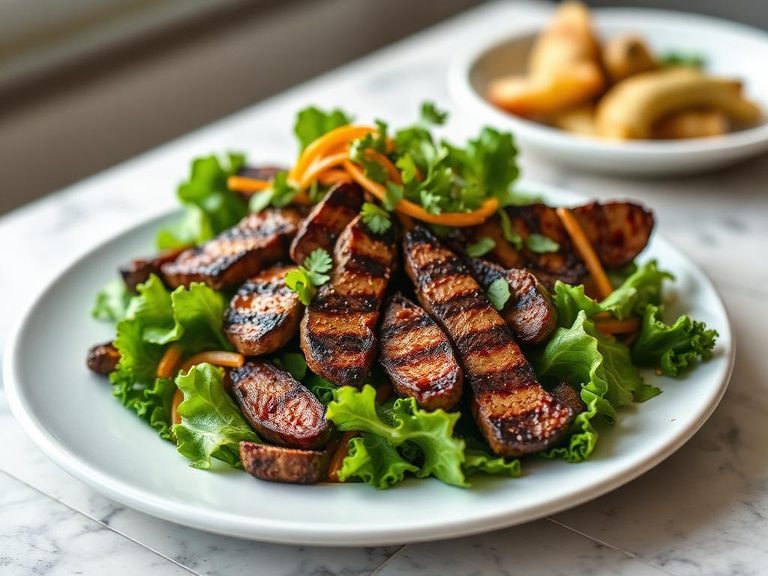
Outside skirt steak is a long, flat, deeply beefy cut from the diaphragm, prized for its intense, mineral-rich flavor and a satisfyingly chewy-yet-tender texture when sliced correctly. Grilled to a perfect medium-rare, it develops a smoky, caramelized crust while the interior remains juicy and succulent. With nearly 27 grams of high-quality protein per 100 grams and zero carbs, it's a powerhouse for muscle maintenance and satiety.
Calorie split: 37% protein · 0% carbs · 63% fat
↓ Full nutrition💚 Why it's loved
People adore skirt steak for its robust, beef-forward taste that stands up boldly to marinades and high-heat cooking. It's the quintessential cut for fajitas and carne asada, delivering that perfect combination of char, smoke, and juicy tenderness in a single, flavorful bite.
⚠️ Watch-outs & how to enjoy it better
The cut's long muscle fibers can make it tough if overcooked or sliced incorrectly. To counteract this, always slice thinly against the grain after a 5-10 minute rest. It's also relatively high in saturated fat (about 8g per 100g), so those monitoring saturated fat intake should enjoy it in moderation or pair it with fiber-rich sides like grilled vegetables or a fresh salad.
Key benefits
- Excellent source of complete protein for muscle repair and growth.
- Rich in iron (heme iron) for oxygen transport and energy.
- Provides zinc for immune function and wound healing.
- Contains B vitamins, especially B12, for nerve health and red blood cell formation.
- Zero carbohydrates, making it suitable for ketogenic and low-carb diets.
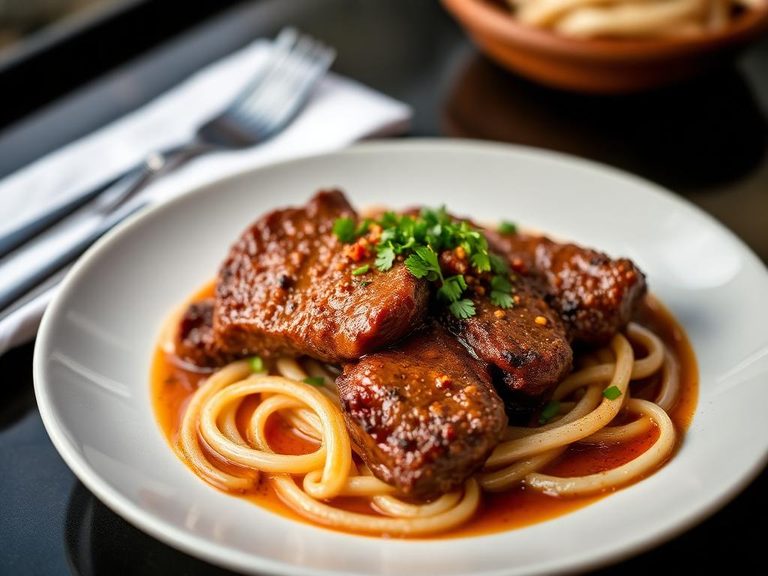
🍽️ Popular dishes
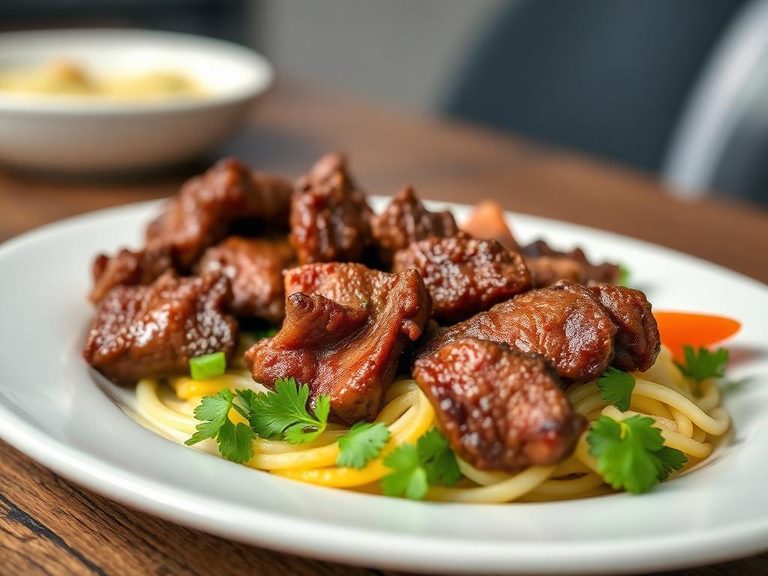
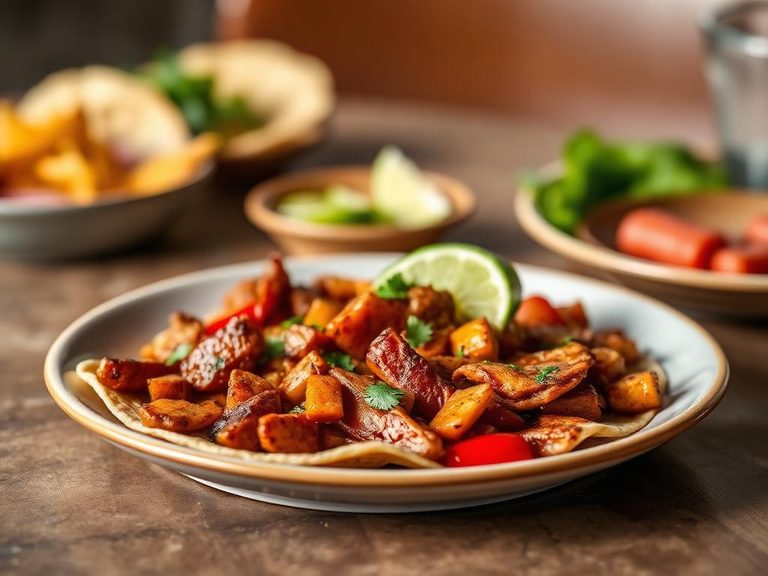
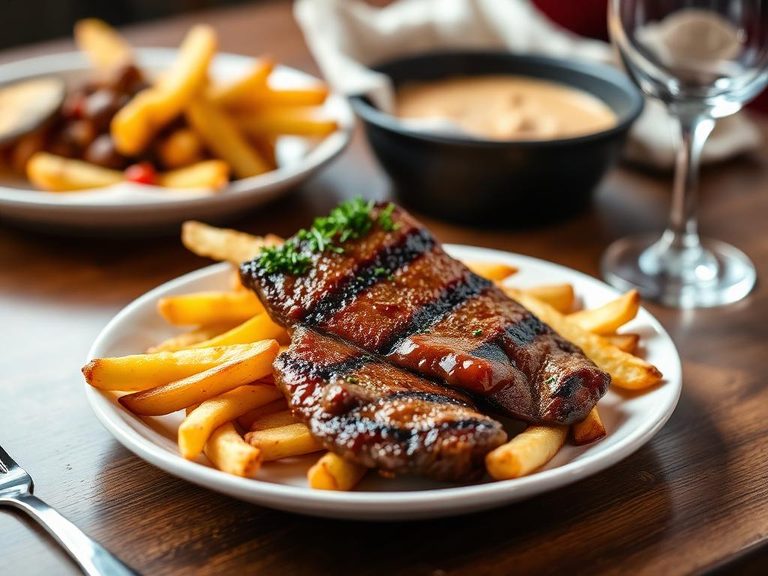
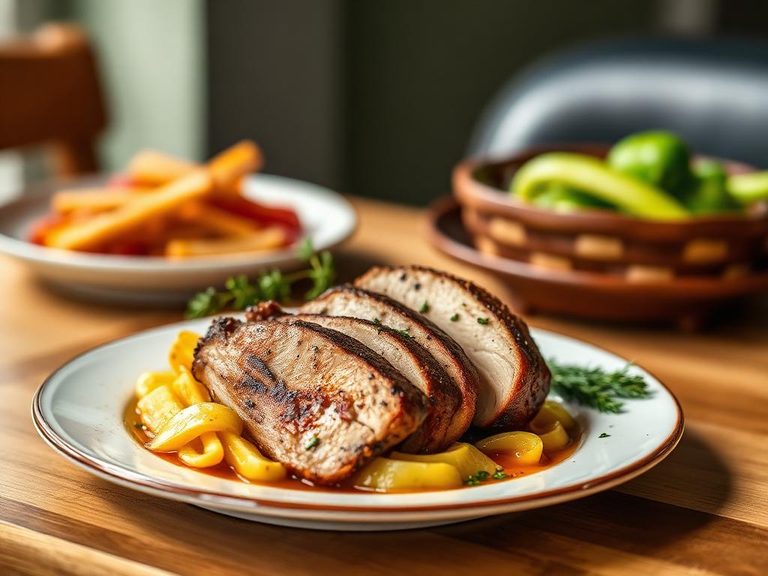
🌍 Where it's eaten
💡 Did you know?
The skirt steak is the diaphragm muscle, and its long, loose grain is so efficient at absorbing marinades that it was historically used as a test cut for new marinade recipes in some butcher shops.
Full nutrition (USDA data · scales with serving)
| Water | 51.6 g |
| Energy | 291 kcal |
| Energy | 1216 kj |
| Protein | 27.0 g |
| Total lipid (fat) | 20.3 g |
| Ash | 1.3 g |
| Carbohydrate, by difference | 0.00 g |
| Fiber, total dietary | 0.00 g |
| Total Sugars | 0.00 g |
| Calcium, Ca | 7.0 mg |
| Iron, Fe | 5.1 mg |
| Magnesium, Mg | 24.0 mg |
| Phosphorus, P | 185 mg |
| Potassium, K | 286 mg |
| Sodium, Na | 71.0 mg |
| Zinc, Zn | 7.1 mg |
| Copper, Cu | 0.21 mg |
| Manganese, Mn | 0.21 mg |
| Selenium, Se | 36.0 ug |
| Vitamin C, total ascorbic acid | 0.00 mg |
| Thiamin | 0.13 mg |
| Riboflavin | 0.85 mg |
| Niacin | 4.9 mg |
| Pantothenic acid | 1.4 mg |
| Vitamin B-6 | 0.45 mg |
| Folate, total | 7.0 ug |
| Folic acid | 0.00 ug |
| Folate, food | 7.0 ug |
| Folate, DFE | 7.0 ug |
| Choline, total | 79.9 mg |
| Betaine | 15.5 mg |
| Vitamin B-12 | 8.2 ug |
| Vitamin B-12, added | 0.00 ug |
| Vitamin A, RAE | 2.0 ug |
| Retinol | 2.0 ug |
| Carotene, beta | 0.00 ug |
| Carotene, alpha | 0.00 ug |
| Cryptoxanthin, beta | 0.00 ug |
| Vitamin A, IU | 6.0 iu |
| Lycopene | 0.00 ug |
| Lutein + zeaxanthin | 0.00 ug |
| Vitamin E (alpha-tocopherol) | 0.09 mg |
| Vitamin E, added | 0.00 mg |
| Vitamin D (D2 + D3), International Units | 8.0 iu |
| Vitamin D (D2 + D3) | 0.20 ug |
| Vitamin D3 (cholecalciferol) | 0.20 ug |
| Vitamin K (phylloquinone) | 1.6 ug |
| Alcohol, ethyl | 0.00 g |
| Caffeine | 0.00 mg |
| Theobromine | 0.00 mg |
Fat & fatty acid profile (per 100g)
| Fatty acids, total saturated | 7.0 g |
| SFA 4:0 | 0.00 g |
| SFA 6:0 | 0.00 g |
| SFA 8:0 | 0.00 g |
| SFA 10:0 | 0.01 g |
| SFA 12:0 | 0.01 g |
| SFA 14:0 | 0.41 g |
| SFA 15:0 | 0.07 g |
| SFA 16:0 | 3.7 g |
| SFA 17:0 | 0.23 g |
| SFA 18:0 | 2.6 g |
| SFA 20:0 | 0.01 g |
| SFA 24:0 | 0.02 g |
| Fatty acids, total monounsaturated | 8.0 g |
| MUFA 14:1 | 0.08 g |
| MUFA 15:1 | 0.10 g |
| MUFA 16:1 | 0.46 g |
| MUFA 16:1 c | 0.45 g |
| MUFA 17:1 | 0.16 g |
| MUFA 18:1 | 7.2 g |
| MUFA 18:1 c | 6.3 g |
| MUFA 20:1 | 0.02 g |
| MUFA 22:1 | 0.00 g |
| Fatty acids, total polyunsaturated | 1.1 g |
| PUFA 18:2 | 0.89 g |
| PUFA 18:2 n-6 c,c | 0.83 g |
| PUFA 18:2 CLAs | 0.05 g |
| PUFA 18:3 | 0.02 g |
| PUFA 18:3 n-3 c,c,c (ALA) | 0.02 g |
| PUFA 18:4 | 0.00 g |
| PUFA 20:2 n-6 c,c | 0.00 g |
| PUFA 20:3 | 0.04 g |
| PUFA 20:3 n-6 | 0.04 g |
| PUFA 20:4 | 0.15 g |
| PUFA 20:5 n-3 (EPA) | 0.00 g |
| PUFA 22:5 n-3 (DPA) | 0.02 g |
| PUFA 22:6 n-3 (DHA) | 0.00 g |
| Fatty acids, total trans | 0.87 g |
| Fatty acids, total trans-monoenoic | 0.86 g |
| TFA 16:1 t | 0.01 g |
| TFA 18:1 t | 0.85 g |
| TFA 18:2 t not further defined | 0.01 g |
| Fatty acids, total trans-polyenoic | 0.01 g |
| Cholesterol | 105 mg |
Amino acid profile (per 100g)
| Tryptophan | 0.32 g |
| Threonine | 1.3 g |
| Isoleucine | 1.3 g |
| Leucine | 2.4 g |
| Lysine | 2.7 g |
| Methionine | 0.75 g |
| Cystine | 0.28 g |
| Phenylalanine | 1.1 g |
| Tyrosine | 1.1 g |
| Valine | 1.4 g |
| Arginine | 1.9 g |
| Histidine | 1.0 g |
| Alanine | 1.7 g |
| Aspartic acid | 2.7 g |
| Glutamic acid | 4.6 g |
| Glycine | 1.2 g |
| Proline | 1.2 g |
| Serine | 1.1 g |
| Hydroxyproline | 0.14 g |
FAQ
What's the difference between inside and outside skirt steak?
The outside skirt is the more prized cut. It's thinner, has a more uniform shape, and a looser grain that makes it more tender and flavorful. The inside skirt is thicker, tougher, and often requires more marinating.
How do I prevent skirt steak from becoming chewy?
The key is high heat and short cooking time (grill or sear for 3-4 minutes per side for medium-rare). Most importantly, let it rest for 5-10 minutes, then slice very thinly *against the grain* to shorten the muscle fibers.
Is skirt steak the same as flank steak?
No, they are different cuts from different parts of the cow. Skirt steak (from the diaphragm) has a more intense, beefy flavor and a looser grain. Flank steak (from the abdominal muscles) is leaner, denser, and has a milder flavor.
Nutrient density (calculated · NRF9.3)
Nutrient Rich Foods index: beneficial nutrients (protein, fiber, vitamins, minerals) minus saturated fat, added sugar & sodium, per 100 kcal.
NRF9.3 index — Fulgoni, Keast & Drewnowski, 2009. Computed from USDA nutrients.
Weight-loss friendliness (composite index)
Energy density 2.91 kcal/g · 37% calories from protein · 0.0 g fiber · 0.0 g sugar per 100 g.
Composite of energy density (Rolls et al., 1999), protein & fiber satiety, minus sugar. A calculated heuristic — ranks satiety-per-calorie, not a clinical measure.
Dietary load (calculated from USDA values)
Potential renal acid load. Positive = acid-forming, negative = alkaline-forming.
Sodium-to-potassium ratio: 0.25 (lower is better — aim for ≤ 1)
Sodium:potassium per WHO potassium guidance. Computed from USDA nutrients.