

Beef, grass-fed, strip steaks, lean only, raw
Whole food · Beef Products

Photo: Wikipedia
Grass-fed strip steak is a lean, premium cut from the short loin of cattle raised on pasture, prized for its fine marbling and robust, beefy flavor. When raw, it presents a deep ruby-red color with a firm, velvety texture that promises a tender, juicy bite once cooked. Nutritionally, it's a powerhouse, delivering an impressive 23 grams of protein per 100g with minimal fat and zero carbohydrates.
Calorie split: 79% protein · 0% carbs · 21% fat
↓ Full nutrition💚 Why it's loved
People adore the strip steak for its perfect balance of tenderness and satisfying chew, with a rich, mineral-forward flavor that's more complex than grain-fed beef. Its versatility makes it a star for simple grilling, elegant pan-searing, or hearty stir-fries, embodying classic steakhouse luxury.
⚠️ Watch-outs & how to enjoy it better
Being very lean, it can become tough and dry if overcooked, requiring careful temperature control. Those watching their saturated fat intake should practice portion control, and individuals with iron overload conditions (like hemochromatosis) should consult a doctor. To counteract toughness, let it rest after cooking and consider a quick marinade with acidic ingredients like vinegar or citrus to tenderize.
Key benefits
- High-quality complete protein for muscle repair and growth.
- Rich in iron and B vitamins, particularly B12, for energy metabolism.
- Contains conjugated linoleic acid (CLA), a beneficial fatty acid from grass-feeding.
- Low in total fat and carbohydrates, suitable for low-carb and ketogenic diets.
🍽️ Popular dishes
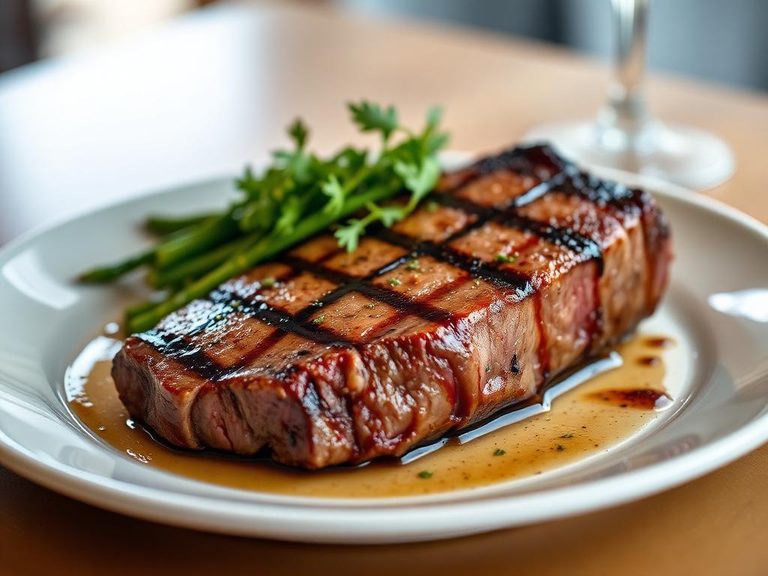
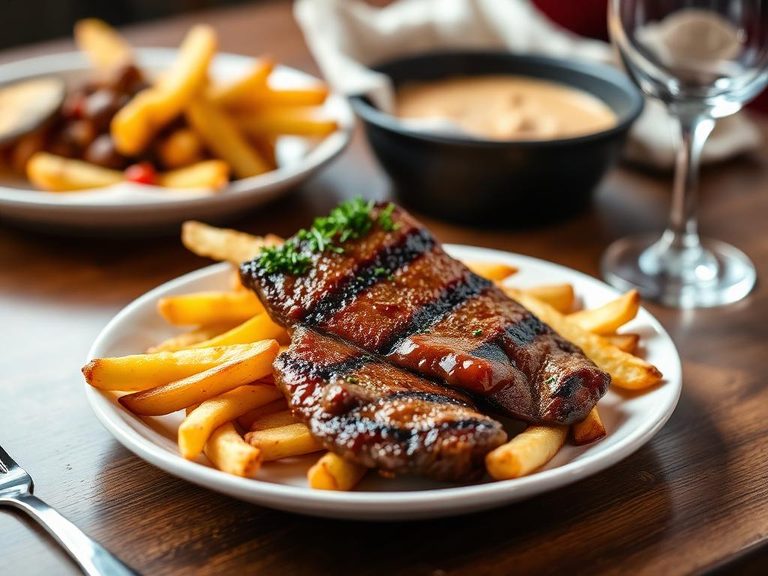
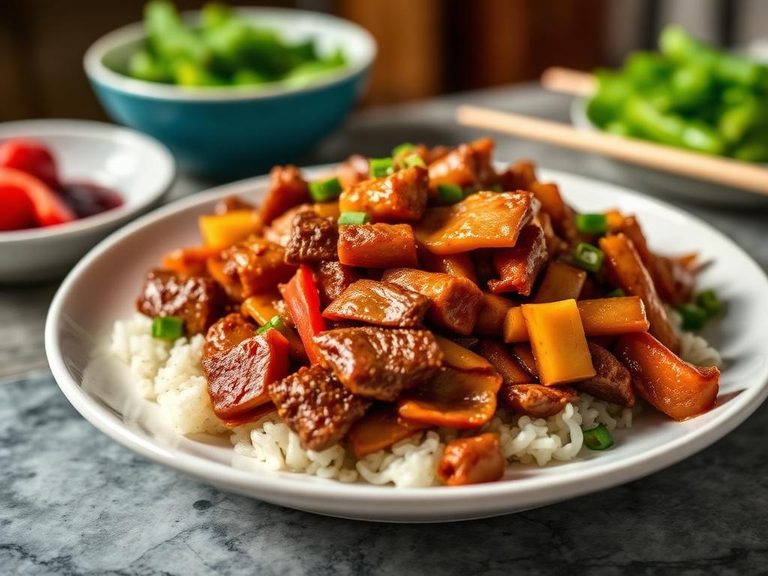
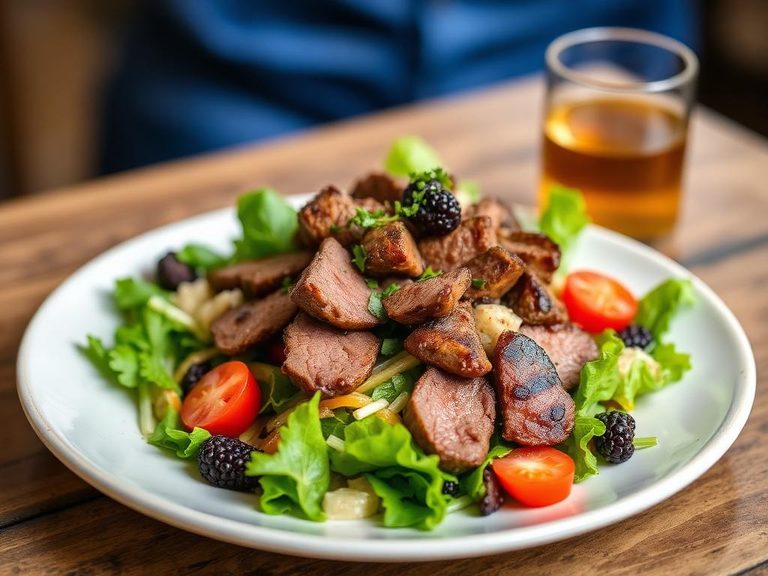
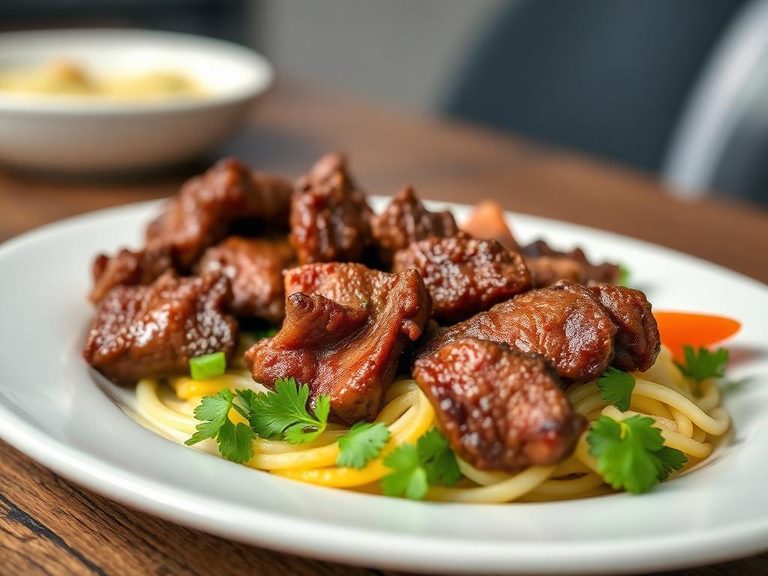
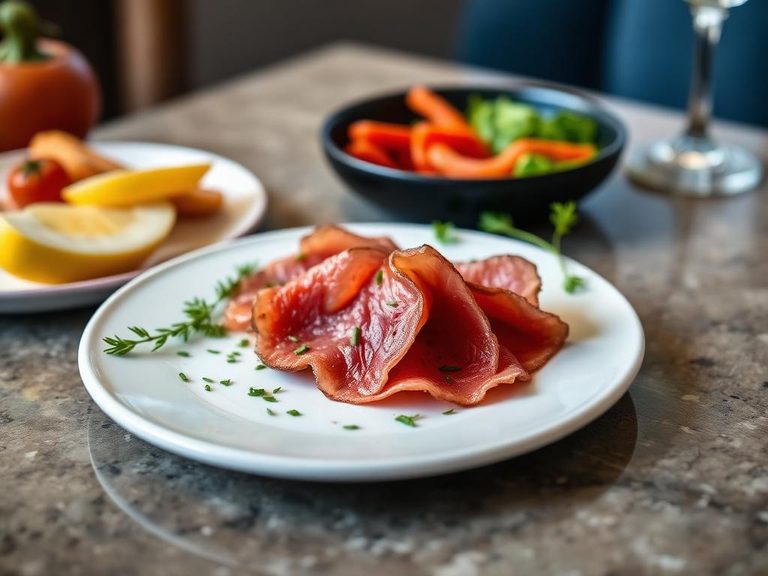
🌍 Where it's eaten
💡 Did you know?
The 'strip' in strip steak comes from the strip of connective tissue that runs along one side of the cut, which is typically removed before cooking, leaving the clean, lean muscle.
Full nutrition (USDA data · scales with serving)
| Water | 73.4 g |
| Energy | 117 kcal |
| Energy | 488 kj |
| Protein | 23.1 g |
| Total lipid (fat) | 2.7 g |
| Ash | 1.7 g |
| Carbohydrate, by difference | 0.00 g |
| Fiber, total dietary | 0.00 g |
| Total Sugars | 0.00 g |
| Calcium, Ca | 9.0 mg |
| Iron, Fe | 1.9 mg |
| Magnesium, Mg | 23.0 mg |
| Phosphorus, P | 212 mg |
| Potassium, K | 342 mg |
| Sodium, Na | 55.0 mg |
| Zinc, Zn | 3.6 mg |
| Copper, Cu | 0.07 mg |
| Manganese, Mn | 0.01 mg |
| Selenium, Se | 21.1 ug |
| Vitamin C, total ascorbic acid | 0.00 mg |
| Thiamin | 0.05 mg |
| Riboflavin | 0.12 mg |
| Niacin | 6.7 mg |
| Pantothenic acid | 0.68 mg |
| Vitamin B-6 | 0.65 mg |
| Folate, total | 13.0 ug |
| Folic acid | 0.00 ug |
| Folate, food | 13.0 ug |
| Folate, DFE | 13.0 ug |
| Choline, total | 65.1 mg |
| Betaine | 7.6 mg |
| Vitamin B-12 | 1.3 ug |
| Vitamin B-12, added | 0.00 ug |
| Vitamin A, RAE | 0.00 ug |
| Retinol | 0.00 ug |
| Carotene, beta | 0.00 ug |
| Carotene, alpha | 0.00 ug |
| Cryptoxanthin, beta | 0.00 ug |
| Vitamin A, IU | 0.00 iu |
| Lycopene | 0.00 ug |
| Lutein + zeaxanthin | 0.00 ug |
| Vitamin E (alpha-tocopherol) | 0.22 mg |
| Vitamin E, added | 0.00 mg |
| Vitamin K (phylloquinone) | 0.90 ug |
| Alcohol, ethyl | 0.00 g |
| Caffeine | 0.00 mg |
| Theobromine | 0.00 mg |
Fat & fatty acid profile (per 100g)
| Fatty acids, total saturated | 1.0 g |
| SFA 4:0 | 0.00 g |
| SFA 6:0 | 0.00 g |
| SFA 8:0 | 0.00 g |
| SFA 10:0 | 0.00 g |
| SFA 12:0 | 0.00 g |
| SFA 14:0 | 0.06 g |
| SFA 15:0 | 0.01 g |
| SFA 16:0 | 0.57 g |
| SFA 17:0 | 0.03 g |
| SFA 18:0 | 0.35 g |
| SFA 20:0 | 0.00 g |
| SFA 22:0 | 0.00 g |
| SFA 24:0 | 0.00 g |
| Fatty acids, total monounsaturated | 0.99 g |
| MUFA 14:1 | 0.01 g |
| MUFA 15:1 | 0.00 g |
| MUFA 16:1 | 0.07 g |
| MUFA 17:1 | 0.00 g |
| MUFA 18:1 | 0.91 g |
| MUFA 18:1 c | 0.82 g |
| MUFA 20:1 | 0.00 g |
| MUFA 22:1 | 0.00 g |
| Fatty acids, total polyunsaturated | 0.11 g |
| PUFA 18:2 | 0.08 g |
| PUFA 18:2 n-6 c,c | 0.04 g |
| PUFA 18:2 CLAs | 0.02 g |
| PUFA 18:3 | 0.01 g |
| PUFA 18:3 n-3 c,c,c (ALA) | 0.01 g |
| PUFA 18:3 n-6 c,c,c | 0.00 g |
| PUFA 18:4 | 0.00 g |
| PUFA 20:2 n-6 c,c | 0.00 g |
| PUFA 20:3 | 0.00 g |
| PUFA 20:4 | 0.01 g |
| PUFA 20:5 n-3 (EPA) | 0.00 g |
| PUFA 22:5 n-3 (DPA) | 0.00 g |
| PUFA 22:6 n-3 (DHA) | 0.00 g |
| Fatty acids, total trans | 0.11 g |
| Fatty acids, total trans-monoenoic | 0.09 g |
| TFA 18:1 t | 0.09 g |
| TFA 18:2 t not further defined | 0.02 g |
| Fatty acids, total trans-polyenoic | 0.02 g |
| Cholesterol | 55.0 mg |
Amino acid profile (per 100g)
Estimated from Beef, variety meats and by-products, mechanically separated beef, raw — USDA does not publish this profile for Beef.
| Tryptophan | 0.17 g |
| Threonine | 0.47 g |
| Isoleucine | 0.58 g |
| Leucine | 1.2 g |
| Lysine | 1.2 g |
| Methionine | 0.43 g |
| Cystine | 0.23 g |
| Phenylalanine | 0.64 g |
| Tyrosine | 0.38 g |
| Valine | 0.92 g |
| Arginine | 1.2 g |
| Histidine | 0.44 g |
| Alanine | 1.0 g |
| Aspartic acid | 1.3 g |
| Glutamic acid | 2.1 g |
| Glycine | 1.2 g |
| Proline | 0.92 g |
| Serine | 0.57 g |
FAQ
What's the difference between grass-fed and grain-fed strip steak?
Grass-fed cattle eat a natural diet of pasture grasses, resulting in leaner meat with a more pronounced, often 'gamey' or mineral flavor and higher levels of certain nutrients like omega-3s and CLA. Grain-fed cattle are finished on grain, which increases marbling (intramuscular fat), leading to a richer, milder taste and more tender texture.
How should I cook a lean grass-fed strip steak?
Because it's lean, high-heat, quick-cooking methods are best to prevent drying out. Sear it in a very hot cast-iron skillet or on a grill for 3-4 minutes per side for medium-rare. Always use a meat thermometer (aim for 130-135°F internal temperature) and let it rest for 5-10 minutes before slicing against the grain.
Is raw beef safe to eat, like in carpaccio?
Only consume raw beef if it is labeled 'sushi-grade' or 'carpaccio-grade,' indicating it has been handled and flash-frozen to eliminate parasites. Standard supermarket beef is not safe to eat raw due to the risk of bacterial contamination like E. coli.
Nutrient density (calculated · NRF9.3)
Nutrient Rich Foods index: beneficial nutrients (protein, fiber, vitamins, minerals) minus saturated fat, added sugar & sodium, per 100 kcal.
NRF9.3 index — Fulgoni, Keast & Drewnowski, 2009. Computed from USDA nutrients.
Weight-loss friendliness (composite index)
Energy density 1.17 kcal/g · 79% calories from protein · 0.0 g fiber · 0.0 g sugar per 100 g.
Composite of energy density (Rolls et al., 1999), protein & fiber satiety, minus sugar. A calculated heuristic — ranks satiety-per-calorie, not a clinical measure.
Dietary load (calculated from USDA values)
Potential renal acid load. Positive = acid-forming, negative = alkaline-forming.
Sodium-to-potassium ratio: 0.16 (lower is better — aim for ≤ 1)
Sodium:potassium per WHO potassium guidance. Computed from USDA nutrients.