

Asparagus, raw
Whole food · Vegetables and Vegetable Products
Asparagus is a spring vegetable prized for its elegant, spear-like stalks with a tender-crisp texture and a distinctive, subtly sweet, earthy flavor. Nutritionally, it's a standout for being exceptionally low in calories while providing a good dose of fiber and a surprising amount of plant-based protein. Its clean, fresh taste is often described as a hallmark of early-season cooking.
Calorie split: 35% protein · 61% carbs · 4% fat
↓ Full nutrition💚 Why it's loved
People cherish asparagus for its unique, savory-sweet flavor that signals the arrival of spring. Its versatility in cooking—from being quickly blanched to highlight its freshness, to being roasted until caramelized—makes it a beloved side or star ingredient in elegant dishes.
⚠️ Watch-outs & how to enjoy it better
Asparagus contains asparagusic acid, which can produce a strong, sulfuric smell in urine for some people, a harmless but notable quirk. It is also high in vitamin K, which individuals on blood-thinning medications like warfarin should account for by maintaining consistent intake. To enjoy it, simply be mindful of portion size if managing vitamin K intake, and know that the urine odor is a normal metabolic response.
Key benefits
- Very low calorie density, ideal for volume eating
- Good source of dietary fiber for digestive health
- Provides a notable amount of plant-based protein per calorie
- Contains antioxidants like glutathione and flavonoids
- Natural source of folate, a key B vitamin
🍽️ Popular dishes
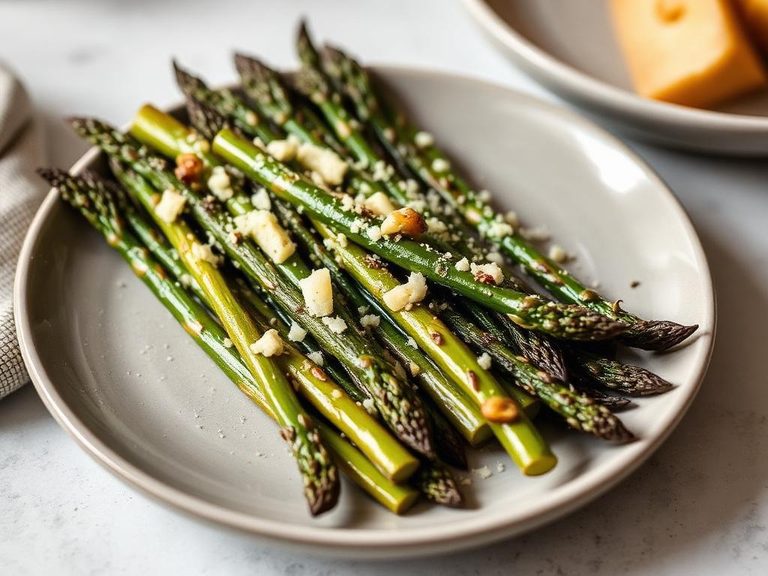

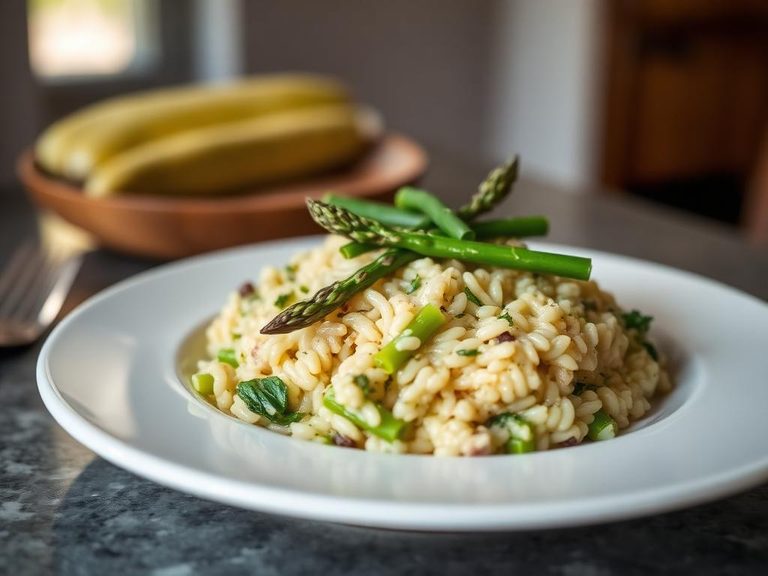
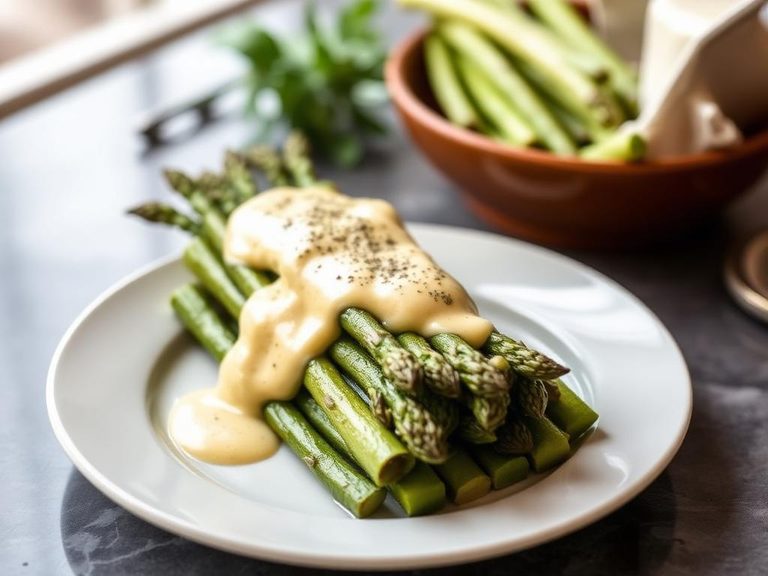
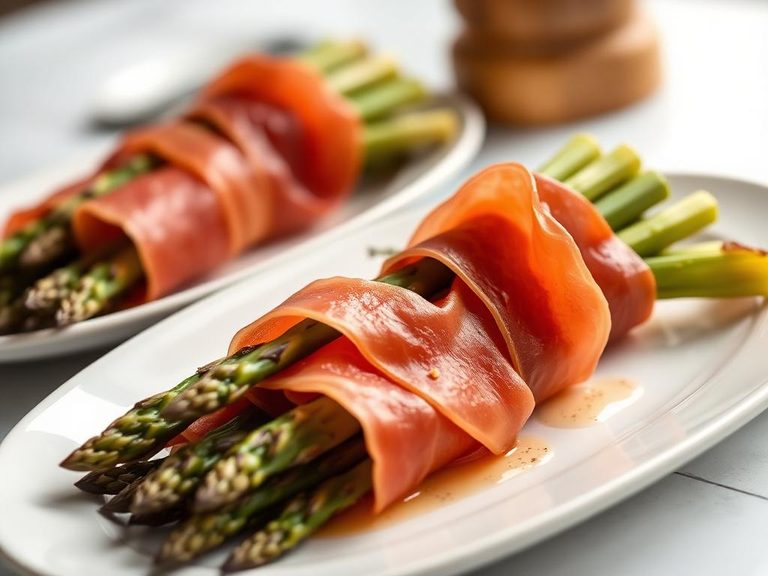
🌍 Where it's eaten
💡 Did you know?
Ancient Romans considered asparagus a delicacy and reportedly had a special word, 'sparagos,' for it, and even used frozen spears, transported via the Alps.
Full nutrition (USDA data · scales with serving)
| Water | 93.2 g |
| Energy | 20.0 kcal |
| Energy | 85.0 kj |
| Protein | 2.2 g |
| Total lipid (fat) | 0.12 g |
| Ash | 0.58 g |
| Carbohydrate, by difference | 3.9 g |
| Fiber, total dietary | 2.1 g |
| Total Sugars | 1.9 g |
| Sucrose | 0.23 g |
| Glucose | 0.65 g |
| Fructose | 1.0 g |
| Lactose | 0.00 g |
| Maltose | 0.00 g |
| Galactose | 0.00 g |
| Calcium, Ca | 24.0 mg |
| Iron, Fe | 2.1 mg |
| Magnesium, Mg | 14.0 mg |
| Phosphorus, P | 52.0 mg |
| Potassium, K | 202 mg |
| Sodium, Na | 2.0 mg |
| Zinc, Zn | 0.54 mg |
| Copper, Cu | 0.19 mg |
| Manganese, Mn | 0.16 mg |
| Selenium, Se | 2.3 ug |
| Vitamin C, total ascorbic acid | 5.6 mg |
| Thiamin | 0.14 mg |
| Riboflavin | 0.14 mg |
| Niacin | 0.98 mg |
| Pantothenic acid | 0.27 mg |
| Vitamin B-6 | 0.09 mg |
| Folate, total | 52.0 ug |
| Folic acid | 0.00 ug |
| Folate, food | 52.0 ug |
| Folate, DFE | 52.0 ug |
| Choline, total | 16.0 mg |
| Betaine | 0.60 mg |
| Vitamin B-12 | 0.00 ug |
| Vitamin B-12, added | 0.00 ug |
| Vitamin A, RAE | 38.0 ug |
| Retinol | 0.00 ug |
| Carotene, beta | 449 ug |
| Carotene, alpha | 9.0 ug |
| Cryptoxanthin, beta | 0.00 ug |
| Vitamin A, IU | 756 iu |
| Lycopene | 0.00 ug |
| Lutein + zeaxanthin | 710 ug |
| Vitamin E (alpha-tocopherol) | 1.1 mg |
| Vitamin E, added | 0.00 mg |
| Tocopherol, beta | 0.00 mg |
| Tocopherol, gamma | 0.09 mg |
| Tocopherol, delta | 0.00 mg |
| Vitamin D (D2 + D3), International Units | 0.00 iu |
| Vitamin D (D2 + D3) | 0.00 ug |
| Vitamin K (phylloquinone) | 41.6 ug |
| Vitamin K (Dihydrophylloquinone) | 0.00 ug |
| Alcohol, ethyl | 0.00 g |
| Caffeine | 0.00 mg |
| Theobromine | 0.00 mg |
Fat & fatty acid profile (per 100g)
| Fatty acids, total saturated | 0.04 g |
| SFA 4:0 | 0.00 g |
| SFA 6:0 | 0.00 g |
| SFA 8:0 | 0.00 g |
| SFA 10:0 | 0.00 g |
| SFA 12:0 | 0.00 g |
| SFA 14:0 | 0.00 g |
| SFA 15:0 | 0.00 g |
| SFA 16:0 | 0.04 g |
| SFA 17:0 | 0.00 g |
| SFA 18:0 | 0.00 g |
| SFA 20:0 | 0.00 g |
| SFA 22:0 | 0.00 g |
| SFA 24:0 | 0.00 g |
| Fatty acids, total monounsaturated | 0.00 g |
| MUFA 14:1 | 0.00 g |
| MUFA 15:1 | 0.00 g |
| MUFA 16:1 | 0.00 g |
| MUFA 17:1 | 0.00 g |
| MUFA 18:1 | 0.00 g |
| MUFA 20:1 | 0.00 g |
| MUFA 22:1 | 0.00 g |
| Fatty acids, total polyunsaturated | 0.05 g |
| PUFA 18:2 | 0.04 g |
| PUFA 18:3 | 0.01 g |
| PUFA 18:4 | 0.00 g |
| PUFA 20:2 n-6 c,c | 0.00 g |
| PUFA 20:3 | 0.00 g |
| PUFA 20:4 | 0.00 g |
| PUFA 20:5 n-3 (EPA) | 0.00 g |
| PUFA 22:5 n-3 (DPA) | 0.00 g |
| PUFA 22:6 n-3 (DHA) | 0.00 g |
| Fatty acids, total trans | 0.00 g |
| Cholesterol | 0.00 mg |
| Phytosterols | 24.0 mg |
Amino acid profile (per 100g)
| Tryptophan | 0.03 g |
| Threonine | 0.08 g |
| Isoleucine | 0.07 g |
| Leucine | 0.13 g |
| Lysine | 0.10 g |
| Methionine | 0.03 g |
| Cystine | 0.03 g |
| Phenylalanine | 0.07 g |
| Tyrosine | 0.05 g |
| Valine | 0.12 g |
| Arginine | 0.09 g |
| Histidine | 0.05 g |
| Alanine | 0.12 g |
| Aspartic acid | 0.51 g |
| Glutamic acid | 0.23 g |
| Glycine | 0.09 g |
| Proline | 0.07 g |
| Serine | 0.11 g |
FAQ
Why does asparagus make my urine smell?
The unique smell is caused by the breakdown of asparagusic acid into sulfur-containing compounds. Not everyone can smell it, and it's a harmless metabolic process.
How do I choose fresh asparagus?
Look for firm, straight stalks with tight, compact tips. The cut ends should look moist, not dried out or woody. Thinner spears are more tender; thicker ones are meatier.
What's the best way to store it?
Trim the woody ends, stand the spears upright in a jar with an inch of water, cover loosely with a plastic bag, and refrigerate. Alternatively, wrap the ends in a damp paper towel and place in a bag.
How do I remove the woody ends?
Hold a spear at both ends and gently bend it until it snaps naturally. The break point indicates where the tough, fibrous base ends and the tender part begins.
Nutrient density (calculated · NRF9.3)
Nutrient Rich Foods index: beneficial nutrients (protein, fiber, vitamins, minerals) minus saturated fat, added sugar & sodium, per 100 kcal.
NRF9.3 index — Fulgoni, Keast & Drewnowski, 2009. Computed from USDA nutrients.
Weight-loss friendliness (composite index)
Energy density 0.20 kcal/g · 44% calories from protein · 2.1 g fiber · 1.9 g sugar per 100 g.
Composite of energy density (Rolls et al., 1999), protein & fiber satiety, minus sugar. A calculated heuristic — ranks satiety-per-calorie, not a clinical measure.
Dietary load (calculated from USDA values)
Potential renal acid load. Positive = acid-forming, negative = alkaline-forming.
Sodium-to-potassium ratio: 0.01 (lower is better — aim for ≤ 1)
Sodium:potassium per WHO potassium guidance. Computed from USDA nutrients.