

Asparagus, cooked, boiled, drained
Whole food · Vegetables and Vegetable Products
Asparagus, once boiled and drained, transforms into tender-crisp, vibrant green spears with a delicate, earthy sweetness and a subtle grassy note. Its texture is a pleasant mix of a firm, snappy tip and a slightly more fibrous stalk. Nutritionally, it's a low-calorie powerhouse, delivering a solid dose of protein and fiber for its minimal energy footprint.
Calorie split: 34% protein · 59% carbs · 7% fat
↓ Full nutrition💚 Why it's loved
People cherish asparagus for its unique, refined flavor that signals the arrival of spring. It's celebrated for its incredible versatility, shining simply steamed with butter, grilled to a char, or elegantly wrapped in prosciutto.
⚠️ Watch-outs & how to enjoy it better
Some find its taste bitter or its smell in urine off-putting. Those prone to kidney stones should moderate intake due to its oxalate content. To mitigate, pair with calcium-rich foods like cheese or yogurt, which can bind oxalates in the digestive tract.
Key benefits
- Excellent source of folate (vitamin B9)
- Rich in vitamins K and C
- Provides prebiotic fiber for gut health
- Contains antioxidants like glutathione
- Naturally low in calories and fat
🍽️ Popular dishes

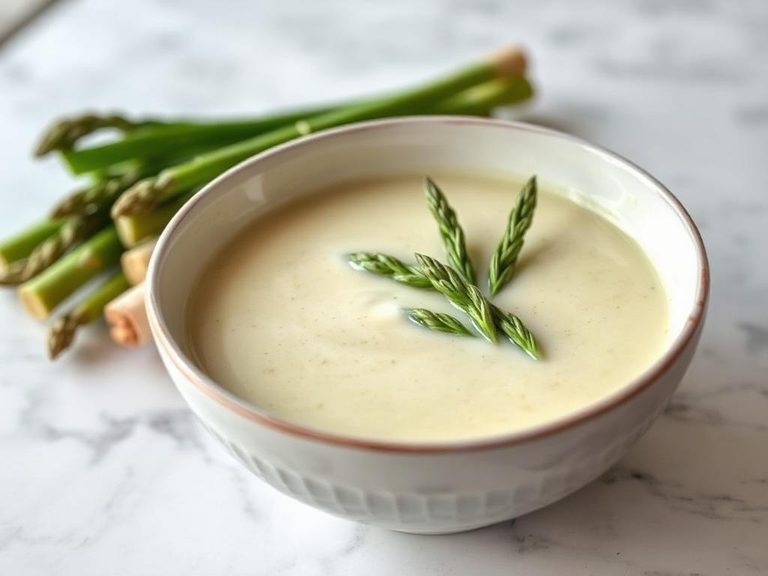
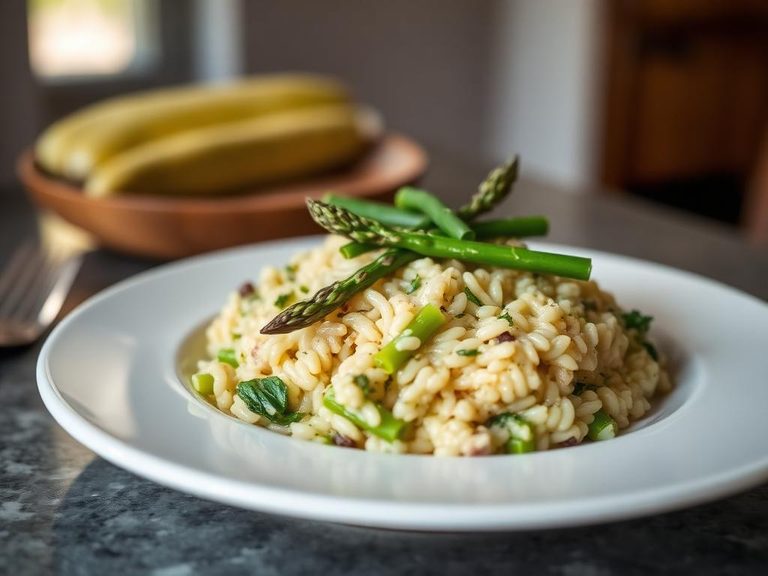
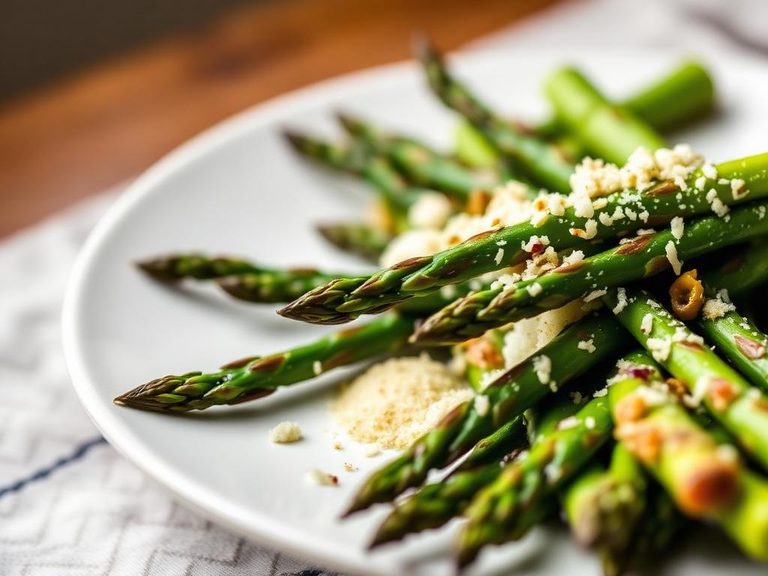
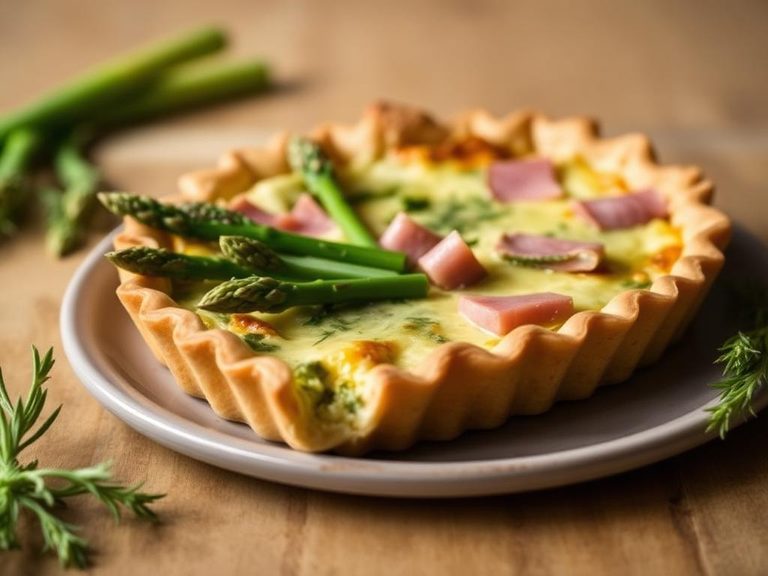
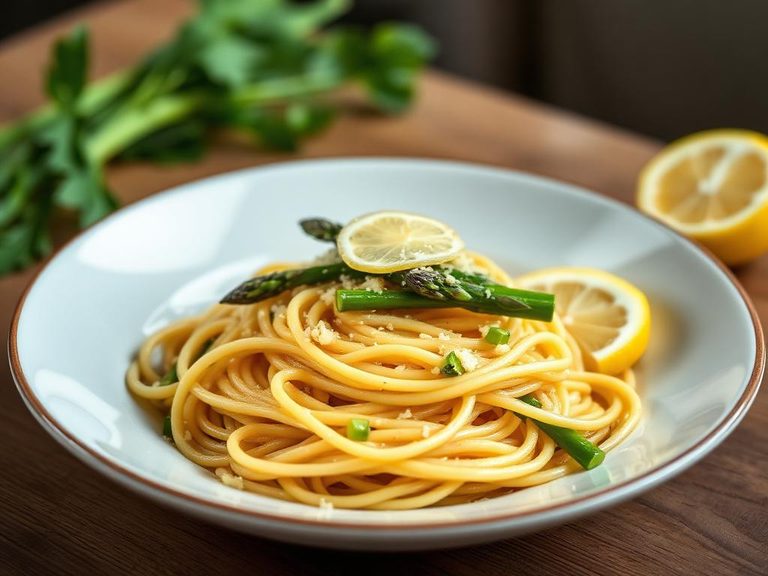
🌍 Where it's eaten
💡 Did you know?
A single asparagus spear can grow up to 10 inches in just 24 hours under ideal conditions.
Full nutrition (USDA data · scales with serving)
| Water | 92.6 g |
| Energy | 22.0 kcal |
| Energy | 94.0 kj |
| Protein | 2.4 g |
| Total lipid (fat) | 0.22 g |
| Ash | 0.63 g |
| Carbohydrate, by difference | 4.1 g |
| Fiber, total dietary | 2.0 g |
| Total Sugars | 1.3 g |
| Sucrose | 0.08 g |
| Glucose | 0.42 g |
| Fructose | 0.79 g |
| Lactose | 0.00 g |
| Maltose | 0.00 g |
| Galactose | 0.00 g |
| Starch | 0.00 g |
| Calcium, Ca | 23.0 mg |
| Iron, Fe | 0.91 mg |
| Magnesium, Mg | 14.0 mg |
| Phosphorus, P | 54.0 mg |
| Potassium, K | 224 mg |
| Sodium, Na | 14.0 mg |
| Zinc, Zn | 0.60 mg |
| Copper, Cu | 0.17 mg |
| Manganese, Mn | 0.15 mg |
| Selenium, Se | 6.1 ug |
| Fluoride, F | 21.9 ug |
| Vitamin C, total ascorbic acid | 7.7 mg |
| Thiamin | 0.16 mg |
| Riboflavin | 0.14 mg |
| Niacin | 1.1 mg |
| Pantothenic acid | 0.23 mg |
| Vitamin B-6 | 0.08 mg |
| Folate, total | 149 ug |
| Folic acid | 0.00 ug |
| Folate, food | 149 ug |
| Folate, DFE | 149 ug |
| Choline, total | 26.1 mg |
| Betaine | 0.90 mg |
| Vitamin B-12 | 0.00 ug |
| Vitamin B-12, added | 0.00 ug |
| Vitamin A, RAE | 50.0 ug |
| Retinol | 0.00 ug |
| Carotene, beta | 604 ug |
| Carotene, alpha | 0.00 ug |
| Cryptoxanthin, beta | 0.00 ug |
| Vitamin A, IU | 1006 iu |
| Lycopene | 30.0 ug |
| Lutein + zeaxanthin | 771 ug |
| Vitamin E (alpha-tocopherol) | 1.5 mg |
| Vitamin E, added | 0.00 mg |
| Tocopherol, beta | 0.02 mg |
| Tocopherol, gamma | 0.21 mg |
| Tocopherol, delta | 0.00 mg |
| Vitamin D (D2 + D3), International Units | 0.00 iu |
| Vitamin D (D2 + D3) | 0.00 ug |
| Vitamin K (phylloquinone) | 50.6 ug |
| Vitamin K (Dihydrophylloquinone) | 0.00 ug |
| Alcohol, ethyl | 0.00 g |
| Caffeine | 0.00 mg |
| Theobromine | 0.00 mg |
Fat & fatty acid profile (per 100g)
| Fatty acids, total saturated | 0.05 g |
| SFA 4:0 | 0.00 g |
| SFA 6:0 | 0.00 g |
| SFA 8:0 | 0.00 g |
| SFA 10:0 | 0.00 g |
| SFA 12:0 | 0.00 g |
| SFA 14:0 | 0.00 g |
| SFA 15:0 | 0.00 g |
| SFA 16:0 | 0.05 g |
| SFA 17:0 | 0.00 g |
| SFA 18:0 | 0.00 g |
| SFA 20:0 | 0.00 g |
| SFA 22:0 | 0.00 g |
| SFA 24:0 | 0.00 g |
| Fatty acids, total monounsaturated | 0.00 g |
| MUFA 14:1 | 0.00 g |
| MUFA 15:1 | 0.00 g |
| MUFA 16:1 | 0.00 g |
| MUFA 17:1 | 0.00 g |
| MUFA 18:1 | 0.00 g |
| MUFA 20:1 | 0.00 g |
| MUFA 22:1 | 0.00 g |
| Fatty acids, total polyunsaturated | 0.10 g |
| PUFA 18:2 | 0.08 g |
| PUFA 18:3 | 0.03 g |
| PUFA 18:4 | 0.00 g |
| PUFA 20:2 n-6 c,c | 0.00 g |
| PUFA 20:3 | 0.00 g |
| PUFA 20:4 | 0.00 g |
| PUFA 20:5 n-3 (EPA) | 0.00 g |
| PUFA 22:5 n-3 (DPA) | 0.00 g |
| PUFA 22:6 n-3 (DHA) | 0.00 g |
| Fatty acids, total trans | 0.00 g |
| Cholesterol | 0.00 mg |
Amino acid profile (per 100g)
| Tryptophan | 0.03 g |
| Threonine | 0.09 g |
| Isoleucine | 0.08 g |
| Leucine | 0.14 g |
| Lysine | 0.11 g |
| Methionine | 0.03 g |
| Cystine | 0.03 g |
| Phenylalanine | 0.08 g |
| Tyrosine | 0.06 g |
| Valine | 0.13 g |
| Arginine | 0.10 g |
| Histidine | 0.05 g |
| Alanine | 0.13 g |
| Aspartic acid | 0.56 g |
| Glutamic acid | 0.26 g |
| Glycine | 0.10 g |
| Proline | 0.08 g |
| Serine | 0.12 g |
FAQ
The effect is caused by the breakdown of asparagusic acid, a sulfur-containing compound unique to asparagus, into volatile chemicals. Not everyone can smell it, and not everyone produces it.
Should I snap or cut the woody ends?
Snapping removes the naturally tough, inedible part where the stalk becomes fibrous. Cutting with a knife is more uniform and less wasteful; aim for about 1-2 inches from the bottom.
How do I keep cooked asparagus from getting mushy?
Blanch it quickly in boiling salted water, then immediately plunge into an ice bath to halt cooking. Pat dry thoroughly before sautéing or grilling to promote caramelization instead of steaming.
Nutrient density (calculated · NRF9.3)
Nutrient Rich Foods index: beneficial nutrients (protein, fiber, vitamins, minerals) minus saturated fat, added sugar & sodium, per 100 kcal.
NRF9.3 index — Fulgoni, Keast & Drewnowski, 2009. Computed from USDA nutrients.
Weight-loss friendliness (composite index)
Energy density 0.22 kcal/g · 44% calories from protein · 2.0 g fiber · 1.3 g sugar per 100 g.
Composite of energy density (Rolls et al., 1999), protein & fiber satiety, minus sugar. A calculated heuristic — ranks satiety-per-calorie, not a clinical measure.
Dietary load (calculated from USDA values)
Potential renal acid load. Positive = acid-forming, negative = alkaline-forming.
Sodium-to-potassium ratio: 0.06 (lower is better — aim for ≤ 1)
Sodium:potassium per WHO potassium guidance. Computed from USDA nutrients.