Sausage, chicken or turkey, Italian style, lower sodium
Whole food · Sausages and Luncheon Meats

Photo: Wikipedia
A lean, savory twist on classic Italian sausage, crafted from chicken or turkey to deliver a robust, herb-forward punch with significantly less fat. Its firm, juicy texture and aromatic blend of fennel, garlic, and paprika make it a flavorful staple for health-conscious cooks. With a high protein-to-calorie ratio and notably low fat, it’s a powerhouse for muscle maintenance without the heavy caloric load of traditional pork sausage.
💚 Why it's loved
People love it for delivering that authentic, herbaceous Italian sausage flavor without the guilt of high fat or excessive calories. It’s a kitchen workhorse that adapts to everything from breakfast scrambles to hearty pasta sauces, making healthy eating feel indulgent.
⚠️ Watch-outs & how to enjoy it better
The lower sodium content can sometimes result in a less intense, slightly muted flavor compared to full-sodium versions, which may disappoint those craving bold, salty notes. To counteract, pair it with acidic ingredients like tomatoes or lemon juice, or use it in dishes with other flavorful components like onions and peppers to boost overall taste.
Key benefits
- High protein content supports muscle repair and satiety
- Significantly lower fat than traditional pork sausage
- Versatile for grilling, sautéing, or baking
- Lower sodium option compared to many processed meats
- Rich in B vitamins, especially B12 and niacin
🍽️ Popular dishes
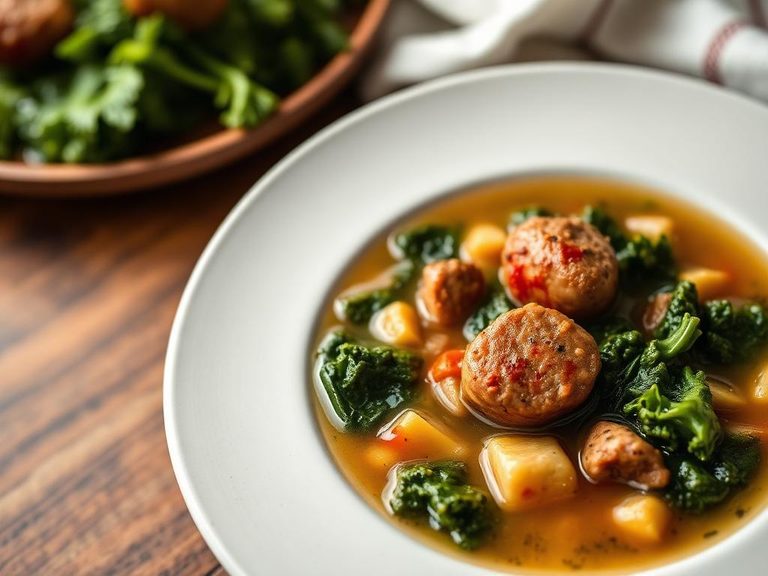
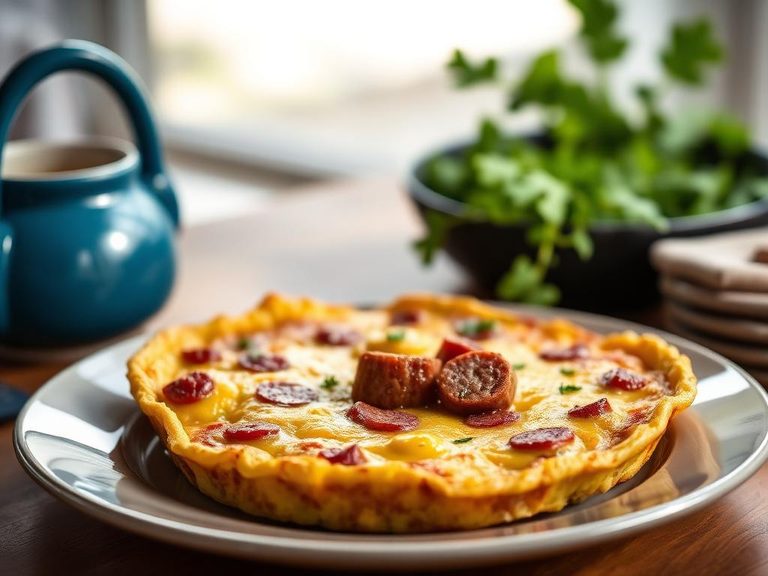
🌍 Where it's eaten
💡 Did you know?
The traditional Italian sausage seasoning blend often includes fennel seeds, which were believed in ancient times to aid digestion and freshen breath—making it a practical choice for a flavorful meal.
Full nutrition (scales with serving)
| Water | 56.0 g |
| Energy | 183 kcal |
| Energy | 765 kj |
| Protein | 21.4 g |
| Total lipid (fat) | 4.5 g |
| Ash | 3.9 g |
| Carbohydrate, by difference | 14.3 g |
| Fiber, total dietary | 0.00 g |
| Total Sugars | 0.81 g |
| Sucrose | 0.81 g |
| Glucose | 0.00 g |
| Fructose | 0.00 g |
| Lactose | 0.00 g |
| Maltose | 0.00 g |
| Galactose | 0.00 g |
| Calcium, Ca | 0.00 mg |
| Iron, Fe | 1.3 mg |
| Magnesium, Mg | 43.0 mg |
| Phosphorus, P | 286 mg |
| Potassium, K | 1062 mg |
| Sodium, Na | 446 mg |
| Zinc, Zn | 2.4 mg |
| Copper, Cu | 0.45 mg |
| Manganese, Mn | 0.58 mg |
| Selenium, Se | 31.3 ug |
| Fluoride, F | 22.4 ug |
| Vitamin C, total ascorbic acid | 0.00 mg |
| Thiamin | 0.40 mg |
| Riboflavin | 0.47 mg |
| Niacin | 12.9 mg |
| Pantothenic acid | 0.71 mg |
| Vitamin B-6 | 0.54 mg |
| Folate, total | 71.0 ug |
| Folic acid | 0.00 ug |
| Folate, food | 71.0 ug |
| Folate, DFE | 71.0 ug |
| Choline, total | 39.8 mg |
| Betaine | 5.9 mg |
| Vitamin B-12 | 0.15 ug |
| Vitamin B-12, added | 0.00 ug |
| Vitamin A, RAE | 0.00 ug |
| Retinol | 0.00 ug |
| Carotene, beta | 0.00 ug |
| Carotene, alpha | 0.00 ug |
| Cryptoxanthin, beta | 0.00 ug |
| Vitamin A, IU | 0.00 iu |
| Lycopene | 0.00 ug |
| Lutein + zeaxanthin | 0.00 ug |
| Vitamin E (alpha-tocopherol) | 1.4 mg |
| Vitamin E, added | 0.00 mg |
| Tocopherol, beta | 0.00 mg |
| Tocopherol, gamma | 0.06 mg |
| Tocopherol, delta | 0.00 mg |
| Tocotrienol, alpha | 0.00 mg |
| Tocotrienol, beta | 0.00 mg |
| Tocotrienol, gamma | 0.02 mg |
| Tocotrienol, delta | 0.00 mg |
| Vitamin D (D2 + D3), International Units | 5.0 iu |
| Vitamin D (D2 + D3) | 0.10 ug |
| Vitamin D3 (cholecalciferol) | 0.10 ug |
| Vitamin K (phylloquinone) | 34.8 ug |
| Vitamin K (Dihydrophylloquinone) | 0.00 ug |
| Vitamin K (Menaquinone-4) | 4.6 ug |
| Alcohol, ethyl | 0.00 g |
| Caffeine | 0.00 mg |
| Theobromine | 0.00 mg |
Fat & fatty acid profile (per 100g)
| Fatty acids, total saturated | 0.89 g |
| SFA 4:0 | 0.00 g |
| SFA 6:0 | 0.00 g |
| SFA 8:0 | 0.00 g |
| SFA 10:0 | 0.00 g |
| SFA 12:0 | 0.00 g |
| SFA 14:0 | 0.02 g |
| SFA 15:0 | 0.00 g |
| SFA 16:0 | 0.67 g |
| SFA 17:0 | 0.00 g |
| SFA 18:0 | 0.19 g |
| SFA 20:0 | 0.00 g |
| SFA 22:0 | 0.00 g |
| SFA 24:0 | 0.00 g |
| Fatty acids, total monounsaturated | 1.8 g |
| MUFA 14:1 | 0.01 g |
| MUFA 15:1 | 0.00 g |
| MUFA 16:1 | 0.25 g |
| MUFA 17:1 | 0.00 g |
| MUFA 18:1 | 1.5 g |
| MUFA 20:1 | 0.02 g |
| MUFA 22:1 | 0.00 g |
| MUFA 24:1 c | 0.00 g |
| Fatty acids, total polyunsaturated | 1.5 g |
| PUFA 18:2 | 1.3 g |
| PUFA 18:3 | 0.09 g |
| PUFA 18:4 | 0.00 g |
| PUFA 20:2 n-6 c,c | 0.01 g |
| PUFA 20:3 | 0.01 g |
| PUFA 20:4 | 0.05 g |
| PUFA 20:5 n-3 (EPA) | 0.00 g |
| PUFA 22:4 | 0.01 g |
| PUFA 22:5 n-3 (DPA) | 0.01 g |
| PUFA 22:6 n-3 (DHA) | 0.00 g |
| Fatty acids, total trans | 0.02 g |
| Cholesterol | 36.0 mg |
| Phytosterols | 0.00 mg |
Amino acid profile (per 100g)
| Tryptophan | 0.18 g |
| Threonine | 0.65 g |
| Isoleucine | 0.63 g |
| Leucine | 1.1 g |
| Lysine | 1.1 g |
| Methionine | 0.34 g |
| Cystine | 0.21 g |
| Phenylalanine | 0.55 g |
| Tyrosine | 0.47 g |
| Valine | 0.69 g |
| Arginine | 0.92 g |
| Histidine | 0.39 g |
| Alanine | 0.79 g |
| Aspartic acid | 1.7 g |
| Glutamic acid | 2.3 g |
| Glycine | 0.64 g |
| Proline | 0.62 g |
| Serine | 0.61 g |
FAQ
Is lower sodium Italian sausage still flavorful?
Yes, it retains the classic herb-forward taste of fennel, garlic, and paprika, though it may be slightly less salty. Cooking it with aromatic vegetables or acidic ingredients can enhance its flavor profile.
Can I use this sausage in recipes that call for pork sausage?
Absolutely. It works as a direct substitute in most recipes, offering a leaner option without sacrificing the essential Italian sausage character.
How does the nutrition compare to regular Italian sausage?
It has significantly less fat and fewer calories, while maintaining a high protein content. The lower sodium version also reduces salt intake, making it a heart-healthier choice.