CRACKER BARREL, steak fries
Whole food · Restaurant Foods

Photo: Wikipedia
Cracker Barrel's steak fries are thick-cut, wedge-shaped potatoes, deep-fried to a golden crisp on the outside while remaining fluffy and starchy inside. They deliver a satisfying, hearty crunch with a subtle potato sweetness, often seasoned with a light salt. Nutritionally, they are a significant source of carbohydrates and fats, providing quick energy but with a moderate calorie density.
💚 Why it's loved
People love steak fries for their hearty, substantial texture that offers a more potato-forward experience than thinner cuts. They are a versatile canvas for dipping sauces and a staple comfort food that evokes a casual, satisfying American dining experience.
⚠️ Watch-outs & how to enjoy it better
As a deep-fried food, they are high in fats and calories, which can contribute to weight gain if consumed in excess. The high glycemic load from the starchy potato can cause blood-sugar spikes, making portion control important for those monitoring their intake. To counteract this, pair them with a protein-rich dish like grilled chicken or a fiber-rich side salad to slow digestion.
Key benefits
- Provides quick energy from carbohydrates
- Source of dietary fiber from potato skin
- Contains potassium from whole potatoes
- Offers a satisfying, crunchy texture
- A familiar comfort food side dish
🍽️ Popular dishes
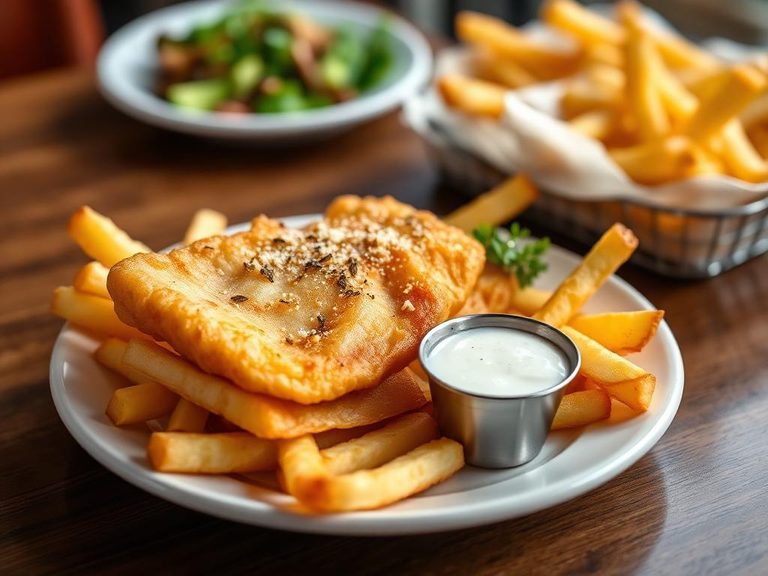
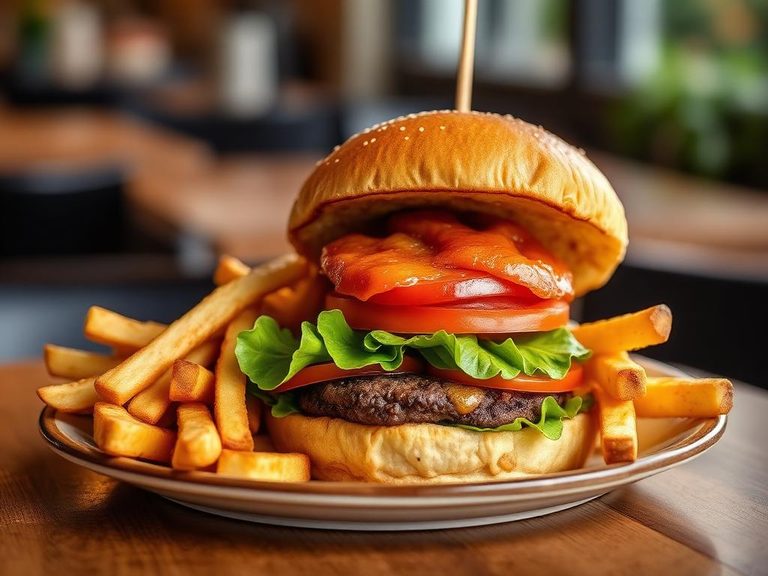
🌍 Where it's eaten
💡 Did you know?
The term 'steak fry' in the U.S. often refers specifically to thick-cut, wedge-style fries, distinguishing them from the thinner 'shoestring' or 'French' fries.
Full nutrition (scales with serving)
| Water | 51.3 g |
| Energy | 255 kcal |
| Energy | 1068 kj |
| Protein | 3.3 g |
| Total lipid (fat) | 13.2 g |
| Ash | 1.4 g |
| Carbohydrate, by difference | 30.9 g |
| Fiber, total dietary | 3.5 g |
| Total Sugars | 0.86 g |
| Sucrose | 0.28 g |
| Glucose | 0.33 g |
| Fructose | 0.25 g |
| Lactose | 0.00 g |
| Maltose | 0.00 g |
| Galactose | 0.00 g |
| Starch | 27.6 g |
| Calcium, Ca | 19.0 mg |
| Iron, Fe | 0.69 mg |
| Magnesium, Mg | 32.0 mg |
| Phosphorus, P | 117 mg |
| Potassium, K | 551 mg |
| Sodium, Na | 43.0 mg |
| Zinc, Zn | 0.42 mg |
| Copper, Cu | 0.12 mg |
| Manganese, Mn | 0.18 mg |
| Vitamin C, total ascorbic acid | 0.90 mg |
| Thiamin | 0.12 mg |
| Riboflavin | 0.06 mg |
| Niacin | 2.4 mg |
| Pantothenic acid | 0.63 mg |
| Vitamin B-6 | 0.24 mg |
| Folate, total | 29.0 ug |
| Folate, food | 29.0 ug |
| Vitamin E (alpha-tocopherol) | 1.3 mg |
| Tocopherol, beta | 0.12 mg |
| Tocopherol, gamma | 5.8 mg |
| Tocopherol, delta | 2.3 mg |
| Tocotrienol, alpha | 0.02 mg |
| Tocotrienol, beta | 0.00 mg |
| Tocotrienol, gamma | 0.00 mg |
| Tocotrienol, delta | 0.00 mg |
| Vitamin K (phylloquinone) | 32.1 ug |
| Vitamin K (Dihydrophylloquinone) | 0.00 ug |
Fat & fatty acid profile (per 100g)
| Fatty acids, total saturated | 2.4 g |
| SFA 4:0 | 0.00 g |
| SFA 6:0 | 0.00 g |
| SFA 8:0 | 0.01 g |
| SFA 10:0 | 0.01 g |
| SFA 12:0 | 0.00 g |
| SFA 14:0 | 0.02 g |
| SFA 15:0 | 0.00 g |
| SFA 16:0 | 1.4 g |
| SFA 17:0 | 0.01 g |
| SFA 18:0 | 0.77 g |
| SFA 20:0 | 0.05 g |
| SFA 22:0 | 0.04 g |
| SFA 24:0 | 0.02 g |
| Fatty acids, total monounsaturated | 3.2 g |
| MUFA 14:1 | 0.00 g |
| MUFA 15:1 | 0.00 g |
| MUFA 16:1 | 0.02 g |
| MUFA 16:1 c | 0.02 g |
| MUFA 17:1 | 0.01 g |
| MUFA 18:1 | 3.1 g |
| MUFA 18:1 c | 3.0 g |
| MUFA 20:1 | 0.05 g |
| MUFA 22:1 | 0.01 g |
| MUFA 22:1 c | 0.00 g |
| MUFA 24:1 c | 0.00 g |
| Fatty acids, total polyunsaturated | 6.8 g |
| PUFA 18:2 | 6.0 g |
| PUFA 18:2 n-6 c,c | 5.9 g |
| PUFA 18:2 CLAs | 0.02 g |
| PUFA 18:3 | 0.81 g |
| PUFA 18:3 n-3 c,c,c (ALA) | 0.75 g |
| PUFA 18:3 n-6 c,c,c | 0.06 g |
| PUFA 18:3i | 0.00 g |
| PUFA 18:4 | 0.00 g |
| PUFA 20:2 n-6 c,c | 0.01 g |
| PUFA 20:3 | 0.00 g |
| PUFA 20:3 n-3 | 0.00 g |
| PUFA 20:3 n-6 | 0.00 g |
| PUFA 20:4 | 0.01 g |
| PUFA 20:5 n-3 (EPA) | 0.00 g |
| PUFA 22:4 | 0.00 g |
| PUFA 22:5 n-3 (DPA) | 0.00 g |
| PUFA 22:6 n-3 (DHA) | 0.00 g |
| Fatty acids, total trans | 0.10 g |
| Fatty acids, total trans-monoenoic | 0.03 g |
| TFA 16:1 t | 0.00 g |
| TFA 18:1 t | 0.03 g |
| TFA 22:1 t | 0.00 g |
| TFA 18:2 t not further defined | 0.07 g |
| Fatty acids, total trans-polyenoic | 0.07 g |
| Cholesterol | 0.00 mg |
| Stigmasterol | 5.0 mg |
| Campesterol | 7.0 mg |
| Beta-sitosterol | 19.0 mg |
Amino acid profile (per 100g)
| Tryptophan | 0.04 g |
| Threonine | 0.09 g |
| Isoleucine | 0.10 g |
| Leucine | 0.14 g |
| Lysine | 0.12 g |
| Methionine | 0.04 g |
| Cystine | 0.03 g |
| Phenylalanine | 0.13 g |
| Tyrosine | 0.09 g |
| Valine | 0.15 g |
| Arginine | 0.17 g |
| Histidine | 0.05 g |
| Alanine | 0.09 g |
| Aspartic acid | 0.65 g |
| Glutamic acid | 0.47 g |
| Glycine | 0.08 g |
| Proline | 0.09 g |
| Serine | 0.10 g |
FAQ
What makes steak fries different from regular French fries?
Steak fries are cut thicker, often as wedges or slabs, which gives them a crisp exterior and a soft, fluffy interior. Regular French fries are typically thinner and cut into sticks.
Are steak fries healthier than regular fries?
Not necessarily. While the thicker cut means a higher potato-to-oil ratio by surface area, they are still deep-fried and high in fat and calories. The nutritional difference is often minimal.
Can I make a healthier version at home?
Yes. You can cut potatoes into wedges, toss them with a small amount of oil and seasonings, and bake them in an oven or air fryer until crispy. This significantly reduces the fat content compared to deep-frying.