

Soup, SWANSON, beef broth, lower sodium
Whole food · Soups, Sauces, and Gravies

Photo: Wikipedia
Swanson's lower sodium beef broth is a clear, savory liquid with a deep amber hue and a rich, meaty aroma. Its texture is thin and watery, designed to be a foundational cooking liquid rather than a standalone soup. With only 6 kcal per 100g, it provides a significant flavor boost with minimal calories, making it a cornerstone for building low-calorie, high-umami dishes.
Calorie split: 75% protein · 13% carbs · 11% fat
↓ Full nutrition💚 Why it's loved
People love it as a convenient, flavor-packed secret weapon that can transform a simple pan sauce or pot of rice into something deeply savory. Its clean, robust beef flavor is a nostalgic taste of home cooking, providing a quick shortcut to complex flavor without the hours of simmering bones.
⚠️ Watch-outs & how to enjoy it better
The primary caution is its sodium content; even the 'lower sodium' version contains a meaningful amount per serving, which can be a concern for those managing blood pressure or fluid retention. To counteract this, use it as a flavor accent rather than the primary liquid, and pair it with potassium-rich vegetables like spinach or potatoes to help balance electrolytes. It is also a processed product and may contain allergens like soy or wheat derivatives, so always check the label.
Key benefits
- Extremely low calorie density for flavor enhancement.
- Significantly reduced sodium content compared to regular broth.
- Provides a small amount of complete protein.
- Versatile base for soups, stews, and sauces.
- Adds umami depth without added fat or sugar.
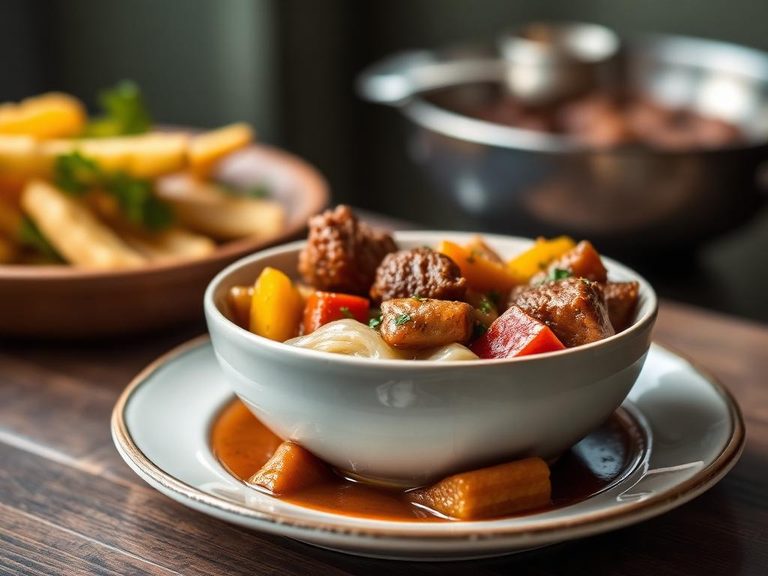
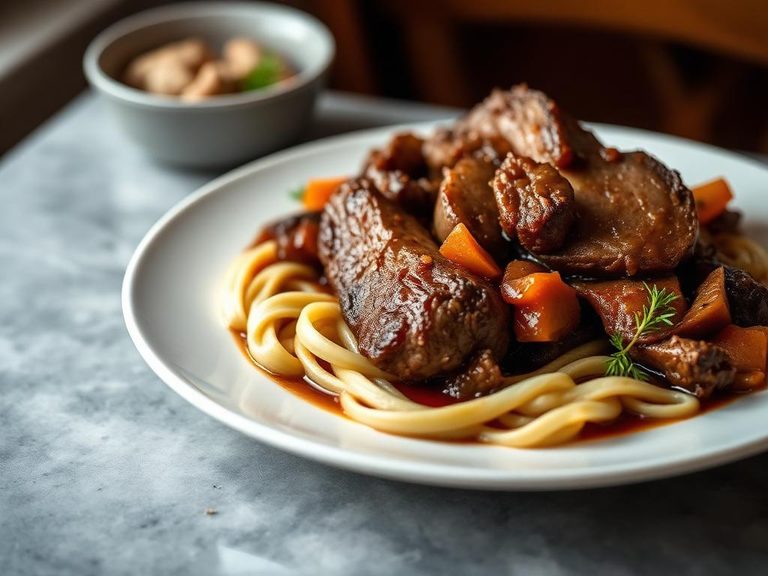
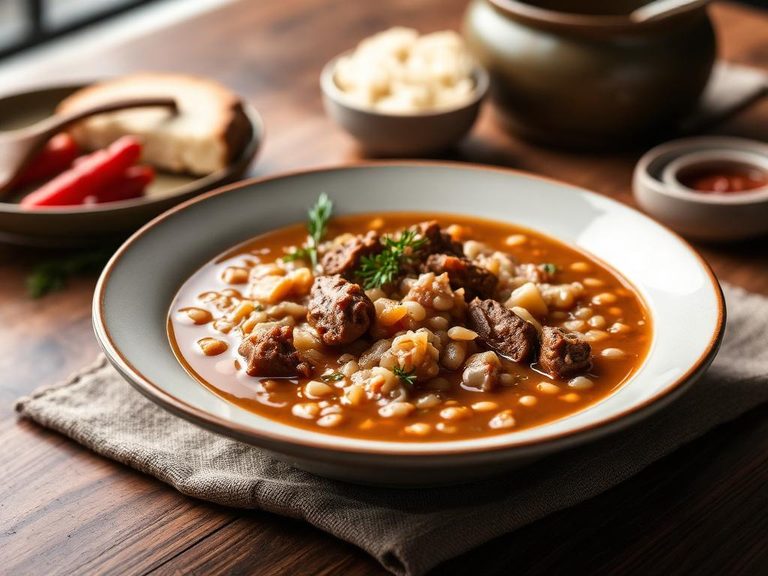
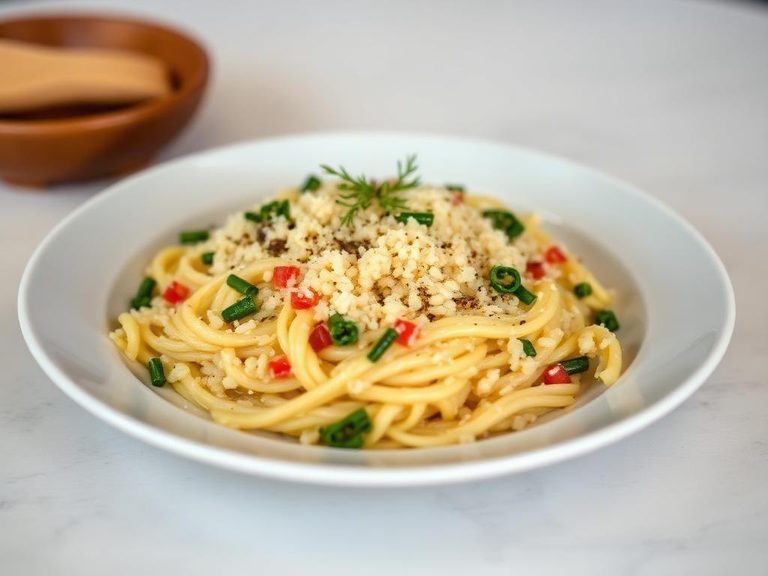
🍽️ Popular dishes

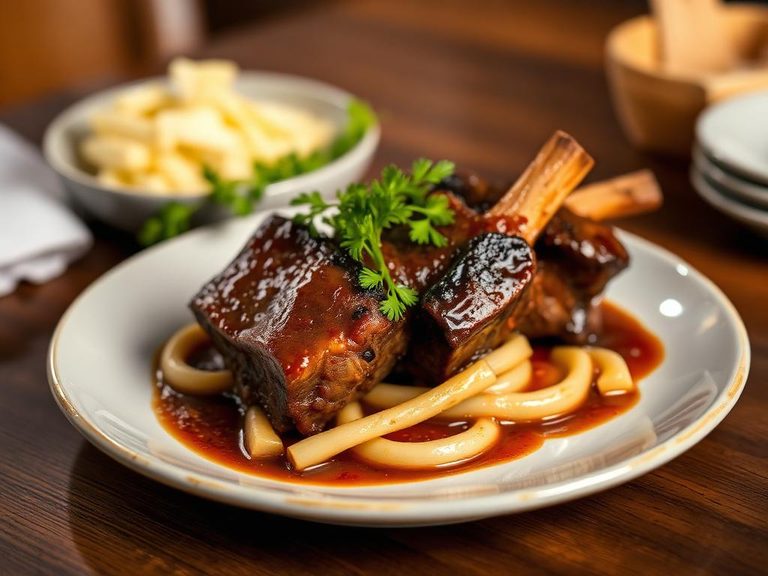
🌍 Where it's eaten
💡 Did you know?
The classic 'Swanson' brand was instrumental in popularizing the TV dinner, and its broth was the original cooking liquid used to steam the turkey in those iconic foil trays.
Full nutrition (USDA data · scales with serving)
| Water | 98.0 g |
| Energy | 6.0 kcal |
| Energy | 27.0 kj |
| Protein | 1.2 g |
| Total lipid (fat) | 0.08 g |
| Ash | 0.50 g |
| Carbohydrate, by difference | 0.21 g |
| Total Sugars | 0.20 g |
| Sucrose | 0.00 g |
| Glucose | 0.20 g |
| Fructose | 0.00 g |
| Lactose | 0.00 g |
| Maltose | 0.00 g |
| Galactose | 0.00 g |
| Calcium, Ca | 2.0 mg |
| Iron, Fe | 0.04 mg |
| Magnesium, Mg | 1.0 mg |
| Phosphorus, P | 10.0 mg |
| Potassium, K | 23.0 mg |
| Sodium, Na | 180 mg |
| Zinc, Zn | 0.32 mg |
| Copper, Cu | 0.01 mg |
| Manganese, Mn | 0.01 mg |
| Selenium, Se | 0.00 ug |
| Thiamin | 0.02 mg |
| Riboflavin | 0.09 mg |
| Niacin | 0.50 mg |
| Pantothenic acid | 0.05 mg |
| Vitamin B-6 | 0.11 mg |
| Vitamin B-12 | 0.00 ug |
| Vitamin A, RAE | 0.00 ug |
| Retinol | 0.00 ug |
| Vitamin A, IU | 0.00 iu |
| Vitamin E (alpha-tocopherol) | 0.00 mg |
| Tocopherol, beta | 0.00 mg |
| Tocopherol, gamma | 0.00 mg |
| Tocopherol, delta | 0.00 mg |
| Tocotrienol, alpha | 0.00 mg |
| Tocotrienol, beta | 0.00 mg |
| Tocotrienol, gamma | 0.00 mg |
| Tocotrienol, delta | 0.00 mg |
Fat & fatty acid profile (per 100g)
| Fatty acids, total saturated | 0.03 g |
| SFA 4:0 | 0.00 g |
| SFA 6:0 | 0.00 g |
| SFA 8:0 | 0.00 g |
| SFA 10:0 | 0.00 g |
| SFA 12:0 | 0.00 g |
| SFA 14:0 | 0.00 g |
| SFA 15:0 | 0.00 g |
| SFA 16:0 | 0.01 g |
| SFA 17:0 | 0.00 g |
| SFA 18:0 | 0.01 g |
| SFA 20:0 | 0.00 g |
| SFA 22:0 | 0.00 g |
| SFA 24:0 | 0.00 g |
| Fatty acids, total monounsaturated | 0.01 g |
| MUFA 14:1 | 0.00 g |
| MUFA 15:1 | 0.00 g |
| MUFA 16:1 | 0.00 g |
| MUFA 16:1 c | 0.00 g |
| MUFA 17:1 | 0.00 g |
| MUFA 18:1 | 0.01 g |
| MUFA 18:1 c | 0.01 g |
| MUFA 20:1 | 0.00 g |
| MUFA 22:1 | 0.00 g |
| MUFA 22:1 c | 0.00 g |
| MUFA 24:1 c | 0.00 g |
| Fatty acids, total polyunsaturated | 0.00 g |
| PUFA 18:2 | 0.00 g |
| PUFA 18:2 n-6 c,c | 0.00 g |
| PUFA 18:2 CLAs | 0.00 g |
| PUFA 18:3 | 0.00 g |
| PUFA 18:3 n-3 c,c,c (ALA) | 0.00 g |
| PUFA 18:3 n-6 c,c,c | 0.00 g |
| PUFA 18:3i | 0.00 g |
| PUFA 18:4 | 0.00 g |
| PUFA 20:2 n-6 c,c | 0.00 g |
| PUFA 20:3 | 0.00 g |
| PUFA 20:3 n-3 | 0.00 g |
| PUFA 20:3 n-6 | 0.00 g |
| PUFA 20:4 | 0.00 g |
| PUFA 20:5 n-3 (EPA) | 0.00 g |
| PUFA 22:4 | 0.00 g |
| PUFA 22:5 n-3 (DPA) | 0.00 g |
| PUFA 22:6 n-3 (DHA) | 0.00 g |
| Fatty acids, total trans | 0.00 g |
| Fatty acids, total trans-monoenoic | 0.00 g |
| TFA 16:1 t | 0.00 g |
| TFA 18:1 t | 0.00 g |
| TFA 22:1 t | 0.00 g |
| TFA 18:2 t not further defined | 0.00 g |
| Fatty acids, total trans-polyenoic | 0.00 g |
| Cholesterol | 0.00 mg |
Amino acid profile (per 100g)
Estimated from Soup, bean with pork, canned, condensed — USDA does not publish this profile for Soup.
| Tryptophan | 0.06 g |
| Threonine | 0.24 g |
| Isoleucine | 0.29 g |
| Leucine | 0.48 g |
| Lysine | 0.40 g |
| Methionine | 0.07 g |
| Cystine | 0.07 g |
| Phenylalanine | 0.33 g |
| Tyrosine | 0.18 g |
| Valine | 0.32 g |
| Arginine | 0.31 g |
| Histidine | 0.15 g |
| Alanine | 0.29 g |
| Aspartic acid | 0.66 g |
| Glutamic acid | 1.1 g |
| Glycine | 0.28 g |
| Proline | 0.27 g |
| Serine | 0.29 g |
FAQ
Is lower sodium beef broth healthy?
It can be a healthy part of a diet as a low-calorie flavor enhancer, but it's still a processed food with added salt. Its healthiness depends on your overall sodium intake and how you use it—best as a component, not a main beverage.
Can I drink beef broth straight?
While it's safe to consume, it's quite salty and not typically enjoyed as a standalone drink. It's designed as a cooking ingredient. If you want a sippable broth, look for a dedicated 'sipping broth' product with even lower sodium.
How does it differ from stock?
Broth is typically made from meat and sometimes vegetables, simmered for a shorter time, resulting in a lighter flavor. Stock is primarily made from bones, simmered longer to extract collagen and minerals, giving it a richer body and mouthfeel. This product is a broth.
What's the best substitute?
A homemade beef stock or broth is ideal. In a pinch, you can use a high-quality bouillon paste or cube diluted with water, or a mushroom broth for a vegetarian umami alternative, though the flavor profile will differ.
Nutrient density (calculated · NRF9.3)
Nutrient Rich Foods index: beneficial nutrients (protein, fiber, vitamins, minerals) minus saturated fat, added sugar & sodium, per 100 kcal.
NRF9.3 index — Fulgoni, Keast & Drewnowski, 2009. Computed from USDA nutrients.
Weight-loss friendliness (composite index)
Energy density 0.06 kcal/g · 80% calories from protein · 0.0 g fiber · 0.2 g sugar per 100 g.
Composite of energy density (Rolls et al., 1999), protein & fiber satiety, minus sugar. A calculated heuristic — ranks satiety-per-calorie, not a clinical measure.
Dietary load (calculated from USDA values)
Potential renal acid load. Positive = acid-forming, negative = alkaline-forming.
Sodium-to-potassium ratio: 7.83 (lower is better — aim for ≤ 1)
Sodium:potassium per WHO potassium guidance. Computed from USDA nutrients.