

Sauce, barbecue, SWEET BABY RAY'S, original
Whole food · Soups, Sauces, and Gravies
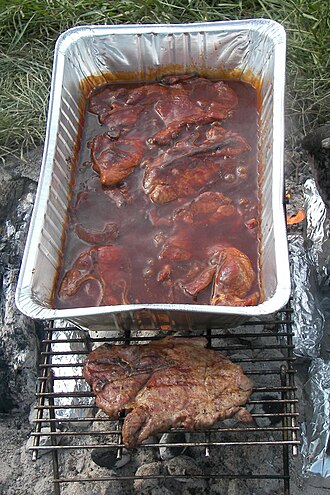
Photo: Wikipedia
Sweet Baby Ray's Original Barbecue Sauce is a thick, glossy, and richly flavored condiment with a deep mahogany hue. It delivers a signature balance of sweet, tangy, and smoky notes, with a smooth, clingy texture perfect for slathering. Nutritionally, it is a high-carbohydrate, high-sugar sauce, providing nearly all its 192 kcal per 100g from 46g of carbs, predominantly from 38g of sugar.
Calorie split: 2% protein · 96% carbs · 2% fat
↓ Full nutrition💚 Why it's loved
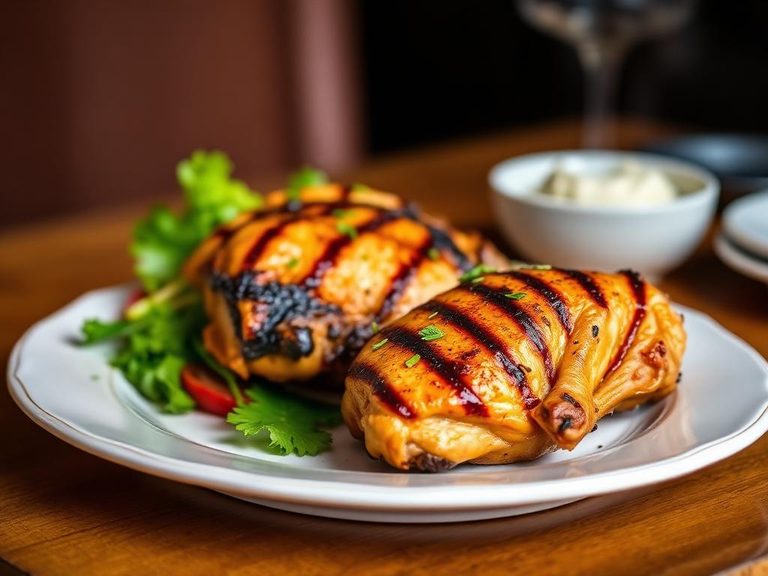
People love it for its iconic, crowd-pleasing taste that perfectly marries sweetness with a smoky tang, making it a staple for backyard barbecues. Its thick, clingy consistency is ideal for glazing ribs or chicken during the final minutes of cooking, creating a delicious, caramelized crust.
⚠️ Watch-outs & how to enjoy it better
The high sugar content (38g per 100g) can cause rapid blood-sugar spikes, making it a concern for diabetics or those monitoring glycemic response. To mitigate this, use it sparingly as a flavoring rather than a main sauce, and pair it with protein-rich foods like chicken breast or pork tenderloin to slow sugar absorption. It may also contain high-fructose corn syrup, a common ingredient some prefer to avoid.
Key benefits
- Adds intense flavor and moisture to grilled or smoked meats
- Provides quick energy from its carbohydrate content
- Versatile base for marinades, glazes, and dipping sauces
- Consistent, widely available flavor profile for home cooking
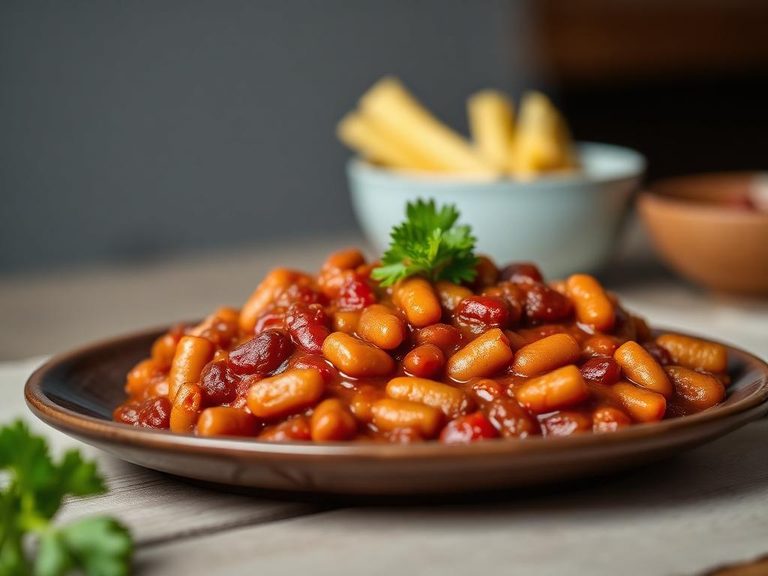
🍽️ Popular dishes
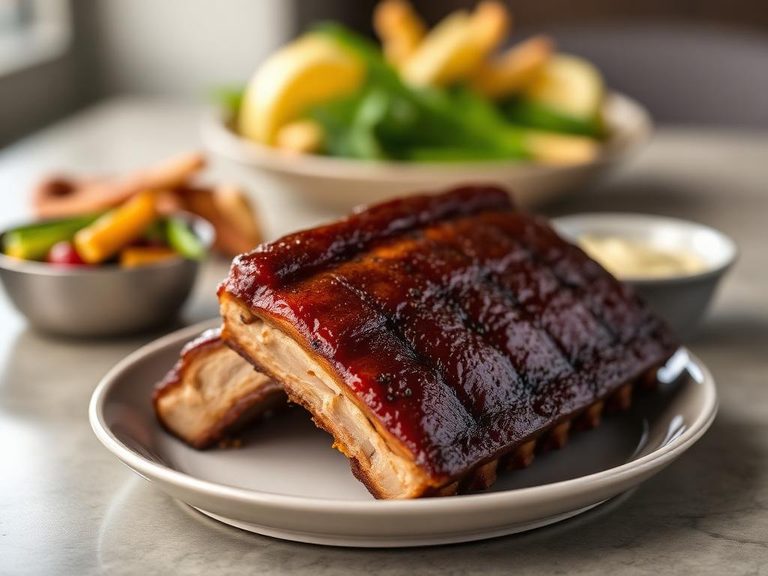
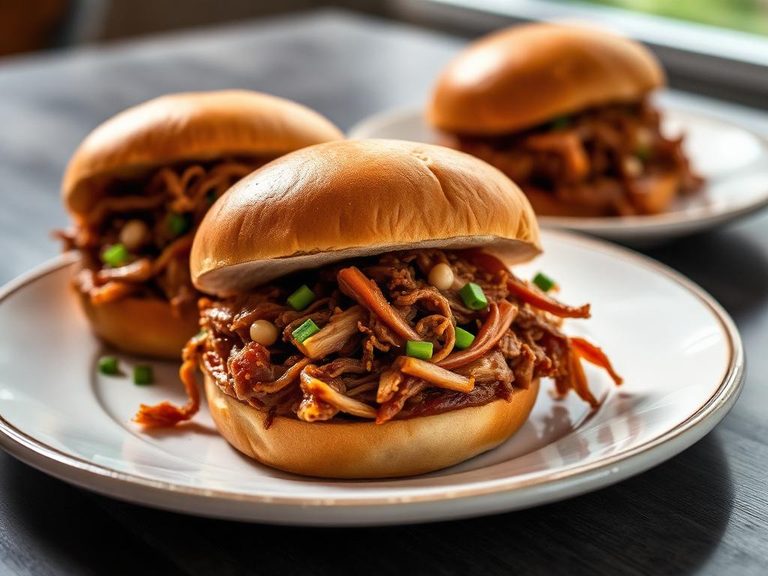
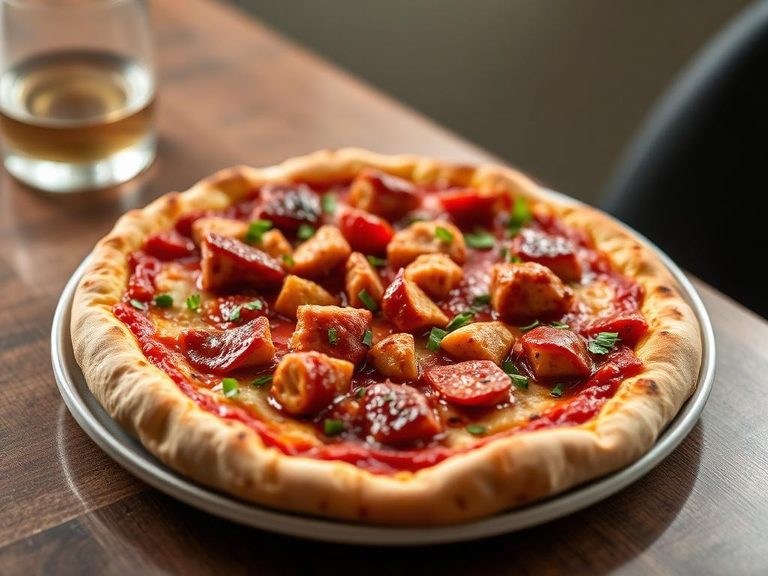

🌍 Where it's eaten
💡 Did you know?
The recipe was created by Chicago resident Larry Raymond in 1985 and won a local rib contest, leading to its commercial production and eventual acquisition by Kraft Heinz in 2014 for a reported $500 million.
Full nutrition (USDA data · scales with serving)
| Water | 50.1 g |
| Energy | 192 kcal |
| Energy | 803 kj |
| Protein | 0.95 g |
| Total lipid (fat) | 0.43 g |
| Ash | 2.4 g |
| Carbohydrate, by difference | 46.1 g |
| Fiber, total dietary | 1.3 g |
| Total Sugars | 38.4 g |
| Sucrose | 0.00 g |
| Glucose | 20.9 g |
| Fructose | 17.5 g |
| Lactose | 0.00 g |
| Maltose | 0.00 g |
| Galactose | 0.00 g |
| Starch | 0.20 g |
| Calcium, Ca | 11.0 mg |
| Iron, Fe | 0.33 mg |
| Magnesium, Mg | 11.0 mg |
| Phosphorus, P | 22.0 mg |
| Potassium, K | 235 mg |
| Sodium, Na | 765 mg |
| Zinc, Zn | 0.19 mg |
| Copper, Cu | 0.06 mg |
| Manganese, Mn | 0.11 mg |
| Vitamin C, total ascorbic acid | 1.4 mg |
| Thiamin | 0.02 mg |
| Riboflavin | 0.07 mg |
| Niacin | 0.74 mg |
| Pantothenic acid | 0.17 mg |
| Vitamin B-6 | 0.07 mg |
| Vitamin A, RAE | 14.0 ug |
| Carotene, beta | 164 ug |
| Carotene, alpha | 0.00 ug |
| Cryptoxanthin, beta | 0.00 ug |
| Vitamin A, IU | 274 iu |
| Lycopene | 7343 ug |
| Lutein + zeaxanthin | 129 ug |
| Vitamin E (alpha-tocopherol) | 1.1 mg |
| Tocopherol, beta | 0.03 mg |
| Tocopherol, gamma | 0.08 mg |
| Tocopherol, delta | 0.00 mg |
| Tocotrienol, alpha | 0.00 mg |
| Tocotrienol, beta | 0.00 mg |
| Tocotrienol, gamma | 0.00 mg |
| Tocotrienol, delta | 0.00 mg |
Fat & fatty acid profile (per 100g)
| Fatty acids, total saturated | 0.04 g |
| SFA 4:0 | 0.00 g |
| SFA 6:0 | 0.00 g |
| SFA 8:0 | 0.00 g |
| SFA 10:0 | 0.00 g |
| SFA 12:0 | 0.00 g |
| SFA 14:0 | 0.00 g |
| SFA 15:0 | 0.00 g |
| SFA 16:0 | 0.02 g |
| SFA 17:0 | 0.00 g |
| SFA 18:0 | 0.01 g |
| SFA 20:0 | 0.00 g |
| SFA 22:0 | 0.00 g |
| SFA 24:0 | 0.00 g |
| Fatty acids, total monounsaturated | 0.02 g |
| MUFA 14:1 | 0.00 g |
| MUFA 15:1 | 0.00 g |
| MUFA 16:1 | 0.00 g |
| MUFA 16:1 c | 0.00 g |
| MUFA 17:1 | 0.00 g |
| MUFA 18:1 | 0.01 g |
| MUFA 18:1 c | 0.01 g |
| MUFA 20:1 | 0.00 g |
| MUFA 22:1 | 0.01 g |
| MUFA 22:1 c | 0.01 g |
| MUFA 24:1 c | 0.00 g |
| Fatty acids, total polyunsaturated | 0.05 g |
| PUFA 18:2 | 0.04 g |
| PUFA 18:2 n-6 c,c | 0.04 g |
| PUFA 18:2 CLAs | 0.00 g |
| PUFA 18:3 | 0.01 g |
| PUFA 18:3 n-3 c,c,c (ALA) | 0.01 g |
| PUFA 18:3 n-6 c,c,c | 0.00 g |
| PUFA 18:4 | 0.00 g |
| PUFA 20:2 n-6 c,c | 0.00 g |
| PUFA 20:3 | 0.00 g |
| PUFA 20:3 n-3 | 0.00 g |
| PUFA 20:3 n-6 | 0.00 g |
| PUFA 20:4 | 0.00 g |
| PUFA 20:5 n-3 (EPA) | 0.00 g |
| PUFA 22:4 | 0.00 g |
| PUFA 22:5 n-3 (DPA) | 0.00 g |
| PUFA 22:6 n-3 (DHA) | 0.00 g |
| Fatty acids, total trans | 0.00 g |
| Fatty acids, total trans-monoenoic | 0.00 g |
| TFA 16:1 t | 0.00 g |
| TFA 18:1 t | 0.00 g |
| TFA 22:1 t | 0.00 g |
| TFA 18:2 t not further defined | 0.00 g |
| Fatty acids, total trans-polyenoic | 0.00 g |
Amino acid profile (per 100g)
Estimated from Sauce, homemade, white, medium — USDA does not publish this profile for Sauce.
| Tryptophan | 0.04 g |
| Threonine | 0.14 g |
| Isoleucine | 0.19 g |
| Leucine | 0.30 g |
| Lysine | 0.24 g |
| Methionine | 0.08 g |
| Cystine | 0.03 g |
| Phenylalanine | 0.15 g |
| Tyrosine | 0.15 g |
| Valine | 0.20 g |
| Arginine | 0.11 g |
| Histidine | 0.08 g |
| Alanine | 0.10 g |
| Aspartic acid | 0.23 g |
| Glutamic acid | 0.64 g |
| Glycine | 0.07 g |
| Proline | 0.30 g |
| Serine | 0.17 g |
FAQ
Is Sweet Baby Ray's gluten-free?
The original flavor is generally considered gluten-free, but always check the label for the most current formulation and allergen warnings, as manufacturing processes can change.
Can I use it as a marinade?
Yes, it's excellent as a marinade base. However, its high sugar content means it can burn quickly on the grill. For best results, marinate the meat for 1-2 hours, then grill over indirect heat, applying the sauce only in the last 10-15 minutes.
How does it compare to other BBQ sauces?
Sweet Baby Ray's is known for being sweeter and thicker than many vinegar-based or mustard-based regional sauces. It's a classic 'tomato-based' style, similar to Kansas City barbecue sauce.
Nutrient density (calculated · NRF9.3)
Nutrient Rich Foods index: beneficial nutrients (protein, fiber, vitamins, minerals) minus saturated fat, added sugar & sodium, per 100 kcal.
NRF9.3 index — Fulgoni, Keast & Drewnowski, 2009. Computed from USDA nutrients.
Weight-loss friendliness (composite index)
Energy density 1.92 kcal/g · 2% calories from protein · 1.3 g fiber · 38.4 g sugar per 100 g.
Composite of energy density (Rolls et al., 1999), protein & fiber satiety, minus sugar. A calculated heuristic — ranks satiety-per-calorie, not a clinical measure.
Dietary load (calculated from USDA values)
Potential renal acid load. Positive = acid-forming, negative = alkaline-forming.
Sodium-to-potassium ratio: 3.26 (lower is better — aim for ≤ 1)
Sodium:potassium per WHO potassium guidance. Computed from USDA nutrients.