

Pork, fresh, leg (ham), shank half, separable lean and fat, raw
Whole food · Pork Products
This cut is the lower portion of the pork leg, a robust, well-exercised muscle that delivers a deep, savory pork flavor and a firm, meaty texture when raw. Nutritionally, it's a powerhouse of high-quality protein with a moderate fat content, making it a substantial and satisfying base for hearty meals. Its leanness compared to other pork cuts makes it a versatile choice for both quick-cooking and slow-braising preparations.
Calorie split: 42% protein · 0% carbs · 58% fat
↓ Full nutrition💚 Why it's loved
People love this cut for its pronounced, classic pork flavor and its ability to become incredibly tender and succulent when cooked properly. Its versatility allows it to shine in everything from simple pan-seared steaks to complex, slow-roasted dishes that fill the home with an irresistible aroma.
⚠️ Watch-outs & how to enjoy it better
Due to its leanness, it can become dry and tough if overcooked, which is a common pitfall for inexperienced cooks. To counteract this, it benefits greatly from brining, marinating, or low-and-slow cooking methods like braising to break down connective tissue and retain moisture.
Key benefits
- Excellent source of complete protein for muscle maintenance and repair.
- Rich in essential B vitamins, particularly thiamine (B1) and niacin (B3), for energy metabolism.
- Provides important minerals like selenium and phosphorus.
- A leaner cut than many pork options, supporting balanced fat intake.
🍽️ Popular dishes
🌍 Where it's eaten
💡 Did you know?
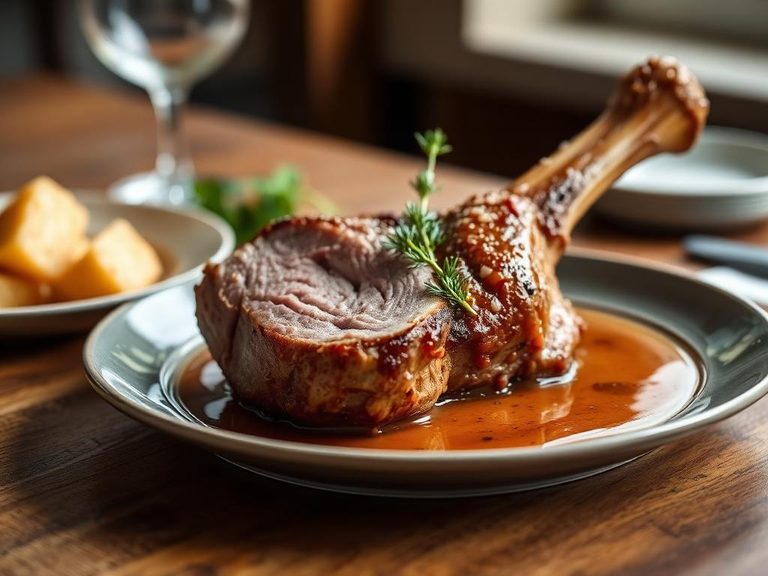
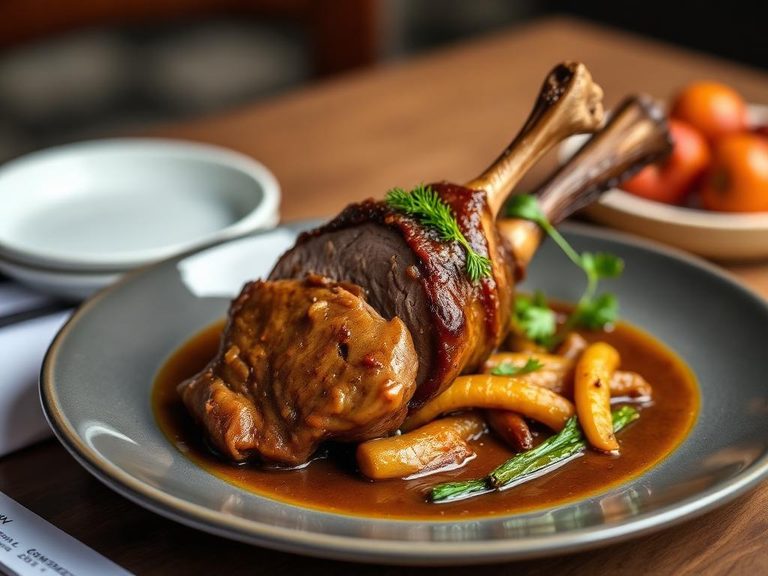
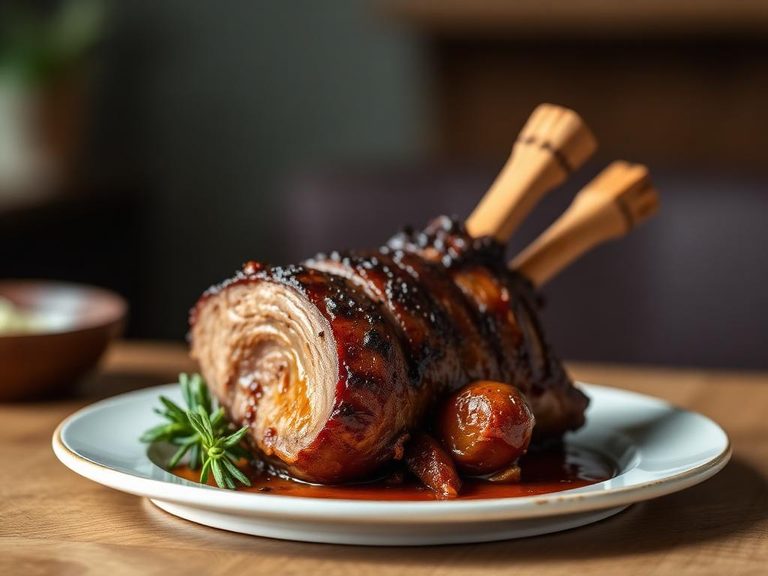
The shank is the same primal cut used for the iconic German dish Schweinshaxe, where it's typically roasted until the skin becomes a crackling, crispy shell while the meat inside stays tender.
Full nutrition (USDA data · scales with serving)
| Water | 67.7 g |
| Energy | 193 kcal |
| Energy | 807 kj |
| Protein | 19.9 g |
| Total lipid (fat) | 12.0 g |
| Ash | 1.0 g |
| Carbohydrate, by difference | 0.00 g |
| Fiber, total dietary | 0.00 g |
| Total Sugars | 0.00 g |
| Calcium, Ca | 12.0 mg |
| Iron, Fe | 0.69 mg |
| Magnesium, Mg | 19.0 mg |
| Phosphorus, P | 204 mg |
| Potassium, K | 329 mg |
| Sodium, Na | 84.0 mg |
| Zinc, Zn | 2.0 mg |
| Copper, Cu | 0.13 mg |
| Manganese, Mn | 0.02 mg |
| Selenium, Se | 19.5 ug |
| Vitamin C, total ascorbic acid | 0.00 mg |
| Thiamin | 0.47 mg |
| Riboflavin | 0.31 mg |
| Niacin | 5.8 mg |
| Pantothenic acid | 0.59 mg |
| Vitamin B-6 | 0.47 mg |
| Folate, total | 0.00 ug |
| Folic acid | 0.00 ug |
| Folate, food | 0.00 ug |
| Folate, DFE | 0.00 ug |
| Choline, total | 68.2 mg |
| Betaine | 2.6 mg |
| Vitamin B-12 | 0.54 ug |
| Vitamin B-12, added | 0.00 ug |
| Vitamin A, RAE | 6.0 ug |
| Retinol | 6.0 ug |
| Carotene, beta | 0.00 ug |
| Carotene, alpha | 0.00 ug |
| Cryptoxanthin, beta | 0.00 ug |
| Vitamin A, IU | 20.0 iu |
| Lycopene | 0.00 ug |
| Lutein + zeaxanthin | 0.00 ug |
| Vitamin E (alpha-tocopherol) | 0.31 mg |
| Vitamin E, added | 0.00 mg |
| Vitamin D (D2 + D3), International Units | 20.0 iu |
| Vitamin D (D2 + D3) | 0.50 ug |
| Vitamin D3 (cholecalciferol) | 0.50 ug |
| Vitamin K (phylloquinone) | 0.00 ug |
| Vitamin K (Dihydrophylloquinone) | 0.00 ug |
| Alcohol, ethyl | 0.00 g |
| Caffeine | 0.00 mg |
| Theobromine | 0.00 mg |
Fat & fatty acid profile (per 100g)
| Fatty acids, total saturated | 3.9 g |
| SFA 4:0 | 0.00 g |
| SFA 6:0 | 0.00 g |
| SFA 8:0 | 0.00 g |
| SFA 10:0 | 0.01 g |
| SFA 12:0 | 0.01 g |
| SFA 14:0 | 0.14 g |
| SFA 15:0 | 0.01 g |
| SFA 16:0 | 2.5 g |
| SFA 17:0 | 0.04 g |
| SFA 18:0 | 1.3 g |
| SFA 20:0 | 0.02 g |
| SFA 22:0 | 0.00 g |
| SFA 24:0 | 0.00 g |
| Fatty acids, total monounsaturated | 5.1 g |
| MUFA 14:1 | 0.00 g |
| MUFA 15:1 | 0.00 g |
| MUFA 16:1 | 0.24 g |
| MUFA 17:1 | 0.00 g |
| MUFA 18:1 | 4.7 g |
| MUFA 18:1 c | 4.7 g |
| MUFA 20:1 | 0.09 g |
| MUFA 22:1 | 0.00 g |
| MUFA 22:1 c | 0.00 g |
| Fatty acids, total polyunsaturated | 2.4 g |
| PUFA 18:2 | 2.1 g |
| PUFA 18:2 n-6 c,c | 2.1 g |
| PUFA 18:3 | 0.10 g |
| PUFA 18:3 n-3 c,c,c (ALA) | 0.09 g |
| PUFA 18:3 n-6 c,c,c | 0.00 g |
| PUFA 18:3i | 0.00 g |
| PUFA 18:4 | 0.00 g |
| PUFA 20:2 n-6 c,c | 0.08 g |
| PUFA 20:3 | 0.01 g |
| PUFA 20:4 | 0.08 g |
| PUFA 20:5 n-3 (EPA) | 0.00 g |
| PUFA 22:5 n-3 (DPA) | 0.01 g |
| PUFA 22:6 n-3 (DHA) | 0.00 g |
| Fatty acids, total trans | 0.10 g |
| Fatty acids, total trans-monoenoic | 0.08 g |
| TFA 18:1 t | 0.08 g |
| TFA 18:2 t not further defined | 0.02 g |
| Fatty acids, total trans-polyenoic | 0.02 g |
| Cholesterol | 67.0 mg |
Amino acid profile (per 100g)
| Tryptophan | 0.24 g |
| Threonine | 0.87 g |
| Isoleucine | 0.94 g |
| Leucine | 1.6 g |
| Lysine | 1.8 g |
| Methionine | 0.55 g |
| Cystine | 0.22 g |
| Phenylalanine | 0.83 g |
| Tyrosine | 0.79 g |
| Valine | 1.0 g |
| Arginine | 1.3 g |
| Histidine | 0.81 g |
| Alanine | 1.1 g |
| Aspartic acid | 1.9 g |
| Glutamic acid | 3.0 g |
| Glycine | 0.90 g |
| Proline | 0.80 g |
| Serine | 0.83 g |
| Hydroxyproline | 0.07 g |
FAQ
Is pork shank the same as ham hock?
Not exactly. A ham hock is the joint between the leg and the foot, which is mostly bone, skin, and connective tissue. A shank is the meatier, upper portion of the leg just above the hock.
How do I keep it from drying out when cooking?
The key is low heat and moisture. For roasting, baste frequently. For braising, ensure it's partially submerged in liquid. Brining the meat beforehand also helps it retain moisture during cooking.
What's the best way to prepare it for a quick meal?
For faster cooking, you can cut the meat off the bone into smaller pieces or steaks, which can be pan-seared or grilled. Marinating first helps tenderize and add flavor.
Nutrient density (calculated · NRF9.3)
Nutrient Rich Foods index: beneficial nutrients (protein, fiber, vitamins, minerals) minus saturated fat, added sugar & sodium, per 100 kcal.
NRF9.3 index — Fulgoni, Keast & Drewnowski, 2009. Computed from USDA nutrients.
Weight-loss friendliness (composite index)
Energy density 1.93 kcal/g · 41% calories from protein · 0.0 g fiber · 0.0 g sugar per 100 g.
Composite of energy density (Rolls et al., 1999), protein & fiber satiety, minus sugar. A calculated heuristic — ranks satiety-per-calorie, not a clinical measure.
Dietary load (calculated from USDA values)
Potential renal acid load. Positive = acid-forming, negative = alkaline-forming.
Sodium-to-potassium ratio: 0.26 (lower is better — aim for ≤ 1)
Sodium:potassium per WHO potassium guidance. Computed from USDA nutrients.