

Pasta mix, Italian lasagna, unprepared
Whole food · Meals, Entrees, and Side Dishes

Photo: Wikipedia
This is a dry, uncooked pasta blend specifically designed for making Italian lasagna, typically consisting of flat, rectangular sheets. The pasta itself has a firm, slightly chewy texture that softens into a tender, silky layer when baked with sauce and cheese. Nutritionally, it is a high-carbohydrate, low-fat base, providing the starchy backbone for a hearty meal.
Calorie split: 12% protein · 83% carbs · 5% fat
↓ Full nutrition💚 Why it's loved
People love it for its ability to transform into a comforting, layered casserole that absorbs the flavors of tomato sauce, béchamel, and cheese. It's a cultural staple of Italian-American and Italian home cooking, symbolizing family gatherings and hearty, satisfying meals.
⚠️ Watch-outs & how to enjoy it better
As a refined carbohydrate, it can cause rapid blood-sugar spikes, especially when paired with sugary sauces. It is also a common gluten allergen. To counteract this, pair it with protein (like ground meat or ricotta) and fiber (like spinach or zucchini in the layers), and practice portion control by limiting to one or two layers per serving.
Key benefits
- Excellent source of complex carbohydrates for sustained energy.
- Provides a foundational structure for a balanced meal with protein and vegetables.
- Convenient pre-cut sheets reduce preparation time.
- Low in fat, making it a lean base for rich sauces and cheeses.
- Contains some dietary fiber for digestive health.
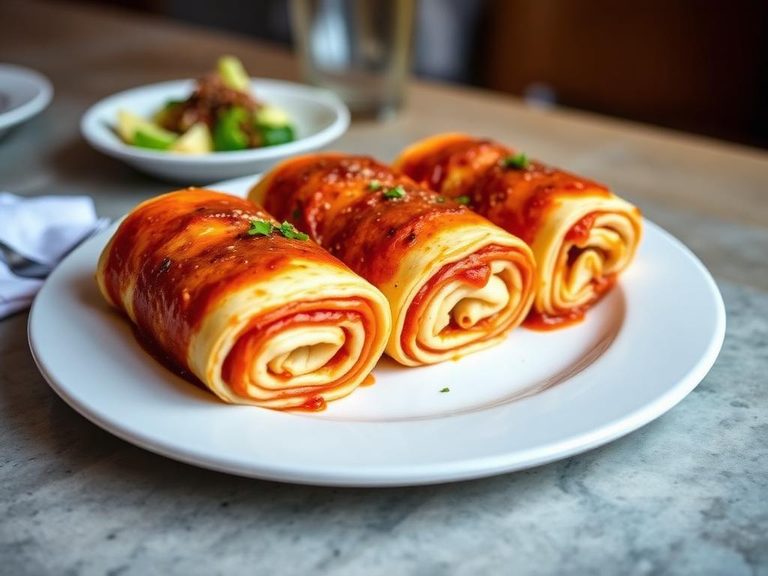
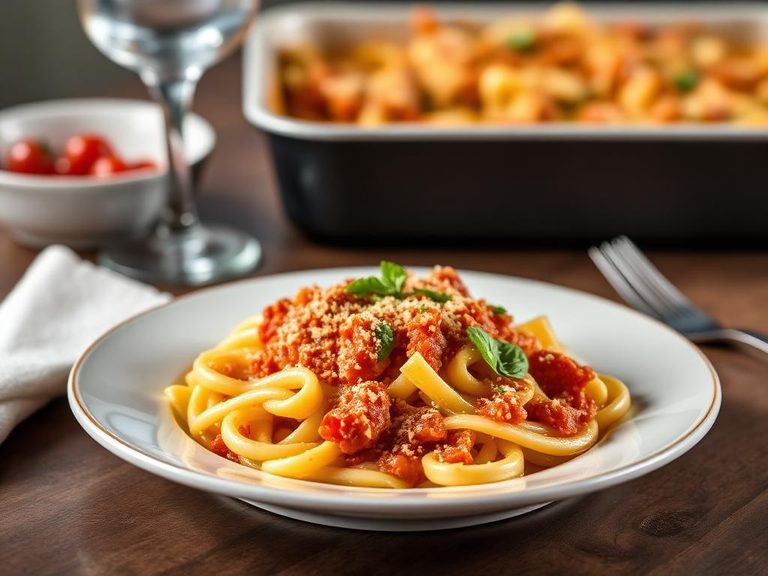
🍽️ Popular dishes
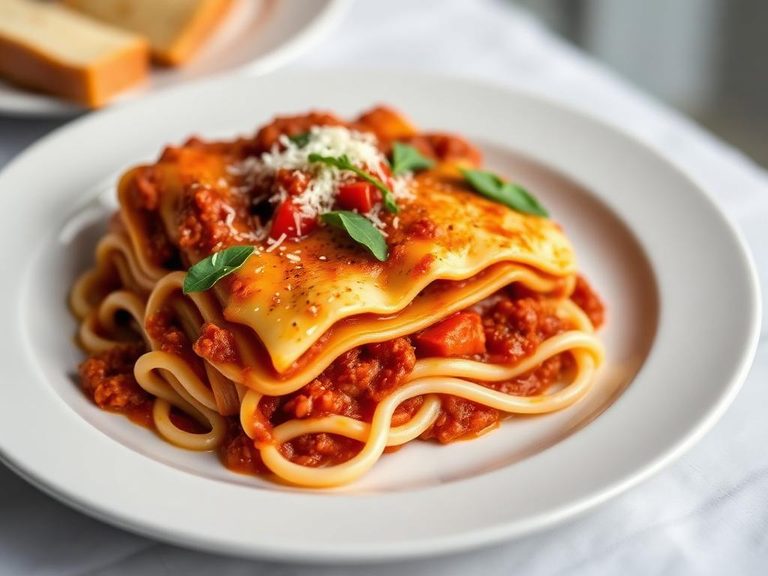
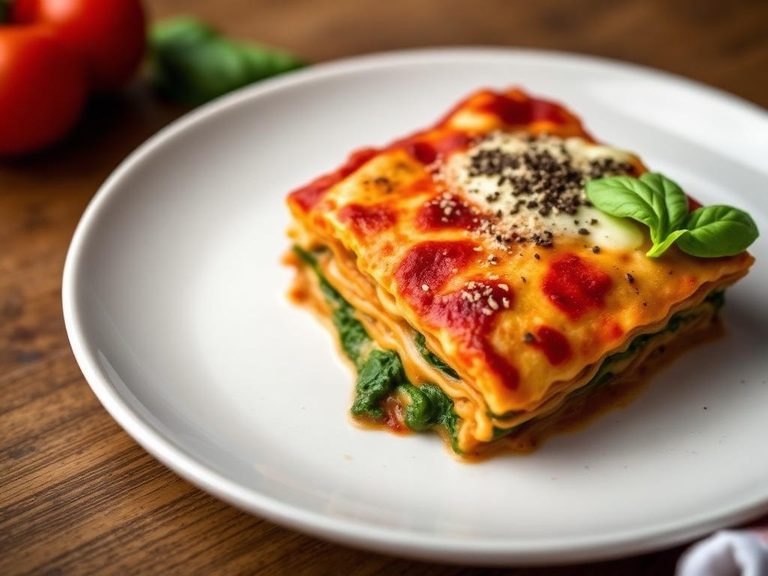
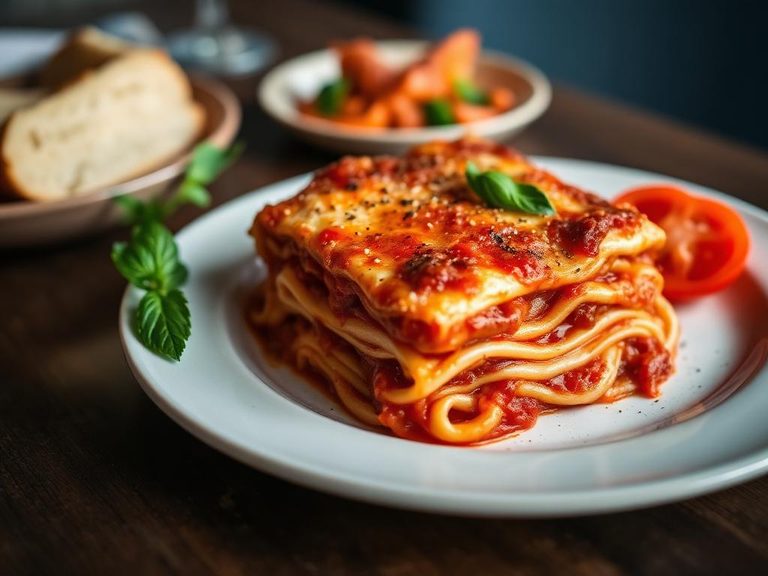
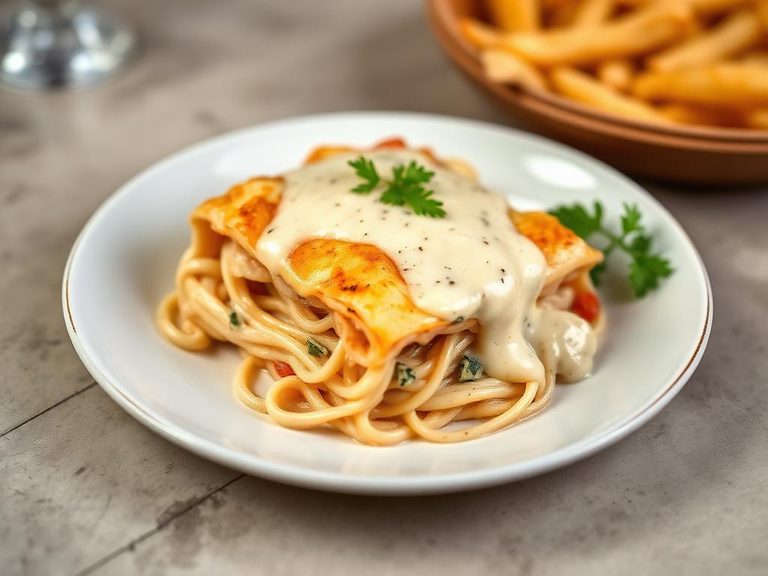
🌍 Where it's eaten
💡 Did you know?
The word 'lasagna' comes from the Greek word 'lasanon,' meaning a large cooking pot or cauldron, which was later adapted by the Romans to refer to the flat pasta sheets themselves.
Full nutrition (USDA data · scales with serving)
| Water | 7.9 g |
| Energy | 356 kcal |
| Energy | 1491 kj |
| Protein | 10.9 g |
| Total lipid (fat) | 2.0 g |
| Ash | 5.4 g |
| Carbohydrate, by difference | 73.8 g |
| Fiber, total dietary | 2.8 g |
| Total Sugars | 11.3 g |
| Sucrose | 6.8 g |
| Glucose | 0.60 g |
| Fructose | 0.80 g |
| Lactose | 0.37 g |
| Maltose | 2.7 g |
| Galactose | 0.00 g |
| Starch | 53.9 g |
| Calcium, Ca | 52.0 mg |
| Iron, Fe | 2.9 mg |
| Magnesium, Mg | 37.0 mg |
| Phosphorus, P | 124 mg |
| Potassium, K | 277 mg |
| Sodium, Na | 1850 mg |
| Zinc, Zn | 0.84 mg |
| Copper, Cu | 0.15 mg |
| Manganese, Mn | 0.58 mg |
| Selenium, Se | 24.9 ug |
| Vitamin C, total ascorbic acid | 0.90 mg |
| Thiamin | 0.70 mg |
| Riboflavin | 0.43 mg |
| Niacin | 5.6 mg |
| Pantothenic acid | 0.60 mg |
| Vitamin B-6 | 0.16 mg |
| Folate, total | 113 ug |
| Folic acid | 105 ug |
| Folate, food | 8.0 ug |
| Folate, DFE | 187 ug |
| Choline, total | 9.7 mg |
| Vitamin B-12 | 0.19 ug |
| Vitamin B-12, added | 0.00 ug |
| Vitamin A, RAE | 10.0 ug |
| Retinol | 3.0 ug |
| Carotene, beta | 78.0 ug |
| Carotene, alpha | 1.0 ug |
| Cryptoxanthin, beta | 0.00 ug |
| Vitamin A, IU | 141 iu |
| Lycopene | 334 ug |
| Lutein + zeaxanthin | 27.0 ug |
| Vitamin E (alpha-tocopherol) | 0.81 mg |
| Vitamin E, added | 0.00 mg |
| Tocopherol, beta | 0.09 mg |
| Tocopherol, gamma | 0.32 mg |
| Tocopherol, delta | 0.06 mg |
| Tocotrienol, alpha | 0.06 mg |
| Tocotrienol, beta | 0.61 mg |
| Tocotrienol, gamma | 0.00 mg |
| Tocotrienol, delta | 0.00 mg |
| Vitamin D (D2 + D3), International Units | 0.00 iu |
| Vitamin D (D2 + D3) | 0.00 ug |
| Vitamin K (phylloquinone) | 12.9 ug |
| Alcohol, ethyl | 0.00 g |
| Caffeine | 0.00 mg |
| Theobromine | 0.00 mg |
Fat & fatty acid profile (per 100g)
| Fatty acids, total saturated | 0.44 g |
| SFA 4:0 | 0.01 g |
| SFA 6:0 | 0.01 g |
| SFA 8:0 | 0.02 g |
| SFA 10:0 | 0.03 g |
| SFA 12:0 | 0.01 g |
| SFA 14:0 | 0.04 g |
| SFA 15:0 | 0.01 g |
| SFA 16:0 | 0.24 g |
| SFA 17:0 | 0.00 g |
| SFA 18:0 | 0.07 g |
| SFA 20:0 | 0.00 g |
| SFA 22:0 | 0.00 g |
| SFA 24:0 | 0.00 g |
| Fatty acids, total monounsaturated | 0.42 g |
| MUFA 14:1 | 0.00 g |
| MUFA 15:1 | 0.00 g |
| MUFA 16:1 | 0.01 g |
| MUFA 16:1 c | 0.01 g |
| MUFA 17:1 | 0.00 g |
| MUFA 18:1 | 0.41 g |
| MUFA 18:1 c | 0.34 g |
| MUFA 20:1 | 0.01 g |
| MUFA 22:1 | 0.00 g |
| MUFA 22:1 c | 0.00 g |
| MUFA 24:1 c | 0.00 g |
| Fatty acids, total polyunsaturated | 0.41 g |
| PUFA 18:2 | 0.39 g |
| PUFA 18:2 n-6 c,c | 0.37 g |
| PUFA 18:2 CLAs | 0.00 g |
| PUFA 18:3 | 0.03 g |
| PUFA 18:3 n-3 c,c,c (ALA) | 0.03 g |
| PUFA 18:3 n-6 c,c,c | 0.00 g |
| PUFA 18:3i | 0.00 g |
| PUFA 18:4 | 0.00 g |
| PUFA 20:2 n-6 c,c | 0.00 g |
| PUFA 20:3 | 0.00 g |
| PUFA 20:3 n-3 | 0.00 g |
| PUFA 20:3 n-6 | 0.00 g |
| PUFA 20:4 | 0.00 g |
| PUFA 20:5 n-3 (EPA) | 0.00 g |
| PUFA 22:4 | 0.00 g |
| PUFA 22:5 n-3 (DPA) | 0.00 g |
| PUFA 22:6 n-3 (DHA) | 0.00 g |
| Fatty acids, total trans | 0.09 g |
| Fatty acids, total trans-monoenoic | 0.07 g |
| TFA 16:1 t | 0.00 g |
| TFA 18:1 t | 0.07 g |
| TFA 22:1 t | 0.00 g |
| TFA 18:2 t not further defined | 0.02 g |
| Fatty acids, total trans-polyenoic | 0.02 g |
| Cholesterol | 1.0 mg |
FAQ
What's the difference between 'uncooked' and 'oven-ready' lasagna sheets?
Uncooked sheets (like this) require boiling before assembly, while oven-ready (or 'no-boil') sheets are thinner and pre-cooked, designed to absorb liquid directly from the sauce during baking.
Can I use this pasta mix for dishes other than lasagna?
While designed for lasagna, the flat sheets can be broken into pieces for soups, layered in other baked dishes, or even used as a substitute for other flat pastas like mafaldine in a pinch.
How do I prevent the pasta from sticking together before baking?
After boiling, rinse the sheets briefly with cool water and lay them flat on a lightly oiled surface or parchment paper, ensuring they don't overlap too much.
Nutrient density (calculated · NRF9.3)
Nutrient Rich Foods index: beneficial nutrients (protein, fiber, vitamins, minerals) minus saturated fat, added sugar & sodium, per 100 kcal.
NRF9.3 index — Fulgoni, Keast & Drewnowski, 2009. Computed from USDA nutrients.
Weight-loss friendliness (composite index)
Energy density 3.56 kcal/g · 12% calories from protein · 2.8 g fiber · 11.3 g sugar per 100 g.
Composite of energy density (Rolls et al., 1999), protein & fiber satiety, minus sugar. A calculated heuristic — ranks satiety-per-calorie, not a clinical measure.
Dietary load (calculated from USDA values)
Potential renal acid load. Positive = acid-forming, negative = alkaline-forming.
Sodium-to-potassium ratio: 6.68 (lower is better — aim for ≤ 1)
Sodium:potassium per WHO potassium guidance. Computed from USDA nutrients.